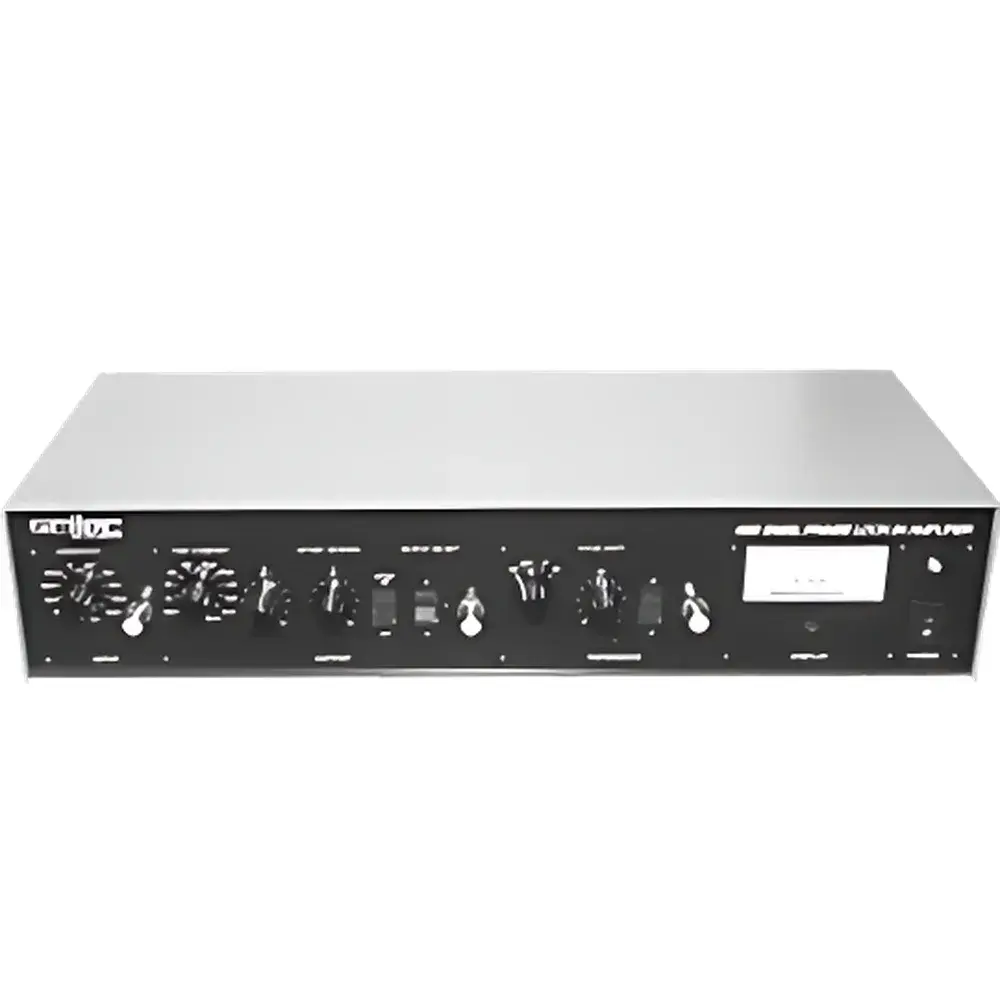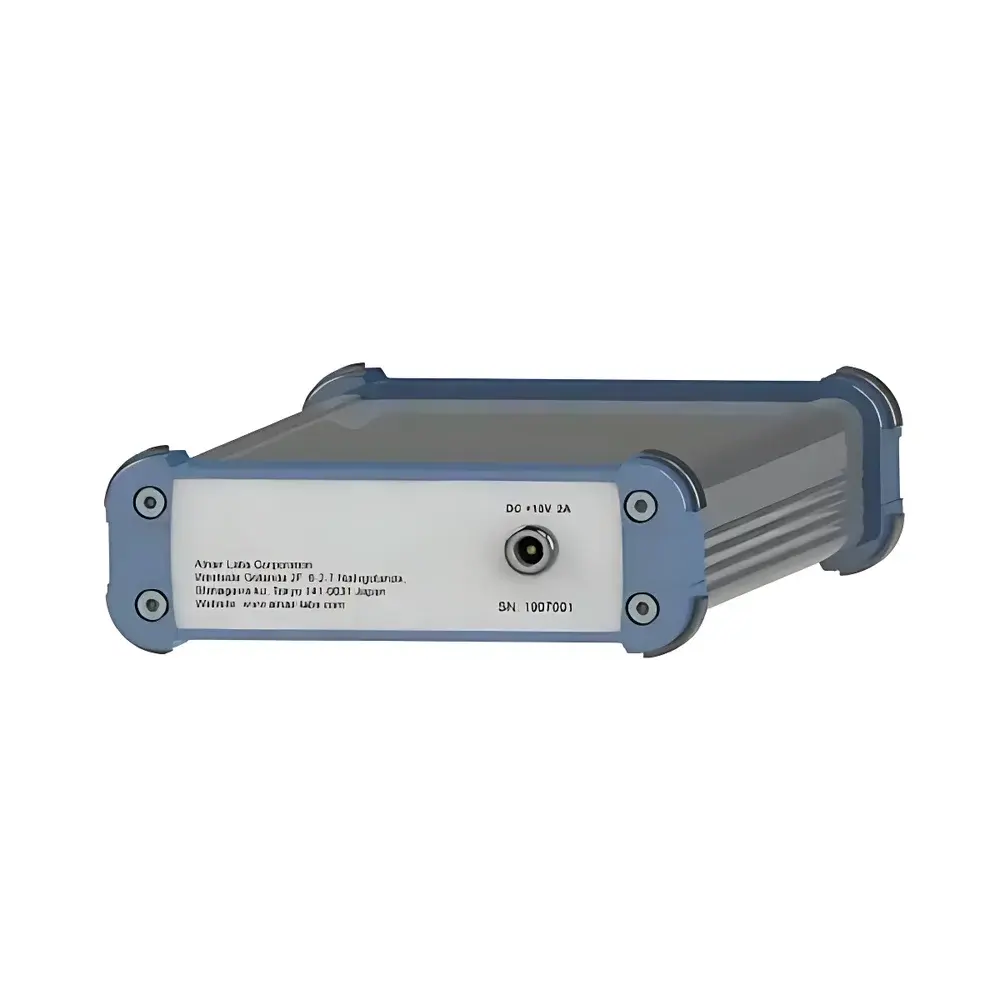
Hamamatsu CPG-100B-1000-P High-Current Nanosecond Pulse Generator
| Origin | Japan |
|---|---|
| Manufacturer Type | Authorized Distributor |
| Origin Category | Imported |
| Model | CPG-100B-1000-P |
| Output Current | Up to 500 A (at 100 V supply, 5 ns pulse width, 300 pH parallel inductance) |
| Pulse Width | Fixed typ. 1–5 ns |
| Repetition Rate | Single-shot to 400 kHz |
| Timing Jitter | < 5 ps (additive) |
| Output Impedance (High-Current Driver Version) | 10–100 mΩ |
| Coupling | AC-coupled |
| RF Connector | Advanced SMA® |
| Trigger Input | 50 Ω terminated, TTL/CMOS compatible |
Overview
The Hamamatsu CPG-100B-1000-P is a high-performance, solid-state nanosecond pulse generator engineered for precision delivery of high-amplitude current transients in demanding scientific and industrial applications. Unlike conventional capacitor-discharge or avalanche-based pulsers, the CPG-100B-1000-P employs a fast-switching GaN or SiC power stage architecture with optimized gate-drive timing and low-inductance internal layout—enabling sub-nanosecond edge fidelity and exceptional pulse-to-pulse stability. It operates on the principle of controlled current slewing through ultra-low-impedance output stages, where pulse amplitude and duration are determined by supply voltage, external load inductance (e.g., 300 pH), and internal switching dynamics—not passive RC networks. This architecture ensures deterministic pulse generation without waveform degradation under varying capacitive or inductive loads, making it suitable for driving laser diode arrays, photoconductive switches, and pulsed electromagnetic field sources requiring reproducible current slew rates up to 3.33 A/ns/V. Its design targets environments where timing accuracy, jitter budget, and power efficiency are critical—particularly in time-resolved spectroscopy, LIDAR receiver calibration, and high-speed optoelectronic test benches.
Key Features
- Scalable peak output current: 100 A at 30 V, 150 A at 40 V, and up to 500 A at 100 V supply (measured into 300 pH parallel inductance and 5 ns pulse width)
- Fixed pulse width range of 1–5 ns (typical), with sub-5 ps additive timing jitter referenced to external trigger input
- Flexible triggering architecture supporting single-shot, burst-mode, and continuous periodic operation up to 400 kHz
- AC-coupled output with Advanced SMA® RF interface ensuring broadband signal integrity from DC to >5 GHz
- Low standby power consumption (< 50 mW), enabling integration into battery-powered or thermally constrained systems
- Configurable output impedance (10–100 mΩ in high-current driver mode) optimized for direct coupling to low-impedance laser diode stacks or photoconductive antennas
Sample Compatibility & Compliance
The CPG-100B-1000-P is designed for use with low-inductance, high-bandwidth loads including multi-junction laser diodes (e.g., 808 nm, 940 nm, or 1550 nm pump diodes), THz photoconductive emitters, and MEMS-based pulsed actuators. Its output stage meets IEC 61000-4-2 (ESD immunity) and IEC 61000-4-4 (EFT/burst) requirements when installed per manufacturer-recommended grounding and shielding guidelines. While not certified as medical or aerospace-grade hardware, its timing performance aligns with metrology practices defined in IEEE Std 1139 (Standard Definitions of Physical Quantities for Fundamental Frequency and Time Metrology) and supports traceable calibration workflows compliant with ISO/IEC 17025:2017 for laboratory-developed test methods. No built-in safety interlocks or Class 1 laser control interfaces are provided; users must implement external interlock circuits per IEC 60825-1 when integrating with optical systems.
Software & Data Management
The CPG-100B-1000-P operates as a stand-alone instrument with no embedded firmware or USB/Ethernet interface. All configuration—including trigger mode selection (single/burst/periodic), polarity inversion, and output enable/disable—is performed via front-panel BNC inputs and TTL-compatible logic levels. For automated test systems, integration is achieved through standard digital I/O lines and programmable function generators (e.g., Keysight 33600A series) synchronized via precision delay generators (e.g., Berkeley Nucleonics Model 577). While no proprietary software is supplied, the device’s deterministic timing behavior enables seamless incorporation into LabVIEW, Python (PyVISA), or MATLAB-based data acquisition frameworks that comply with IEEE 488.2 and SCPI command subsets. Audit trails for pulse parameter settings must be maintained externally, as the unit does not support FDA 21 CFR Part 11-compliant electronic records or GLP/GMP audit logging.
Applications
- LIDAR system development: Driving high-power laser diode arrays for time-of-flight ranging and atmospheric backscatter profiling
- Pulsed laser pumping: Generating nanosecond seed pulses for Q-switched Nd:YAG or fiber amplifiers
- Explosive initiation testing: Providing precise, repeatable current pulses for bridgewire or pyrotechnic initiator characterization
- Phase-array radar simulation: Emulating high-slew-rate transmitter waveforms for RF front-end validation
- Ultrafast optoelectronics: Biasing photoconductive switches in THz time-domain spectroscopy setups
- Material ablation studies: Delivering controlled current surges to microsecond-scale plasma generation platforms
FAQ
What is the minimum achievable pulse width?
The device delivers fixed-width pulses with a typical duration of 1–5 ns; narrower pulses are not supported due to intrinsic switching and parasitic inductance limitations.
Can the CPG-100B-1000-P drive a 50 Ω resistive load directly?
No—it is not designed for 50 Ω termination. Its output impedance is intentionally low (10–100 mΩ) to maximize current delivery into highly inductive or capacitive laser-diode loads; use with 50 Ω terminations may cause instability or damage.
Is remote programming supported via GPIB or Ethernet?
No. The unit has no onboard controller or communication interface; all control is implemented externally via TTL/BNC signals.
Does the device include internal calibration or self-test functionality?
No. Calibration requires external high-bandwidth current probes (e.g., Pearson model 411 or Tektronix TCP0030A) and oscilloscopes with ≥12 GHz bandwidth and ≤100 fs RMS jitter.
What thermal management is required during continuous 400 kHz operation?
Active forced-air cooling (≥20 CFM) over the heatsink surface is mandatory; ambient temperature must remain below 40 °C to maintain specified pulse amplitude stability and junction temperature limits.