
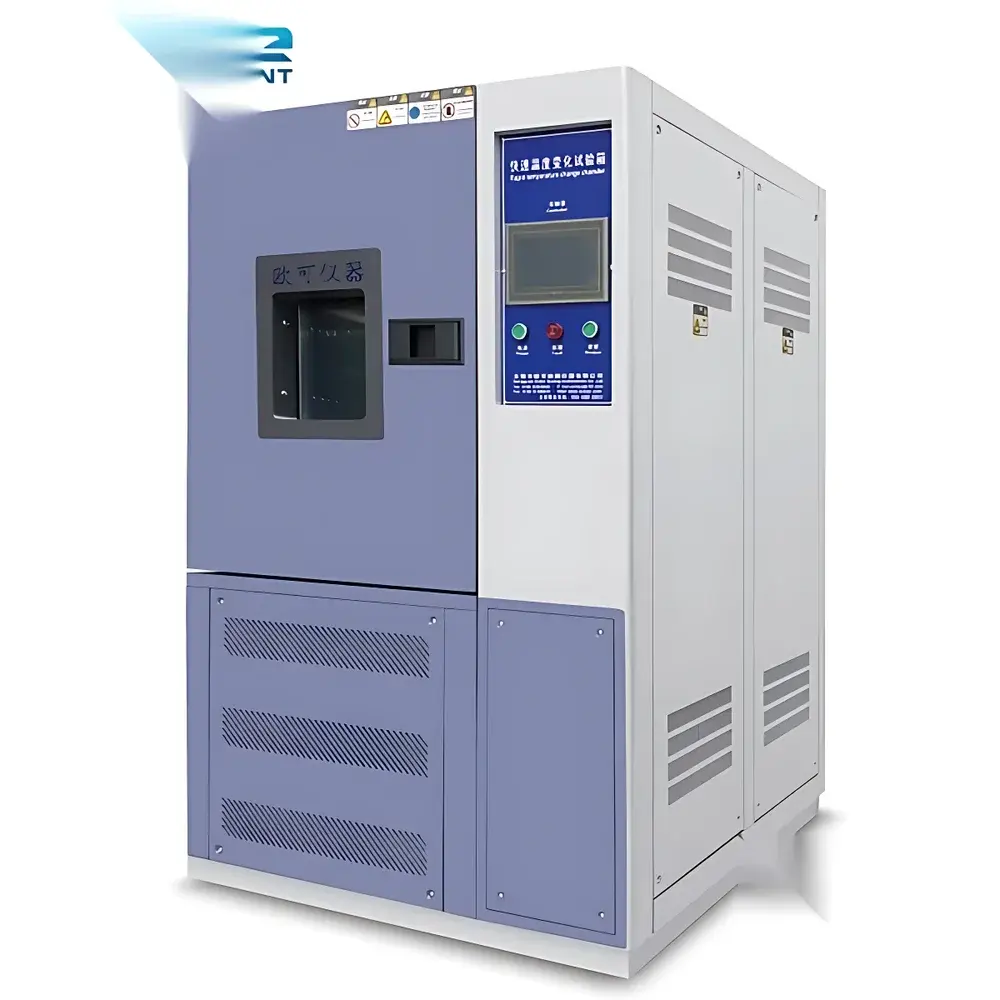
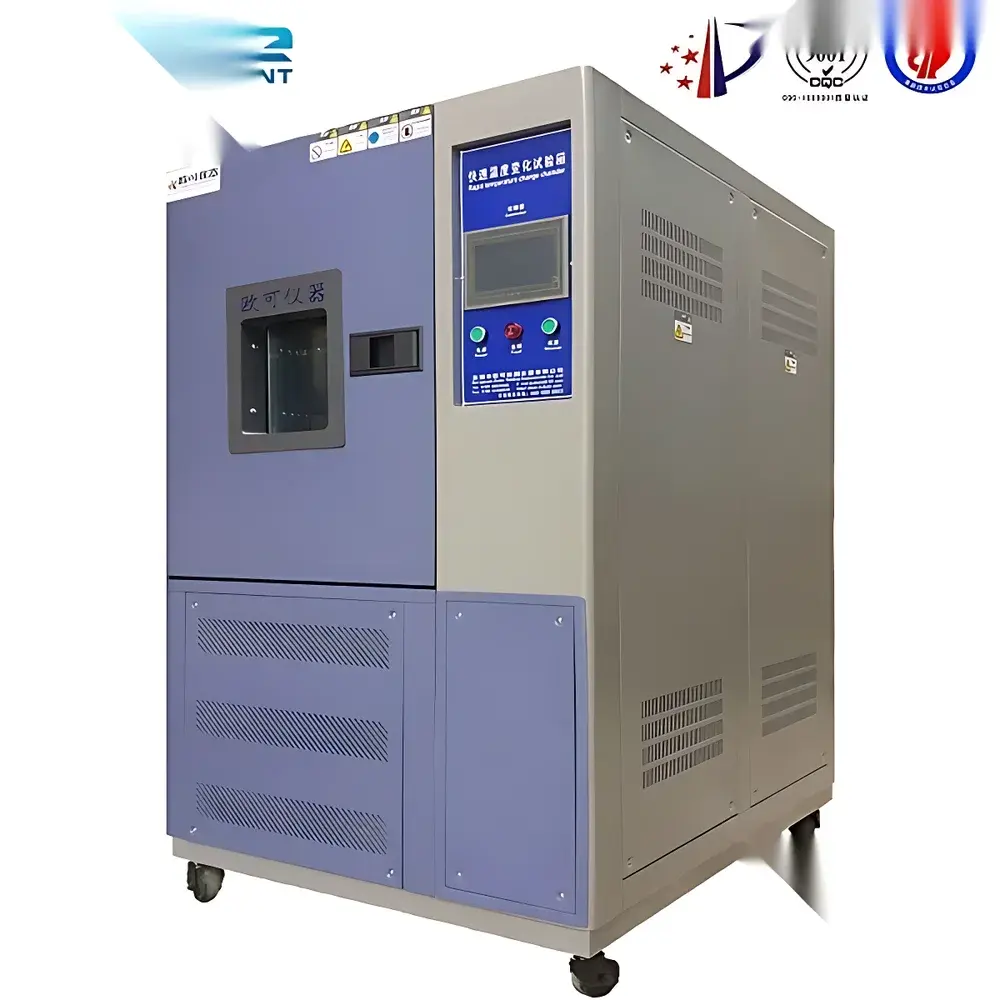
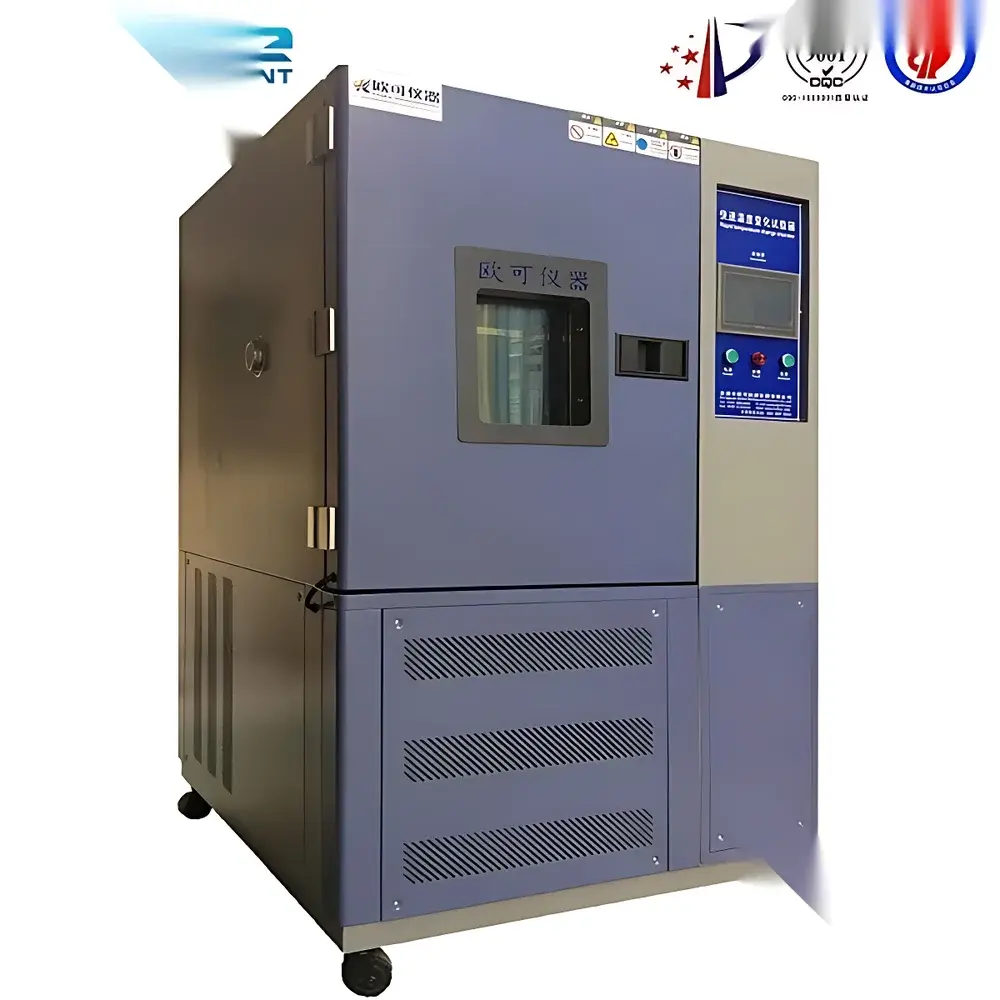
Rapid Temperature Cycling (Humidity) Environmental Test Chamber
| Brand | Other Brands |
|---|---|
| Origin | Imported |
| Manufacturer Type | General Distributor |
| Price | USD 14,000 (approx.) |
Overview
The Rapid Temperature Cycling (Humidity) Environmental Test Chamber is a precision-engineered climatic stress test system designed specifically for reliability validation of photovoltaic (PV) modules under accelerated aging conditions. It operates on the principle of controlled, high-rate thermal transition between extreme temperature and humidity states—enabling simulation of real-world environmental fatigue mechanisms such as thermal expansion mismatch, moisture ingress, interfacial delamination, and electrochemical corrosion. The chamber implements a three-zone architecture (high-temperature zone, low-temperature zone, and test zone), thermally isolated via multi-layer vacuum-insulated paneling and high-efficiency gasket sealing. Temperature transitions are achieved through high-velocity air-stream switching—eliminating mechanical movement of test specimens and ensuring repeatable, traceable thermal shock profiles per IEC 60068-2-14 and MIL-STD-810H methodologies.
Key Features
- Three-chamber segregated design with independent thermal control for rapid, repeatable temperature transitions (typical ramp rates: ≥10 °C/min between −40 °C and +85 °C)
- Dual-refrigeration cooling system (cascade vapor-compression) supporting both air-cooled and water-cooled configurations for stable sub-zero operation down to −70 °C
- Humidity control range: 10–98% RH at temperatures from +10 °C to +85 °C, maintained via steam injection and desiccant-assisted dehumidification
- Programmable thermal cycling: up to 9,999 cycles with individual cycle duration up to 9,999 minutes; supports 2-zone (hot/cold) or 3-zone (hot/ambient/cold) sequencing
- Compliance-grade chamber integrity: uniformity ≤ ±2 °C across test volume (per IEC 60068-3-5), stability ≤ ±0.5 °C, and humidity uniformity ≤ ±3% RH
- Integrated safety systems including over-temperature cutoff, refrigerant pressure monitoring, door interlock, and condensate overflow protection
Sample Compatibility & Compliance
The chamber accommodates standard PV module formats (up to 2.4 m × 1.4 m footprint) with adjustable mounting rails and non-reactive stainless-steel interior surfaces. It fully supports test protocols mandated by international photovoltaic qualification standards—including IEC 61215-2 (crystalline Si), IEC 61646-2 (thin-film), IEC 62108 (CPV), UL 1703 (safety), IEEE 1513 (field performance modeling), and IEC 61730-2 (module safety classification). All operational parameters—including temperature setpoints, humidity levels, dwell times, ramp rates, and cycle counts—are logged with timestamped, tamper-evident records compliant with GLP and GMP audit requirements. The system architecture supports optional integration with FDA 21 CFR Part 11–compliant electronic signature and audit trail modules upon customer specification.
Software & Data Management
Equipped with a Windows-based controller interface featuring intuitive touch-screen navigation and multi-level user access (Operator, Engineer, Administrator). The embedded software enables full test sequence programming, real-time graphical monitoring of chamber variables (T, RH, dew point, compressor status), and automatic generation of IEC-aligned test reports in PDF and CSV formats. Data logging resolution is configurable down to 1-second intervals, with internal storage capacity for ≥30 days of continuous operation. Optional Ethernet/RS-485 connectivity allows remote supervision via SCADA platforms or centralized lab management systems. Calibration data—including sensor NIST-traceable certificates and annual verification logs—is stored within the system’s secure database and exportable for regulatory submissions.
Applications
This chamber is deployed primarily in PV module qualification laboratories, Tier-1 manufacturer R&D centers, and independent testing facilities accredited to ISO/IEC 17025. Core applications include Damp Heat (DH1000, DH2000), Thermal Cycling (TC200, TC600), Humidity Freeze (HF10), and combined stress sequences such as IEC 61215 MQT 11–15. Beyond solar, it serves aerospace component screening (e.g., conformal coating adhesion under cyclic hygrothermal stress), automotive electronics validation (ISO 16750-4), and advanced battery pack environmental endurance testing (UN 38.3 T4/T5). Its robust thermal dynamics also support accelerated life testing of encapsulants, backsheet materials, and metallization interfaces.
FAQ
What standards does this chamber comply with for PV module testing?
It meets the physical and operational requirements of IEC 61215-2, IEC 61646-2, IEC 62108, UL 1703, IEEE 1513, and IEC 61730-2—including temperature uniformity, ramp rate fidelity, and humidity control accuracy.
Can the chamber perform simultaneous temperature and humidity cycling?
Yes—it supports synchronized thermal and hygral stress profiles, including Damp Heat followed by Thermal Cycling without manual intervention.
Is calibration documentation provided with shipment?
Each unit ships with factory calibration certificates for all primary sensors (PT100 temperature, capacitive RH), traceable to national metrology institutes per ISO/IEC 17025 guidelines.
What maintenance is required for long-term reliability?
Recommended preventive maintenance includes quarterly refrigerant pressure verification, biannual desiccant replacement, annual steam generator cleaning, and semi-annual validation of temperature/humidity uniformity per IEC 60068-3-5.
Does the system support remote diagnostics and firmware updates?
Yes—via secure HTTPS-enabled web interface; remote support sessions require pre-authorized access credentials and comply with ISO 27001 information security protocols.



