
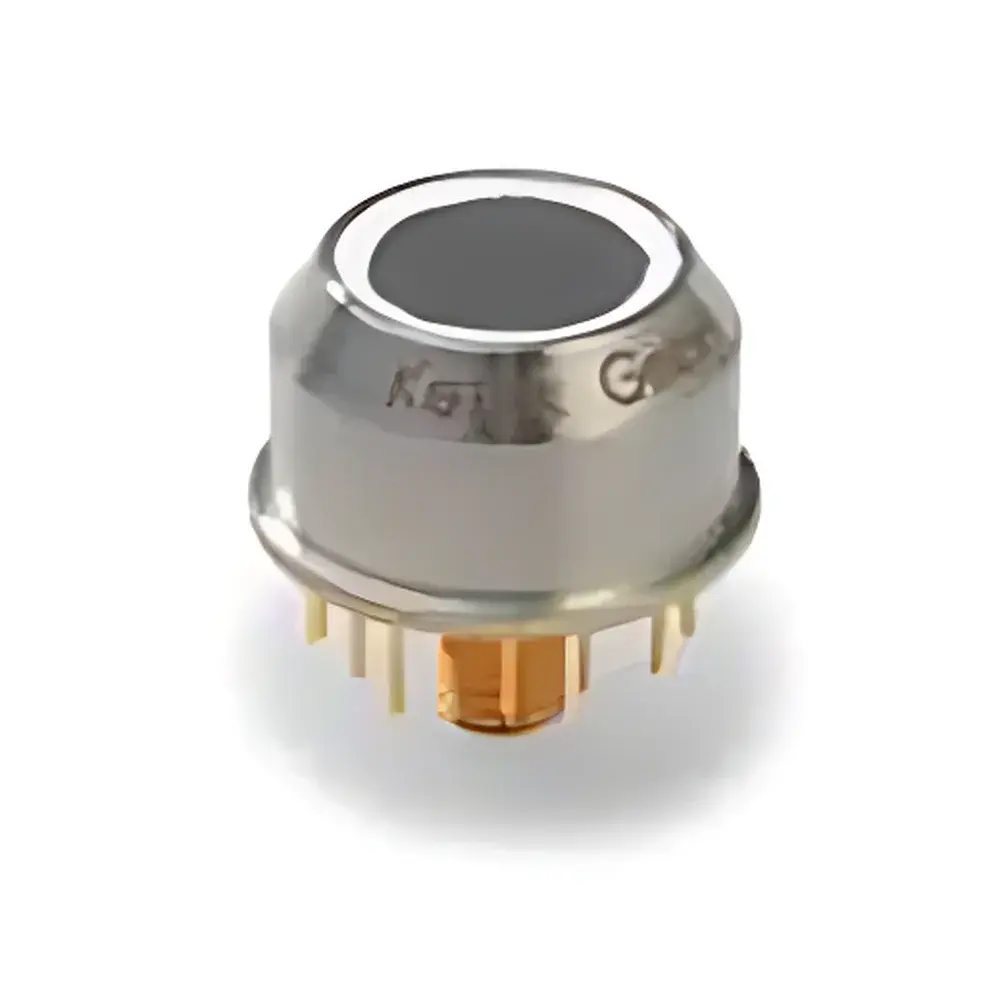
KETEK VITUS-SDD Silicon Drift Detector
| Brand | KETEK |
|---|---|
| Origin | Germany |
| Model | VITUS |
| Active Area Options | 7–100 mm² |
| Window Material | 8 µm or 25 µm Beryllium (standard) / AP3.3 polymer (low-energy) |
| Cooling | Peltier, ΔT ≤ 75 °C @ 30 °C heatsink (standard class) / ≤ 55 °C @ 20 °C heatsink (low-energy class) |
| Energy Resolution (FWHM) | ≤133 eV @ Mn-Kα (5.9 keV), 8 µs peaking time |
| Count Rate Capability | >15,000 cps (standard), >10,000 cps (low-energy), dead time <50% at 100 kcps |
| Peak-to-Background Ratio (P/B) | >6,000 (guaranteed) |
Overview
The KETEK VITUS-SDD is a high-performance silicon drift detector (SDD) engineered for precision X-ray spectroscopy in demanding analytical environments—from laboratory-based energy-dispersive X-ray fluorescence (ED-XRF) and scanning electron microscopy (SEM-EDS) to spaceborne planetary science instrumentation. Leveraging KETEK’s pioneering SDD architecture developed in Germany, the VITUS series delivers exceptional energy resolution, high count-rate tolerance, and long-term operational stability under thermal and radiation stress. Its core principle relies on low-capacitance, large-area silicon drift geometry with integrated field-effect transistor (FET) readout, enabling fast charge collection and minimal electronic noise. This design directly supports sub-135 eV FWHM resolution at Mn-Kα (5.9 keV) with 8 µs peaking time—a benchmark for quantitative elemental analysis where peak separation and trace-element sensitivity are critical. The detector’s heritage includes flight qualification on NASA Mars rovers; multiple VITUS units deployed since 2017 remain fully functional on the Martian surface, validating its robustness against extreme thermal cycling, vacuum exposure, and cumulative radiation dose.
Key Features
- Ultra-low-noise, large-area SDD architecture with monolithic integration of sensor and JFET preamplifier
- Two window options: standard 8 µm or 25 µm beryllium for general-purpose use; ultra-thin AP3.3 polymer window (3.3 µm equivalent) for enhanced detection of light elements (B, C, N, O, F)
- Peltier thermoelectric cooling with precise thermal management—ΔT up to 75 °C below ambient (standard class) or 55 °C (low-energy class), ensuring stable gain and resolution over extended acquisitions
- Guaranteed energy resolution ≤133 eV FWHM at Mn-Kα (5.9 keV) with 8 µs peaking time, verified per ISO 11348-3 and ASTM E1598 test protocols
- High count-rate performance: >15,000 cps typical linearity with <50% dead time at 100 kcps input rate—enabling rapid mapping and high-throughput screening
- Peak-to-background ratio >6,000 (guaranteed), essential for detecting trace elements in complex matrices such as geological samples or alloy inclusions
- Compact, hermetically sealed TO-8 package compatible with industry-standard cryostats, SEM stages, and portable XRF housings
Sample Compatibility & Compliance
The VITUS-SDD supports broad sample compatibility across solid, powdered, and thin-film specimens without requiring conductive coating in most SEM-EDS applications. Its low-energy window variants enable reliable quantification of elements from boron (Z=5) to uranium (Z=92) in air or He purge environments. All VITUS detectors comply with RoHS Directive 2011/65/EU and meet mechanical shock/vibration requirements per MIL-STD-810G for aerospace integration. For regulated laboratories, the detector’s stable calibration and linear response support compliance with ISO/IEC 17025:2017 (clause 5.9) for measurement uncertainty estimation and USP guidelines for XRF-based pharmaceutical excipient verification. Traceable factory calibration certificates—including energy scale, resolution, and gain stability data—are supplied with each unit.
Software & Data Management
KETEK provides the open-architecture VITUS Control Suite (v4.x), supporting Windows/Linux platforms and offering native drivers for common DAQ systems (e.g., Amptek DP5, XIA Pixie-4). The software enables real-time spectrum acquisition, automatic peak deconvolution using iterative least-squares fitting (ILSF), and batch processing with customizable reporting templates. Audit trails, user access control, and electronic signature functionality align with FDA 21 CFR Part 11 requirements when deployed in GMP/GLP environments. Raw spectral data is exported in standard formats (ASCII, .spc, .qdf) and integrates seamlessly with third-party quantification engines such as AXIL, QXAS, or Thermo Fisher’s Pathfinder. Firmware updates are delivered via secure HTTPS channel with SHA-256 integrity verification.
Applications
- Planetary surface composition analysis (e.g., Mars rover missions, lunar regolith studies)
- High-resolution microanalysis in field-emission SEM and TEM-EDS systems
- Non-destructive elemental screening of cultural heritage artifacts and forensic evidence
- Quality control of metal alloys, battery cathode materials, and semiconductor thin films
- Environmental monitoring of soil heavy metals and airborne particulate matter (PM2.5/PM10)
- Research-grade XRF mapping of biological tissue sections for metallomics studies
FAQ
What is the maximum recommended operating temperature for the VITUS-SDD heat sink?
The standard-class VITUS requires a heatsink temperature ≤30 °C for guaranteed performance; low-energy variants require ≤20 °C.
Can the VITUS-SDD be operated without liquid nitrogen cooling?
Yes—fully Peltier-cooled operation eliminates reliance on LN₂, reducing infrastructure complexity and enabling portable and in-situ deployments.
Is the AP3.3 low-energy window suitable for vacuum-compatible SEM installations?
Yes—the AP3.3 window is rated for UHV (≤1×10⁻⁹ mbar) and withstands bake-out temperatures up to 80 °C for 24 hours.
How is energy calibration maintained over long-term operation?
Each VITUS unit includes a factory-calibrated ⁵⁵Fe source reference; software supports daily auto-calibration using Mn-Kα or Co-Kα lines with ±0.5 eV reproducibility over 12 months.
Does KETEK provide application-specific firmware for space missions?
Yes—flight-qualified firmware variants (including radiation-hardened memory handling and watchdog-triggered recovery) are available under ITAR-controlled licensing agreements.




