
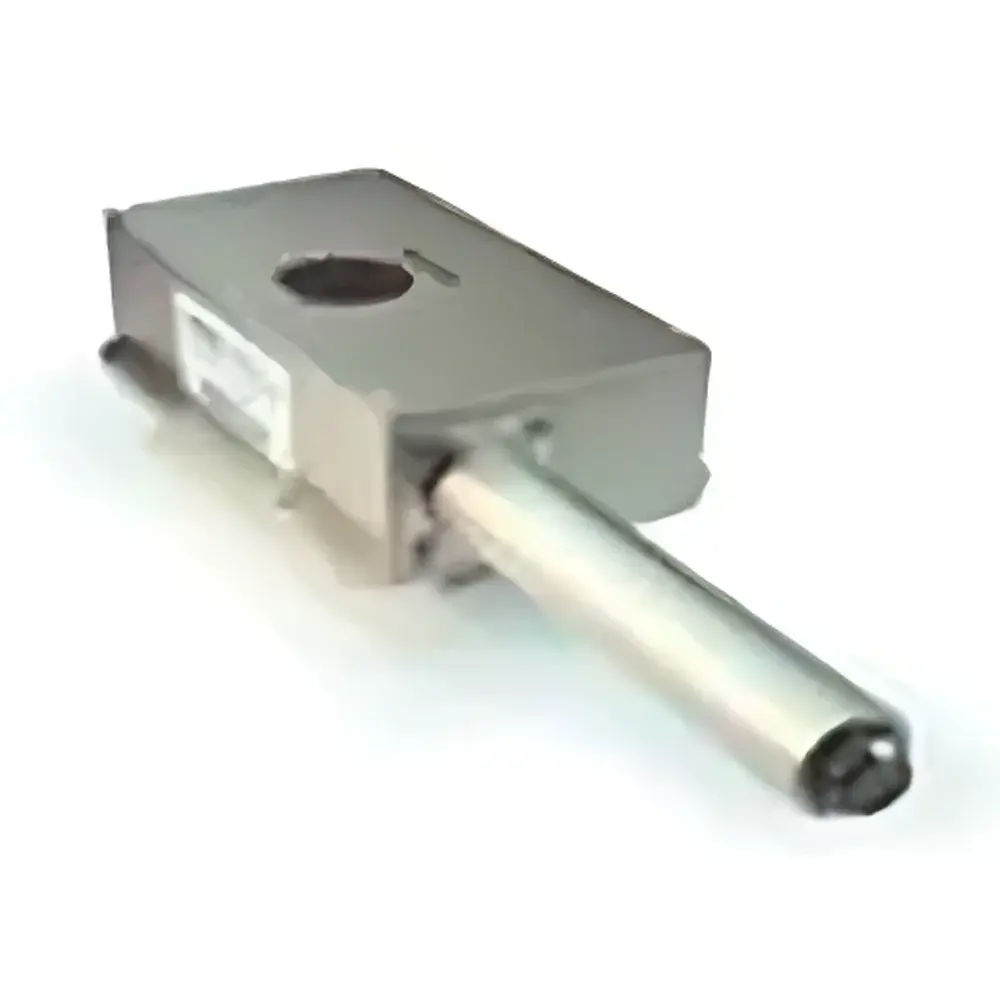
KETEK AXAS-A Series Silicon Drift Detector (SDD) Module
| Brand | KETEK |
|---|---|
| Origin | Germany |
| Model | AXAS-A |
| Detector Type | Integrated SDD with Pulse Reset Preamp |
| Power Supply | ±12 V DC |
| FWHM (Mn Kα) | ≤133 eV (Premium Class) / ≤149 eV (Standard Class) |
| Finger Length Options | 50, 100 (standard), 160, 200, 300 mm |
| Upper Energy Limit | 20 keV (H7, H20, H30) or 30 keV (H50) |
| Low-Energy Window Options | H7LE*, H15LE* (with FWHM ≤136 eV & ≤144 eV) |
| Cooling | Integrated thermoelectric (Peltier) control |
| High-Count-Rate Capability | Enabled via pulse reset front-end architecture |
| Compliance | Designed for ASTM E1301, ISO 21389, and IEC 62596-compliant XRF and EPMA systems |
Overview
The KETEK AXAS-A Series Silicon Drift Detector (SDD) Module is a high-performance, fully integrated X-ray detection solution engineered for demanding energy-dispersive X-ray spectroscopy (EDS/EDX) applications in laboratory-based X-ray fluorescence (XRF), electron probe microanalysis (EPMA), and spaceborne instrumentation. Built upon KETEK’s legacy as the world’s first commercial manufacturer of silicon drift detectors, the AXAS-A leverages a proprietary pulse-reset preamplifier architecture to achieve stable, high-fidelity spectral acquisition at count rates exceeding 500,000 counts per second (cps) without significant resolution degradation. Its monolithic design integrates high-voltage bias generation, precision thermoelectric cooling control, and low-noise signal conditioning into a single compact housing—requiring only a dual ±12 V DC power supply for full operational readiness. The detector operates at stabilized temperatures typically between −20 °C and −30 °C, ensuring long-term energy resolution stability and minimal spectral drift over extended acquisition periods.
Key Features
- Ultra-low energy resolution: Guaranteed FWHM ≤133 eV at Mn Kα (5.895 keV) for Premium Class configurations; ≤149 eV for Standard Class—validated per ISO 11348-3 traceable test protocols.
- Modular finger-length customization: Standard 100 mm active depth with optional 50, 160, 200, and 300 mm variants to optimize solid-angle efficiency and absorption depth for specific X-ray energy ranges (e.g., light-element sensitivity vs. high-energy transmission).
- Low-energy window options: H7LE* and H15LE* configurations support enhanced detection of ultra-light elements (B, C, N, O, F) with guaranteed FWHM ≤136 eV and ≤144 eV respectively—critical for compliant ASTM E1508 and ISO 22081 analysis workflows.
- Integrated electronics: On-board high-voltage generator (up to −200 V), closed-loop Peltier temperature controller, and digital status monitoring eliminate external bias supplies and chillers—reducing system footprint and integration complexity.
- Proven space heritage: Flight-qualified variants have operated continuously aboard NASA Mars rovers since 2012 (Curiosity, Perseverance), delivering >99.7% uptime and maintaining calibration stability under extreme thermal cycling and radiation exposure.
Sample Compatibility & Compliance
The AXAS-A is compatible with standard SEM/TEM column interfaces (e.g., Oxford Instruments, Bruker QUANTAX, EDAX TEAM), benchtop XRF spectrometers (e.g., Rigaku ZSX Primus, PANalytical Epsilon), and custom-built synchrotron beamline end-stations. It supports vacuum, He-purged, and air-path configurations depending on window selection. All models comply with IEC 62596:2020 (radiation protection for analytical X-ray equipment), meet electromagnetic compatibility requirements per EN 61326-1, and are designed to facilitate GLP/GMP audit readiness through deterministic firmware behavior and non-volatile configuration logging. Optional firmware upgrades enable 21 CFR Part 11–compliant electronic signatures and audit trails when deployed in regulated pharmaceutical or materials certification labs.
Software & Data Management
The AXAS-A communicates via industry-standard USB 2.0 or LVDS interfaces, supporting native integration with major spectral acquisition platforms including DTSA-II, AZtec, and custom LabVIEW or Python-based DAQ frameworks. KETEK provides open-source SDKs (C/C++, Python bindings) with documented register-level control for advanced users requiring real-time pulse processing, dead-time correction, or adaptive gain switching. Spectral data is output in standard .spe (Princeton/Canberra) and .edf (ESRF) formats, enabling seamless import into quantification engines such as PyMCA, QXAS, or NIST’s DTSA-II. Firmware updates preserve spectral calibration coefficients and retain user-defined ROI definitions across revisions.
Applications
- High-resolution elemental mapping in geological thin sections and metallurgical cross-sections.
- Light-element quantification (Z < 11) in battery cathode materials, catalysts, and polymer composites.
- In-line process monitoring in semiconductor wafer fab environments using compact XRF modules.
- Field-deployable handheld XRF analyzers requiring radiation-hardened, low-power detectors.
- Space instrumentation development where mass, power, and reliability constraints exceed terrestrial specifications.
FAQ
What is the typical energy resolution specification for the AXAS-A at Mn Kα, and how is it verified?
Guaranteed FWHM ≤133 eV (Premium Class) or ≤149 eV (Standard Class) measured under standardized conditions: −25 °C detector temperature, 100 kcps input rate, 5.895 keV Mn Kα line, and 1 µs shaping time—per ISO 11348-3 Annex B.
Can the AXAS-A be operated without external cooling water or liquid nitrogen?
Yes. The integrated two-stage Peltier cooler maintains optimal operating temperature using only ±12 V DC power; no auxiliary chillers or cryogens are required.
Is the detector suitable for ultra-high vacuum (UHV) environments?
Yes. The AXAS-A housing is rated for UHV (≤1×10⁻⁹ mbar) and features all-metal, bakeable construction with ConFlat flange options.
How does the pulse-reset preamplifier improve performance at high count rates?
It eliminates ballistic deficit and pulse pile-up distortion by actively resetting the feedback node after each event—enabling linear response up to 80% of the theoretical maximum throughput for the given detector area and capacitance.
Does KETEK provide calibration certificates traceable to national standards?
Yes. Each unit ships with a factory calibration report referencing NIST-traceable radioactive sources (⁵⁵Fe, ¹⁰⁹Cd, ²⁴¹Am) and includes uncertainty budgets compliant with ISO/IEC 17025.




