
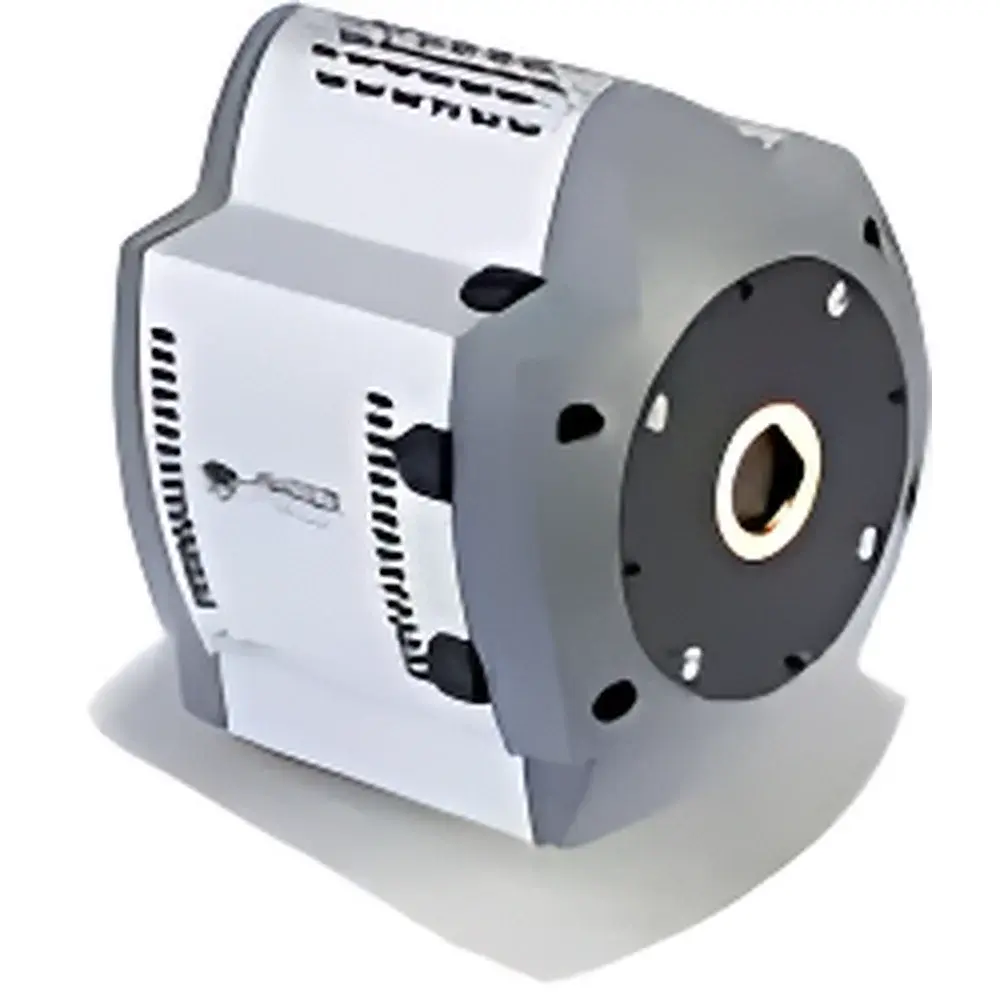
Andor iXon+ DU897 EMCCD Camera
| Brand | Andor |
|---|---|
| Origin | United Kingdom |
| Model | iXon+ DU897 |
| Sensor Type | Back-illuminated Frame Transfer CCD (512 × 512 pixels) |
| Cooling | Thermoelectric to –100 °C |
| Quantum Efficiency | >90% at peak wavelength |
| Readout Speed | Up to 10 MHz |
| Output Modes | EM Amplifier and Conventional CCD Amplifier |
| Vacuum Enclosure | UltraVac™ |
| Gain Control | RealGain™ (linear, quantitative EM gain calibration) |
| CIC Suppression | Minimal Clock-Induced Charge |
| Dynamic Range | High dynamic range readout |
| Baseline Stability | Enhanced Baseline Clamp |
| Calibration | EMCAL™ EM gain self-calibration |
| Operating Mode | Cropped Sensor Mode for sub-millisecond temporal resolution |
| Mounting Interface | C-mount compatible (shutter optional) |
Overview
The Andor iXon+ DU897 is a high-performance electron-multiplying charge-coupled device (EMCCD) camera engineered for quantitative, low-light scientific imaging. Based on a back-illuminated, frame-transfer architecture with a 512 × 512 pixel sensor, it delivers single-photon sensitivity without compromising spatial fidelity or temporal stability. Its operation relies on on-chip electron multiplication—achieved via a specialized serial register operated under high-voltage bias—to amplify weak photoelectron signals above the read noise floor of the output amplifier. This enables photon-starved applications—including live-cell fluorescence microscopy, single-molecule tracking, adaptive optics wavefront sensing, and faint-object astronomical imaging—to achieve signal-to-noise ratios unattainable with conventional CCDs or sCMOS sensors. The DU897’s deep thermoelectric cooling (–100 °C), ultra-stable vacuum enclosure (UltraVac™), and optimized clocking design collectively suppress dark current, clock-induced charge (CIC), and baseline drift—critical prerequisites for reproducible quantitative intensity measurements across extended exposures.
Key Features
- RealGain™ Technology: Provides linear, calibrated, and repeatable EM gain control—enabling absolute photon counting and quantitative intensity mapping without empirical gain lookup tables.
- Ultra-low Noise Architecture: Thermoelectric cooling to –100 °C reduces dark current to <0.0001 e⁻/pix/s; UltraVac™ vacuum sealing ensures long-term thermal and vacuum stability for consistent performance over years of operation.
- High Quantum Efficiency: Back-illuminated sensor achieves >90% peak QE in the visible to near-UV range (300–700 nm), maximizing photon capture efficiency for dim fluorophores and weak emission sources.
- Dual Readout Pathways: Simultaneous access to both EM-amplified and conventional (non-amplified) outputs permits direct comparison, gain validation, and flexible experimental design—e.g., using conventional mode for bright-field reference frames and EM mode for low-signal channels.
- Cropped Sensor Mode: Enables sub-millisecond image acquisition rates (up to hundreds of frames per second) by reading only a region-of-interest—ideal for kinetic studies such as calcium spark dynamics or rapid membrane potential changes.
- EMCAL™ Self-Calibration: Onboard firmware allows users to perform full EM gain calibration in situ, correcting for temperature-, voltage-, and aging-related gain drift—essential for longitudinal experiments and regulatory-compliant workflows.
Sample Compatibility & Compliance
The iXon+ DU897 integrates seamlessly with major inverted and upright microscope platforms (Nikon Ti, Olympus IX, Zeiss Axio series) via standard C-mount or optional adapter kits. Its compact form factor and low-power consumption support integration into enclosed environmental chambers and multi-modal setups (e.g., combined with TIRF, STORM, or light-sheet configurations). The camera complies with CE, RoHS, and FCC electromagnetic compatibility directives. For regulated environments—including GLP/GMP laboratories and clinical research facilities—the system supports audit-trail-enabled software logging (via Andor Solis or SDK-integrated custom applications), time-stamped metadata embedding, and user-access controls aligned with FDA 21 CFR Part 11 requirements when deployed with validated acquisition protocols.
Software & Data Management
Andor Solis v4.x provides intuitive, scriptable control of all hardware parameters—including EM gain, exposure time, ROI definition, cooling setpoint, and shutter timing—with real-time histogram analysis, live contrast stretching, and multi-channel overlay. The SDK (available for C++, Python, MATLAB, and LabVIEW) enables full automation within custom analysis pipelines and third-party platforms (e.g., Micro-Manager, ImageJ/Fiji, and Napari). All acquired images embed standardized FITS or TIFF metadata (including gain setting, temperature, exposure, and calibration flags), ensuring traceability and interoperability with FAIR data principles. Raw data export supports 16-bit and 32-bit floating-point formats to preserve dynamic range and enable downstream deconvolution or machine-learning preprocessing.
Applications
- Live-cell super-resolution microscopy (PALM/STORM)
- Single-molecule fluorescence colocalization and dwell-time analysis
- Astronomical lucky imaging and exoplanet detection
- Time-resolved spectroscopy and phosphorescence lifetime mapping
- Quantitative FRET and FLIM in primary neuronal cultures
- Low-light bioluminescence imaging (e.g., luciferase reporter assays)
- Quantum optics experiments requiring photon-number-resolving detection
FAQ
What is the typical EM gain stability over a 24-hour acquisition?
With UltraVac™ and RealGain™ active feedback, gain drift remains within ±1.5% over 24 hours at –90 °C, assuming stable ambient conditions and factory calibration.
Can the DU897 be used for quantitative intensity measurements in regulated environments?
Yes—when paired with Solis’ audit-trail logging, user authentication, and EMCAL™-verified gain values, it meets core technical requirements for GLP and 21 CFR Part 11 compliance.
Is C-mount the only mechanical interface option?
No—C-mount is standard; F-mount, M42, and microscope-specific adapters (e.g., Nikon QI, Zeiss ICS) are available as accessories.
How does Cropped Sensor Mode affect full-well capacity and linearity?
Cropping preserves per-pixel full-well depth and maintains linearity across the selected ROI; however, total system dynamic range scales with the number of active pixels read out.
Does the camera support hardware-triggered synchronization with external devices?
Yes—it accepts TTL-level start/stop and frame-sync triggers, and provides programmable output strobes for synchronized laser pulsing or stage motion.



