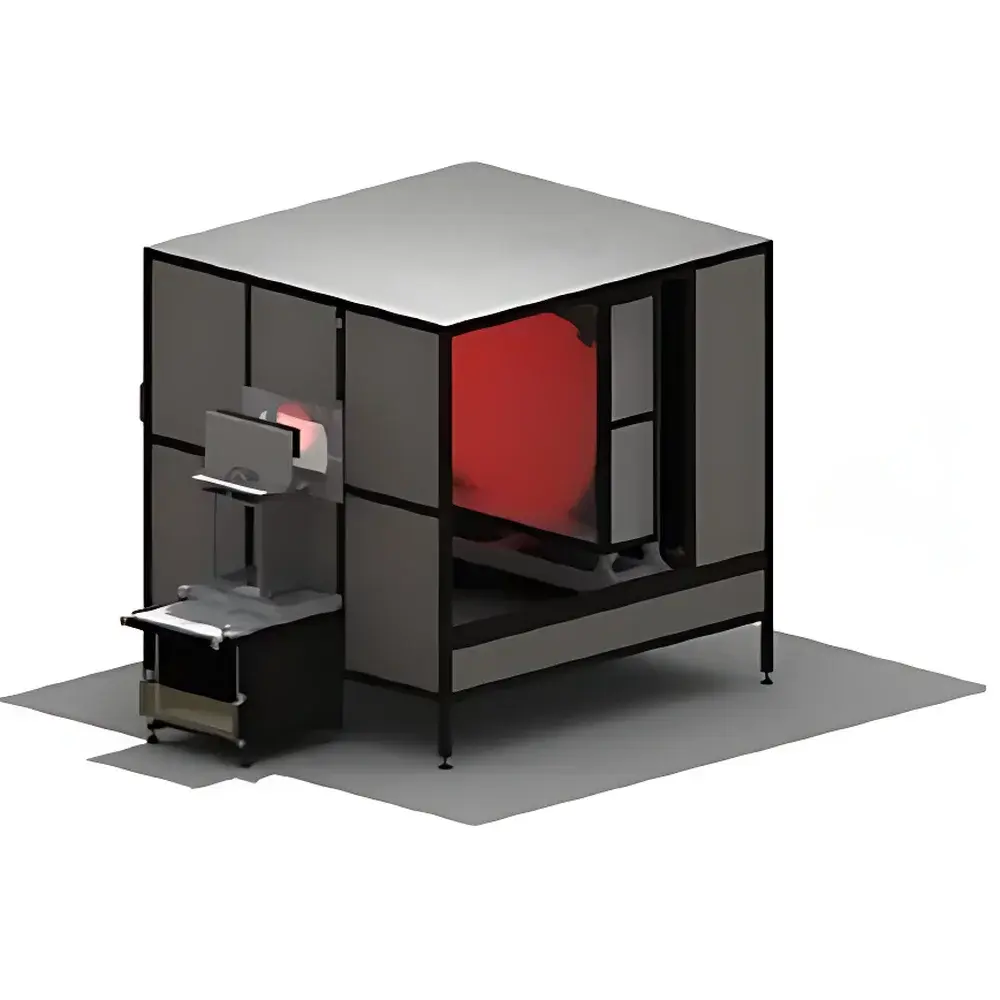
Pleiades MES Series Multi-Unit Automotive Headlamp and Signal Lamp Photometric Testing System
| Brand | Pleiades |
|---|---|
| Origin | France |
| Model | MES |
| Configuration Options | MES_S_31MR (Signal Lamps), MES_L_128MRV (Headlamps), MES_SP (Entry-Level Signal Lamp), MES_LP (Entry-Level Headlamp) |
| Integrated Light-Tight Enclosure | Yes |
| Compliance Standards | SAE J575 / J1383, ECE R112 / R149 / R7, GB 4599 / GB 23255 / GB 15766, JIS D5501 / D5002 |
| Measurement Distance Reduction | From 25 m to <2 m via Precision Aspheric Lens Array |
| Detector Architecture | Multi-Zone Photometric Sensor Unit (MR/MRV Series) |
| Application Scope | In-Line Production Verification, Type Approval Pre-Testing, R&D Photometric Characterization |
Overview
The Pleiades MES Series Multi-Unit Automotive Headlamp and Signal Lamp Photometric Testing System is an engineered solution for high-throughput, standards-compliant photometric evaluation of automotive lighting systems—designed specifically to overcome the spatial, temporal, and economic constraints inherent in conventional far-field goniophotometric measurement. Unlike traditional setups requiring 25-meter optical paths and dedicated darkrooms, the MES system employs a proprietary aspheric lens array that optically compresses the measurement geometry, enabling full-field luminous intensity distribution (LID) acquisition at an effective distance of less than 2 meters. This optical transformation preserves photometric traceability while eliminating dependence on large-scale infrastructure. The system operates on the principle of near-field imaging photometry: high-resolution detector arrays capture spatially resolved irradiance data across the entire lamp aperture, which is then mathematically transformed—via calibrated point-spread function (PSF) deconvolution and angular mapping algorithms—into far-field candela distributions compliant with international regulatory frameworks.
Key Features
- Integrated light-tight enclosure: Eliminates need for external darkroom construction; meets ISO 17025 environmental control requirements for photometric stability (temperature ±1°C, humidity <65% RH).
- Multi-unit modular architecture: Configurable detector modules support concurrent testing of multiple lamp units or sequential validation of different lamp types without mechanical repositioning.
- Standards-driven calibration workflow: Factory-traceable calibration against NIST-traceable reference lamps; supports periodic verification per ISO/IEC 17025 Clause 6.6 and ASTM E2912.
- Dual-platform hardware variants: MES_S_31MR optimized for signal lamps (stop, turn, tail, rear fog) per ECE R7 and SAE J575; MES_L_128MRV engineered for complex headlamp beam patterns including ADB, matrix LED, and adaptive driving beams per ECE R149 and SAE J2555.
- Entry-level production variants: MES_SP and MES_LP provide cost-optimized configurations for 100% in-line photometric pass/fail screening—retaining core optical fidelity while streamlining UI and data export protocols.
Sample Compatibility & Compliance
The MES platform accommodates all OEM-relevant lamp form factors—including halogen, HID, LED, and laser-based modules—with mechanical adaptability for mounting interfaces per ISO 14520-12 and SAE J1757-1. Each configuration undergoes pre-validation against regulatory test points defined in ECE Regulation 112 Annex 3 (headlamps) and Annex 4 (signal lamps), SAE J1383 Table III, and China’s GB 4599–2007 Annex C. System software embeds real-time pass/fail logic aligned with luminous intensity tolerances (±15% for ECE, ±20% for SAE), beam cutoff angle verification, and chromaticity checks per CIE 1931 xy coordinates. Full audit trails comply with GLP and GMP documentation requirements, including electronic signatures per FDA 21 CFR Part 11.
Software & Data Management
Pleiades MES Control Suite provides a deterministic, deterministic Windows-based interface supporting automated test sequencing, multi-standard switching, and export of standardized reports (PDF, XML, CSV). All raw sensor data is stored with metadata tags including lamp ID, operator, timestamp, ambient conditions, and calibration certificate ID. Version-controlled firmware ensures backward compatibility with historical datasets. Data integrity safeguards include SHA-256 hashing of measurement files and configurable retention policies aligned with IATF 16949 Clause 8.5.2. Remote diagnostics and over-the-air firmware updates are supported via TLS 1.3–secured Ethernet connection.
Applications
- Pre-certification testing for ECE, SAE, GB, and JIS type approval submissions—reducing third-party lab dependency by up to 70% in early development cycles.
- In-line photometric gate at final assembly: MES_SP/LP variants perform cycle times under 45 seconds per lamp unit with repeatability better than ±2.5% (k=2) across 1,000 consecutive measurements.
- R&D beam pattern optimization: High-density angular sampling (0.05° resolution in horizontal, 0.1° vertical) enables detailed analysis of glare zones, cut-off sharpness, and adaptive zone transitions.
- Supplier quality assurance: Standardized test templates allow tier-1 suppliers to generate auditable reports accepted directly by OEM engineering centers without retesting.
- Regulatory change response: Rapid reconfiguration for emerging standards such as UN R159 (ADB) and GB 43035–2023 (intelligent lighting systems) via software license update.
FAQ
Does the MES system eliminate the need for third-party certification labs?
No—it does not replace official type approval testing but significantly reduces reliance on external labs by enabling full internal pre-compliance verification. Final certification still requires accredited laboratory testing per ISO/IEC 17025.
Can MES validate adaptive driving beam (ADB) systems?
Yes—MES_L_128MRV supports dynamic ADB validation via synchronized trigger input and frame-locked acquisition, capturing individual pixel-level intensity changes during programmed beam modulation sequences.
Is calibration required before each test run?
No—system-level calibration is performed annually per ISO 17025; daily verification uses built-in reference LEDs with documented drift compensation algorithms.
What is the minimum lamp size the system can accommodate?
The standard stage supports lamps from 80 mm × 50 mm (e.g., side marker) up to 320 mm × 180 mm (full-width LED headlamp), with optional custom fixtures available.
How is measurement uncertainty quantified?
Total expanded uncertainty (k=2) is ≤ ±3.8% for peak intensity, ≤ ±0.15° for cutoff angle, and ≤ ±0.003 Δu’v’ for chromaticity—validated per ISO/IEC Guide 98-3 (GUM) and reported in every test certificate.