
LabFlicker Handheld Flicker Analyzer
| Origin | Denmark |
|---|---|
| Manufacturer Type | Authorized Distributor |
| Origin Category | Imported |
| Model | LabFlicker |
| Dimensions (L × W × H) | 115 × 53 × 13 mm |
| Weight | 0.16 kg |
| Shipping Dimensions (L × W × H) | 170 × 130 × 70 mm |
| Shipping Weight | 0.5 kg |
| Warranty | 2 years |
| Software Integration | Light Inspector (Viso Systems) |
| Output Metrics | Flicker Percentage, Flicker Index, Flicker Frequency, SVM (Stroboscopic Visibility Measure), PstLM (Short-Term Flicker Indicator per IEC TR 61547-1), JA8 §24 Compliance Data |
| Data Export | CSV & Excel-compatible arrays |
| Real-time Signal Processing | Onboard intelligent algorithm engine |
Overview
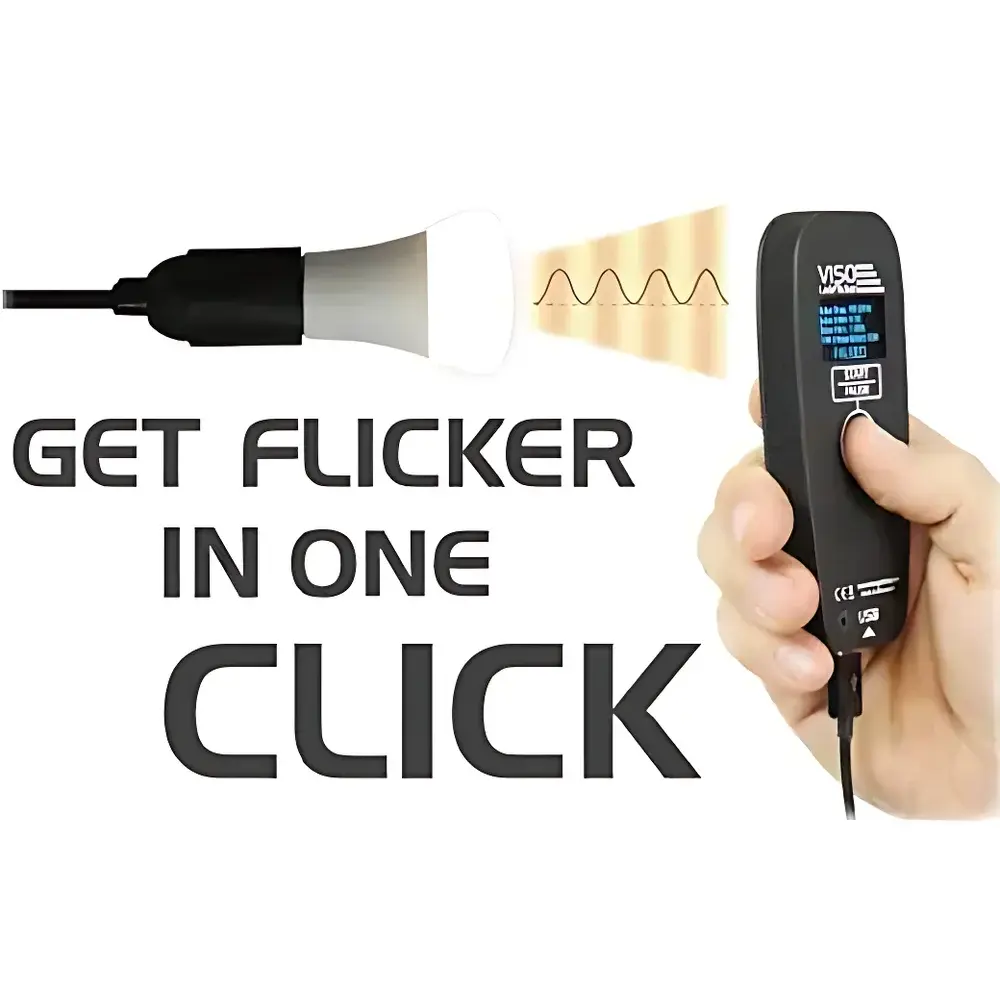
The LabFlicker Handheld Flicker Analyzer is a precision-engineered optical measurement instrument designed for quantitative assessment of temporal light modulation (TLM) in lighting products and light sources. Built upon photometric sampling principles compliant with IEC TR 61547-1, CIE TN 006:2016, and ENERGY STAR Lamps V2.1 requirements, the LabFlicker captures high-speed irradiance waveforms using a calibrated silicon photodiode sensor with cosine-corrected angular response. Its core function is to characterize flicker behavior across both time-domain (e.g., waveform shape, peak-to-trough ratio) and frequency-domain representations, enabling rigorous evaluation of human-perceivable stroboscopic effects and long-term visual discomfort risks. Unlike generic light meters, the LabFlicker implements real-time digital signal processing firmware optimized for flicker-specific metrics—including SVM and PstLM—ensuring traceable, repeatable results aligned with international photobiological safety and energy efficiency standards.
Key Features
- Compact handheld form factor (115 × 53 × 13 mm; 0.16 kg) engineered for lab bench deployment and on-site source proximity measurements
- Integrated photodiode sensor with NIST-traceable spectral responsivity (380–780 nm) and f1′ < 3% compliance per CIE S 023/E:2013
- Real-time onboard computation of IEC-defined flicker parameters: Flicker Percentage (%), Flicker Index, Fundamental Flicker Frequency, SVM, and PstLM
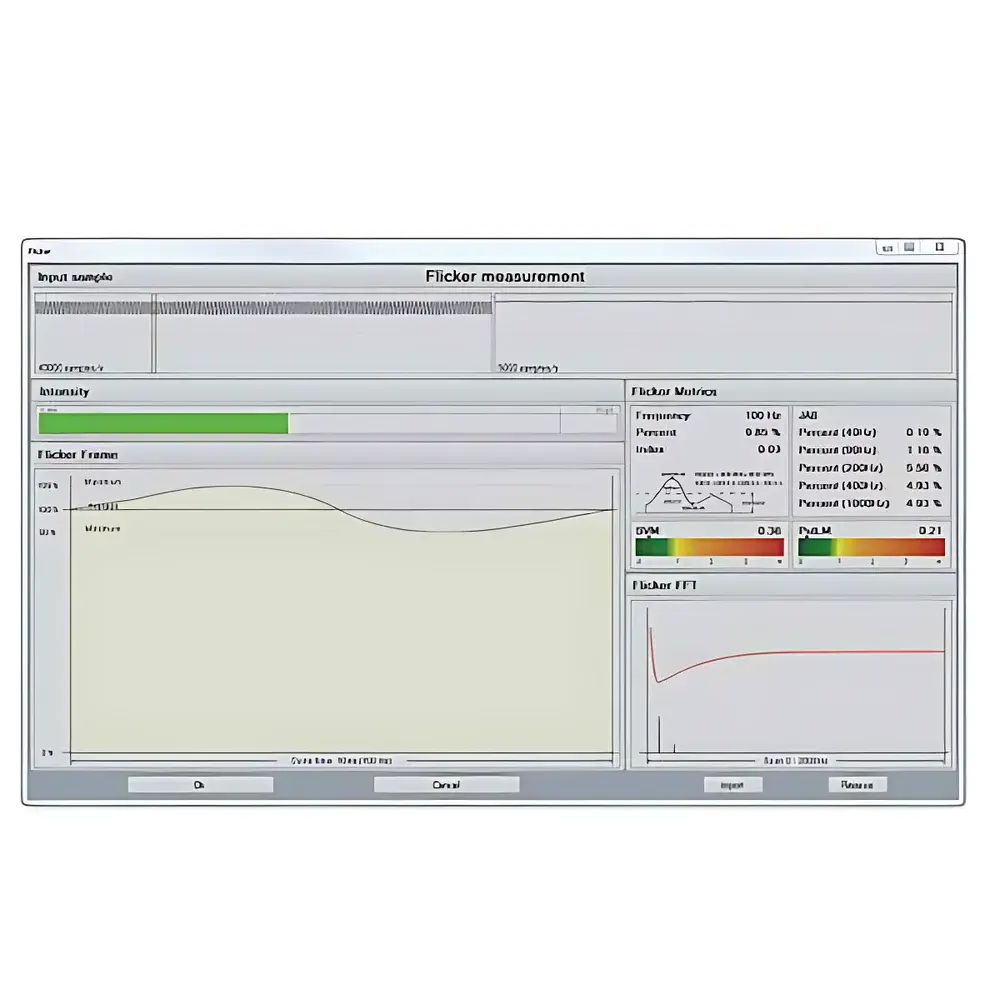
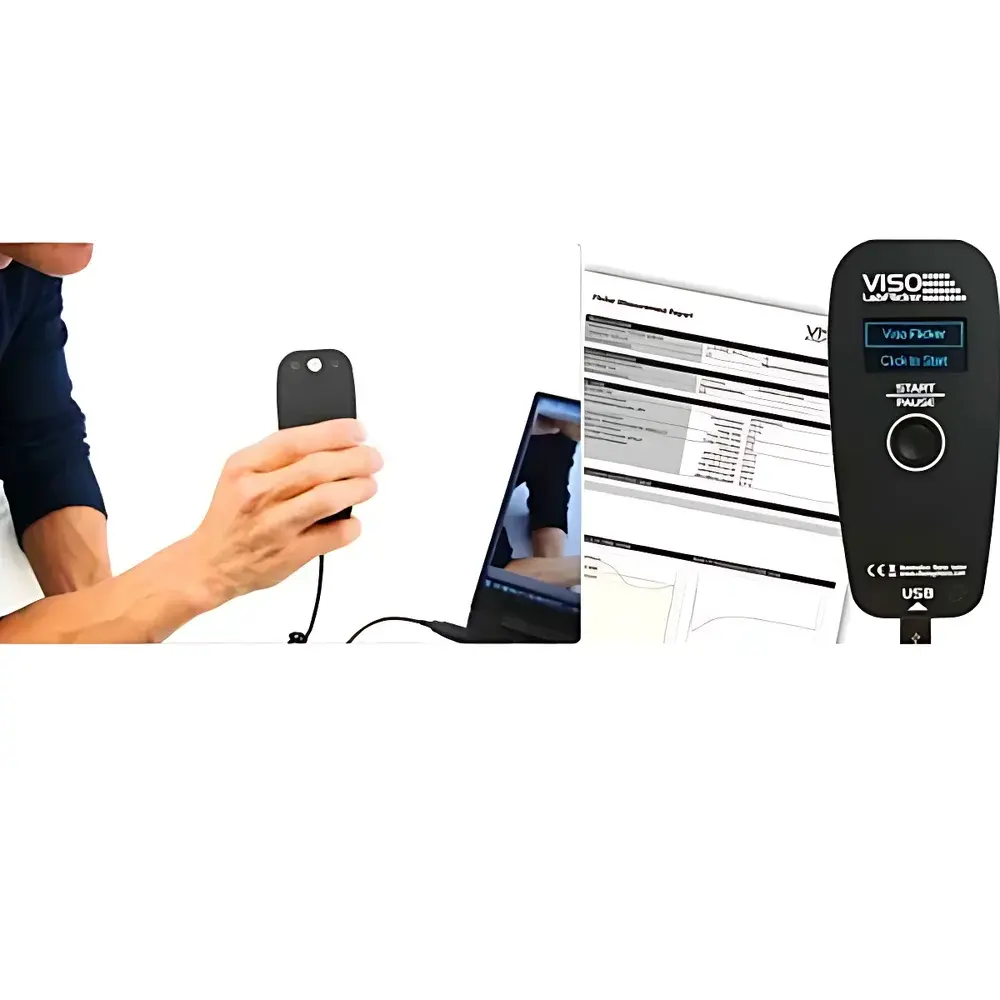
- Direct USB-C connectivity to Windows-based PCs running Light Inspector software (v5.0 or later) for live waveform visualization and synchronized metric display
- Export-ready data output in CSV format compatible with Microsoft Excel, MATLAB, and statistical analysis platforms for post-processing and archival
- Self-contained operation mode: functions independently without external hardware; full functionality unlocked when paired with Viso goniophotometers or spectroradiometers for integrated photometric reporting
Sample Compatibility & Compliance
The LabFlicker supports measurement of all common electrically powered light sources—including LED modules, OLED panels, fluorescent tubes, HID lamps, and smart lighting systems—under steady-state and dimmed operating conditions. It meets the photometric sampling requirements specified in IEC TR 62778 (Assessment of Blue Light Hazard) and IEC 63158 (LED Lamp Flicker Test Methods). For regulatory reporting, it generates JA8 §24-compliant flicker data required by California Title 24 Part 6 and DLC Qualified Products List (QPL) submissions. All internal calibration constants are stored in non-volatile memory and remain stable over the 2-year warranty period under ISO/IEC 17025-aligned environmental conditions (23 ± 2°C, 50 ± 10% RH).
Software & Data Management
Light Inspector software serves as the primary interface for LabFlicker operation, providing real-time oscilloscope-style waveform rendering, automatic peak detection, and dual-domain (time/frequency) FFT analysis. The software implements audit-trail logging per FDA 21 CFR Part 11 guidelines when configured in validated laboratory environments, recording user actions, timestamped measurements, and firmware revision metadata. Raw sampled data (≥20 kS/s acquisition rate) is buffered internally and streamed losslessly during active capture. Exported datasets include header metadata specifying integration time, exposure settings, and sensor gain—enabling full metrological traceability in GLP/GMP-compliant quality documentation workflows.
Applications
- LED driver design validation and flicker mitigation R&D
- Quality control testing of luminaires prior to ENERGY STAR, DLC, or CE marking
- Photobiological safety assessments per IEC 62471 and IEC/TR 63164
- Academic research on visual fatigue, photosensitive epilepsy thresholds, and circadian rhythm disruption
- Field verification of retrofit lighting installations against municipal lighting ordinances
- Third-party test lab accreditation support for ISO/IEC 17025 scope expansion in temporal light artifact testing
FAQ
Does the LabFlicker require annual recalibration?
No scheduled recalibration is mandated within the 2-year warranty period; however, users may perform optional verification using a stable reference lamp per ISO/IEC 17025 Annex A.3.
Can LabFlicker measure pulsed or PWM-driven light sources?
Yes—it resolves modulation frequencies up to 2 kHz with ≥100 dB dynamic range, supporting duty-cycle analysis of digitally controlled drivers.
Is Light Inspector software included with purchase?
Yes, a perpetual license for Light Inspector v5.x is bundled; updates are available via Viso Systems’ secure customer portal.
What is the minimum measurable flicker frequency?
The system achieves reliable detection down to 0.1 Hz with configurable averaging windows, suitable for evaluating low-frequency thermal drift artifacts.
How does LabFlicker ensure measurement reproducibility across operators?
Through fixed geometry mounting options, automated gain stabilization, and software-enforced measurement protocols that eliminate subjective positioning variables.
Related Products





