
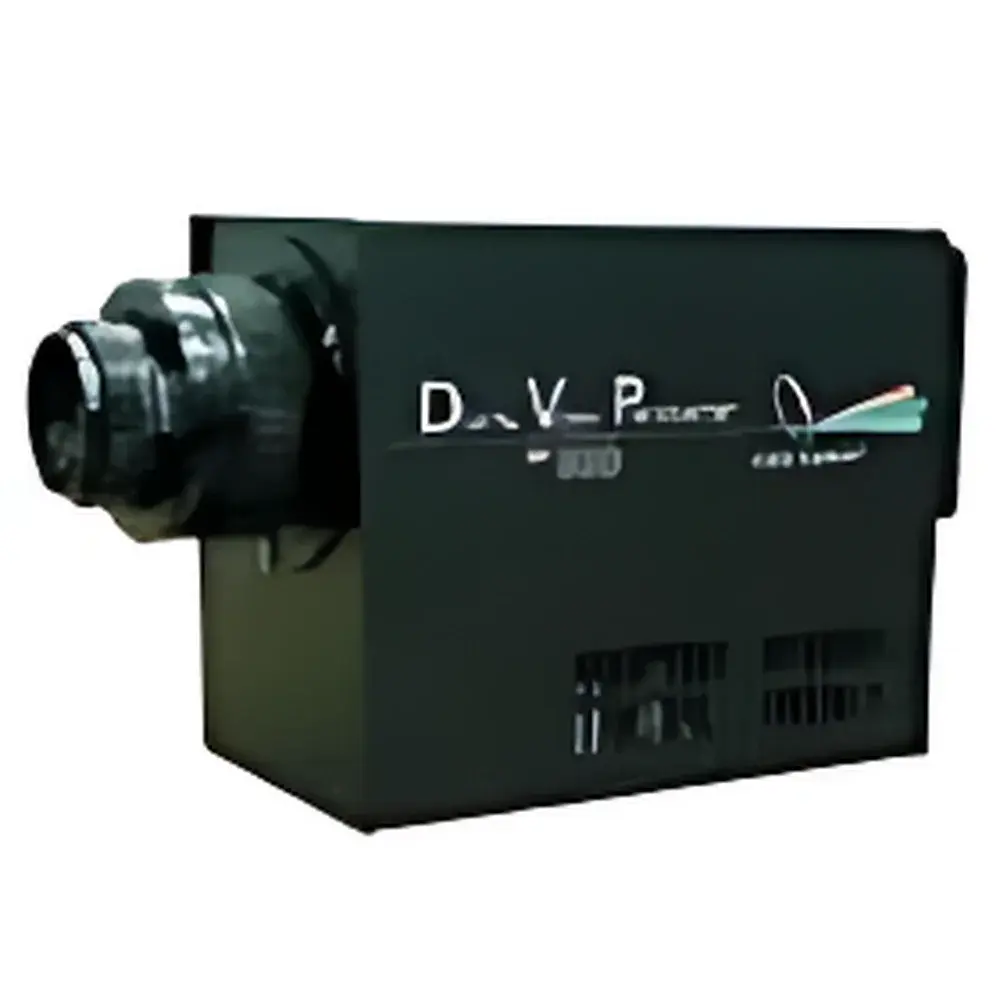
Photo Research PR-920 Digital Imaging Photometer
| Brand | Photo Research |
|---|---|
| Origin | USA |
| Model | PR-920 |
| Type | Automated Imaging Photometer |
| Luminance Range | Not specified in input |
| Chromaticity Accuracy | Enabled by CIE 1931 Standard Observer-matched filter set |
| Spatial Resolution | 1024 × 1024 pixel cooled CCD array |
| Measurement Capabilities | Luminance, Chromaticity, Luminance Uniformity, Emitter Shape & Distortion, Convergence, MTF (Modulation Transfer Function) |
| Optional Accessory | Motorized 5-axis translation stage for automated spatial scanning |
| Compliance | Designed to support ISO/CIE-compliant photometric and colorimetric measurement workflows |
| Repeatability | High repeatability for luminance and chromaticity (exact values not provided in source data) |
Overview
The Photo Research PR-920 Digital Imaging Photometer is a high-precision, scientific-grade imaging radiometric instrument engineered for two-dimensional spatial characterization of light-emitting devices and surfaces. Unlike conventional spot photometers or integrating sphere-based systems, the PR-920 employs a thermoelectrically cooled 1024 × 1024 pixel CCD sensor array coupled with a CIE 1931 standard observer-matched optical filter set. This architecture enables simultaneous acquisition of absolute luminance (cd/m²), chromaticity coordinates (CIE x, y or u′, v′), and spatial intensity distribution across an entire field of view—without mechanical scanning or interpolation. The system operates on fundamental principles of photometry and colorimetry, where spectral responsivity is calibrated against NIST-traceable standards to ensure metrological integrity. Its design targets applications requiring quantitative mapping of emissive non-uniformity, geometric distortion, and optical transfer function behavior—particularly in R&D labs and production QA environments evaluating OLED microdisplays, automotive lighting modules, AR/VR waveguides, and backlight units.
Key Features
- Thermoelectrically cooled 1024 × 1024 scientific CCD sensor for low-noise, high-dynamic-range imaging photometry
- Integrated CIE 1931 photopic and color-matching filter assembly enabling traceable luminance and chromaticity measurement per CIE S 002:2022 and ISO/CIE 11664 series standards
- Full-frame spatial analysis: direct capture of luminance uniformity, hotspot detection, shape fidelity, and convergence metrics
- Modulation Transfer Function (MTF) evaluation capability via slanted-edge or bar-target analysis, supporting ISO 12233-derived methodologies
- Optional motorized 5-axis precision translation stage (X/Y/Z + tip/tilt) for programmable area scanning, focus stacking, and multi-position registration
- Real-time image preview, region-of-interest (ROI) definition, and statistical reporting (min/max/mean/std dev) per selected metric
Sample Compatibility & Compliance
The PR-920 accommodates planar and mildly curved emissive samples ranging from microLED arrays (<1 mm²) to large-area displays (up to 500 mm diagonal, depending on lens configuration). It supports both DC-steady-state and pulsed emission measurements with user-defined integration times. All photometric outputs are traceable to NIST reference standards and comply with core requirements of IEC 62341-6-3 (OLED measurements), ISO 9241-307 (display ergonomics), and ASTM E308 (computing color using CIE system). The instrument’s firmware and data export protocols facilitate alignment with GLP and GMP documentation workflows, including timestamped metadata, operator ID logging, and audit-ready CSV/TIFF output formats.
Software & Data Management
Controlled via Photo Research’s proprietary SpectraWin software, the PR-920 provides a deterministic, scriptable interface for measurement automation, calibration management, and report generation. SpectraWin supports custom measurement sequences—including multi-point uniformity grids, time-series luminance decay tracking, and comparative spectral-radiometric overlays. Data files retain full EXIF-like metadata (exposure, gain, filter state, lens ID, calibration date) and are exportable in vendor-neutral formats (CSV, TIFF, HDF5) compatible with MATLAB, Python (NumPy/PIL), and JMP for downstream statistical process control (SPC) or machine learning preprocessing. Software validation documentation is available upon request to support FDA 21 CFR Part 11 compliance in regulated manufacturing settings.
Applications
- Quantitative assessment of OLED, MicroLED, and MiniLED display uniformity, mura detection, and aging-induced luminance drift
- Automotive headlamp beam pattern validation per ECE R112 and SAE J1383
- AR/VR near-eye display modulation transfer function (MTF) and point-spread function (PSF) characterization
- Backlight unit (BLU) hot-spot analysis and diffuser performance evaluation
- LED package binning based on spatial chromaticity variation and centroid shift
- Research into human visual system response modeling using high-fidelity luminance maps
FAQ
What calibration standards does the PR-920 reference?
The PR-920 is factory-calibrated using NIST-traceable luminance and chromaticity standards; users may perform routine verification with optional PR-2000 calibration sources.
Can the PR-920 measure pulsed or PWM-driven emitters?
Yes—integration time is fully adjustable (1 ms to 10 s), enabling synchronization with external triggers for accurate duty-cycle-resolved luminance and chromaticity capture.
Is spectral power distribution (SPD) measurement supported?
No—the PR-920 is a filtered broadband photometer, not a spectroradiometer; it reports CIE-compliant tristimulus values but does not resolve spectral data.
How is geometric distortion corrected during imaging?
A one-time lens distortion map can be applied within SpectraWin using checkerboard or dot-grid calibration targets, ensuring sub-pixel spatial fidelity for shape and MTF analysis.
Does the system support automated pass/fail grading against user-defined uniformity thresholds?
Yes—custom tolerance masks and statistical limits (e.g., Δu′v′ 85%) can be embedded in measurement scripts for inline QA decision logic.




