
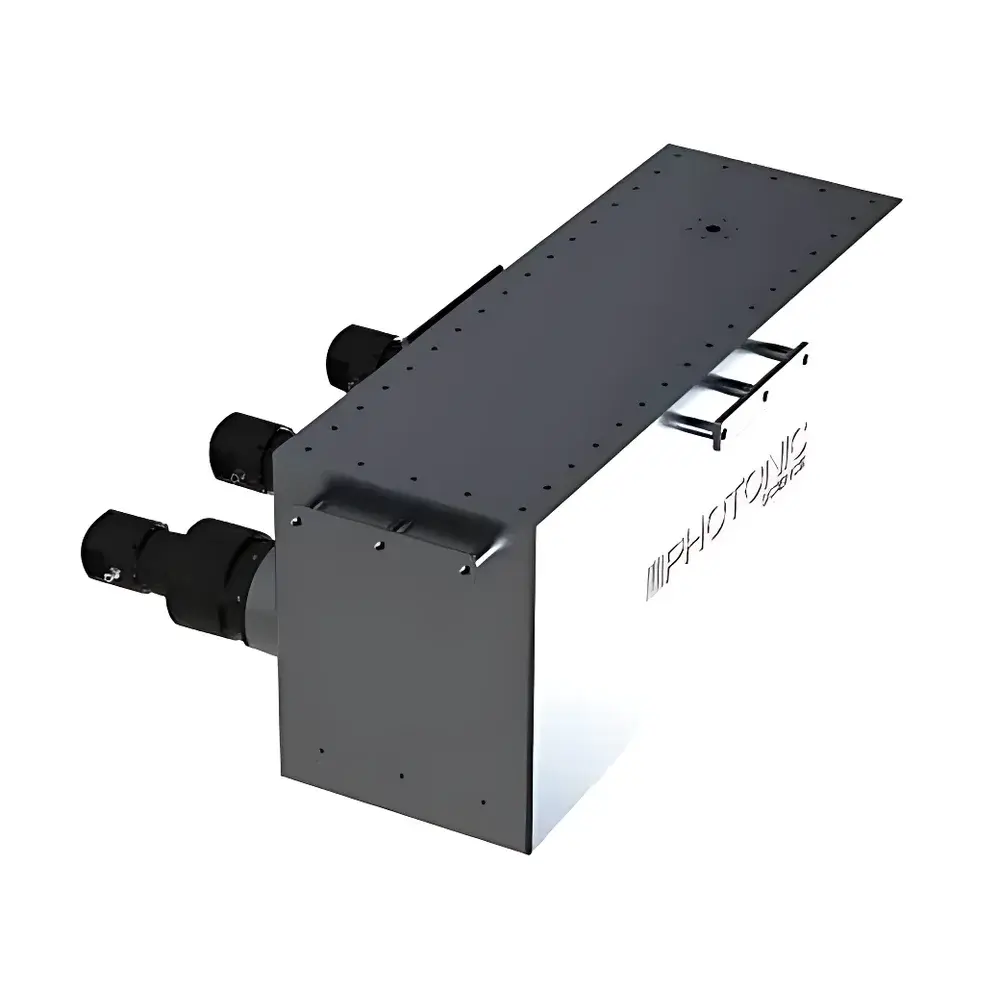
Neutron ICCD Detector – High-Sensitivity Imaging System by PSEL (UK)
| Key | Origin: UK |
|---|---|
| Manufacturer Type | Authorized Distributor |
| Origin Category | Imported |
| Model | Neutron ICCD |
| Pricing | Available Upon Request |
Overview
The PSEL Neutron ICCD Detector is a high-sensitivity, gated intensified charge-coupled device imaging system engineered for quantitative neutron radiography, tomography, diffraction, and small-angle neutron scattering (SANS). It operates on the principle of neutron-to-light conversion via a scintillating screen—specifically LiF:ZnS:Ag—followed by optical coupling to an intensifier tube and low-noise CCD sensor. This architecture enables single-neutron event detection with precise temporal gating (<1 ms), essential for time-of-flight (TOF) neutron experiments at reactor- and accelerator-based facilities. Designed and assembled in the UK under strict quality control protocols, the system meets the mechanical, thermal, and vacuum compatibility requirements of international neutron beamlines—including ILL (Grenoble), ISIS (UK), and SNS (USA). Its modular optical train supports interchangeable phosphor screens and lens assemblies, ensuring adaptability across neutron energy ranges (cold, thermal, epithermal) and experimental geometries.
Key Features
- Gated ICCD architecture with <1 ms shutter width at 1 kHz repetition rate, enabling TOF-resolved neutron imaging and background suppression
- LiF:ZnS:Ag scintillator screen (supplied by Scintacor, UK) with peak emission at 450 nm (blue), 3.5 µs decay time to 10% intensity, and negligible afterglow—optimized for high-contrast, low-persistence imaging
- Thermoelectrically cooled CCD sensor operating at –20 °C, reducing dark current to sub-0.01 e⁻/pix/s and supporting exposure durations up to 30 minutes per frame
- 16-bit digitization with >10,000:1 dynamic range and readout noise <3 e⁻ RMS, delivering high-fidelity signal quantification for weak-flux neutron fields
- Modular optical interface compatible with f/1.2–f/1.8 C-mount lenses and fiber-optic tapers; supports both direct coupling and relay-lens configurations
- Real-time image acquisition via Gigabit Ethernet interface with native support for GenICam-compliant software drivers (e.g., DCAM, Spinnaker SDK)
Sample Compatibility & Compliance
The detector accommodates standard neutron beamline sample environments—including vacuum-compatible stages, cryostats (4–300 K), and high-pressure cells—without compromising optical alignment or thermal stability. The LiF:ZnS:Ag screen exhibits minimal X-ray and UV sensitivity, ensuring specificity to neutron interactions while maintaining low gamma-ray cross-section. All firmware and acquisition logic comply with GLP/GMP-aligned audit trail requirements, including timestamped metadata logging (exposure time, gate delay, temperature, gain setting) traceable to NIST-traceable clocks. The system conforms to IEC 61000-6-3 (EMC) and ISO 9001 manufacturing standards; documentation packages include CE Declaration of Conformity and UKCA marking where applicable.
Software & Data Management
Acquisition and analysis are supported through PSEL’s open-API NeutronView Suite (v4.x), which provides real-time histogram equalization, flat-field correction, dead-time compensation, and ROI-based photon counting statistics. Raw frames are saved in HDF5 format with embedded NeXus-compatible metadata (NXdetector, NXinstrument), ensuring seamless integration with Mantid, DAWN, and SasView workflows. The software supports FDA 21 CFR Part 11-compliant user access controls, electronic signatures, and immutable audit logs—critical for regulated materials characterization in nuclear safety and pharmaceutical neutron crystallography applications. Batch processing pipelines enable automated ring artifact correction for tomographic reconstructions using ASTRA or TomoPy libraries.
Applications
- Neutron Radiography & Tomography: High-contrast imaging of hydrogen-rich materials (e.g., fuel cells, polymers, plant vasculature) using 20 cm × 26 cm active area and 200 µm effective pixel pitch
- Time-of-Flight Diffraction: Crystal structure analysis of polycrystalline alloys and battery cathodes via gated detection synchronized to chopper phases
- Small-Angle Neutron Scattering (SANS): Low-background measurement of nanoscale structures (1–100 nm) in soft matter, leveraging ultra-low noise (<3 e⁻) readout and long exposures
- Protein Crystallography: High-resolution Laue diffraction mapping of large-unit-cell biological macromolecules under cryogenic conditions
- Neutron Reflectometry: Sub-nanometer interfacial profiling of thin films and multilayers using angular-resolved intensity mapping
FAQ
What neutron energy ranges is this ICCD optimized for?
It is primarily designed for cold and thermal neutrons (0.1–25 meV); performance with epithermal neutrons requires optional Gd-based converter layers.
Can the system be integrated into existing beamline control frameworks (EPICS, TANGO)?
Yes—via provided PV-based IOC modules and RESTful API endpoints for synchronization with shutter, chopper, and sample stage controllers.
Is the LiF:ZnS:Ag screen replaceable in situ?
Yes; screen cartridges are field-swappable without realignment, with calibration coefficients stored in EEPROM and auto-loaded upon insertion.
Does the system support hardware-triggered acquisition for pulsed sources?
Yes—TTL-compatible external trigger input accepts gate signals from neutron choppers or RF cavities with jitter <50 ns.
What is the mean time between failures (MTBF) under continuous beam operation?
>15,000 hours (per IEC 61508 SIL-2 assessment), validated via accelerated life testing at 30 °C ambient and 85% RH.



