Vanguard Scientific CCD 447 & CCD 486 High-Resolution Full-Frame Area-Scan CCD Image Sensors
| Origin | USA |
|---|---|
| Supplier Type | Authorized Distributor |
| Import Status | Imported |
| Model | CCD 447 / CCD 486 |
| Pricing | Upon Technical Evaluation and Configuration |
Overview
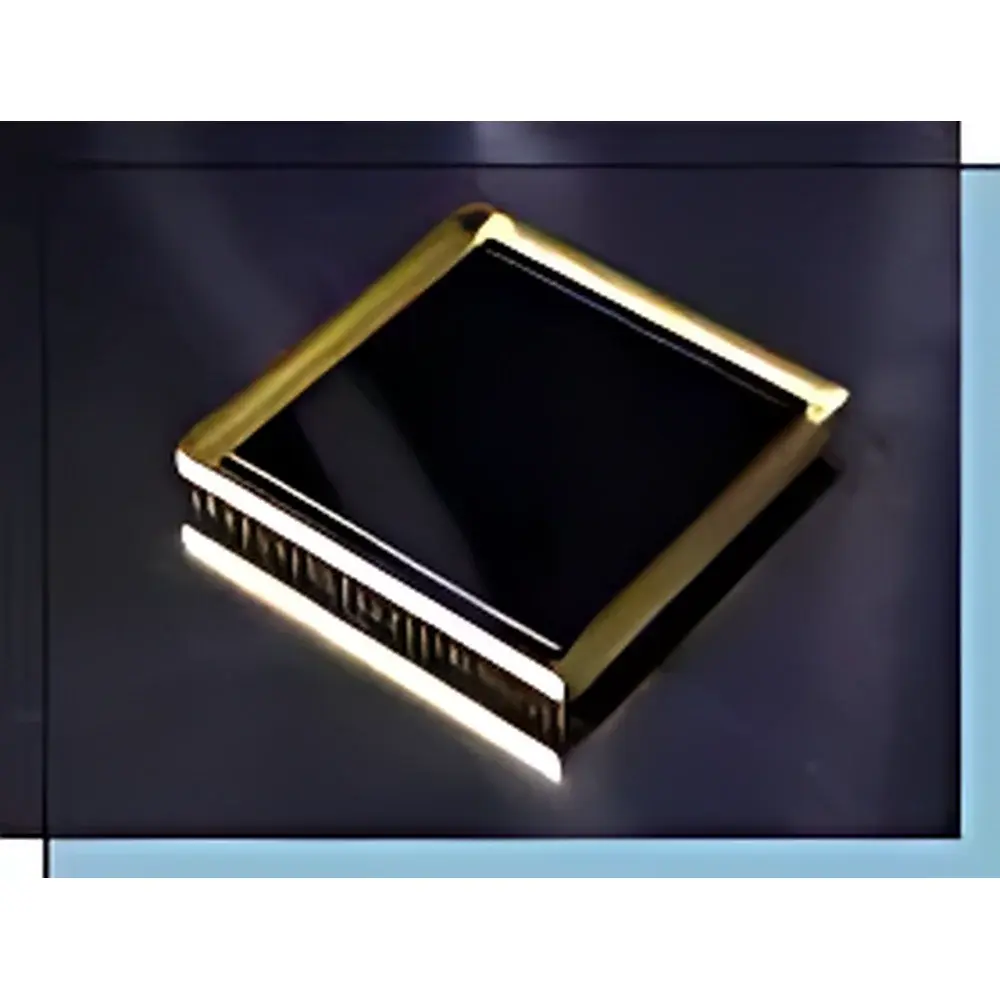
The Vanguard Scientific CCD 447 and CCD 486 are high-performance, full-frame area-scan charge-coupled device (CCD) image sensors engineered for demanding scientific, medical, and industrial imaging applications. Both devices operate on the principle of photoelectron accumulation in silicon-based potential wells, followed by precise serial charge transfer and low-noise voltage conversion at dedicated output amplifiers. Designed with multi-pinned phase (MPP) operation, these sensors achieve deep depletion characteristics and enhanced quantum efficiency—particularly critical in X-ray indirect detection systems using scintillator-coupled configurations. The CCD 447 delivers a 2048 × 2048 pixel array with 15 µm × 15 µm pixels over a 32.46 mm × 32.46 mm active area, while the CCD 486 scales to 4096 × 4096 pixels across a 61.44 mm × 61.44 mm format—making it one of the largest monolithic full-frame CCDs commercially available for high-resolution digital radiography and space-based remote sensing. Both models support front-illuminated (FI) and back-illuminated (BI) architectures, enabling optimization for spectral response from UV (200 nm) through visible to near-infrared (1000 nm), depending on antireflection coating and substrate thinning specifications.
Key Features
- Full-frame architecture with no mechanical shutter required—ideal for synchronized exposure control in pulsed X-ray or laser illumination environments
- 100% fill factor achieved via microlens integration (BI variants) or optimized gate structure (FI variants), maximizing photon collection efficiency
- Dual-readout amplifier topology: two dual-stage amplifiers (lower-left and upper-right corners) optimized for high-speed readout (>50 kpixels/sec); two single-stage amplifiers (lower-right and upper-left) configured for ultra-low-noise operation (<4 e⁻ RMS read noise)
- Integrated three-phase clocking within imaging area and serial register—enabling stable, low-bleed charge transfer and reduced image lag
- On-chip dark reference pixels (18 masked columns preceeding serial register in CCD 486) for real-time offset correction and improved fixed-pattern noise suppression
- MPP mode operation ensures reduced dark current (<0.1 e⁻/pixel/sec at −40°C), supporting long-exposure astronomical and low-dose medical imaging protocols
Sample Compatibility & Compliance
These CCD sensors are designed for integration into OEM imaging subsystems compliant with IEC 62220-1-1 (digital X-ray detectors), ASTM E2737 (standard practice for digital detector arrays), and ISO 15708-2 (non-destructive testing—characterization of digital detectors). When coupled with Gd₂O₂S:Tb or CsI:Tl scintillators and fiber-optic tapers or lens coupling optics, they meet clinical requirements for DR (Digital Radiography) systems under FDA 21 CFR Part 11–compliant software environments. Their hermetic ceramic packaging and optional thermoelectric cooling interfaces align with MIL-STD-883H environmental stress screening protocols for aerospace deployment.
Software & Data Management
Vanguard provides FPGA-based camera link interface boards and SDKs supporting GenICam-compliant acquisition drivers (Windows/Linux). Raw frame data is delivered in 16-bit linear format with embedded metadata (exposure time, temperature, gain settings, amplifier selection flags). The SDK includes tools for non-uniformity correction (NUC), pixel defect mapping, and correlated double sampling (CDS) calibration—essential for GLP/GMP-aligned QA/QC workflows. Audit trails for sensor configuration changes are exportable in CSV/JSON formats, satisfying traceability requirements per ISO/IEC 17025 and FDA 21 CFR Part 11 Annex 11 guidelines.
Applications
- Medical digital radiography (DR), including mammography systems requiring high spatial resolution and contrast sensitivity at low dose levels
- Non-destructive evaluation (NDE) of composite materials and turbine blades using microfocus X-ray sources
- Astronomical instrumentation—including focal plane arrays for ground-based telescopes and CubeSat payloads
- High-energy physics experiments requiring radiation-hardened, large-area position-sensitive detection
- Industrial metrology and surface inspection systems operating under controlled vacuum or cryogenic conditions
FAQ
What cooling options are supported for long-exposure operation?
Both CCD 447 and CCD 486 are compatible with thermoelectric (Peltier) coolers capable of stabilizing sensor temperature to −40°C ± 0.1°C; liquid nitrogen dewar integration is available for ultra-low-noise applications.
Can these sensors be operated in binning mode?
Hardware binning is not natively supported due to full-frame architecture; however, on-FPGA pixel summation and region-of-interest (ROI) readout are implemented via custom firmware to emulate effective binning without compromising dynamic range.
Is back-thinning available for the CCD 486 model?
Yes—back-illuminated variants of CCD 486 undergo precision mechanical thinning and AR coating deposition to achieve >90% QE at 650 nm; process documentation and QE curves are provided per lot.
What is the maximum sustainable frame rate for full-array readout?
At 50 kpixels/sec per amplifier with all four outputs active, CCD 486 achieves ~1.2 fps full-frame; readout speed scales linearly with amplifier count reduction (e.g., 0.3 fps with single-output mode for lowest noise).
Do you provide radiation damage characterization data?
Yes—total ionizing dose (TID) testing up to 10 krad(Si) and displacement damage testing with 1 MeV neutron fluence are documented in datasheet addenda upon NDA execution.