
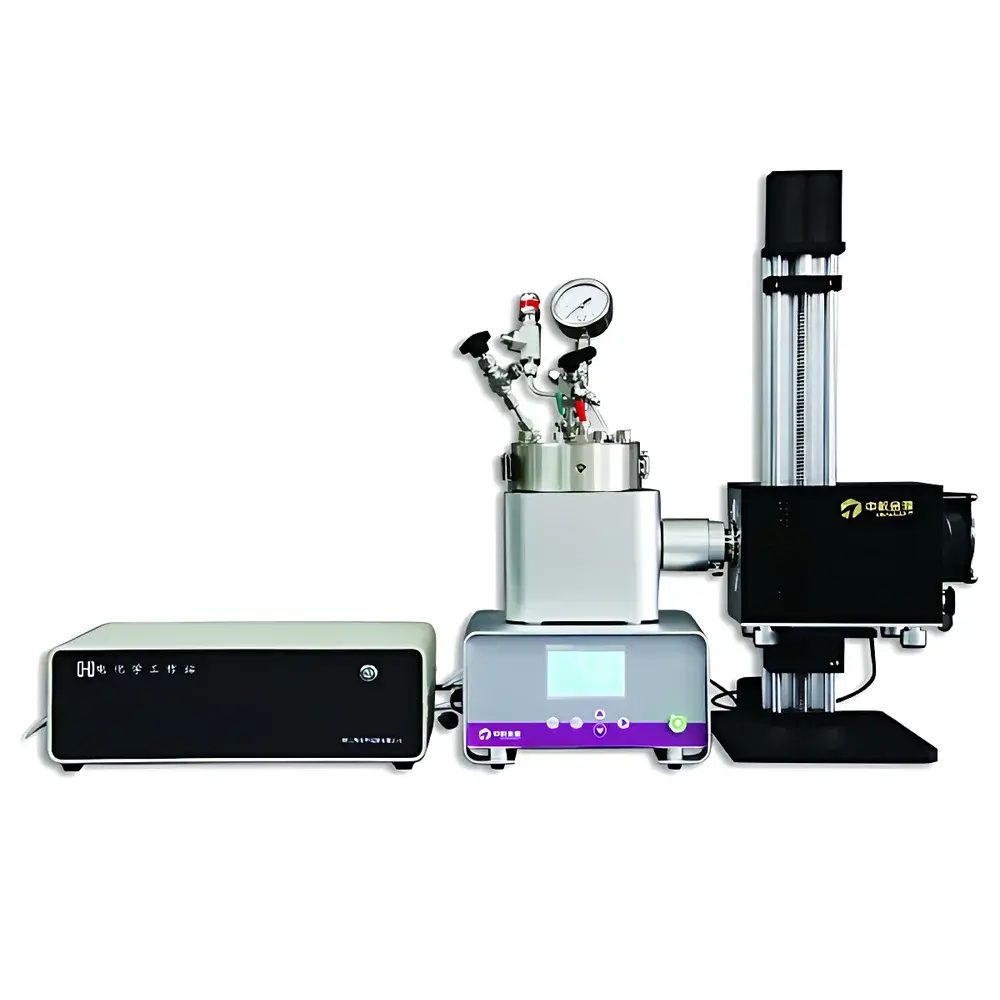
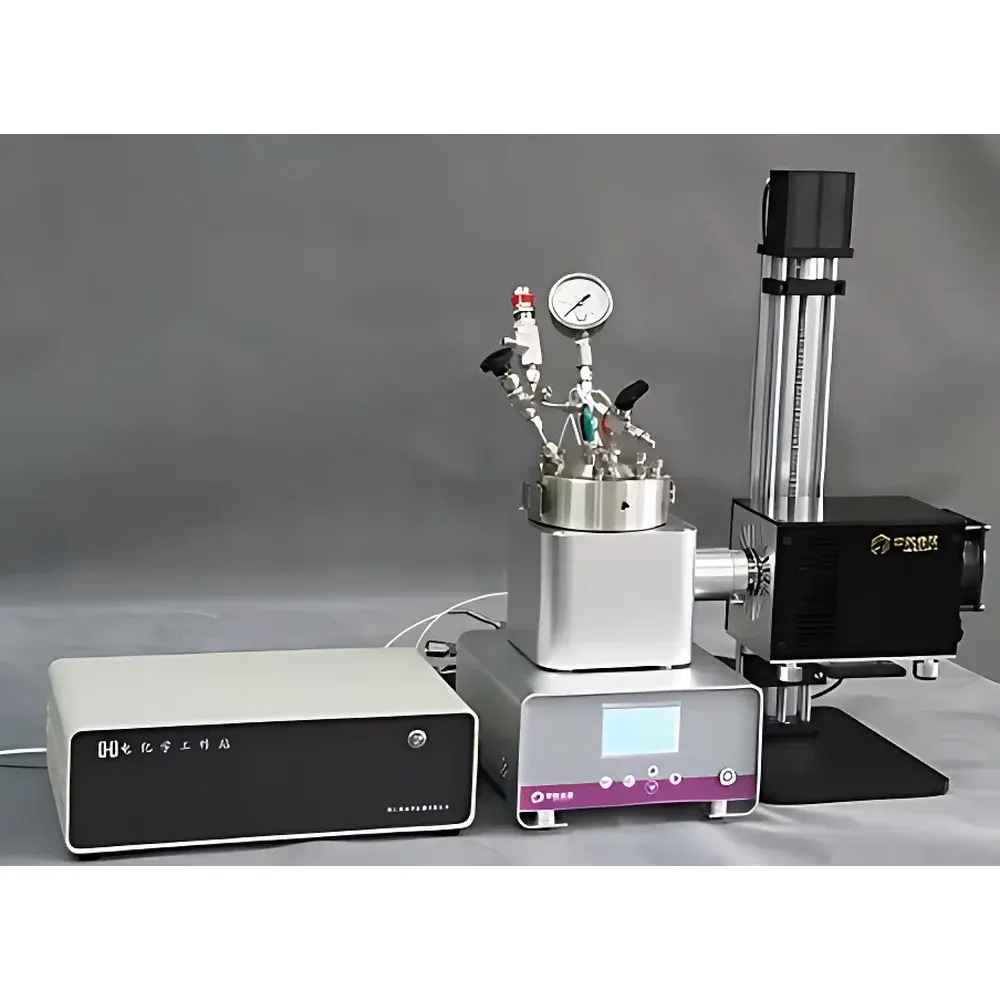
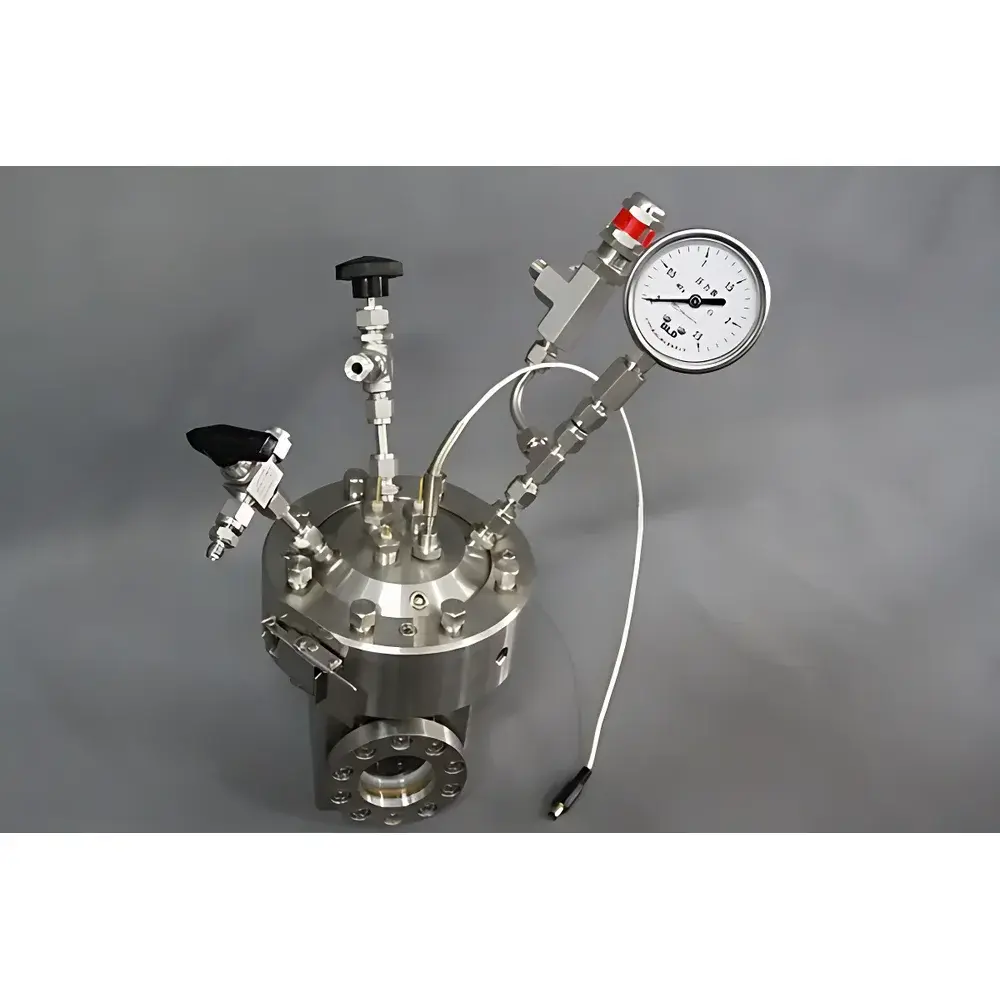
HPRS-PEC250 Photoelectrochemical Reactor (Zhongjiaojinyuan)
| Brand | Zhongjiaojinyuan |
|---|---|
| Origin | Beijing, China |
| Manufacturer Type | Direct Manufacturer |
| Origin Category | Domestic |
| Model | HPRS-PEC250 |
| Price | USD 8,300 (approx.) |
| Usable Volume | 250 mL |
| Vessel Material | 316L Stainless Steel |
| Working Pressure | 2 MPa (rated), up to 2.5 MPa with optional digital pressure gauge |
| Window Material | Sapphire |
| Optical Aperture Diameter | 30 mm |
| Illumination Mode | Side-irradiation |
| Heating Temperature Range | Up to 300 °C (PID-controlled, ±0.1 °C accuracy) |
| Sealing System | Dual-line high-temp graphite composite gasket |
| Stirring | Internal magnetic stirring |
| Control Modes | Dual-timer (temperature-hold timer & operation timer), 0–999 min/h |
| Power Supply | 200–240 V AC, 50–60 Hz |
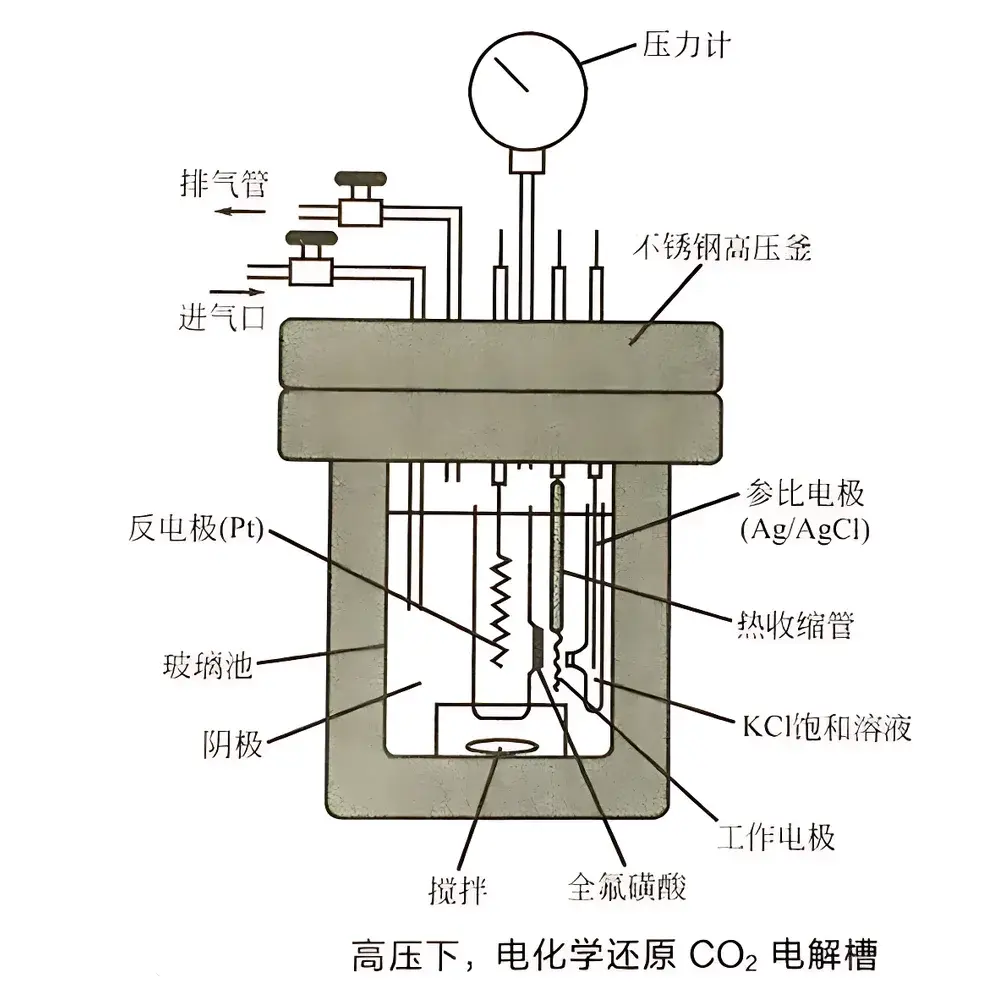
| Electrode Compatibility | PEEK-insulated Pt working electrode, PEEK-saturated calomel reference electrode (SCE), PEEK Pt counter electrode clamp |
| Optional Accessories | 300 W Xe lamp (HXF300/PF300-T8), high-power LED (LED100HA), Hg lamp, elevated platform with motorized vertical adjustment, high-temperature/pressure reference electrodes (e.g., CORR Inc. 220 °C / 2000 PSI) |
Overview
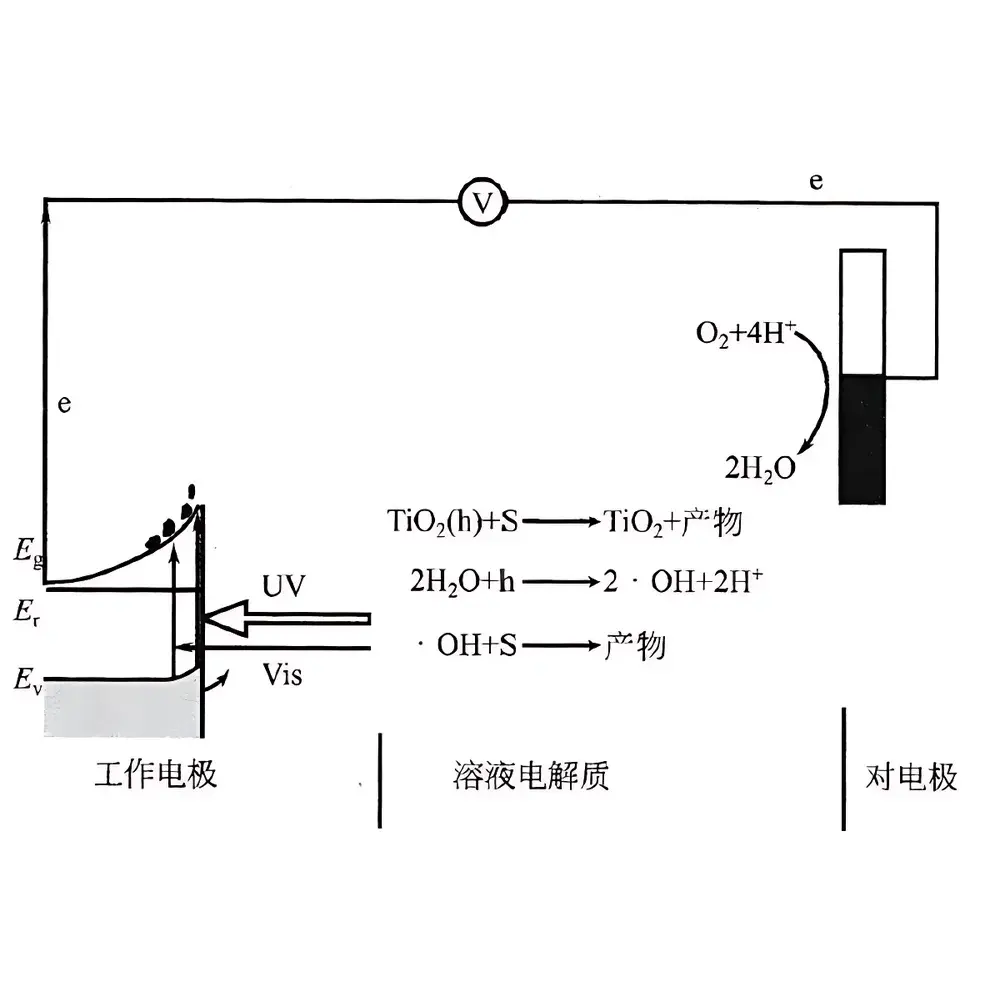
The HPRS-PEC250 Photoelectrochemical Reactor is a purpose-engineered laboratory-scale pressure reactor designed for fundamental and applied research in photoelectrocatalysis—particularly photocatalytic CO₂ reduction, water splitting, and organic pollutant degradation under controlled electrochemical bias and simultaneous light irradiation. It operates on the principle of semiconductor photoelectrochemistry: when a photoactive catalyst (e.g., TiO₂, BiVO₄, or perovskite-based thin films) is deposited onto a conductive substrate and used as a working electrode (photoanode or photocathode), application of an external bias potential significantly suppresses bulk recombination of photogenerated electron–hole pairs. This enables quantitative charge separation, interfacial redox kinetics analysis, and direct correlation between photon flux, applied potential, and Faradaic efficiency. The reactor integrates sealed high-pressure capability (up to 2 MPa operational, 2.5 MPa burst-rated), side-illumination geometry through a 30 mm sapphire viewport (transmitting UV–Vis–NIR, λ ≥ 190 nm), and full compatibility with commercial potentiostats/galvanostats—including those compliant with FDA 21 CFR Part 11 audit trail requirements (e.g., Zahner IM6, Pine WaveDriver 200, CHI 760E, Admiral Systems).
Key Features
- Robust dual-seal architecture using high-purity graphite composite gaskets with double-line compression design—validated for continuous operation at ≤2 MPa and ≤300 °C.
- Modular heating system with PID-controlled dual-point temperature monitoring (vessel wall + internal medium), enabling precise thermal management during long-duration photoelectrolysis experiments.
- Sapphire optical window (30 mm clear aperture, AR-coated optional) ensures high transmission stability across UV–Vis spectrum and mechanical resistance to thermal shock and chemical corrosion.
- Electrode interface engineered for electrochemical integrity: PEEK-insulated platinum working electrode, PEEK-saturated calomel reference electrode (SCE), and PEEK-clamped counter electrode—all rated for use in aggressive aqueous and non-aqueous electrolytes under pressure.
- Motorized lift platform supports automated vertical positioning of external light sources (Xe, LED, Hg), minimizing alignment drift and enabling reproducible irradiance calibration via NIST-traceable power meters.
- Integrated fluid handling manifold with three-way ball valve, needle valve, pressure relief valve, and dedicated gas/liquid sampling ports—designed for in situ GC/HPLC sampling without system depressurization.
Sample Compatibility & Compliance
The HPRS-PEC250 accommodates heterogeneous photocatalysts immobilized on FTO/ITO/glassy carbon substrates, slurry-based colloidal systems (with optional internal frit support), and membrane-electrode assemblies (MEAs). Its 316L stainless steel body—with optional PTFE lining or quartz liner—resists corrosion from acidic, alkaline, and halide-containing electrolytes (e.g., 0.5 M Na₂SO₄, 0.1 M H₂SO₄, LiTFSI in acetonitrile). All wetted components comply with ASTM F899 (standard specification for stainless steels) and ISO 15156-3 (materials for H₂S-containing environments). Pressure instrumentation meets ASME B31.3 process piping standards; electrical safety conforms to IEC 61010-1 for laboratory equipment. For GLP/GMP-aligned workflows, the reactor supports time-stamped data logging when paired with compliant electrochemical workstations featuring electronic signatures and audit trails.
Software & Data Management
While the reactor itself is hardware-controlled via embedded microprocessor and LCD interface (displaying real-time temperature, stir speed, elapsed time), seamless integration with third-party electrochemical software is achieved via standard analog/digital I/O (0–5 V, RS232, USB). When used with Zahner Zennium or BioLogic SP-300, users can synchronize potentiostatic sweeps with temperature ramps, illumination triggers, and gas evolution monitoring (e.g., via mass spectrometer or GC-TCD). All parameter logs—including temperature setpoint deviations, stir rate fluctuations, and pressure transients—are exportable as CSV/TXT for post-acquisition statistical analysis (e.g., ANOVA of Faradaic efficiency vs. bias potential at fixed irradiance). Firmware updates are delivered via secure USB protocol, with version history traceable per ISO/IEC 17025 documentation requirements.
Applications
- Quantitative photoelectrocatalytic CO₂ reduction to CO, CH₄, or C₂H₄ under tunable bias and simulated solar irradiance (AM 1.5G).
- Stability assessment of photoanodes for oxygen evolution reaction (OER) in neutral and alkaline media under sustained 1-sun illumination and >1.23 V vs. RHE.
- Kinetic modeling of interfacial charge transfer resistance (Rct) via electrochemical impedance spectroscopy (EIS) under operando illumination conditions.
- High-pressure photo-Fenton and persulfate activation studies requiring simultaneous UV/visible irradiation and electrochemical regeneration of Fe²⁺/Fe³⁺ or SO₄•⁻ precursors.
- Development of tandem photoelectrochemical cells integrating PV-biased photocathodes with molecular catalysts for selective nitrate-to-ammonia conversion.
FAQ
What is the maximum allowable operating temperature and pressure for continuous use?
Continuous operation is rated at ≤300 °C and ≤2 MPa. Short-term excursions to 2.5 MPa are permitted only with the optional digital pressure transducer and require prior validation of gasket compression cycle life.
Can the reactor be used with corrosive halide-based electrolytes such as LiBr or KI solutions?
Yes—when equipped with the optional quartz liner or fully PTFE-lined configuration, the system demonstrates >500 h stability in 1 M KI + 0.1 M HCl at 80 °C and open-circuit potential.
Is the sapphire window compatible with deep-UV light sources (e.g., 254 nm low-pressure Hg lamps)?
Standard sapphire transmits >85% at 254 nm; for enhanced UV throughput below 200 nm, AR-coated sapphire or synthetic fused silica windows are available as custom options.
How is electrical feedthrough isolation maintained at elevated temperature and pressure?
All electrode feedthroughs utilize hermetically sealed PEEK insulators with integrated O-rings and compression sleeves, tested to IP68 and validated per MIL-STD-202G Method 108 for dielectric withstand at 1 kV DC up to 200 °C.
Does the system support automated liquid injection or dosing during reaction?
Not natively—but the spare 1/4″ Swagelok port enables integration with syringe pump modules (e.g., Harvard Apparatus PHD 2000) via pressure-rated PTFE tubing and back-pressure regulators for controlled reagent addition under flow-through mode.



