
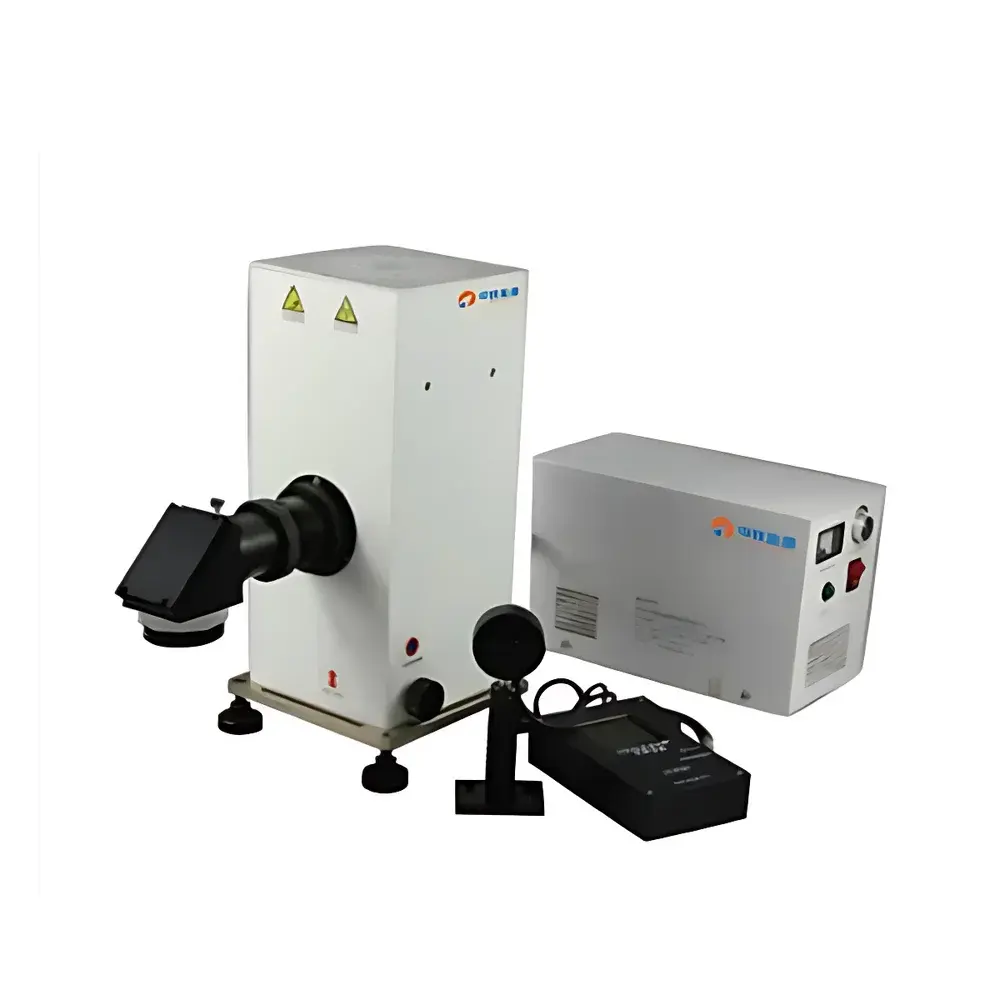
CEL-S500 Solar Simulator Xenon Light Source
| Brand | CEL (Zhongjiao Jinyuan) |
|---|---|
| Model | CEL-S500 |
| Light Source Type | High-Pressure Short-Arc Spherical Xenon Lamp |
| Rated Power | 500 W |
| Spectral Range | 300–2500 nm |
| Color Temperature | ~6000 K |
| Output Modes | Collimated Beam, Focused Point Source, Fiber-Coupled Output (optional) |
| Beam Uniformity (Collimated) | ≤ ±10% (average), ≤ ±5% (local, over 2×2 cm area) |
| Adjustable Illumination Spot Diameter | 3–50 mm (via iris diaphragm) |
| Lamp Lifetime | 500–800 h |
| Cooling Method | Forced-Air Convection |
| Compliance | Compatible with ASTM E927-22, IEC 60904-9 Ed. 3, JIS C 8912 standards for solar simulation classification |
| Optical Mounting Interfaces | Standardized for 25.4 mm, 50.8 mm, M52, M62 filter holders and lens tubes |
Overview
The CEL-S500 Solar Simulator Xenon Light Source is an engineered optical system designed for high-fidelity spectral replication of terrestrial sunlight under controlled laboratory conditions. It employs a 500 W high-pressure short-arc spherical xenon lamp—operating in a stable DC or high-frequency AC arc discharge mode—to generate a continuous, broadband spectrum spanning 300–2500 nm. With a correlated color temperature of approximately 6000 K and strong spectral continuity across UV-Vis-NIR regions, the CEL-S500 serves as a primary irradiance source for photovoltaic (PV) device characterization, including current–voltage (I–V) curve tracing, external quantum efficiency (EQE) mapping, and spectral response analysis. Its optical architecture supports both collimated and focused illumination geometries, enabling direct integration into solar cell test stations, photoelectrochemical cells, photocatalytic reactors, surface photovoltage spectroscopy (SPS) setups, and optogenetic stimulation platforms. The system is not a Class AAA solar simulator per se but is configurable—when paired with certified AM1.5G filter assemblies and calibrated reference cells—to meet Class A spectral match requirements per IEC 60904-9 Ed. 3 and ASTM E927-22.
Key Features
- High-stability 500 W xenon lamp power supply with adjustable current output (15–25 A), ensuring consistent radiometric output over extended operation cycles.
- Optimized optical train featuring fused silica condenser lenses and rear-reflective ellipsoidal mirror geometry to maximize photon collection efficiency (>75% typical coupling into collimated path).
- Integrated three-axis precision translation stage within the lamp housing, enabling sub-millimeter alignment of lamp arc position relative to focal planes and optical axes.
- Dual-output capability: switchable between uniform collimated beam (60 mm diameter, ≤±10% spatial non-uniformity) and high-intensity point-source configuration (minimum spot size 8 mm, compatible with fiber coupling via SMA905 or FC/PC adapters).
- Modular filter and optic interface supporting standard mounting formats (25.4 mm, 50.8 mm, M52, M62), facilitating rapid integration of AM1.5G spectral filters, bandpass interference filters, neutral density attenuators, and dichroic mirrors.
- Active forced-air cooling system maintaining lamp envelope temperature below 120 °C during continuous operation, extending electrode life and minimizing thermal drift in irradiance stability.
Sample Compatibility & Compliance
The CEL-S500 accommodates diverse sample geometries and experimental configurations—from single-junction silicon PV cells to multi-junction III–V devices, perovskite thin films, photocatalytic powder suspensions in quartz cuvettes, and biological tissue cultures under defined photobiological exposure protocols. Its spectral output conforms to the spectral match criteria outlined in IEC 60904-9 Ed. 3 when used with traceable AM1.5G filter sets (e.g., Schott KG-5 + BG-39 + UG-11 composite stack). Radiometric calibration is supported via NIST-traceable silicon photodiode reference detectors and spectroradiometers (e.g., Ocean Insight HDX or Avantes AvaSpec-ULS2048CL-EVO). The system satisfies essential functional prerequisites for GLP-compliant photovoltaic testing environments, including audit-ready operational logs (when integrated with optional digital controller), lamp hour tracking, and interlock-enabled safety shutdown.
Software & Data Management
While the base CEL-S500 operates via analog/manual controls, it is fully compatible with optional digital control modules offering RS-232/USB interfaces for remote intensity regulation, lamp ignition sequencing, and runtime logging. When integrated with third-party data acquisition systems (e.g., Keithley 2400/2600 series SMUs, Thorlabs PM100D power meters), the source enables synchronized I–V sweep acquisition with real-time irradiance monitoring. All firmware and communication protocols comply with IEEE 488.2 and SCPI command sets. Audit trails—including lamp ignition count, cumulative operating hours, and user-initiated parameter changes—are retained in non-volatile memory for regulatory review under FDA 21 CFR Part 11–aligned workflows.
Applications
- Photovoltaic performance evaluation: I–V curve measurement, fill factor determination, and maximum power point tracking (MPPT) under standardized illumination.
- Photoelectrochemical (PEC) water splitting studies requiring broadband excitation across semiconductor bandgaps (e.g., TiO₂, BiVO₄, Fe₂O₃).
- Time-resolved surface photovoltage (SPV) and Kelvin probe force microscopy (KPFM) experiments demanding stable, low-noise illumination.
- Heterogeneous photocatalysis: degradation kinetics of organic pollutants (e.g., methylene blue, phenol) under simulated solar irradiation.
- Biological photostimulation assays—including circadian rhythm entrainment, retinal ganglion cell activation, and plant photomorphogenesis—using spectrally tailored outputs.
- Optical sensor calibration and responsivity verification across UV–Vis–NIR detector arrays.
FAQ
What is the spectral match grade achievable with the CEL-S500 when equipped with AM1.5G filters?
When combined with a calibrated, multi-layer AM1.5G filter assembly and operated at nominal 1 Sun (100 mW/cm²) intensity, the CEL-S500 achieves Class A spectral match per IEC 60904-9 Ed. 3, with spectral deviation <±12.5% in the 300–400 nm range, <±7.5% in 400–500 nm, and <±5% in 500–1100 nm.
Can the CEL-S500 be used for accelerated aging tests per IEC 61215?
It is not configured as a full-spectrum UV-enhanced aging source; however, with supplemental UVA-340 lamps or broadband UV filters, it may serve auxiliary irradiance roles in customized test protocols—subject to independent spectral validation.
Is lamp replacement a field-serviceable procedure?
Yes. The lamp module is tool-free accessible; replacement requires only alignment verification using the built-in crosshair target and recommissioning via reference cell calibration.
Does the system support automated irradiance feedback control?
Not natively—but optional closed-loop integration with a calibrated photodiode monitor and PID-controlled power supply enables ±0.5% irradiance stability over 8-hour periods.
Are optical components supplied with anti-reflective coatings optimized for 300–2500 nm?
All standard fused silica lenses and mirrors feature MgF₂-overcoated AR layers with average R <0.5% across 250–2000 nm, minimizing ghost reflections and thermal load on downstream optics.




