
Zhongjiao Jinyuan Quartz Optical Bandpass Filters Series
| Brand | Zhongjiao Jinyuan |
|---|---|
| Substrate | Fused Silica (Quartz) |
| Diameter | 59 mm |
| Mounting Thread | M62 |
| Optical Density (OD) | ≥2 @ Blocking Regions |
| Spectral Range | UV–NIR (200–1100 nm) |
| Coating Type | Hard-Dielectric Thin-Film |
| Compliance | ISO 9001, GB/T 2828.1 (Sampling Inspection), RoHS Directive 2011/65/EU |
| Warranty | 12 months limited warranty |
Overview
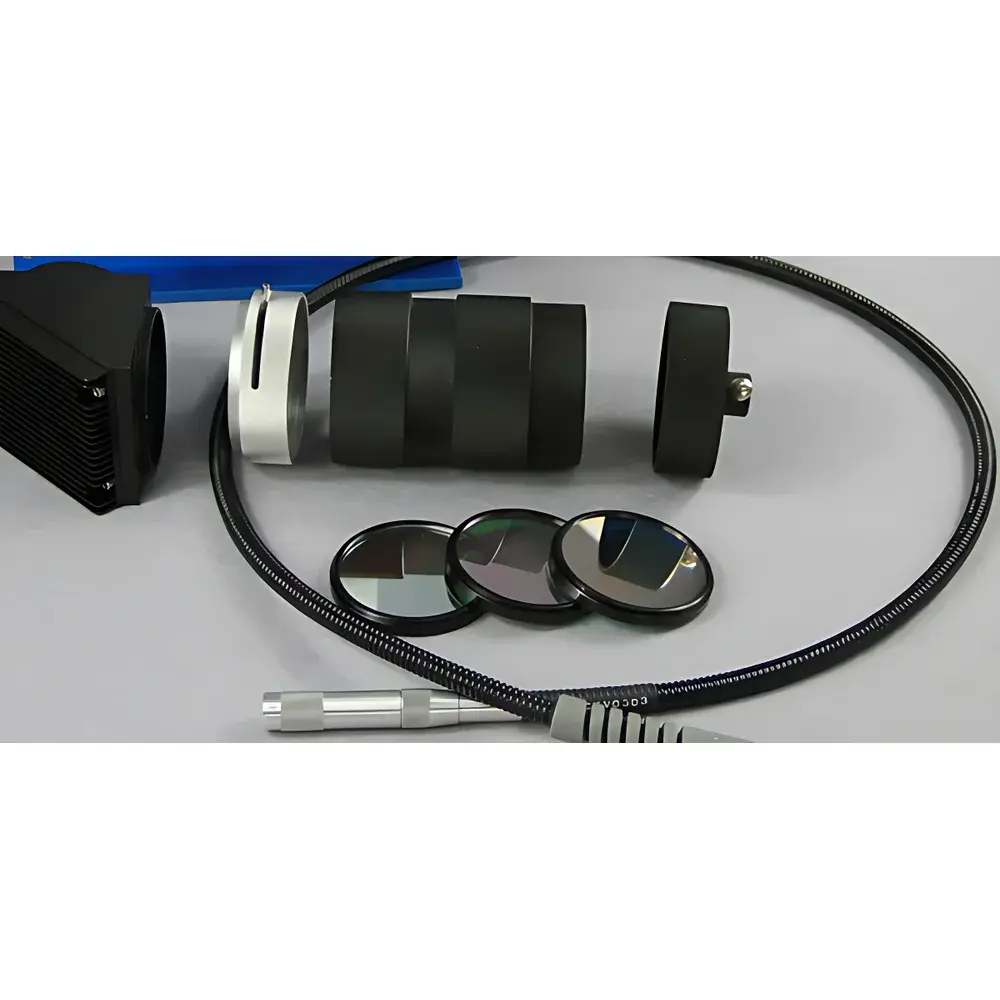
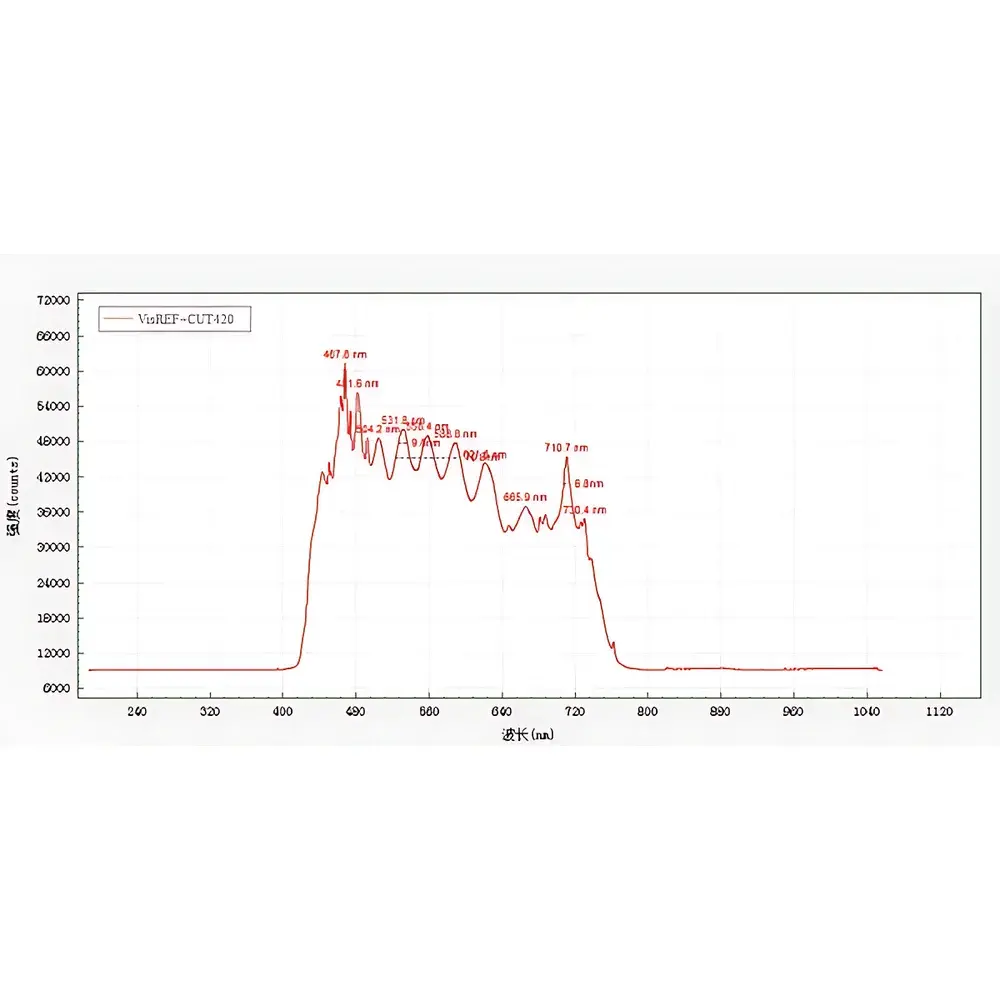
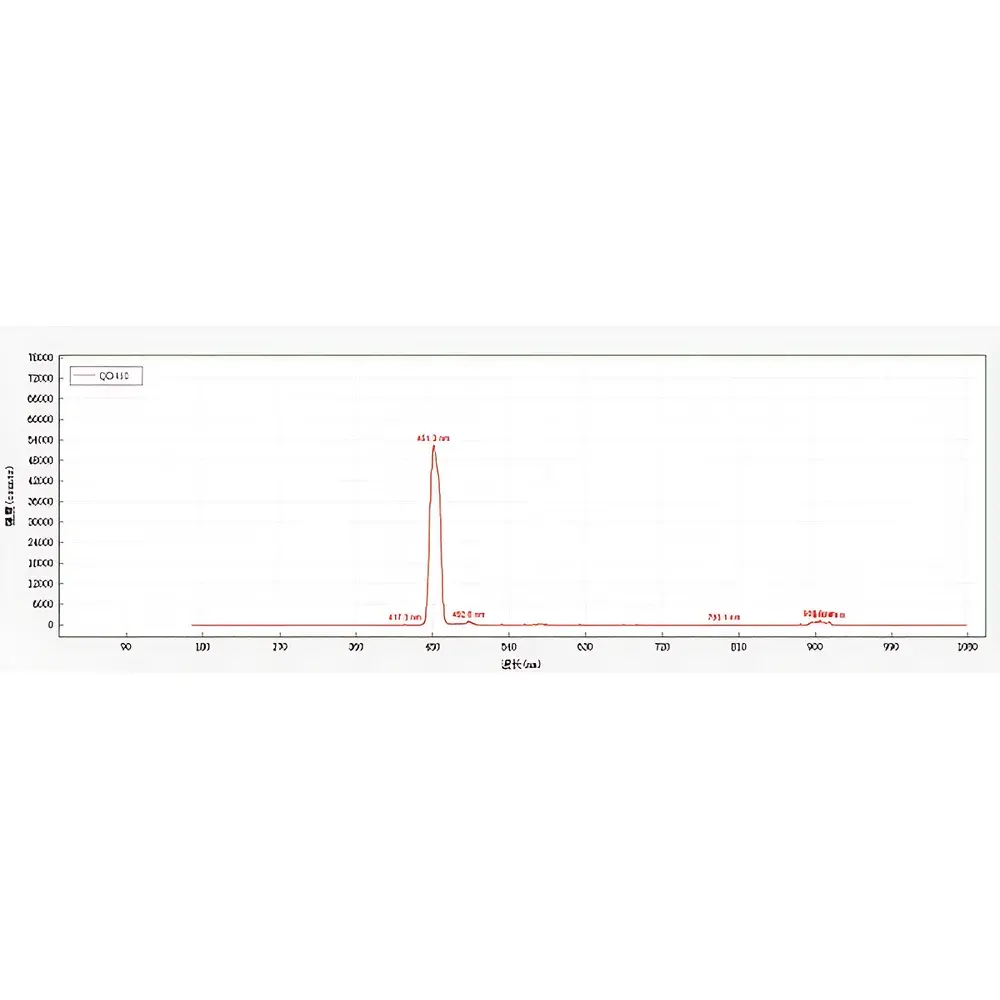
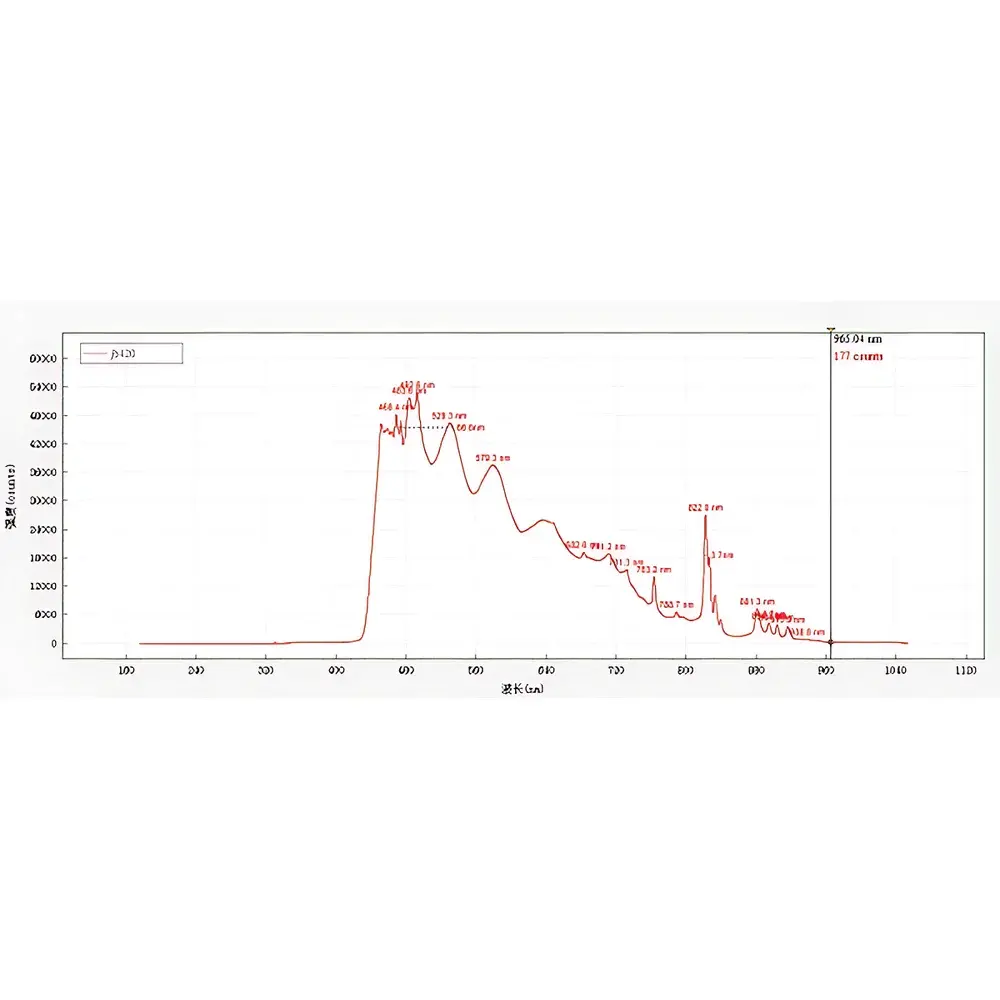
Zhongjiao Jinyuan Quartz Optical Bandpass Filters Series comprises a comprehensive portfolio of precision hard-coated fused silica interference filters engineered for spectral isolation in analytical, photochemical, and optical measurement applications. Each filter operates on the principle of thin-film interference—where multilayer dielectric coatings deposited onto high-purity synthetic quartz substrates selectively transmit a narrow band of wavelengths while suppressing out-of-band radiation through destructive interference. The series covers discrete peak wavelengths from 254 nm to 630 nm, with two primary spectral groupings: UV bandpass filters (254–390 nm, blocking 200–900 nm) and VIS/NIR bandpass filters (400–630 nm, blocking 200–1100 nm). All filters feature a standard 59 mm clear aperture and M62 threaded mounting interface, enabling mechanical compatibility with Zhongjiao Jinyuan’s full line of calibrated light sources—including UVREF reference lamps, QD300–400 and QD300–800 broadband sources, VISREF visible standards, and UVIRCUT long-pass blockers. Designed for stability under thermal cycling and intense irradiance, these filters maintain spectral fidelity across ambient temperatures from −20 °C to +80 °C and are rated for continuous operation at irradiance levels up to 500 mW/cm² (UV region).
Key Features
- Fused silica substrate with ≤0.2 nm surface irregularity (λ/20 @ 632.8 nm), ensuring minimal wavefront distortion and high transmission uniformity.
- Hard-dielectric coating architecture deposited via ion-assisted e-beam evaporation, delivering >90% peak transmittance and OD ≥2 in specified blocking regions.
- M62-threaded mechanical interface enables secure, repeatable positioning in collimated beam paths; compatible with multi-filter stacking configurations without alignment drift.
- Thermal stability validated per ISO 10110-7:2018—no measurable shift in center wavelength (CWL) or bandwidth (FWHM) after 100 thermal cycles between −20 °C and +60 °C.
- Compliant with GLP-relevant documentation practices: each filter batch is traceable to manufacturing lot number, spectral verification report (including CWL, FWHM, and blocking OD), and substrate certification (OH⁻ content <1 ppm, metallic impurities <10 ppb).
Sample Compatibility & Compliance
The filters are optimized for use with collimated or quasi-collimated light sources operating in photometric, radiometric, and photochemical measurement workflows. They are routinely deployed in UV-Vis spectrophotometer auxiliary modules, fluorescence excitation path conditioning, photocatalytic quantum yield calibration setups, and solar simulator spectral filtering. Regulatory alignment includes adherence to ASTM E275 (Standard Practices for Describing and Measuring Performance of UV–Vis Spectrophotometers), ISO/IEC 17025:2017 (for laboratories using these filters in accredited testing), and USP (Spectrophotometry and Light-Scattering). While not FDA-cleared devices, their material composition and coating integrity meet requirements for Class I optical components under 21 CFR Part 1040.10 (Laser Product Performance Standard) when integrated into Class 1 or Class 2 laser-based instrumentation.
Software & Data Management
These are passive optical components and require no embedded firmware or driver software. However, spectral performance data—including measured transmittance curves, CWL tolerances (±1.5 nm for UV series; ±2.0 nm for VIS series), and blocking OD maps—are provided in machine-readable CSV and PDF formats upon request. Integration into automated systems is supported via standardized mechanical mounting and documented dimensional tolerances (±0.05 mm on diameter, ±0.1° on parallelism). For labs implementing 21 CFR Part 11-compliant data acquisition, filter identity and calibration history can be logged within LIMS or ELN platforms using supplied batch-specific metadata files.
Applications
- Quantitative UV photolysis studies requiring monochromatic excitation at defined wavelengths (e.g., 254 nm for DNA damage assays, 365 nm for polymer crosslinking kinetics).
- Calibration of UV-Vis spectrophotometers and radiometers against NIST-traceable reference standards.
- Spectral conditioning in solar simulator output for accelerated weathering tests (ASTM G155, IEC 61215).
- Excitation filtering in steady-state and time-resolved fluorescence spectroscopy, particularly where Raman suppression or stray-light rejection is critical.
- In-line spectral monitoring in photochemical flow reactors, especially those coupled with online UV-Vis detection (e.g., CEL-PECR-TFC10 flow cells).
FAQ
Are these filters suitable for high-intensity UV lamp applications?
Yes—fused silica substrate and ion-assisted dielectric coatings withstand continuous irradiance up to 500 mW/cm² in the 254–365 nm range without measurable degradation over 1,000 hours of operational lifetime.
What is the typical center wavelength tolerance?
UV series (254–390 nm): ±1.5 nm; VIS/NIR series (400–630 nm): ±2.0 nm—verified per ISO 10110-2:2019 interferometric measurement protocol.
Do you provide spectral transmittance reports for individual filters?
Yes—each shipped unit includes a certificate of conformance with a unique serial number and a downloadable spectral scan (300–1100 nm, 0.5 nm resolution) referenced to NIST SRM 2036.
Can multiple filters be stacked mechanically without optical misalignment?
Yes—the M62 thread design ensures axial repeatability within ±2 µm, and flatness specification (λ/20) guarantees minimal beam deviation in stacked configurations up to three filters.
Is technical support available for system integration?
Remote application engineering support is included with purchase; on-site installation assistance is available under separate service agreement (not covered under standard warranty).



