
CEL-DHS Deuterium-Tungsten Combined Fiber-Coupled Light Source System
| Brand | CEL (China Education Goldsource) |
|---|---|
| Model | CEL-DHS |
| Light Source Type | Deuterium + Tungsten Halogen |
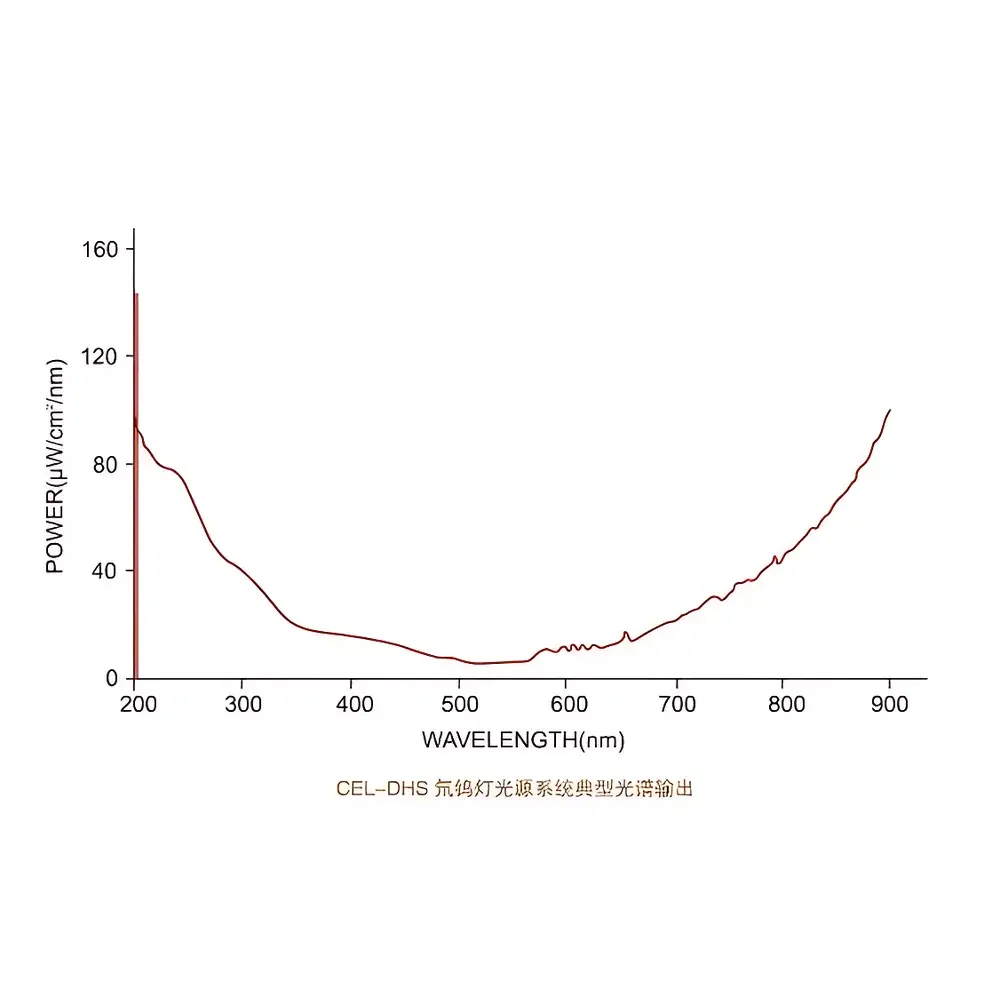
| Spectral Range | 200–1100 nm |
| Total Power | 40 W (Deuterium: 30 W, Tungsten: 10 W) |
| Output Interface | SMA 905 |
| Stability | < 1×10⁻³ AU (rms, over 1 h) |
| Drift | < 0.25 %/h |
| Warm-up Time | 1–5 min |
| Operating Temperature | 5–35 °C |
| Weight | 2.5 kg |
| Deuterium Lamp Lifetime | >1000 h |
| Tungsten Lamp Lifetime | 2000 h |
| Input Voltage | 150–250 VAC, 50/60 Hz |
| Illumination Mode | External (Fiber-Output) |
Overview
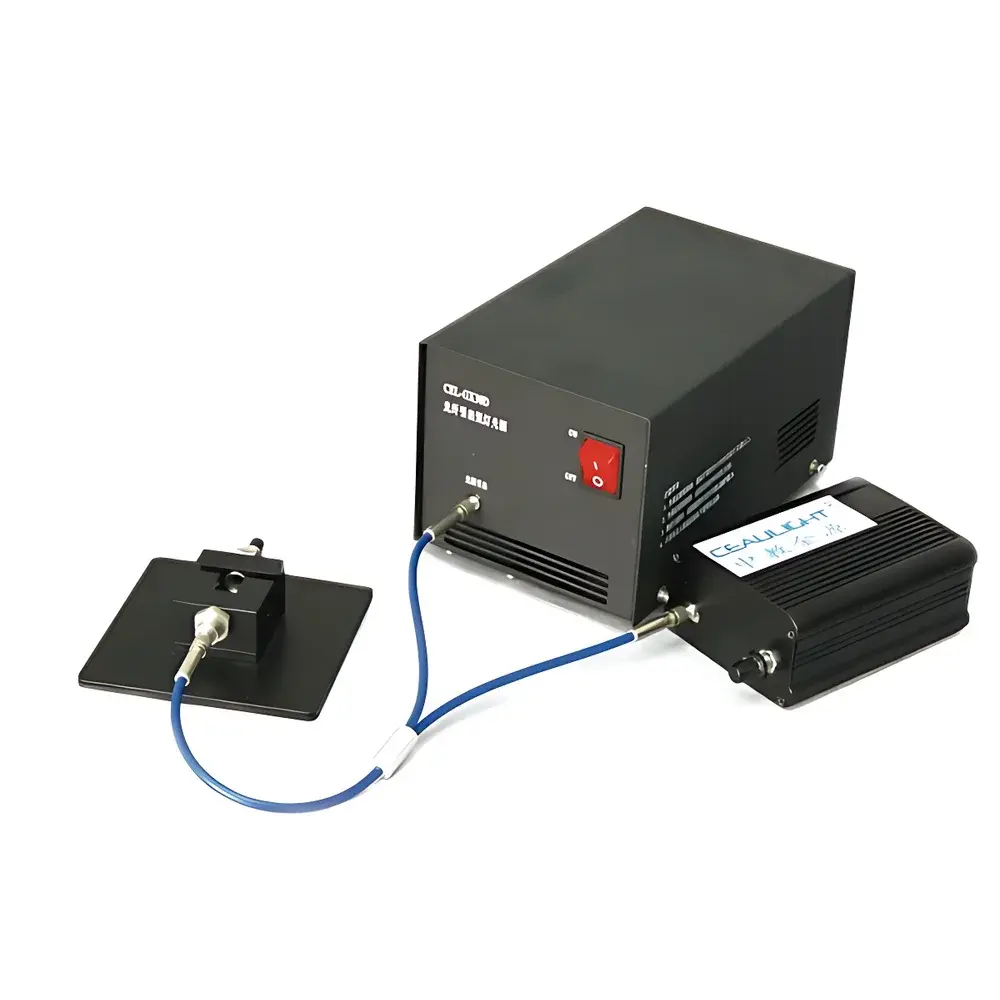
The CEL-DHS Deuterium-Tungsten Combined Fiber-Coupled Light Source System is a dual-lamp, spectrally continuous broadband source engineered for high-fidelity UV-Vis-NIR spectroscopic applications. It integrates two physically and electrically isolated emitters—a low-noise deuterium arc lamp (CEL-GX30D) covering 200–400 nm and a stabilized tungsten-halogen lamp (CEL-GW10) spanning 350–1100 nm—within a single compact chassis. The system delivers seamless spectral continuity from deep ultraviolet through near-infrared by spatially overlapping and fiber-coupling both outputs into a single SMA 905 connector. This architecture eliminates mechanical switching or optical re-alignment, ensuring intrinsic wavelength stability and minimizing intensity discontinuities at the 350–400 nm overlap region. Designed for laboratory-grade transmission, absorption, and reflectance measurements, the CEL-DHS meets the demanding requirements of benchtop spectrophotometers, monochromator-based setups, and fiber-optic sensor calibration systems where broad spectral coverage, long-term radiometric consistency, and operational simplicity are critical.
Key Features
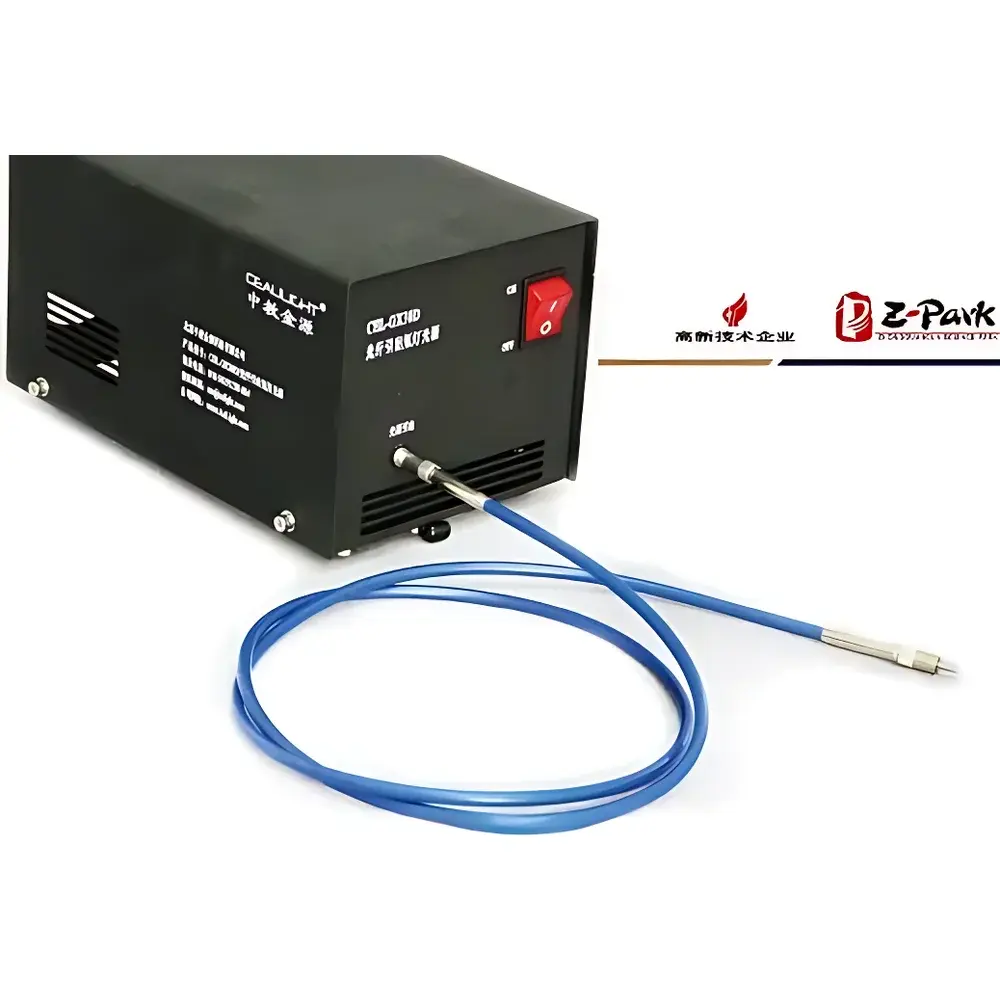
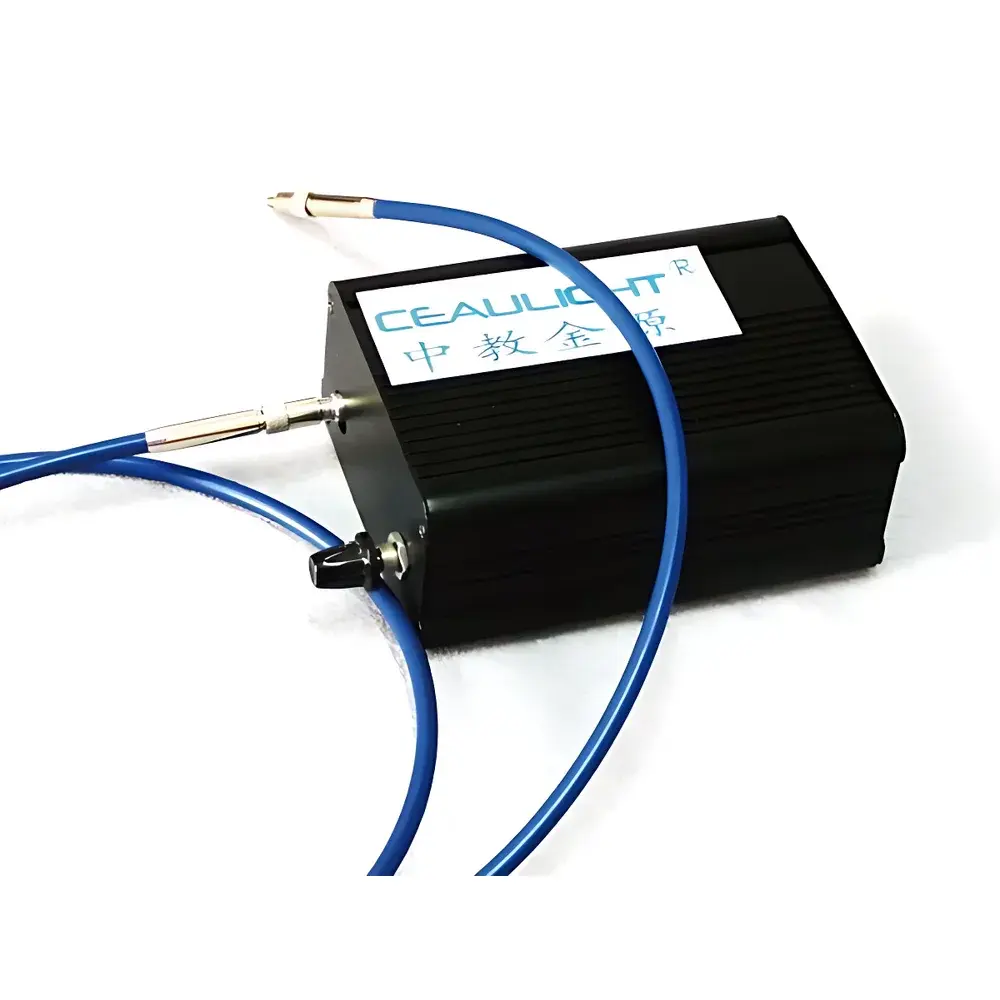
- Fiber-coupled output via standardized SMA 905 interface, enabling direct integration with spectrometers, optical fibers, integrating spheres, and custom optical trains
- Independent on/off control of deuterium and tungsten lamps—facilitating spectral region selection without thermal or electrical crosstalk
- Optimized thermal management and regulated power supplies ensure radiometric stability < 1×10⁻³ AU (absorbance units, RMS) over one hour and drift < 0.25 %/h under constant operating conditions
- Compact, benchtop-ready design (2.5 kg) with integrated power conditioning; accepts universal AC input (150–250 VAC, 50/60 Hz) without external transformers or controllers
- Short warm-up time (1–5 minutes) to reach photometric equilibrium, reducing experimental downtime and improving throughput in QC and research workflows
- High-reliability emitter configuration: deuterium lamp rated for >1000 hours, tungsten-halogen lamp rated for 2000 hours—supporting extended unattended operation in GLP-compliant environments
Sample Compatibility & Compliance
The CEL-DHS is compatible with standard quartz cuvettes, transmission cells, solid-state optical filters, and reflective standards used across UV-Vis-NIR characterization. Its spectral output conforms to ISO 6780:2012 (spectral irradiance reference sources) and supports traceable calibration per NIST-traceable protocols when paired with calibrated photodiodes or spectroradiometers. While not an FDA-regulated medical device, its stability and repeatability align with analytical instrument qualification requirements under USP , ASTM E275, and ISO/IEC 17025–compliant laboratories. No hazardous material declarations apply; all internal components comply with RoHS Directive 2011/65/EU and REACH Annex XVII restrictions.
Software & Data Management
The CEL-DHS operates as a hardware-level light source without embedded firmware or digital control interfaces. It is fully compatible with third-party instrument control software (e.g., OceanView, Thorlabs’ APT, LabVIEW, Python-based PyVISA drivers) via TTL-triggered external relays or manual switch actuation. For audit-ready environments, users may log lamp activation timestamps, cumulative operating hours (via external timer or PLC), and environmental parameters (temperature/humidity) alongside spectral acquisition data—enabling full traceability in 21 CFR Part 11–aligned workflows when implemented with appropriate electronic record controls.
Applications
- UV-Vis-NIR absorbance and transmittance spectroscopy of aqueous and organic solutions, thin films, and nanomaterial dispersions
- Calibration of array detectors, CCD/CMOS spectrometers, and FTIR accessories requiring broadband reference illumination
- Photocatalytic reaction monitoring (e.g., TiO₂, g-C₃N₄ degradation studies) using defined UV-driven excitation
- Fiber-optic sensor interrogation, including refractive index sensing, fluorescence excitation, and LED/photodiode response characterization
- Validation of optical coating performance across multi-band anti-reflective or dichroic filter stacks
- Teaching laboratories for fundamental optics experiments involving Beer-Lambert law verification, spectral resolution analysis, and detector linearity testing
FAQ
Is the CEL-DHS suitable for use with monochromators?
Yes—the stable, low-noise output and broad spectral continuity make it ideal for monochromator-based scanning systems requiring high signal-to-noise ratio across UV-Vis-NIR.
Can the deuterium and tungsten lamps be operated simultaneously?
Yes; both lamps are independently powered and may be run concurrently to achieve maximum spectral coverage (200–1100 nm) with optimized intensity balance in the overlap region.
What is the recommended optical fiber type for coupling?
UV-grade fused silica fibers with SMA 905 terminations (e.g., Ocean Insight QP400-UV-VIS, Thorlabs UV/VIS 400 µm core) are recommended to preserve UV throughput and minimize solarization effects.
Does the system include radiometric calibration data?
No—calibration certificates and spectral irradiance curves are available as optional add-ons upon request, traceable to NIST-standard reference lamps.
How is lamp aging compensated during long-term experiments?
Users should implement periodic intensity normalization using a stable reference detector or internal baseline correction routines within acquisition software; no automatic feedback loop is built into the hardware.





