
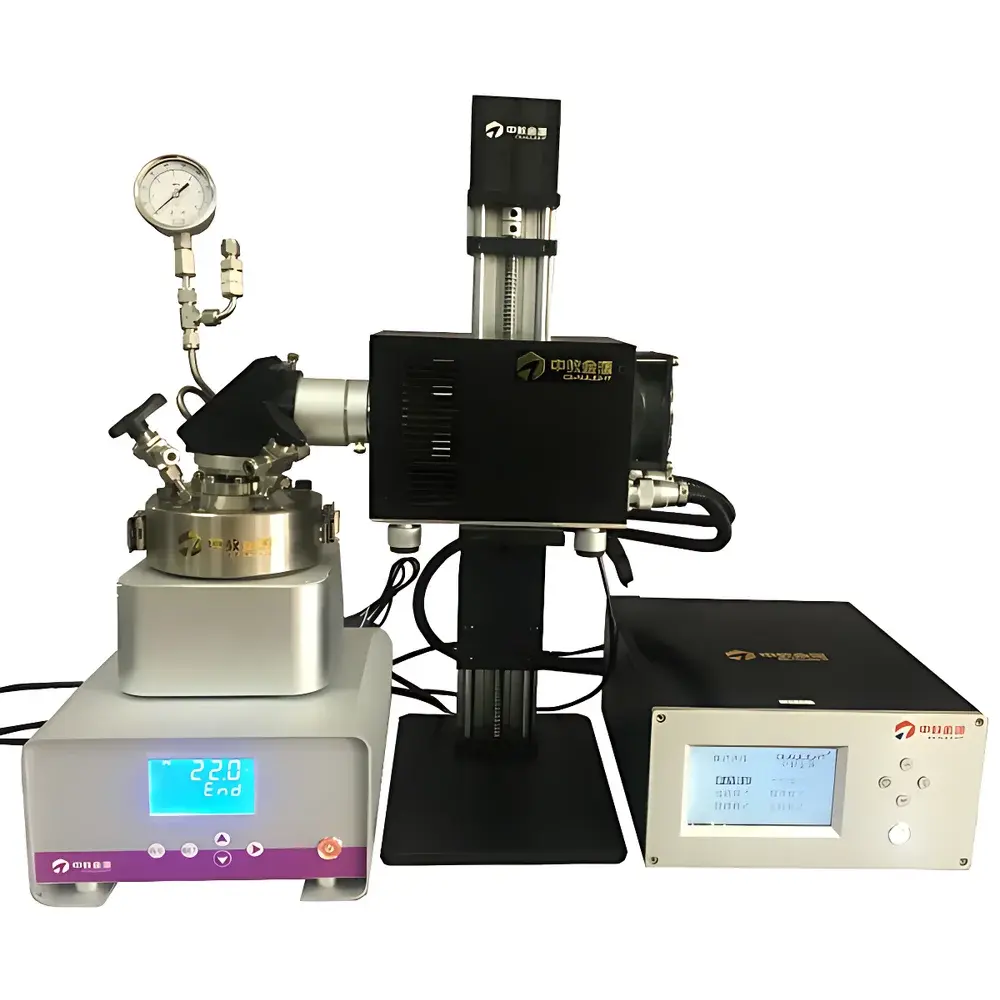
CEL-HPR+ High-Pressure Photochemical Reactor (Premium Edition with Sapphire Window & Motorized Lift Platform)
| Brand | CEL (China Education Goldsource) |
|---|---|
| Origin | Beijing, China |
| Manufacturer Type | OEM Manufacturer |
| Country of Origin | China |
| Model | CEL-HPR+ |
| Price | USD 9,800 (FOB Beijing) |
| Vessel Capacity | 25–250 mL |
| Construction Material | 316L Stainless Steel (optional Hastelloy C-276) |
| Maximum Operating Pressure | 10 MPa |
| Vacuum Rating | ≤10⁻³ Pa (after pump-down) |
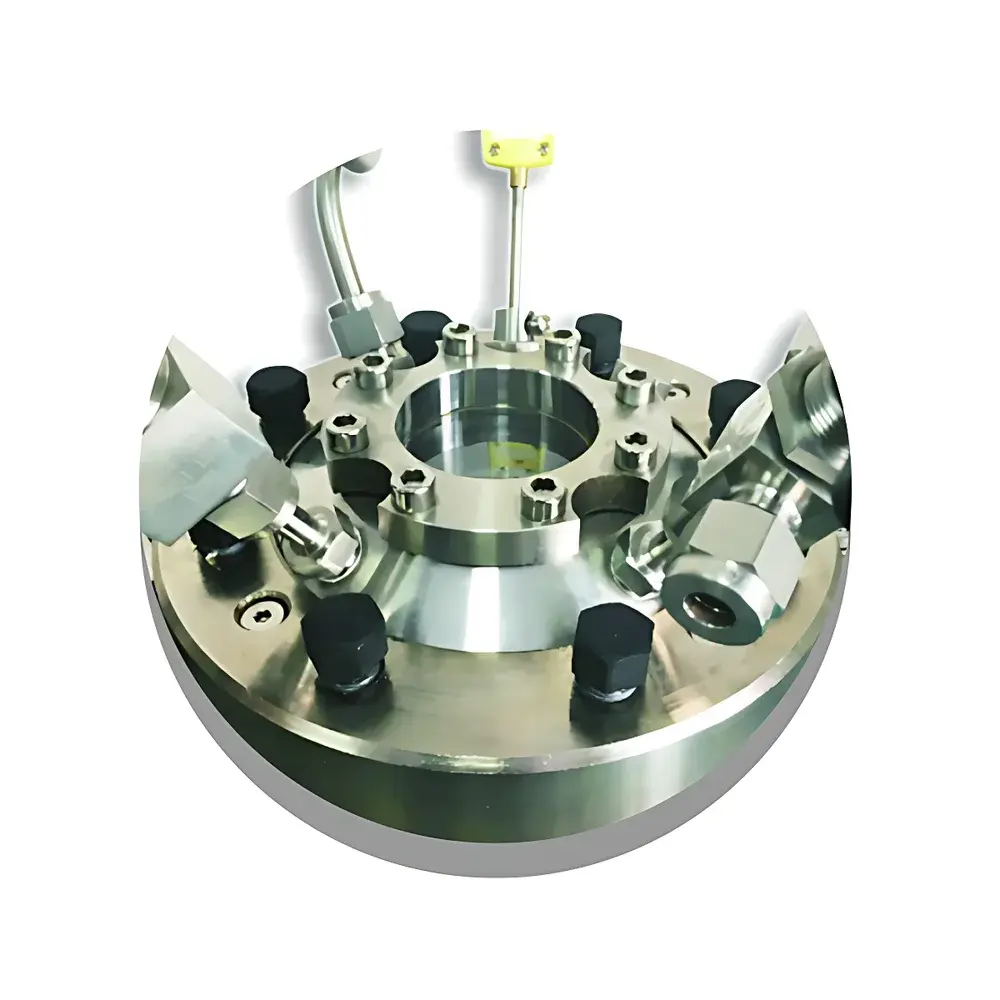
| Optical Window | Single-face sapphire (Al₂O₃), diameter 20–40 mm, transmission >85% @ 200–2500 nm |
| Heating Power | 1200 W modular heater |
| Temperature Range | Ambient to 300 °C (control accuracy ±0.1 °C) |
| Stirring | Internal magnetic coupling, bidirectional, speed-adjustable |
| Sealing System | Dual-line graphite composite gasket with crescent-shaped dual-clamp flange |
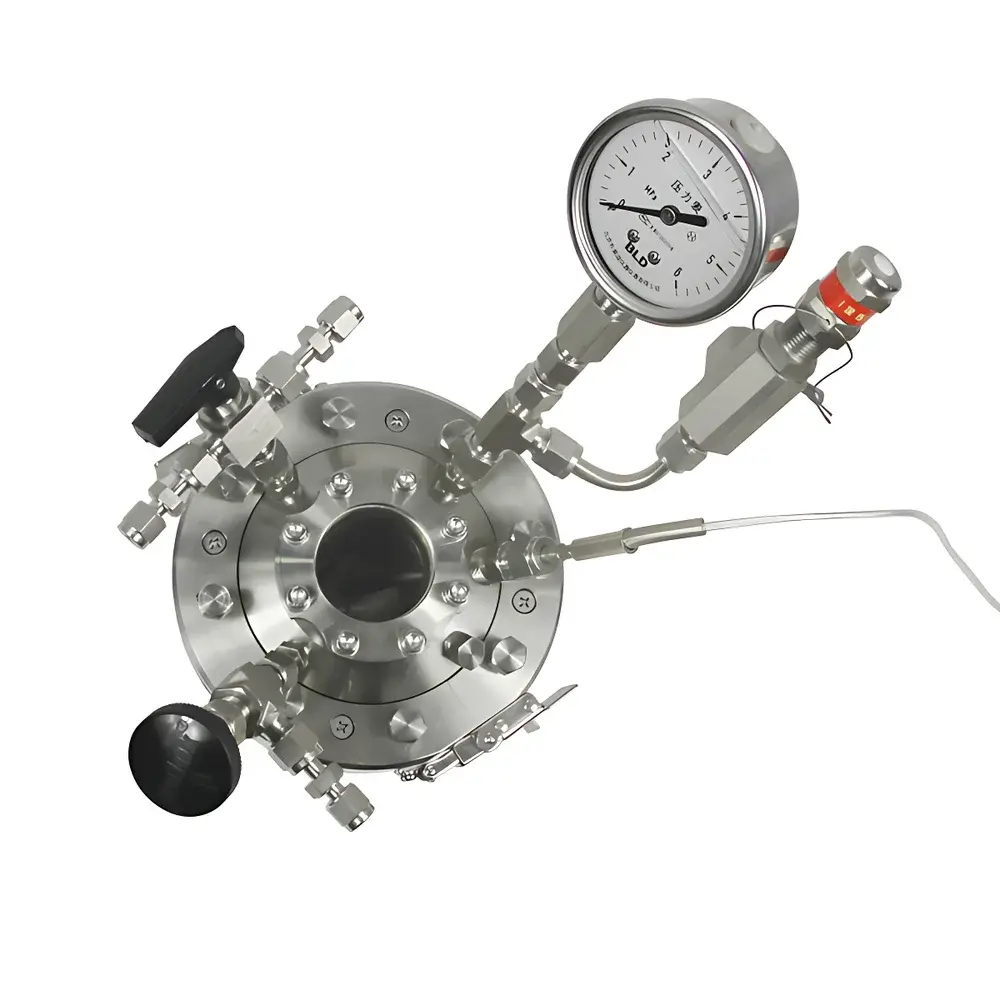
| Safety Features | Integrated pressure relief valve, redundant thermal monitoring, fail-safe overpressure cutoff |
| Automation | Motorized vertical lift platform (400 mm travel), programmable timing for heating, stirring, and illumination cycles |
| Compliance | Designed per ASME BPVC Section VIII Div. 1 (2023), ISO 4775:1993 (high-pressure reactors), and ASTM E2515-19 (photochemical reaction systems) |
Overview
The CEL-HPR+ High-Pressure Photochemical Reactor (Premium Edition) is an engineered solution for quantitative photochemical and photocatalytic research under rigorously controlled high-pressure, temperature-stabilized, and optically transparent conditions. Built upon Couette-type internal magnetic drive architecture and a monolithic sapphire optical viewport, it enables real-time in situ irradiation—via top-illumination (TOP) or side-illumination (SIDE) configurations—of homogeneous or heterogeneous reactions at pressures up to 10 MPa and temperatures up to 300 °C. Its design adheres to fundamental principles of photochemical kinetics, where photon flux density, reactant residence time, interfacial mass transfer, and quantum yield are simultaneously constrained by mechanical integrity, thermal uniformity, and optical fidelity. Unlike conventional batch reactors with quartz or fused-silica windows—prone to thermal cracking, UV degradation, or surface condensation—the CEL-HPR+ integrates single-crystal sapphire (α-Al₂O₃) with hydrophobic surface treatment, ensuring stable transmittance across deep-UV (200 nm) to NIR (2500 nm), minimal birefringence, and zero water-beading during condensing-phase experiments.
Key Features
- Sapphire optical viewport: Chemically inert, scratch-resistant (Mohs 9), thermally stable up to 2000 °C, with broadband transmission (>85%) and negligible autofluorescence—critical for time-resolved spectroscopic monitoring and quantum efficiency calibration.
- Dual-point temperature control: Independent thermal sensors embedded in both reactor wall and internal fluid phase eliminate overshoot; PID-controlled modular heating ensures radial thermal homogeneity <±0.3 °C across the reaction zone.
- Double-seal flange system: Crescent-shaped dual-clamp mechanism with high-temperature graphite composite gasket provides leak-tight sealing at 10 MPa—validated per ISO 5208 leakage class A—and eliminates cross-threading risk during repeated assembly.
- Motorized lift platform (400 mm stroke): Precision stepper-driven vertical positioning enables reproducible source-to-reactor distance control for absolute irradiance calibration (W·m⁻²) and spatial fluence mapping.
- Integrated gas/liquid handling interface: Standardized Swagelok-compatible ports (¼″ NPT) support direct coupling with mass flow controllers (MFCs), syringe pumps (e.g., PPS series), and online sampling manifolds (e.g., CEL-GSOA).
- Fail-safe pressure management: Redundant safety architecture includes burst-disc rated at 12 MPa, spring-loaded pressure relief valve (set at 10.5 MPa), and digital overpressure lockout triggered at 10.2 MPa.
Sample Compatibility & Compliance
The CEL-HPR+ accommodates liquid-phase, slurry-phase, and gas-phase reactions—including multiphase CO₂ hydrogenation, NOₓ photoreduction, VOC mineralization, and supercritical fluid synthesis—with compatibility for aggressive media (e.g., HF-containing electrolytes, chlorinated solvents, H₂S-saturated streams). All wetted parts meet ASTM A240 Grade 316L requirements; optional Hastelloy C-276 construction extends corrosion resistance to reducing acidic environments. The reactor conforms to ISO/IEC 17025:2017 method validation prerequisites for photochemical kinetic studies and supports GLP-compliant audit trails when operated with CEL’s optional data-logging firmware (v3.2+), which records timestamped pressure, temperature, stir speed, and illumination status with SHA-256 hashing for data integrity.
Software & Data Management
The embedded controller features a 5.7″ industrial LCD HMI with real-time graphical display of process variables and programmable multi-step protocols (e.g., “heat-to-120 °C → purge-N₂ ×3 → pressurize-to-5 MPa → illuminate-for-180 min”). Optional USB-C data export supports CSV-formatted logs compatible with MATLAB, OriginLab, and Python-based kinetic modeling frameworks (e.g., Cantera, PyDSTool). For regulated environments, the optional CEL-DataVault module complies with FDA 21 CFR Part 11 via electronic signature capture, role-based access control, and immutable audit logs—enabling use in GMP pilot-scale catalyst screening.
Applications
This reactor serves as a primary tool for mechanistic photochemistry research requiring simultaneous control of photon flux, partial pressure, and thermal gradient. Validated applications include: (1) photocatalytic CO₂ reduction to CH₄/C₂H₄ using plasmonic Cu/TiO₂ under 5–8 MPa CO₂; (2) selective C–N coupling under visible LED irradiation in pressurized aniline/benzaldehyde mixtures; (3) in situ Raman/FTIR observation of TiO₂ surface intermediates during NO decomposition at 300 °C/10 MPa; (4) accelerated aging studies of perovskite photocatalysts under combined UV–thermal stress; and (5) supercritical antisolvent (SAS) nanoparticle formation with real-time laser diffraction monitoring through the sapphire window.
FAQ
What light sources are mechanically and spectrally compatible with the CEL-HPR+?
Standard mounting accepts 300 W Xe arc lamps (CEL-HXF300), high-power LED arrays (CEL-LED100HA), and medium-pressure Hg lamps via ISO-KF40 or CF35 flanges; spectral cutoff is defined by sapphire transmission—not lamp housing.
Can the reactor be used for corrosive halogen-containing feedstocks?
Yes—standard 316L construction resists Cl⁻ up to 100 °C/5 MPa; for >150 °C or HF-containing streams, Hastelloy C-276 upgrade is recommended and validated per NACE MR0175/ISO 15156.
Is remote operation supported?
Ethernet-enabled RS485 Modbus RTU interface allows integration into LabVIEW, Ignition SCADA, or custom Python automation scripts for unattended overnight runs.
How is optical alignment verified during setup?
A collimated He–Ne laser (632.8 nm) is supplied with alignment jigs; beam deviation <0.1° relative to viewport normal is confirmed using a quadrant photodiode array and digital inclinometer.
What maintenance intervals are recommended for long-term reliability?
Graphite gaskets require replacement after 50 thermal cycles above 200 °C; magnetic stir coupling torque is verified annually via calibrated torque wrench; sapphire window surface integrity is inspected quarterly using white-light interferometry (RMS roughness <0.8 nm).



