CEL-QPCE3000 Photoelectrochemical Quantum Efficiency Measurement System (QE/IPCE)
| Brand | CEL (Zhongjiao Jinyuan) |
|---|---|
| Origin | Beijing, China |
| Manufacturer Type | Direct Manufacturer |
| Model | CEL-QPCE3000 |
| Measurement Mode | DC |
| Spectral Range | 300–1100 nm (optional 200–2500 nm) |
| Wavelength Step Resolution | ≥1 nm, continuously adjustable |
| QE/IPCE Repeatability (RSI) | <0.3% (photocurrent) |
| Chopping Frequency | 5–1000 Hz |
| Monochromator | 300 mm focal length, asymmetric Czerny-Turner design, aberration-corrected, nitrogen-purged port |
| Light Source | 500 W Xe lamp (Osram), intensity stability <0.01% |
| Detector | UV-enhanced Si photodiode (300–1100 nm) |
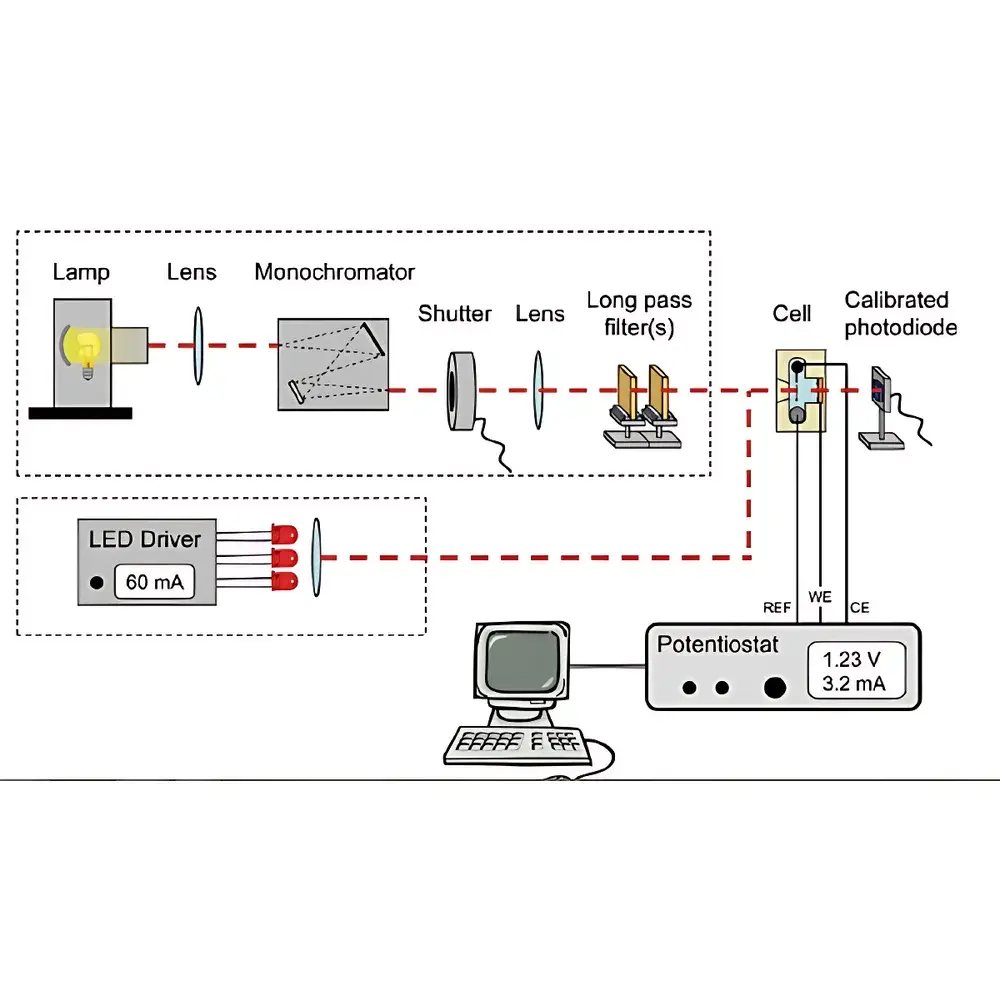
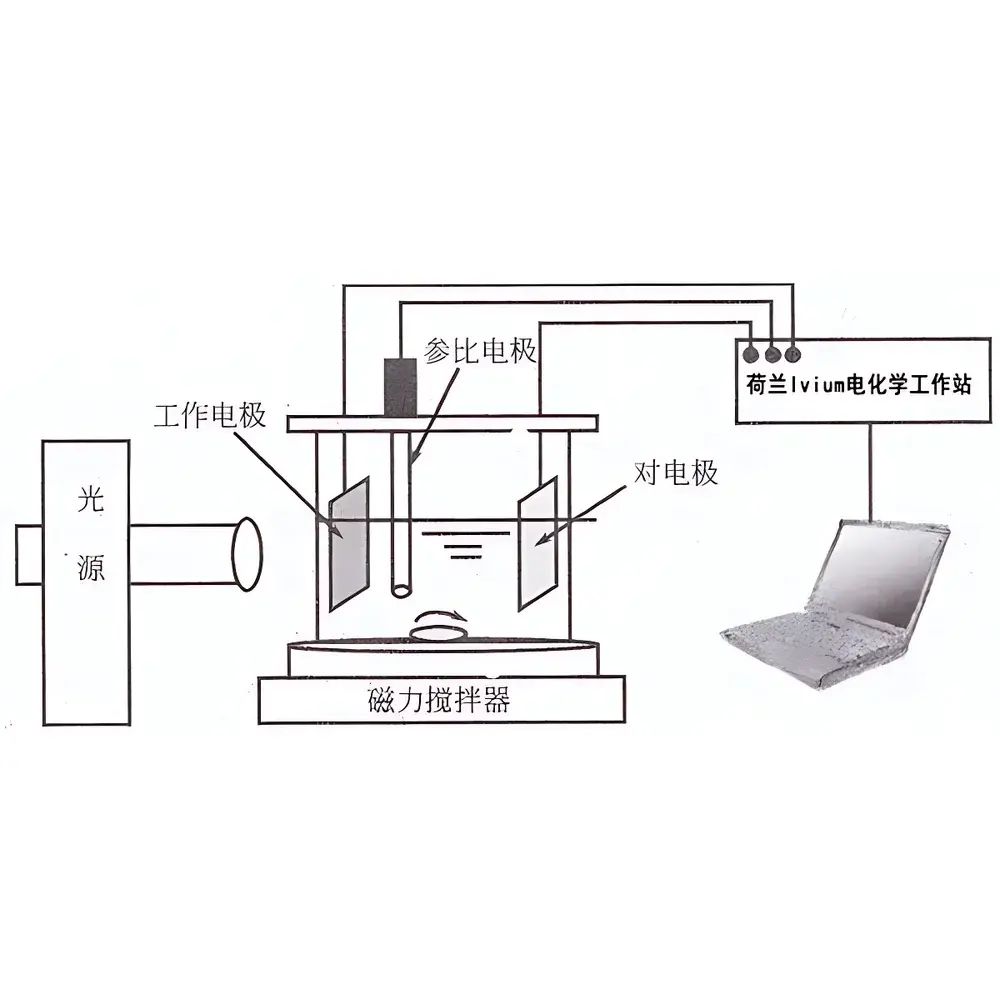
| Electrochemical Integration | Compatible with Ivium and other CE-compliant potentiostats |
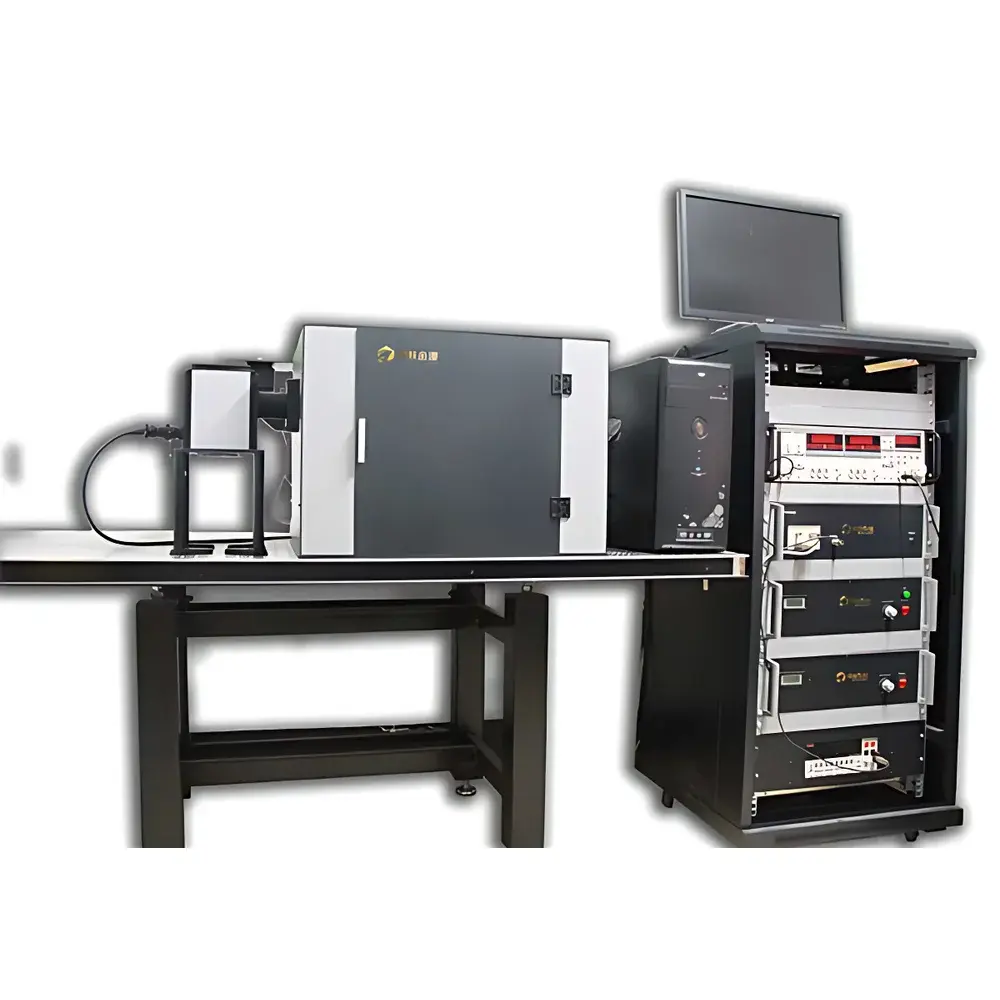
| Sample Stage | Motorized dual-position stage (reference + sample), EMI-shielded enclosure |
| Optional Bias Light | Single- or dual-channel LED/laser bias sources |
Overview
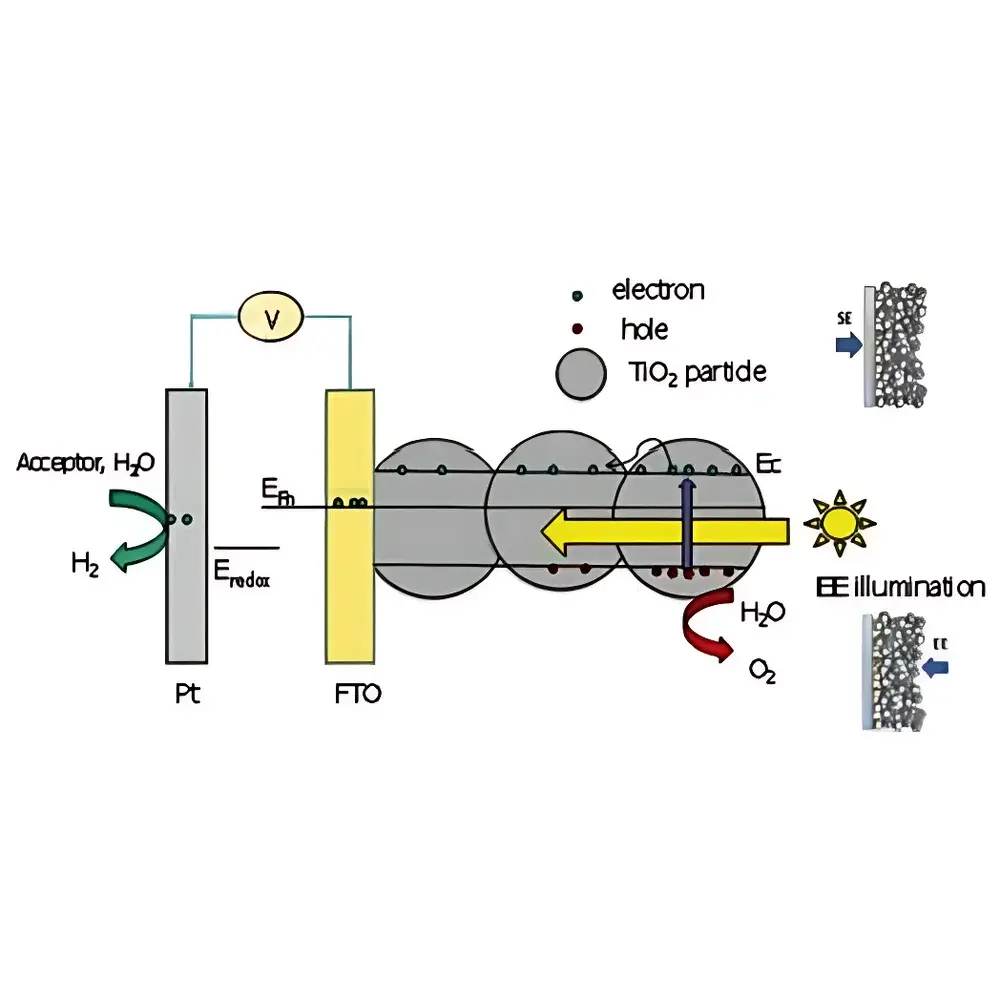
The CEL-QPCE3000 Photoelectrochemical Quantum Efficiency Measurement System is a precision-engineered platform for quantitative spectral characterization of photoactive materials under controlled electrochemical conditions. It operates on the principle of monochromatic photon-to-current conversion efficiency (IPCE) and external quantum efficiency (EQE) measurement via lock-in amplification—leveraging phase-sensitive detection to isolate weak photocurrent signals from broadband noise. The system integrates a high-stability 500 W xenon lamp, a 300 mm focal-length Czerny-Turner monochromator with aberration correction and nitrogen-purge capability, and a calibrated UV-enhanced silicon photodiode (300–1100 nm) as the primary reference detector. Its core function is to determine wavelength-resolved charge carrier generation and interfacial transfer kinetics in semiconductor photoelectrodes, enabling rigorous evaluation of light-harvesting performance, surface recombination losses, and catalytic selectivity in aqueous and non-aqueous electrolytes.
Key Features
- Automated, software-controlled spectral scanning with real-time background subtraction and error compensation algorithms
- Dual-mode operation: DC electrochemical polarization (galvanostatic/potentiostatic) and AC-modulated photocurrent detection (5–1000 Hz chopping frequency)
- Motorized dual-position sample stage housed within a grounded, EMI-shielded enclosure to ensure signal integrity during low-current measurements (<100 pA resolution achievable)
- Monochromator with integrated nitrogen purge port, enabling stable operation across atmospheric absorption bands (e.g., O2 at 760 nm, H2O vapor beyond 1400 nm)
- Optical path isolation: separate optical chamber and mechanical drive compartment prevent lubricant outgassing contamination and stray light generation
- High-precision wavelength calibration via stepper-motor-driven grating with细分驱动 (microstep control), ensuring spectral reproducibility ≤±0.1 nm over repeated scans
- Modular detector interface supporting interchangeable photodiodes—including optional InGaAs for extended NIR coverage (800–1600 nm)
- Compatibility with industry-standard electrochemical workstations (e.g., Ivium CompactStat, BioLogic SP-300) for synchronized potentiodynamic control and transient photocurrent acquisition
Sample Compatibility & Compliance
The CEL-QPCE3000 supports planar and particulate photoelectrodes mounted on conductive substrates (FTO, ITO, Au, Pt, Ni foam), liquid-junction photoelectrochemical cells (e.g., three-electrode configurations), and optically transparent thin-film devices. It accommodates standard quartz or fused-silica cuvettes (1 cm path length) and custom-designed reactor cells with optical access windows. All hardware and firmware comply with CE marking requirements for laboratory instrumentation. Data acquisition workflows support audit-trail logging and user-access controls aligned with GLP principles. When paired with FDA 21 CFR Part 11–compliant electrochemical software (e.g., IviumSoft with electronic signature modules), the system meets regulatory expectations for traceable, tamper-evident data generation in R&D environments subject to quality assurance oversight.
Software & Data Management
The proprietary QEPower software provides full instrument orchestration: automated wavelength sweep, bias light triggering, potentiostat synchronization, and real-time IPCE/QE calculation using NIST-traceable responsivity curves. Raw current/voltage data are stored in HDF5 format with embedded metadata (wavelength, applied potential, chopping frequency, integration time, detector gain). Export options include CSV, MATLAB (.mat), and Origin-compatible XY files. Batch processing tools enable comparative analysis across multiple samples, including normalization to incident photon flux (measured via calibrated reference diode), dark-current correction, and spectral transmittance deconvolution. All calibration files (detector responsivity, lamp spectral irradiance, monochromator throughput) are digitally signed and version-controlled within the software database.
Applications
- Quantitative benchmarking of photoanodes (e.g., BiVO4, Fe2O3, WO3) and photocathodes (e.g., Cu2O, Si, GaInP2) for solar water splitting
- Structure–property correlation studies: evaluating doping, heterojunction formation, co-catalyst loading, and surface passivation effects on charge separation efficiency
- In situ monitoring of photocorrosion onset via time-resolved IPCE decay at fixed wavelengths
- Validation of optical models (e.g., transfer matrix simulations) by correlating measured QE spectra with predicted absorption profiles
- Characterization of perovskite-based photoelectrochemical sensors and hybrid organic–inorganic photodetectors
- Standardized testing per ASTM E2536-19 (Standard Test Method for External Quantum Efficiency of Photovoltaic Devices) with appropriate modifications for liquid-junction systems
FAQ
What is the minimum detectable photocurrent under DC mode?
The system achieves sub-nanoampere sensitivity (≤500 pA typical) when coupled with low-noise electrometers and optimized shielding; actual limit depends on integration time, chopping frequency, and electrode geometry.
Can the CEL-QPCE3000 measure internal quantum efficiency (IQE)?
Yes—by integrating with a reflectance/absorbance accessory (e.g., integrating sphere or UV-Vis-NIR spectrophotometer), users can derive IQE = EQE / Absorption Fraction, provided spectral absorption data are acquired under identical geometric conditions.
Is nitrogen purging mandatory for UV measurements below 350 nm?
Strongly recommended: atmospheric oxygen absorbs strongly below 200 nm and exhibits structured absorption up to ~250 nm; nitrogen purging eliminates this interference and improves signal stability in the deep-UV range.
How is spectral irradiance calibrated?
Calibration uses a NIST-traceable standard photodiode (e.g., Hamamatsu S1337 series) with certified spectral responsivity; absolute irradiance values are interpolated across the scan range using lamp output stability data and monochromator throughput corrections.
Does the system support transient photocurrent spectroscopy (TPS)?
Yes—when synchronized with a pulsed bias source or gated light-emitting diode array, the CEL-QPCE3000 captures millisecond-scale photocurrent rise/decay kinetics at selected wavelengths, enabling carrier lifetime estimation via stretched-exponential fitting.