
CEL-IV Solar Cell I-V Characterization System
| Origin | Beijing, China |
|---|---|
| Manufacturer Type | Authorized Distributor |
| Origin Category | Domestic |
| Model | CEL-IV |
| Price | USD 22,800 (FOB) |
| Trigger Mode | Steady-State |
Overview
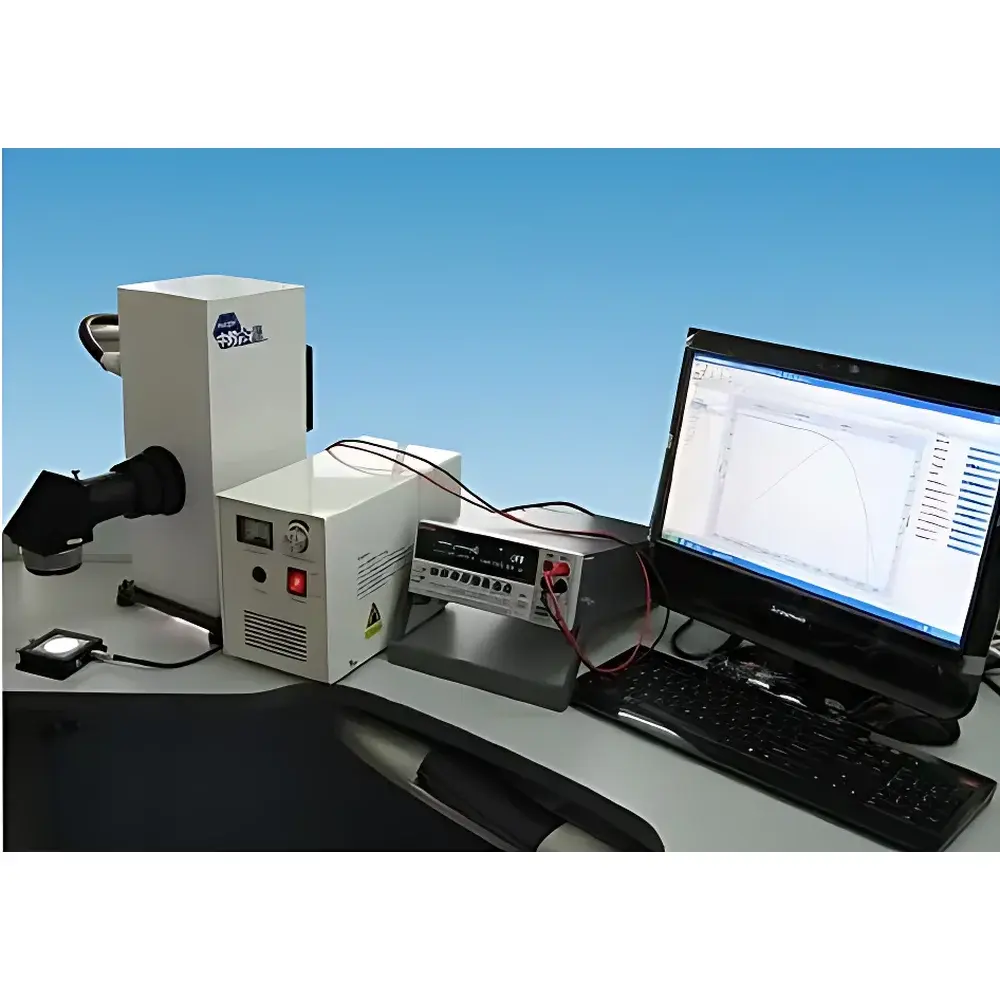
The CEL-IV Solar Cell I-V Characterization System is a turnkey solution engineered for precise, repeatable current–voltage (I-V) and power–voltage (P-V) measurements of photovoltaic devices under controlled illumination. Built upon the fundamental principles of semiconductor junction characterization, the system applies a programmable voltage sweep across the device under test (DUT) while simultaneously measuring resulting current response—enabling direct derivation of critical performance parameters including open-circuit voltage (Voc), short-circuit current (Isc), maximum power point (Pmpp), fill factor (FF), and power conversion efficiency (η). The system integrates a Class AAA solar simulator compliant with IEC 60904-9:2020 and ASTM E927-19 standards, ensuring spectral match (AM1.5G), irradiance uniformity (<5% spatial non-uniformity), and temporal stability (<2% RMS over 30 min)—all essential for metrologically traceable PV testing in R&D, quality assurance, and certification workflows.
Key Features
- Steady-state I-V and P-V curve acquisition under both illuminated and dark conditions
- Integrated Class AAA solar simulator (CEL-S500) with AM1.5G spectral filtering, collimated output, and real-time irradiance monitoring
- High-accuracy source measurement unit (SMU): Keithley 2401 (or 2400-series equivalent), offering 1 nA to 1.05 A current range and 200 µV to 21 V voltage range with 6½-digit resolution
- Calibrated reference solar cell (CEL-RC series): 20 mm × 20 mm monocrystalline or polycrystalline silicon standard cell, supplied with NIST-traceable calibration certificate
- Full-spectrum optical power meter (CEL-NP2000) with Si/InGaAs photodetector covering 190 nm–11,000 nm, ±0.001 mW resolution
- Dedicated sample stage with four-probe contact configuration to eliminate lead resistance errors and enable true device-level characterization
- Modular hardware architecture supporting optional thermal control (Peltier-cooled stage, circulating chiller), XYZ manual/automated translation, and temperature monitoring
Sample Compatibility & Compliance
The CEL-IV system accommodates planar photovoltaic samples up to 50 mm × 50 mm (or Ø60 mm circular format), including silicon wafers, perovskite thin films, organic PV cells, CIGS, and tandem structures. Four-point probe interfacing ensures accurate contact resistance compensation—critical for low-resistance devices and emerging high-conductivity interlayers. All optical and electrical measurements adhere to international PV metrology standards: IEC 60904-1 (photovoltaic current–voltage characteristics), IEC 60904-3 (reference spectra), IEC 60904-9 (solar simulator classification), and ASTM E1036 (electrical performance testing of terrestrial PV modules). The system supports GLP-compliant data integrity through audit-trail-enabled software logging, timestamped raw data capture, and export-ready metadata embedding.
Software & Data Management
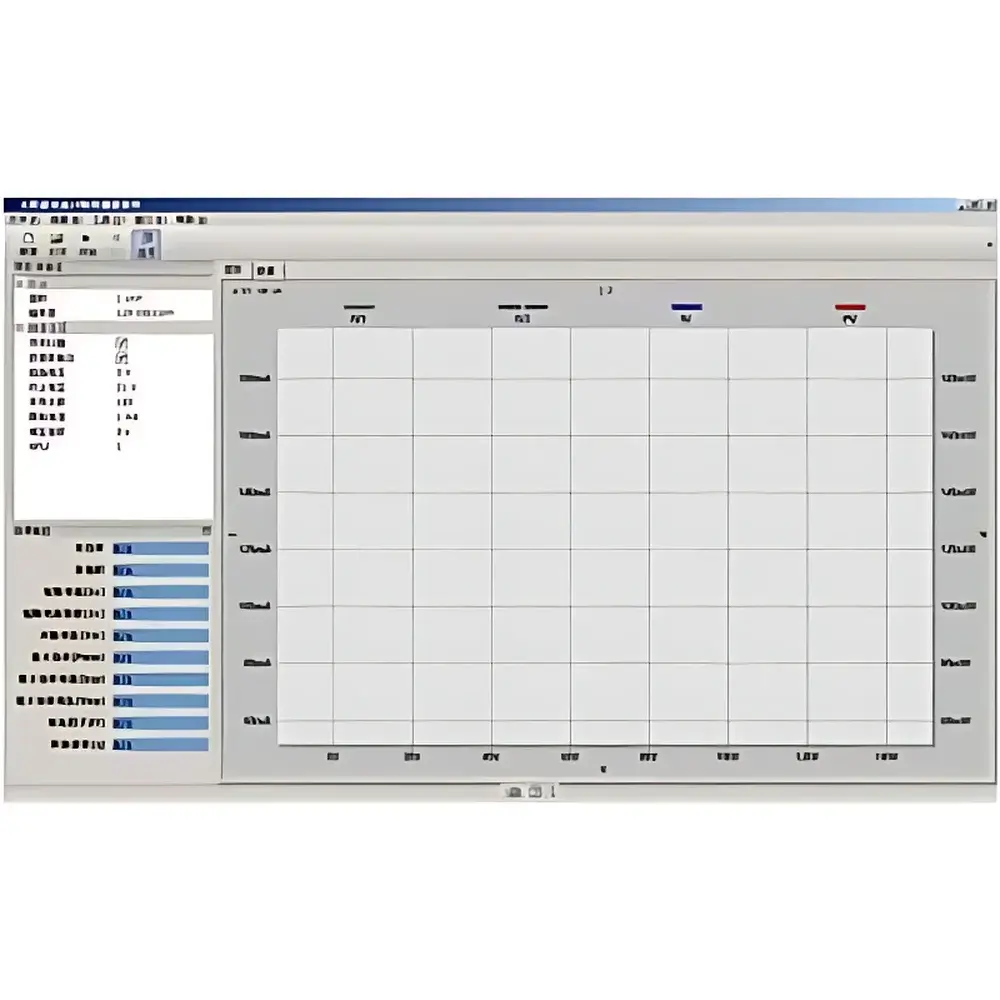
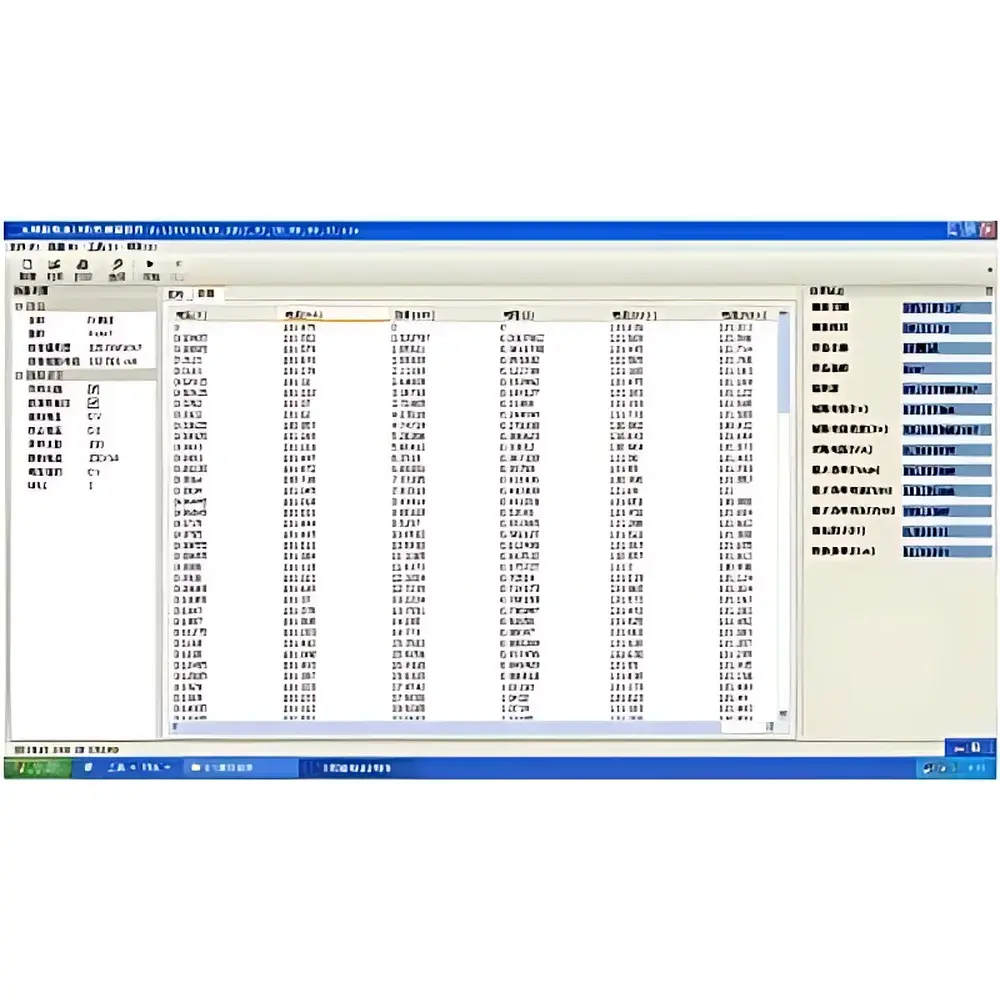
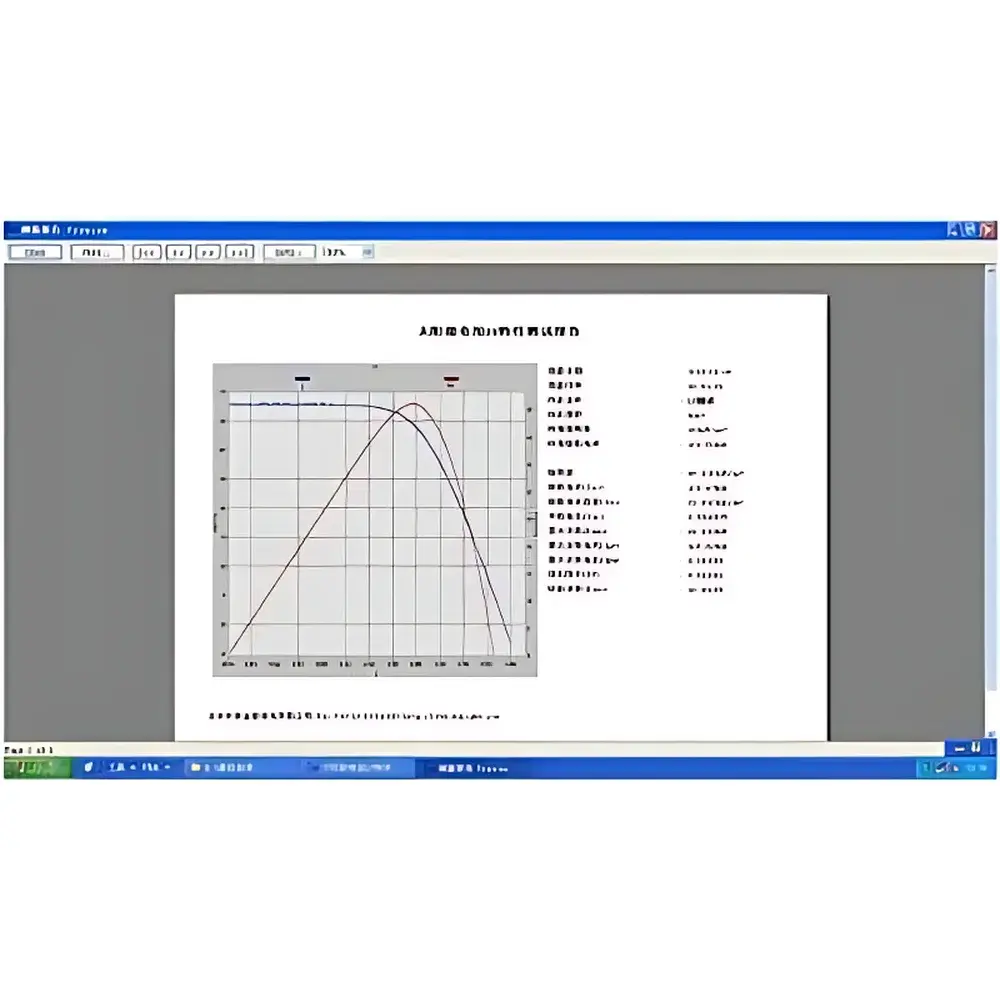
The native Windows-based control software provides a fully localized Chinese GUI without compromising engineering rigor—featuring intuitive waveform configuration, real-time curve overlay, automatic parameter extraction (Voc, Isc, FF, η), and statistical batch analysis. Raw I-V datasets are stored in vendor-neutral formats: ASCII (tab-delimited), Excel (.xlsx), and XML (schema-compliant for LIMS integration). Reporting templates generate ISO/IEC 17025-aligned test certificates—including irradiance calibration history, reference cell traceability ID, ambient temperature/humidity logs, and uncertainty estimates per GUM (JCGM 100:2008). All data exports retain full precision (no rounding), support Unicode character sets, and embed instrument serial numbers and firmware revision stamps.
Applications
- R&D evaluation of novel absorber materials (e.g., perovskites, quantum dots, organic semiconductors)
- Process optimization in thin-film deposition and electrode fabrication lines
- Quality control screening of production-grade solar cells and mini-modules
- Stability assessment under light soaking, thermal cycling, and bias stress protocols
- Validation of encapsulation integrity and interfacial recombination kinetics via dark I-V analysis
- Calibration transfer between primary reference labs and secondary test facilities
FAQ
Does the CEL-IV system meet IEC 61215 and IEC 61646 qualification requirements for module testing?
The CEL-IV is designed for cell-level characterization—not full-module qualification. However, its Class AAA illumination and traceable metrology serve as the foundational platform for developing pre-qualification test procedures aligned with IEC 61215 Section 10 (STC measurements) when paired with appropriate mounting fixtures and environmental controls.
Can the system perform pulsed I-V measurements for minimizing self-heating artifacts?
No—the CEL-IV operates exclusively in steady-state mode per its trigger architecture. For transient or flash-pulse characterization, users should consider complementary systems such as solar simulators with integrated fast-switching SMUs or dedicated flash testers.
Is firmware and software update support provided internationally?
Yes—remote firmware updates and version-controlled software releases (with changelogs and validation reports) are delivered via secure portal access to registered customers, with technical documentation available in English and Chinese.
What calibration documentation accompanies the reference solar cell?
Each CEL-RC standard cell ships with an accredited calibration report issued by a CNAS-accredited laboratory, specifying spectral responsivity (A/W) at 10 nm intervals from 300–1200 nm, absolute uncertainty (k=2), and traceability to NIM (National Institute of Metrology, China) or PTB (Physikalisch-Technische Bundesanstalt) standards.
Are third-party SMU replacements (e.g., Keysight B2900 series) supported?
The software driver layer is optimized for Keithley 2400-series SMUs. While generic SCPI command mapping may permit limited interoperability, full feature parity—including synchronized light-triggered sweeps and auto-ranging logic—is guaranteed only with original Keithley hardware.





