
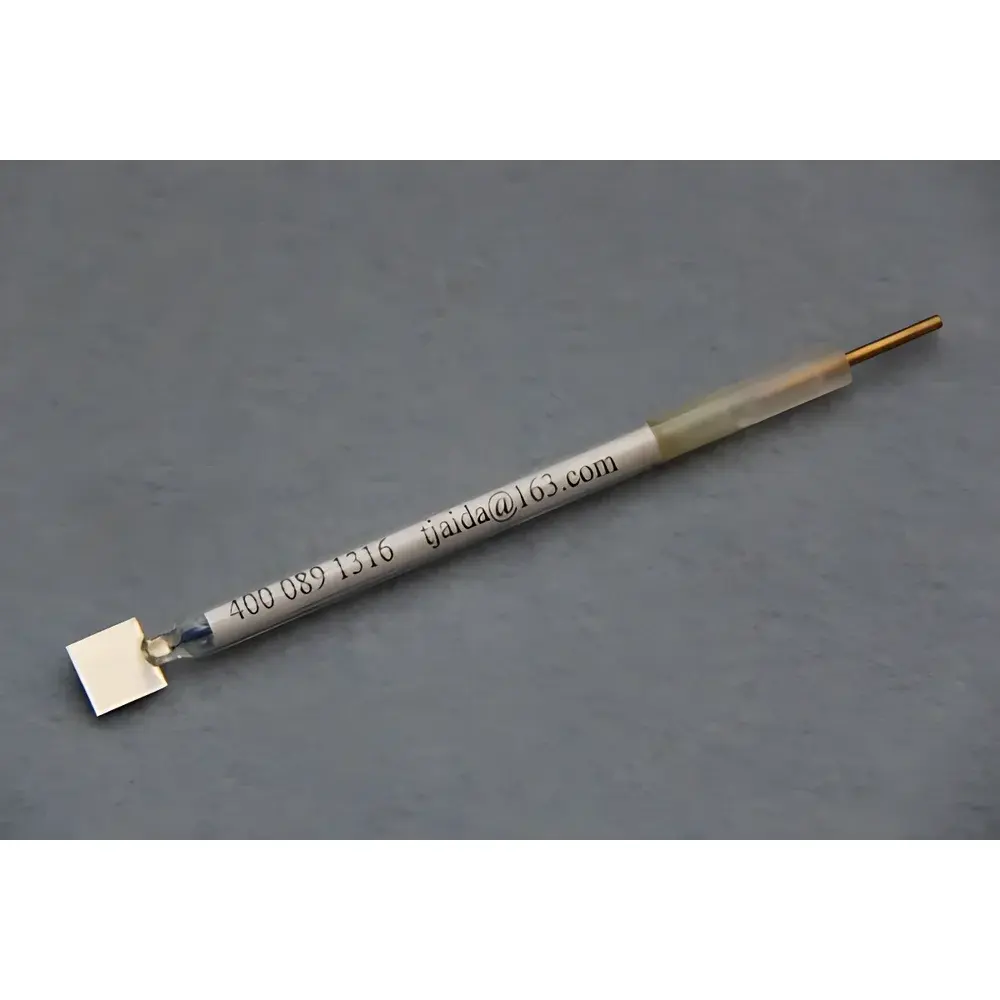
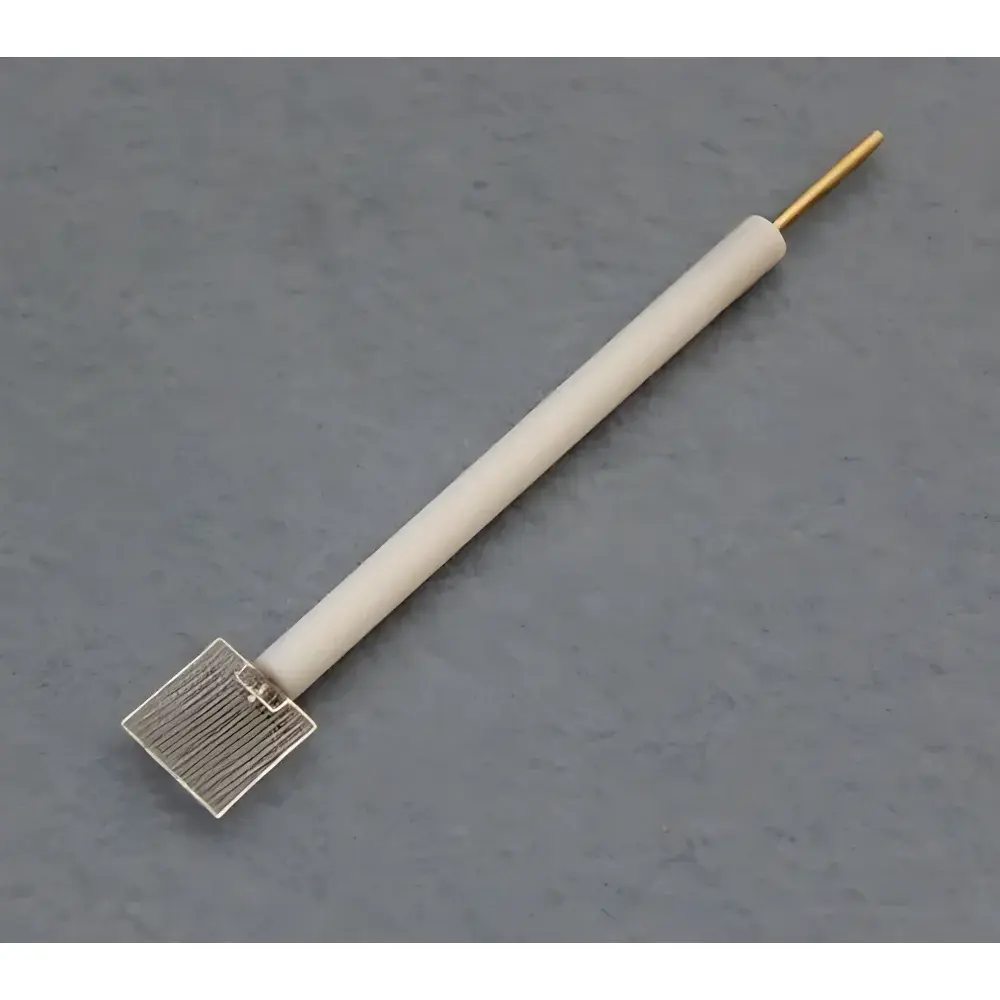
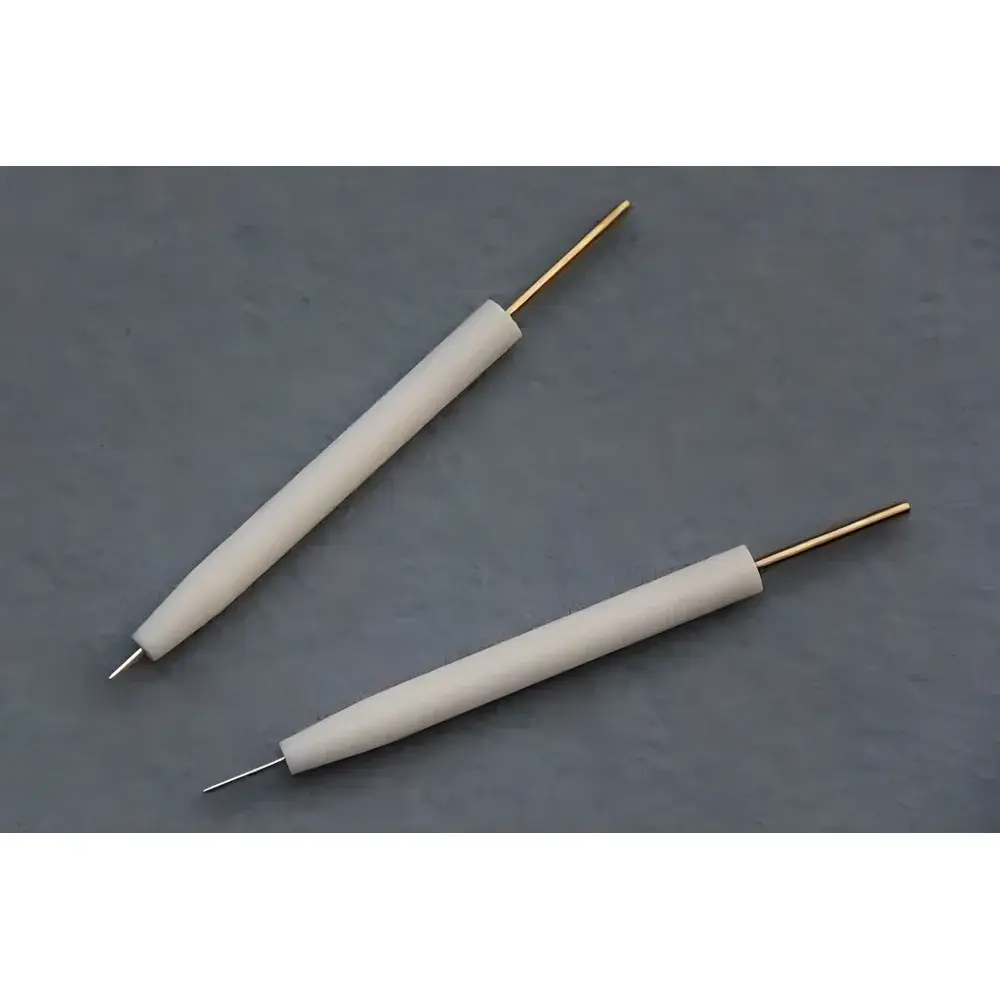
Platinum Electrode (Pt Sheet, Pt Mesh, Pt Wire) for Electrochemical and Optical Instrumentation
| Origin | Beijing, China |
|---|---|
| Manufacturer Type | Distributor |
| Regional Origin | Domestic (China) |
| Model | Customizable (e.g., Pt005, Pt010, Pt015, Pt017, or sheet/mesh variants) |
| Price Range | USD 0.15 – 75.00 per unit (based on configuration) |
| Component Category | Optical & Electrochemical Instrument Component |
| Platinum Purity | ≥99.95% |
| Electrode Stem Material | Borosilicate Glass or PTFE |
| Stem Diameter | 6 mm or 8 mm (PTFE) |
| Sheet Dimensions | 5×10 mm to 20×20 mm |
| Sheet Thickness | 0.1–0.5 mm |
| Mesh Specification | 52 mesh |
| Wire Diameters | 0.5 mm or 1.0 mm |
| Wire Lengths | 5–37 mm |
Overview
Platinum electrodes serve as critical conductive interfaces in hybrid optical-electrochemical instrumentation—particularly in spectroelectrochemical cells, optically transparent electrochemical reactors, and in situ Raman/UV-Vis flow cells where simultaneous optical access and stable electrochemical performance are required. These electrodes are fabricated from high-purity platinum (≥99.95% Pt), selected for its exceptional chemical inertness, wide electrochemical potential window (−0.2 to +1.2 V vs. SCE in aqueous media), low hydrogen overpotential, and minimal optical absorption across UV-Vis-NIR spectral ranges (190–2500 nm). Unlike carbon- or gold-based alternatives, platinum maintains structural integrity under prolonged anodic polarization and repeated potential cycling—making it indispensable for quantitative kinetic studies, catalyst evaluation, and reference-grade calibration in optical laboratory equipment.
Key Features
- High-purity platinum (≥99.95% Pt) certified per ASTM B588–22, ensuring reproducible electron transfer kinetics and negligible background interference in optical transmission measurements.
- Three geometric configurations optimized for distinct experimental architectures: (a) Pt sheet electrodes (5×10 mm to 20×20 mm; thickness 0.1–0.5 mm) for uniform current distribution in cuvette-style spectroelectrochemical cells; (b) Pt mesh electrodes (52 mesh, open-area ratio >70%) enabling high optical transmittance (>85% at 550 nm) while sustaining mechanical stability in flow-through optical cells; (c) Pt wire electrodes (models Pt005, Pt010, Pt015, Pt017) with precisely controlled diameters (0.5 or 1.0 mm) and lengths (5–37 mm) for microelectrode applications or embedded sensor integration.
- Chemically inert electrode stems constructed from either borosilicate glass (for high-temperature compatibility up to 450 °C) or medical-grade PTFE (ASTM D4894-compliant), both offering zero leachables and full compatibility with aggressive electrolytes (e.g., concentrated H2SO4, HF-containing solutions).
- Customizable geometry: sheet shape (square, circular, annular), mesh aperture, wire tip geometry (flat-cut, hemispherical, sharpened), and stem length (standard 80–120 mm; extended options available) to match OEM optical cell designs or ISO/IEC 17025-compliant lab setups.
- Traceable manufacturing documentation provided—including batch-specific purity certificates, dimensional inspection reports, and surface roughness data (Ra < 0.2 µm for sheet variants)—supporting GLP/GMP audit readiness and instrument qualification (IQ/OQ).
Sample Compatibility & Compliance
These platinum electrodes are validated for use with aqueous, non-aqueous, and molten salt electrolytes across pH 0–14 and temperatures from −20 °C to +180 °C (depending on stem material). They exhibit no measurable spectral distortion in standard quartz or sapphire optical windows (transmission loss <0.3% at 254 nm). All configurations comply with IEC 61000-4-3 (EMC immunity) when integrated into shielded optical-electrochemical platforms. For regulated environments, PTFE-stemmed variants meet USP Class VI biocompatibility requirements, and documentation supports FDA 21 CFR Part 11 compliance when paired with validated data acquisition software.
Software & Data Management
While inherently passive components, these electrodes integrate seamlessly with industry-standard electrochemical workstations (e.g., BioLogic SP-300, Metrohm Autolab PGSTAT302N) and optical spectrometers (Ocean Insight, Avantes, Hamamatsu). Their dimensional consistency enables reliable correlation between measured current density (A/cm²) and optical absorbance change (ΔA), facilitating automated kinetic modeling in MATLAB®, Python (SciPy), or commercial packages such as Thermo Scientific OMNIC Paradigm. Raw electrode geometry metadata (area, perimeter, projected volume) can be exported via CSV for inclusion in LIMS or ELN systems supporting ASTM E2500-22 traceability frameworks.
Applications
- In situ UV-Vis-NIR spectroelectrochemistry of redox-active dyes, metalloporphyrins, and conducting polymers.
- Real-time monitoring of photocatalytic reactions in optically coupled photoelectrochemical cells (PECs).
- Reference electrode support in dual-compartment optical flow cells for corrosion studies (ASTM G59, G102).
- Substrate-integrated electrodes for thin-film electrochromic device characterization (ISO 10218-2).
- Calibration standards for potentiostatic control validation in ISO/IEC 17025-accredited analytical laboratories.
FAQ
Are these electrodes suitable for use in acidic or alkaline electrolytes?
Yes. Platinum’s thermodynamic stability ensures consistent performance in 1–12 M H2SO4, 1–10 M KOH, and mixed acid-base media without dissolution or oxide passivation artifacts.
Can I specify non-standard dimensions or mounting configurations?
Absolutely. Custom fabrication includes laser-cut sheet profiles, welded mesh frames, insulated wire leads, and threaded PTFE housings compatible with standard optical flanges (CF-35, KF-25, or DIN 28178).
Do you provide electrochemical characterization data (e.g., CV in Fe(CN)63−/4−)?
Upon request, certified cyclic voltammograms (50 mV/s, 0.1 M KCl + 5 mM K3[Fe(CN)6]) and impedance spectra (100 kHz–10 mHz) are supplied with each batch to verify active surface area and charge-transfer resistance.



