
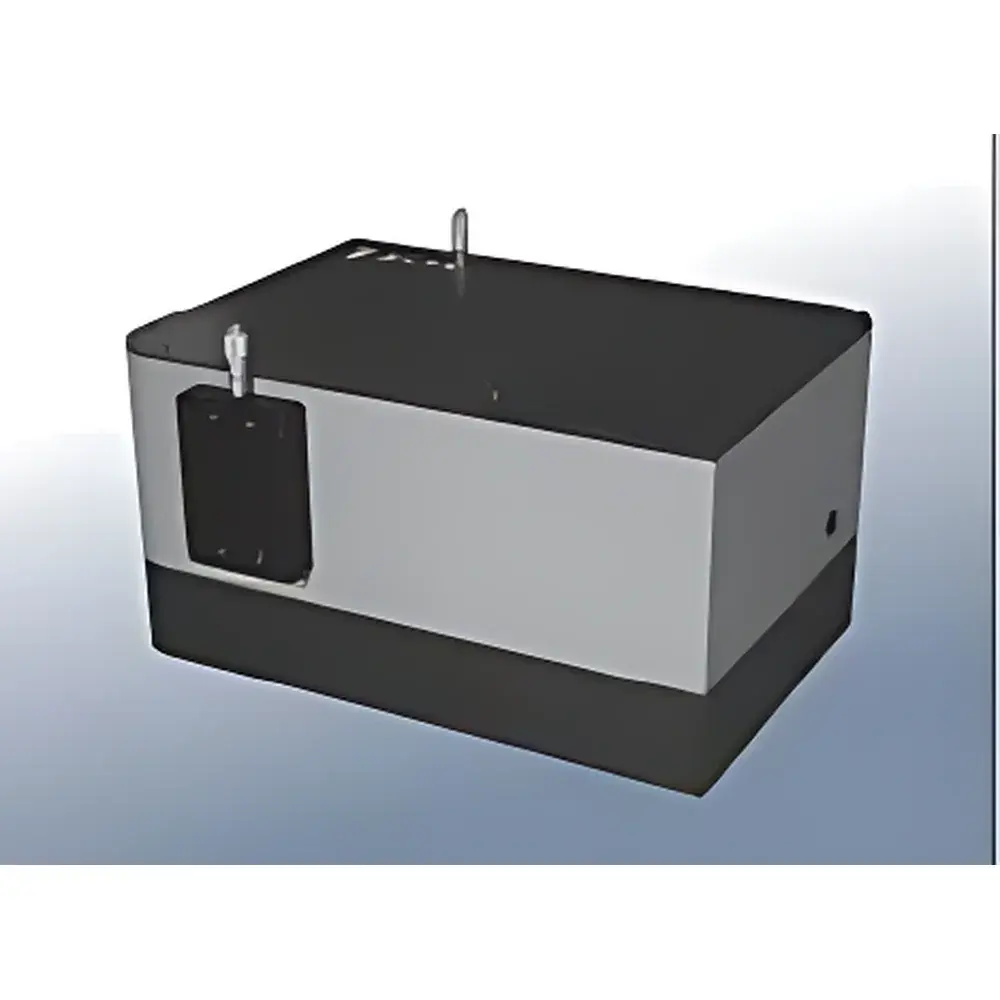
CEL-IS302 Triple-Grating Scanning Monochromator / Spectrometer
| Brand | CEL (China Education Goldsource) |
|---|---|
| Model | CEL-IS302 |
| Focal Length | 300 mm |
| f-number | f/4.8 |
| Stray Light | ≤5×10⁻⁴ |
| Minimum Step Resolution | 0.0023 nm |
| Grating Dimensions | 55 mm × 55 mm × 6 mm |
| Standard Grating Set | 1200 g/mm (λₚ = 300 nm), 600 g/mm (λₚ = 750 nm), 300 g/mm (λₚ = 1250 nm) |
| Slit Width Range | 10 μm – 3 mm (motorized, 10 μm knife-edge with auto-protection) |
| Slit Height | 14 mm |
| Dimensions (L×W×H) | 390 mm × 278 mm × 204 mm |
| Weight | 16 kg |
Overview
The CEL-IS302 is a high-performance triple-grating scanning monochromator engineered for precision wavelength selection and spectral characterization in research-grade optical laboratories. Based on the Czerny–Turner optical configuration, it employs a 300 mm focal length concave mirror system with an f/4.8 aperture ratio to balance throughput and spectral resolution. Its core architecture supports interchangeable diffraction gratings—each mounted on a motorized turret—enabling seamless switching between three optimized dispersion regimes without realignment. The instrument operates on the principle of angular dispersion: incident polychromatic light is collimated, diffracted by the selected grating, and refocused onto the exit slit, where a narrow bandpass is isolated via precise stepper-motor-driven rotation of the grating. This mechanical scanning approach delivers stable, repeatable wavelength tuning across UV–Vis–NIR (190–2500 nm, dependent on grating and detector choice), making it suitable for applications requiring high spectral fidelity, low stray light, and long-term calibration stability.
Key Features
- Triple-grating turret with automated positioning and encoder-based feedback for reproducible grating selection and zero-offset calibration.
- Optimized optical path design achieving stray light suppression of ≤5×10⁻⁴ (measured at 600 nm with 400 nm blocking filter), critical for weak-signal detection and high-dynamic-range spectroscopy.
- Sub-nanometer wavelength resolution enabled by 0.0023 nm minimum step size and high-precision 10,000-step-per-revolution stepper motor coupled to a 1:100 reduction gearbox.
- Motorized slits with 10 μm knife-edge blades and programmable width control (10 μm to 3 mm); automatic retraction at power-off or overtravel to prevent damage.
- Rigid aluminum alloy chassis with vibration-damped baseplate and internal thermal stabilization—designed to minimize drift during extended scans (>1 hr).
- Integrated USB 2.0 interface with ASCII command protocol compliant with standard SCPI-like syntax, enabling direct integration into LabVIEW, Python (PyVISA), MATLAB, and custom DAQ environments.
Sample Compatibility & Compliance
The CEL-IS302 functions as a standalone wavelength selector and is compatible with a wide range of external light sources (Xe/Hg lamps, LEDs, supercontinuum lasers, tunable OPOs) and detectors (PMTs, Si/InGaAs photodiodes, CCD/CMOS array spectrometers). It does not include a built-in source or detector, allowing users to configure systems aligned with ISO/IEC 17025-compliant measurement chains. All optical coatings meet MIL-C-48497A specifications for durability and environmental resistance. Mechanical design adheres to IEC 61000-6-2 (immunity) and IEC 61000-6-3 (emissions) standards. While not certified for medical or industrial safety-critical use, its construction supports GLP-aligned operation when integrated into validated spectroscopic workflows (e.g., UV-Vis absorbance validation per USP , reflectance calibration per ASTM E308).
Software & Data Management
The monochromator ships with cross-platform control software (Windows/macOS/Linux) supporting wavelength sweep programming, multi-grating sequence scripting, and real-time slit synchronization. Raw position data (encoder counts) and calibrated wavelength values are logged in CSV format with timestamps and metadata headers (grating ID, slit width, scan speed). Audit trail functionality records all parameter changes, user logins, and firmware updates—meeting foundational requirements for FDA 21 CFR Part 11 compliance when deployed within validated laboratory information management systems (LIMS). API documentation includes full register maps and error code definitions, facilitating third-party integration and automated calibration verification routines.
Applications
- High-resolution emission and excitation spectroscopy in photoluminescence studies of quantum dots, perovskites, and organic semiconductors.
- Wavelength calibration reference for FTIR, Raman, and hyperspectral imaging systems using NIST-traceable line sources (e.g., Hg/Ar lamps).
- Monochromatic irradiation setup for photochemical reaction kinetics, solar cell quantum efficiency mapping, and accelerated aging tests per IEC 61215.
- Custom optical filter characterization—transmission, blocking, and edge steepness evaluation using double-monochromator configurations.
- Fundamental optics education: demonstration of dispersion relations, grating equation validation, and aberration analysis in undergraduate and graduate teaching labs.
FAQ
What wavelength range is supported with the standard grating set?
The standard gratings cover 190–300 nm (1200 g/mm), 350–900 nm (600 g/mm), and 800–2500 nm (300 g/mm); actual usable range depends on coating efficiency and detector sensitivity.
Can the CEL-IS302 be used in vacuum or purged environments?
Yes—the housing includes sealed O-ring ports for optional N₂ purge; vacuum operation down to 10⁻³ mbar is possible with modified gasketing and outgassing protocols.
Is firmware upgradable in the field?
Yes—firmware updates are delivered via USB and retain all user calibration coefficients; version history and checksum verification are embedded in the bootloader.
Does the instrument support synchronous scanning with external detectors?
Yes—TTL-compatible trigger input/output ports enable hardware-gated acquisition and lock-in timing with PMTs or gated CCDs.
What maintenance is required for long-term accuracy?
Annual verification of grating alignment and encoder zero-point using a He-Ne laser reference is recommended; no routine optical cleaning is needed under controlled lab conditions.





