
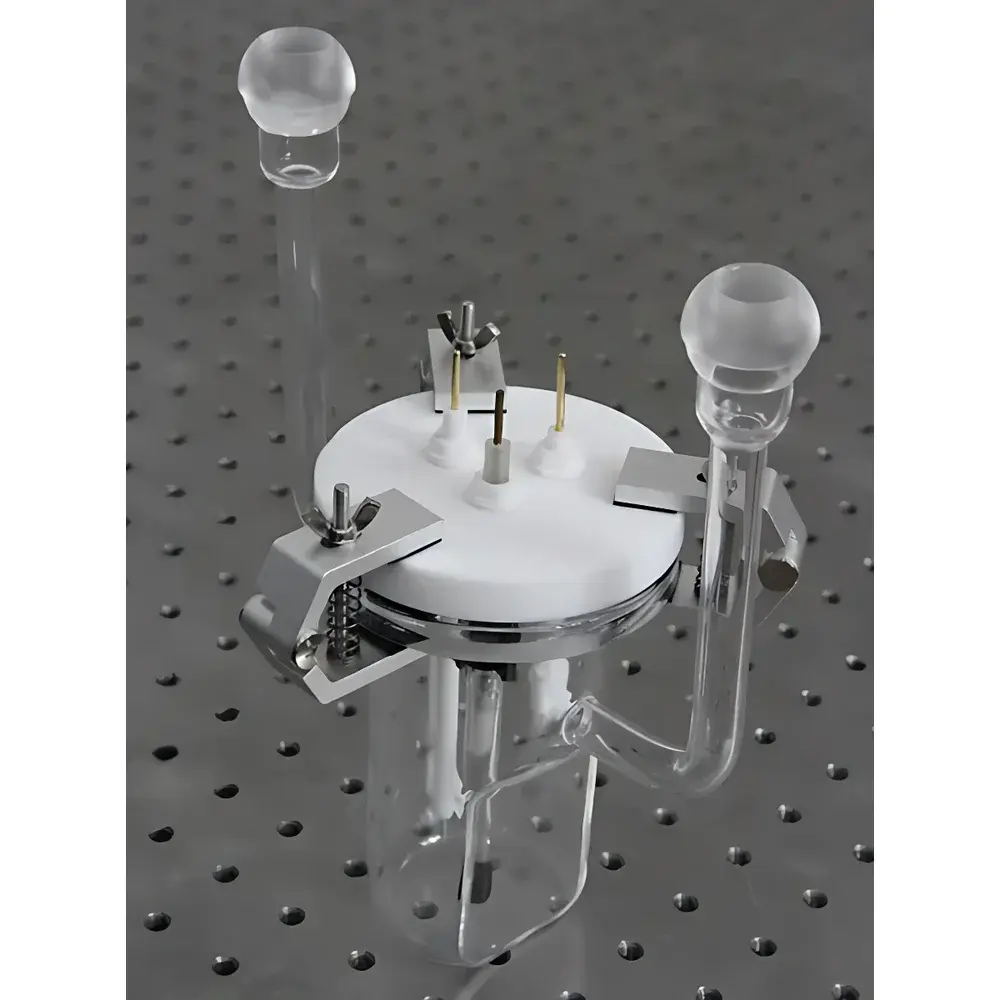
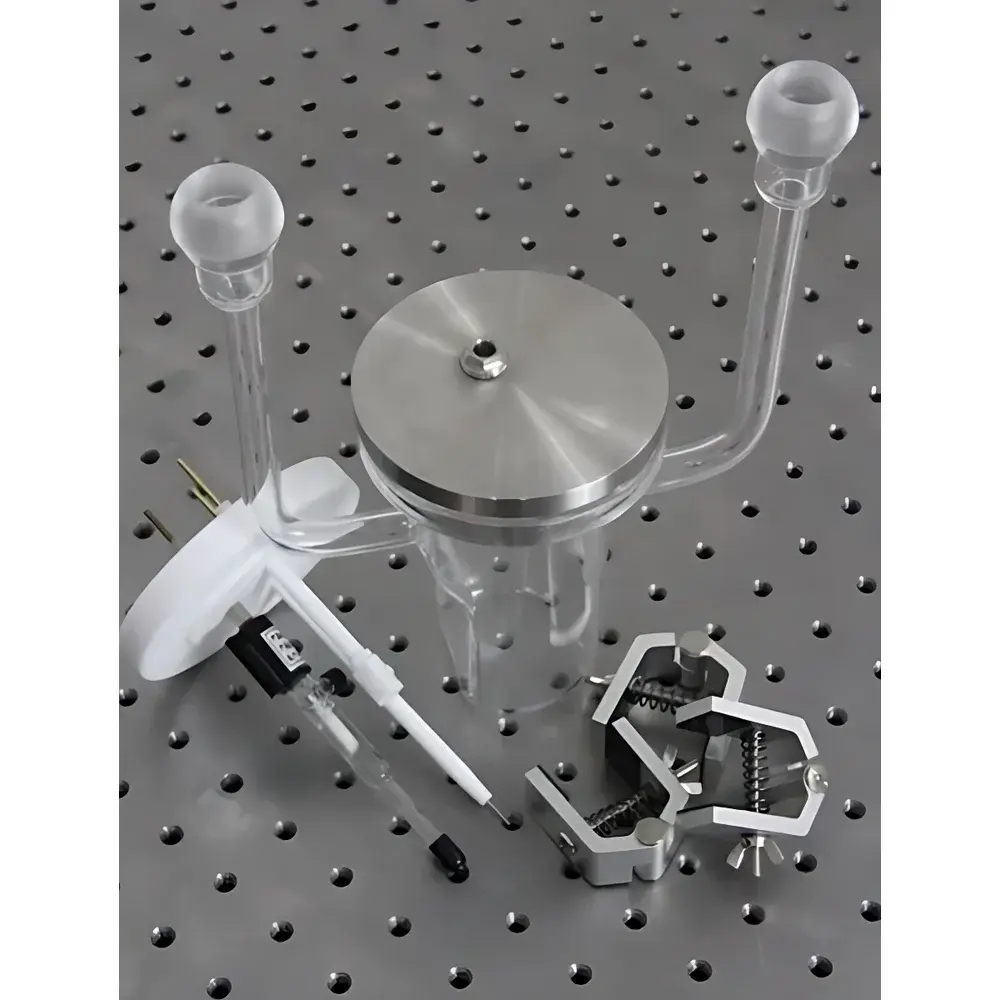
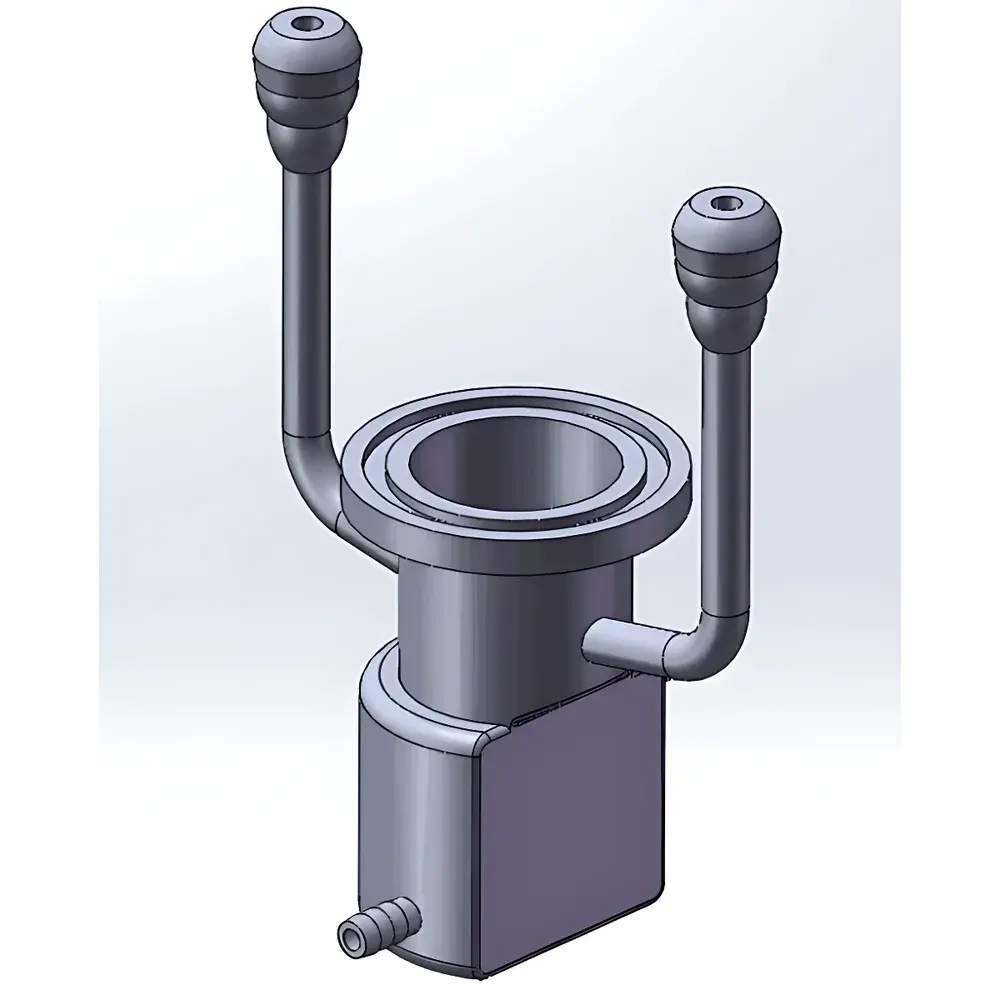
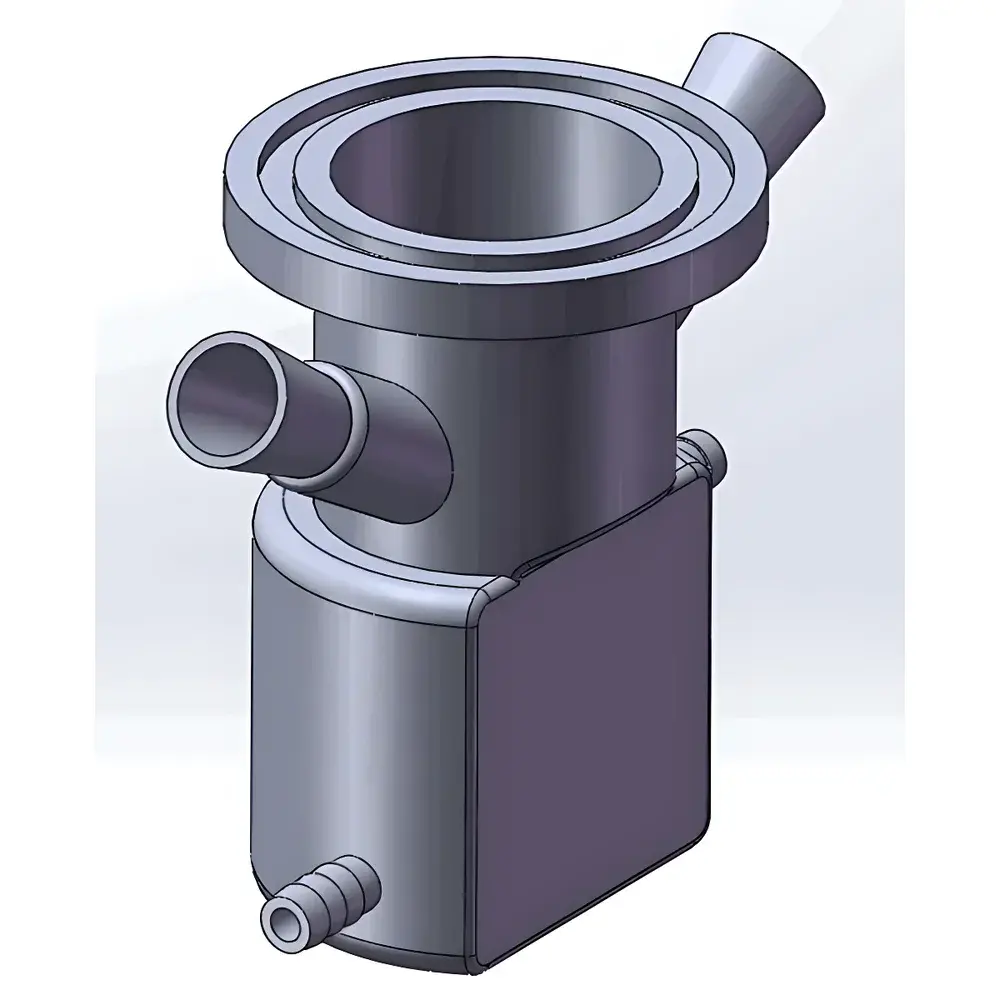
CEL-QPR150 Side-Illuminated All-Quartz Photochemical Reactor
| Brand | CEAULIGHT (Zhongjiao Jinyuan) |
|---|---|
| Model | CEL-QPR150 |
| Volume | 150 mL |
| Optical Window | 40 × 60 mm |
| Material | Fused Quartz (UV-Grade, ≥185 nm transmission) |
| Sealing System | PEEK/316L Stainless Steel/Quartz Lid with Fluoroelastomer O-rings |
| Electrode Ports | Three-electrode configuration (customizable) |
| Gas Handling | Dual gas inlets/outlets with VCR/NW25 vacuum-compatible fittings |
| Thermal Management | Optional integrated quartz jacket (CEL-QPR150CH/LH variants) for thermostatic control (±0.5 °C) |
| Compliance | Designed for ISO/IEC 17025-aligned photoelectrochemical workflows, compatible with ASTM E2938–21 (standard practice for evaluating photocatalytic activity) |
Overview
The CEL-QPR150 Side-Illuminated All-Quartz Photochemical Reactor is an engineered platform for controlled, quantitative photoelectrochemical and heterogeneous photocatalytic experimentation. Unlike top- or bottom-illuminated configurations, its side-illumination geometry directs incident UV–vis radiation perpendicularly across the full reaction volume through a precisely dimensioned 40 × 60 mm fused quartz window—maximizing photon flux density at the catalyst–solution interface while minimizing optical path distortion and shadowing effects. Constructed entirely from high-purity synthetic fused quartz (transmission >90% down to 185 nm), the reactor body is monolithically fused—eliminating adhesive interfaces that degrade under prolonged UV exposure or thermal cycling. This architecture ensures long-term dimensional stability, chemical inertness against strong acids, bases, and oxidants (e.g., H₂O₂, persulfates), and compatibility with both aqueous and organic solvent systems. The reactor operates under ambient, vacuum (<10⁻³ mbar), or inert gas (N₂, Ar) environments, supporting reproducible kinetic studies under rigorously defined mass-transfer and irradiance conditions.
Key Features
- Monolithic fused-quartz construction with seamless sidewall fusion—no epoxy or cement joints to compromise UV integrity or induce leaching.
- Side-illumination design enables uniform irradiation of suspended catalysts, immobilized electrodes, or gas–liquid–solid three-phase interfaces without beam attenuation by headspace or electrode supports.
- Modular sealing system: Interchangeable lids fabricated from PEEK (for electrochemical compatibility), 316L stainless steel (for high-pressure applications), or quartz (for full spectral transparency); all sealed via chemically resistant fluoroelastomer O-rings rated to 200 °C.
- Standard three-electrode port layout (working, reference, counter) with PEEK-insulated feedthroughs; optional custom electrode channeling (e.g., Pt mesh, Ag/AgCl, Hg/Hg₂SO₄) available per ASTM E2570–18 guidelines.
- Vacuum- and gas-tight configuration certified to ISO 10648-2:1994 leakage standards; dual gas ports support continuous purging, stoichiometric dosing, or dynamic headspace analysis.
- Thermostatic variants (CEL-QPR150CH & CEL-QPR150LH) integrate a co-axial quartz water jacket—enabling precise temperature regulation (5–80 °C) without metallic contamination or thermal stress cracking.
Sample Compatibility & Compliance
The CEL-QPR150 accommodates heterogeneous suspensions (TiO₂, g-C₃N₄, MOFs), immobilized photoanodes/cathodes (FTO, ITO, NiOₓ), gas-phase reactants (CO₂, NOₓ, CH₄), and multiphase liquid–gas–solid systems. Its material set complies with USP for pharmaceutical-grade quartzware and meets the inertness requirements of ISO 14040 life-cycle assessment protocols for catalytic materials testing. All variants are designed for integration into GLP-compliant laboratories: traceable calibration records for optical window dimensions and pressure ratings are supplied; PEEK components conform to FDA 21 CFR 177.2415 for repeated food-contact use—ensuring no extractables interfere with low-concentration analyte detection (e.g., µM-level H₂ or O₂ evolution quantification).
Software & Data Management
While the CEL-QPR150 is a passive reactor (no embedded electronics), it is fully interoperable with industry-standard instrumentation ecosystems. It integrates natively with potentiostats (BioLogic SP-300, Pine Research WaveNow), quantum yield measurement systems (Hamamatsu C9920-02), and online GC/TCD setups (Agilent 7890B with autosampler). Digital experiment logs—including irradiance mapping (via calibrated photodiode arrays), temperature ramp profiles, and gas chromatography peak integration—can be synchronized via LabVIEW or Python-based control frameworks compliant with IEEE 1851–2021 metadata tagging standards. Audit trails for experimental parameters (light intensity, temperature setpoint, gas flow rate) satisfy FDA 21 CFR Part 11 requirements when paired with validated electronic lab notebooks (e.g., LabArchives, IDBS E-WorkBook).
Applications
- Quantitative photocatalytic H₂/O₂ evolution kinetics under AM 1.5G or monochromatic LED illumination.
- Photoelectrocatalytic CO₂ reduction with in situ FTIR or DEMS coupling.
- Structure–activity relationship studies of plasmonic nanoparticles under controlled oxygen partial pressure.
- Accelerated aging tests of photocatalysts under simulated solar UV stress (per ISO 105-B02).
- In situ Raman spectroelectrochemistry of semiconductor/electrolyte interfaces during illumination.
- Gas-phase VOC degradation kinetics under continuous-flow UV–O₃ conditions.
FAQ
What light sources are compatible with the CEL-QPR150’s side-illumination geometry?
Xenon arc lamps (with AM 1.5G filters), collimated LED arrays (365–530 nm), and tunable monochromators coupled via fiber-optic light guides are routinely deployed. Beam homogeneity is verified using NIST-traceable CCD-based radiometers.
Can the reactor be used for high-pressure photochemistry?
Yes—when equipped with the 316L stainless steel lid and torqued to 12 N·m, the assembly withstands static pressures up to 10 bar (145 psi) at 25 °C, per ASME B31.3 process piping compliance protocols.
Is the quartz window replaceable in the field?
No—the window is integral to the fused monocoque structure. Replacement requires factory re-fusion; however, spare reactor bodies are stocked with serialized calibration certificates.
How is temperature uniformity ensured in jacketed variants?
A laminar-flow recirculating chiller (±0.1 °C stability) delivers coolant through the annular quartz jacket; infrared thermography confirms ≤0.8 °C axial gradient across the 150 mL active volume.
Does the reactor support in situ optical diagnostics?
Yes—the full quartz construction enables simultaneous side-illumination and orthogonal collection for transmission UV-Vis, fluorescence, or laser-induced breakdown spectroscopy (LIBS), provided optical access ports are specified at order entry.




