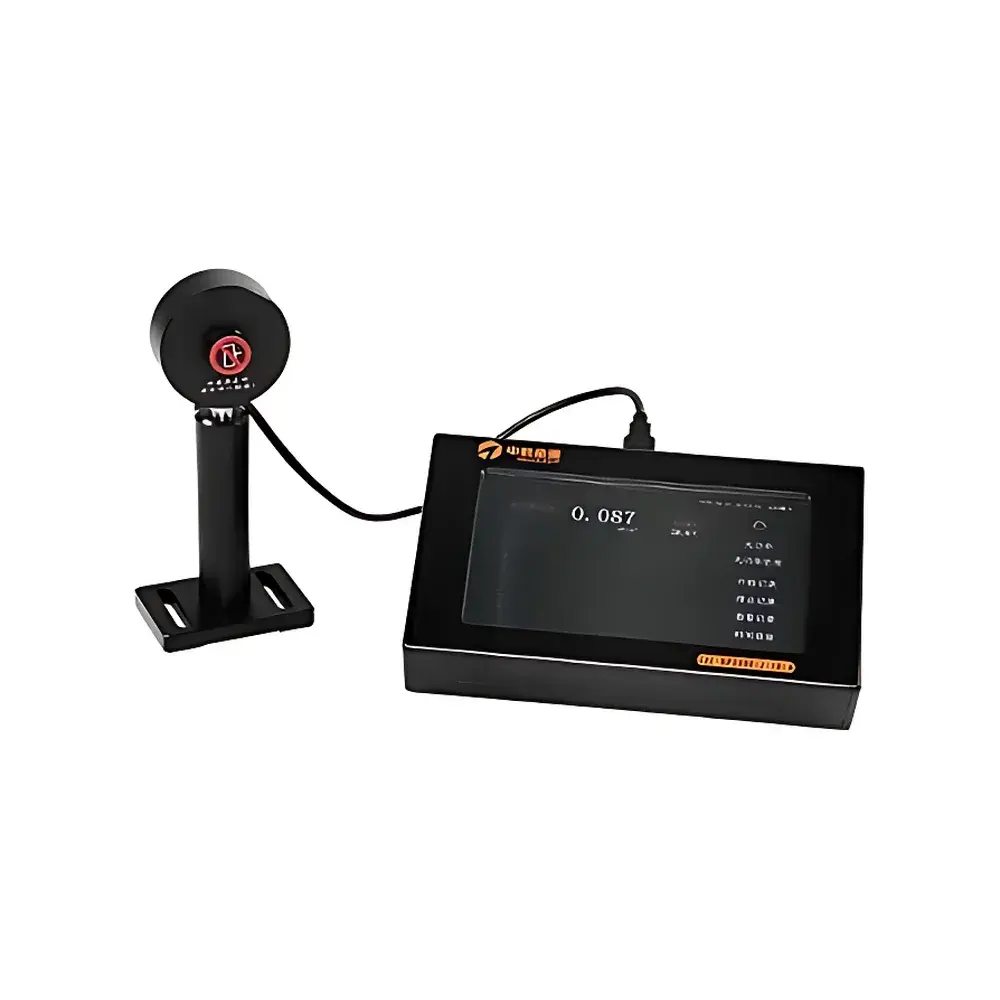
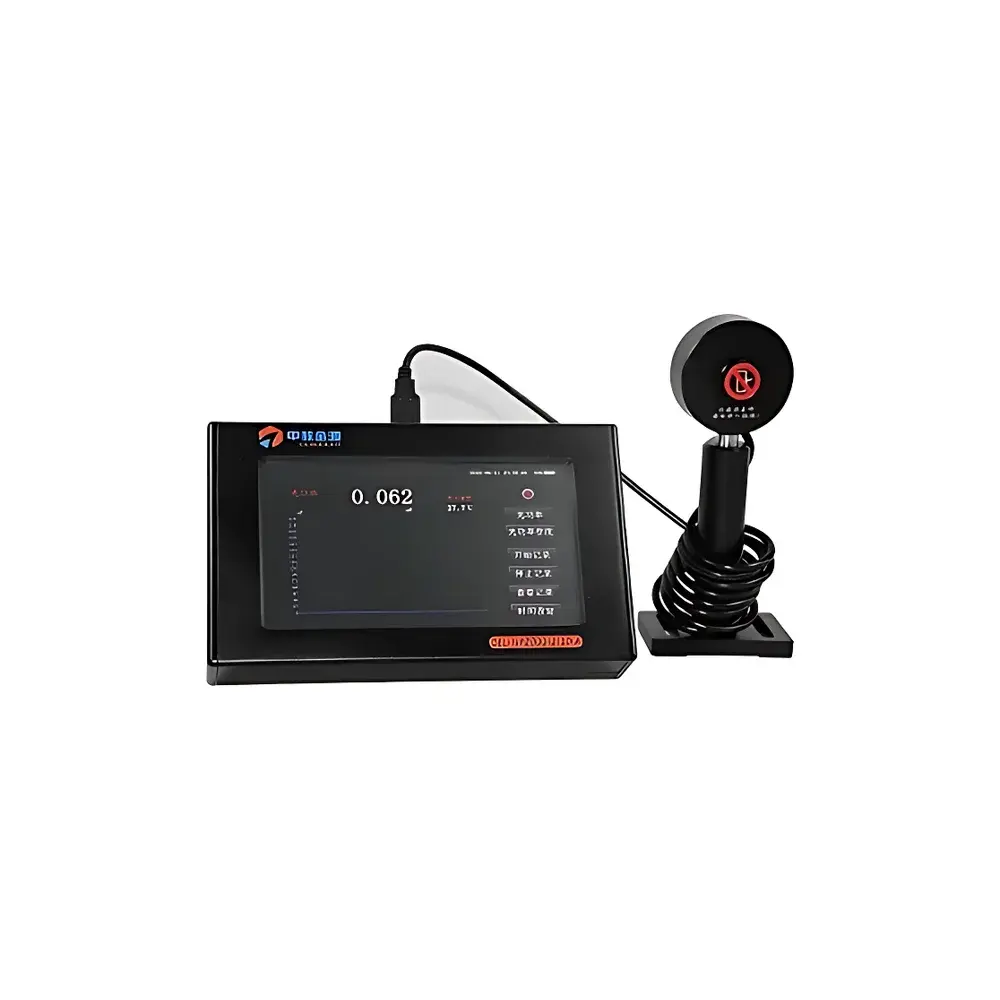
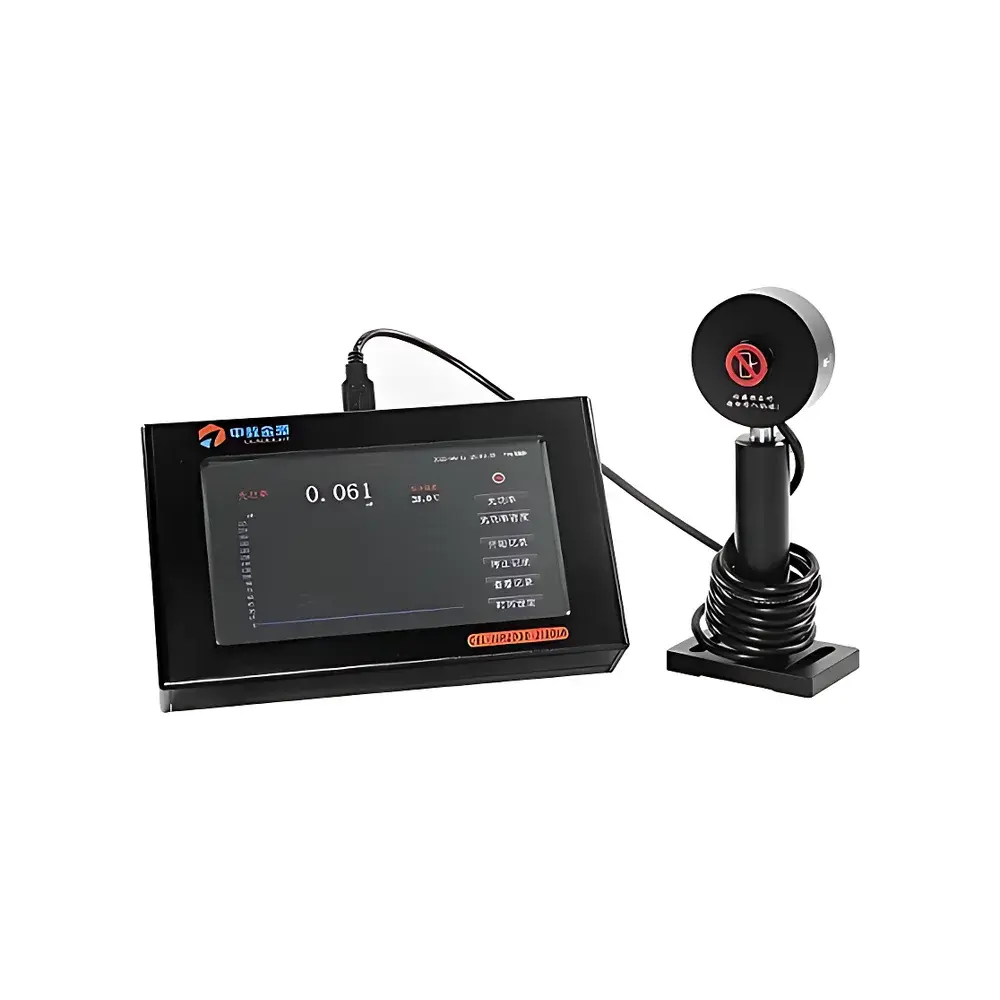
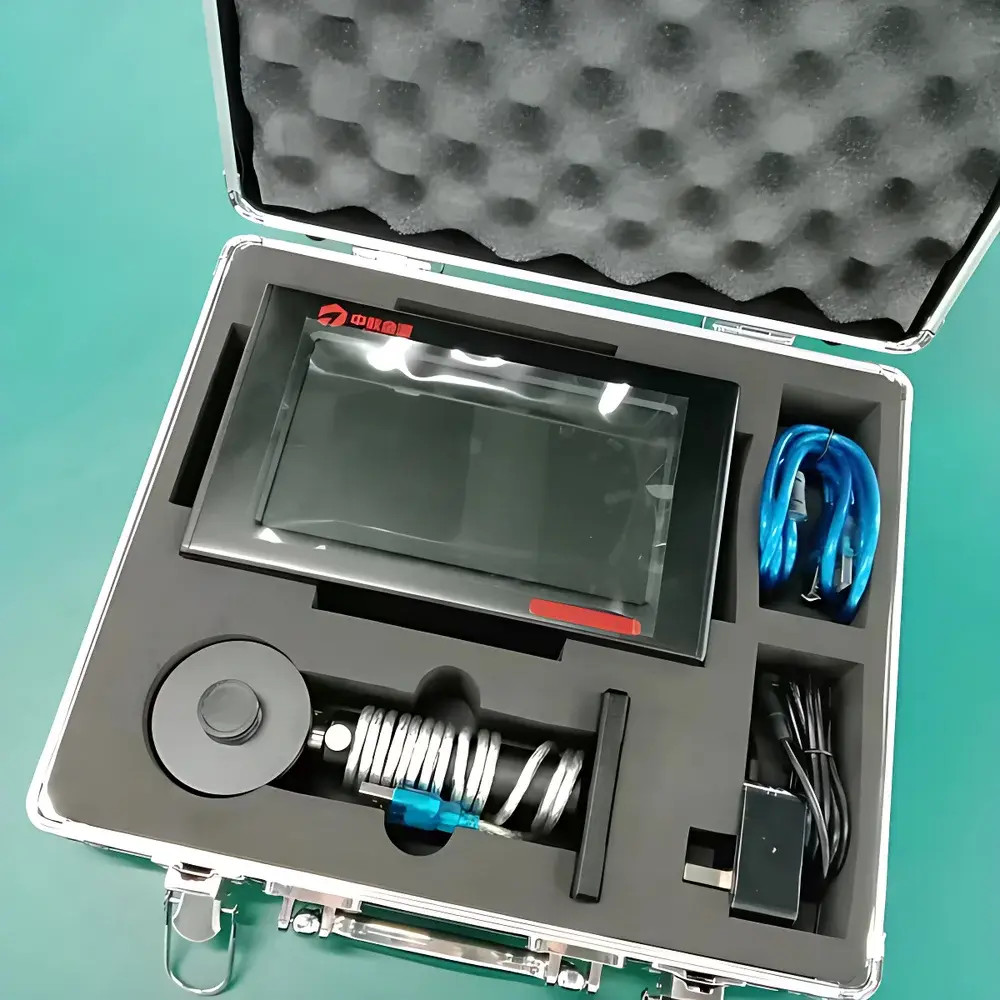
CEL-NP2000-2A / CEL-NP2000-10A Automated Optical Power Meter
| Brand | CEL (Zhongjiao Jinyuan) |
|---|---|
| Origin | Beijing, China |
| Manufacturer Type | Direct Manufacturer |
| Model Variants | CEL-NP2000-2A (2 W Full Scale), CEL-NP2000-10A (10 W Full Scale) |
| Power Range | 0–2000 mW / 0–10000 mW |
| Detector Aperture | Ø10 mm / Ø20 mm |
| Spectral Range | 190 nm – 11,000 nm (UV-VIS-IR) |
| Temperature Compensation | 15–45 °C, Drift < ±1% FS |
| Resolution | 1 µW |
| Response Time | < 0.4 s |
| Accuracy | ±5% FS |
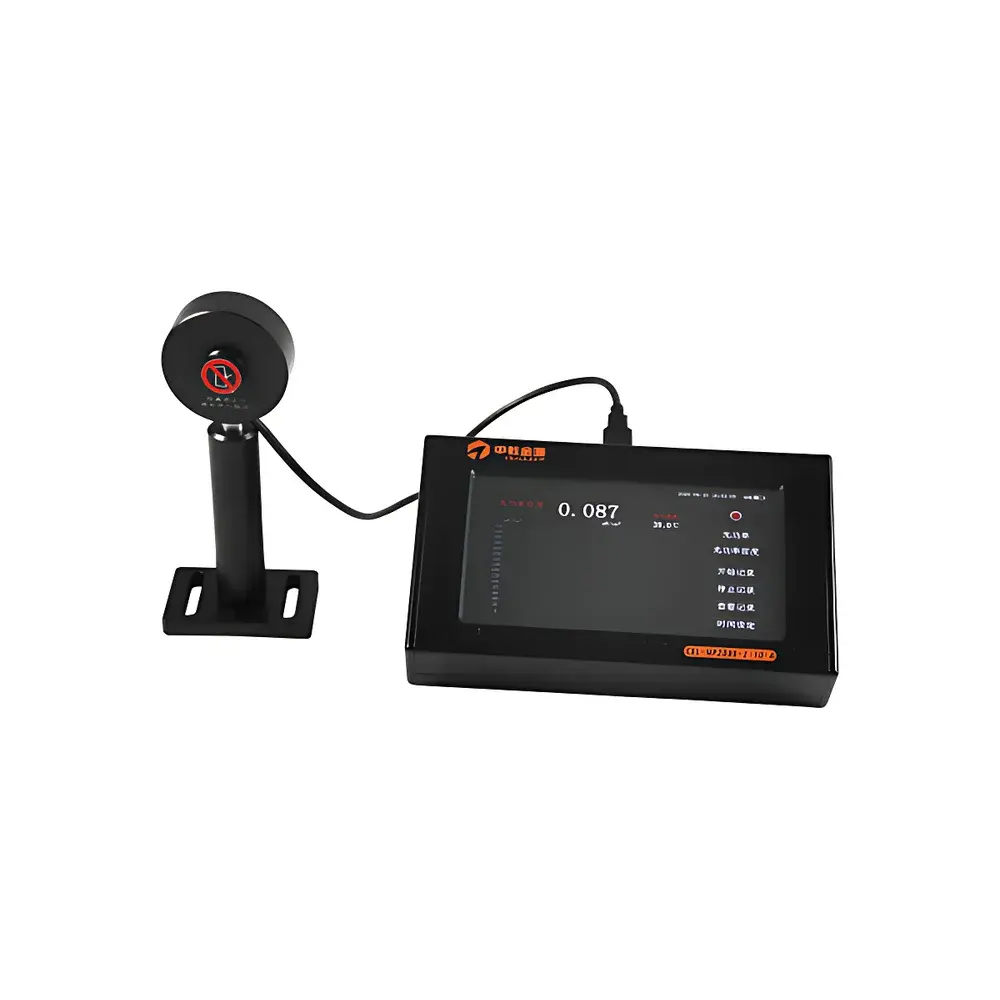
| Display | 7-inch capacitive touchscreen |
| Data Storage | Built-in TF card logging |
| Power Supply | Internal 3000 mAh Li-ion battery (AC adapter: 220 V, 50 Hz) |
| Output Units | mW, mW/cm² |
Overview
The CEL-NP2000-2A and CEL-NP2000-10A Automated Optical Power Meters are precision radiometric instruments engineered for high-stability, wide-dynamic-range optical power measurement across ultraviolet (190 nm), visible (400–700 nm), and infrared (up to 11,000 nm) spectral bands. Based on calibrated thermopile or photodiode detector architecture—optimized for both high-power tolerance and low-light sensitivity—these meters operate on the principle of direct radiant flux conversion into proportional electrical signals, with real-time thermal drift compensation ensuring metrological consistency under variable ambient conditions. Unlike conventional manual power meters, the NP2000 series integrates closed-loop auto-ranging circuitry that dynamically selects optimal gain stages during measurement, preserving 1 µW resolution at sub-milliwatt levels while maintaining linearity up to 10 W without saturation or range-switching artifacts. Designed for traceable irradiance quantification in research-grade photochemical and photobiological systems, the instrument meets foundational requirements for ISO/IEC 17025-compliant calibration workflows and supports audit-ready data capture for GLP-regulated environments.
Key Features
- Auto-ranging dual-scale measurement: seamless transition between µW and W ranges without manual intervention, eliminating user-induced range errors
- Thermally stabilized detector head with integrated temperature sensor (15–45 °C operating range); automatic full-scale drift correction (< ±1% FS)
- Two interchangeable detector modules: Ø10 mm aperture (NP2000-2A, 2 W max) and Ø20 mm aperture (NP2000-10A, 10 W max), each pre-calibrated per NIST-traceable reference standards
- Real-time dual-unit display: simultaneous readout of absolute optical power (mW) and irradiance (mW/cm²), calculated using active aperture area and beam profile assumptions
- 7-inch industrial-grade capacitive touchscreen interface with intuitive icon-driven navigation; no external PC required for basic operation
- Onboard TF card logging (FAT32 formatted) with timestamped CSV export capability; compatible with Windows/macOS/Linux via standard USB-MSC protocol
- Integrated 3000 mAh rechargeable Li-ion battery enabling >6 hours continuous field operation; AC charging via universal 220 V / 50 Hz input
Sample Compatibility & Compliance
The NP2000 series is validated for use with continuous-wave (CW) and pulsed light sources—including xenon arc lamps, LED arrays, laser diodes, and solar simulators—provided pulse repetition rates exceed 10 Hz and duty cycles remain ≥5%. Detector coatings are optimized for uniform responsivity across 190–11,000 nm, with spectral flatness verified per ASTM E275 and ISO 9050. The instrument conforms to IEC 61000-4-3 (EMC immunity) and IEC 61010-1 (safety for laboratory equipment). While not certified to FDA 21 CFR Part 11 out-of-the-box, its software architecture supports electronic signature implementation and audit trail generation when deployed with validated third-party LIMS integration. Calibration certificates include uncertainty budgets compliant with GUM (JCGM 100:2008) and are issued with 12-month validity.
Software & Data Management
The optional PC-based control suite (CEL-PowerSuite v3.x) provides real-time streaming of power/irradiance data at 10 Hz sampling, synchronized timestamping, and batch export to Excel-compatible formats. Advanced functions include quantum yield calculation for photocatalytic water splitting (based on incident photon flux, reaction stoichiometry, and gas chromatography validation inputs), time-integrated dose reporting (J/cm²), and multi-channel comparative analysis for reactor array studies. All software operations generate immutable log files containing operator ID, session start/end timestamps, calibration ID, and environmental metadata—enabling full traceability per ISO/IEC 17025 clause 7.7. Data encryption (AES-256) and role-based access control are available upon enterprise license activation.
Applications
- Photocatalysis research: quantifying incident photon flux for quantum efficiency (AQY) determination in TiO₂, g-C₃N₄, and perovskite-based systems
- Solar simulator characterization: spectral mismatch correction and temporal stability assessment per IEC 60904-9 and ASTM E927
- Optical safety compliance: irradiance mapping for laser safety officer (LSO) assessments per ANSI Z136.1 and IEC 60825-1
- Medical phototherapy device validation: dose calibration for UVB/UVA phototherapy lamps and NIR tissue irradiation systems
- Industrial process monitoring: real-time UV curing lamp output verification in semiconductor packaging and adhesive curing lines
- Environmental photobiology: measuring actinic flux in aquatic microcosms and plant canopy radiation studies
FAQ
What calibration standards are used for factory certification?
Each unit is calibrated against NIST-traceable reference detectors (Hamamatsu S1337 series for UV-VIS; Gentec-EO UP19K-15S-H5 for IR) at five discrete wavelengths (254 nm, 365 nm, 450 nm, 850 nm, 1064 nm) with full spectral responsivity curves provided in the certificate.
Can the instrument measure pulsed lasers?
Yes—provided pulse width exceeds 10 µs and repetition rate is ≥10 Hz. For nanosecond pulses, a dedicated fast-response detector module (CEL-NP-FR, sold separately) is recommended.
Is the touchscreen interface operable with gloves?
The capacitive screen supports stylus input and thin nitrile glove operation; thick insulating gloves may require optional resistive overlay upgrade.
How is temperature drift compensated during long-duration experiments?
An embedded RTD sensor continuously monitors detector substrate temperature; firmware applies real-time correction coefficients derived from pre-characterized thermal response matrices stored in non-volatile memory.
Does the system support remote control via Ethernet or RS-232?
Standard configuration includes USB-C virtual COM port (CDC ACM class); optional RS-485 and Ethernet/Wi-Fi modules are available under OEM customization contracts.