
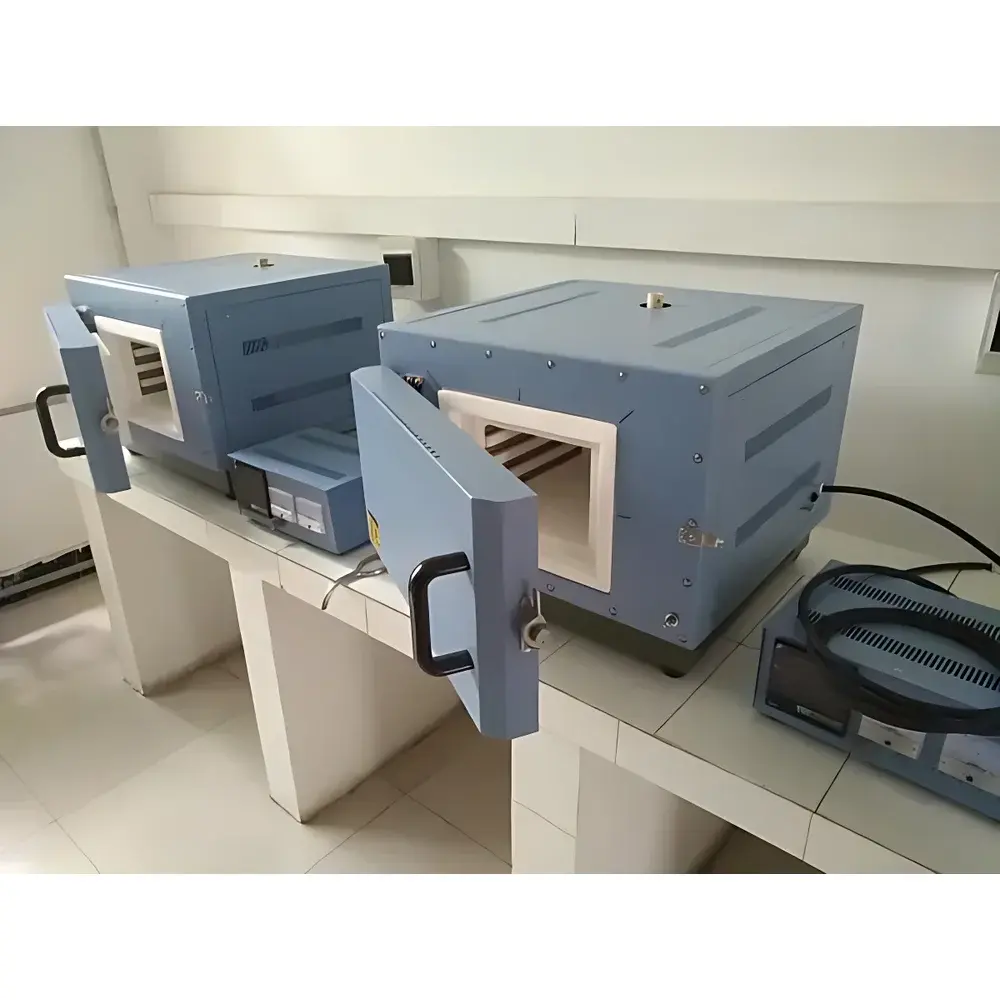
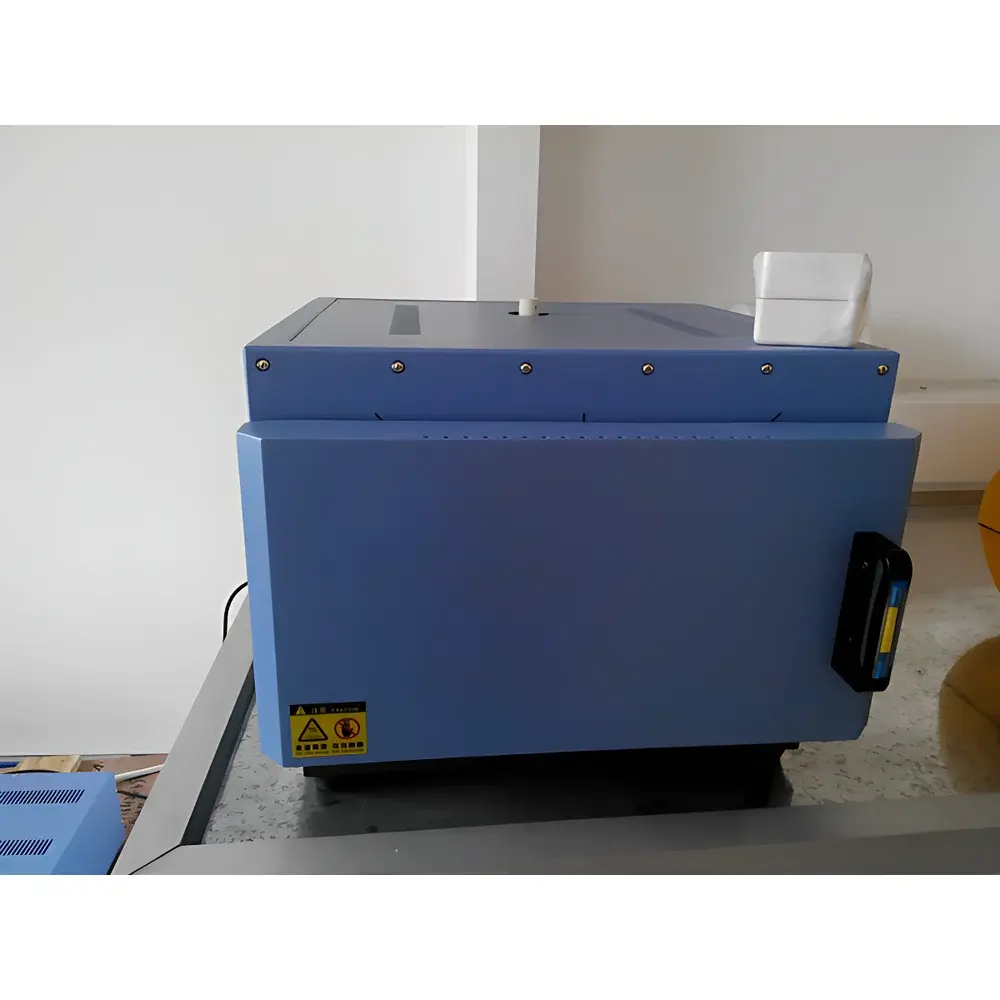
Zhongke Aobo TL3012 1200°C Ceramic Fiber Muffle Furnace
| Brand | Zhongke Aobo |
|---|---|
| Origin | Beijing, China |
| Model | TL3012 |
| Instrument Type | Box-Type Muffle Furnace |
| Max Temperature | 1200°C |
| Temperature Control Accuracy | ±1°C |
| Max Power | 7.5 kW |
| Heating Time to Max Temp | ≤60 min |
| Heating Method | HRE Resistance Wire |
| Internal Chamber Dimensions | 400 × 300 × 250 mm |
| Chamber Volume | 30 L |
| Insulation Material | High-Density Ceramic Fiber |
| Thermocouple Type | K-Type |
| Power Supply | 3-Phase 380 V AC, 16 A |
| Weight | 100 kg |
Overview
The Zhongke Aobo TL3012 is a high-performance, laboratory-grade box-type muffle furnace engineered for precise thermal processing up to 1200°C. It operates on the principle of resistive heating via high-purity HRE (High Resistance Electrothermal) alloy resistance wire, housed within a double-layered, low-conductivity ceramic fiber insulation chamber. This architecture enables rapid thermal ramping, exceptional thermal uniformity across the working zone (±5°C at 1200°C), and minimal external surface temperature rise—typically ≤60°C under continuous operation at maximum setpoint. Designed for routine and regulated analytical workflows, the TL3012 complies with fundamental thermal stability requirements outlined in ASTM E1142 (Standard Practice for Calibration of Laboratory Ovens and Furnaces) and supports GLP-compliant sample preparation per ISO/IEC 17025 Annex A.3. Its sealed muffle configuration isolates samples from combustion byproducts, making it suitable for ashing, calcination, heat treatment, and pre-conditioning of reference materials.
Key Features
- Ceramic fiber insulation (density ≥128 kg/m³) reduces thermal mass and improves energy efficiency—achieving 1200°C in ≤60 minutes with 30% lower power consumption versus conventional brick-lined furnaces.
- Modular, side-hinged door design with high-temperature silicone gasket ensures gas-tight sealing and minimizes heat leakage during dwell cycles.
- Independent intelligent controller (TL20/30/60 series) featuring PID algorithm, 30-step programmable ramp-soak profiles, and digital temperature setting with ±1°C accuracy over full range.
- Dual safety interlocks: automatic power cutoff upon door opening and over-temperature cutout (settable up to 1250°C) compliant with IEC 61000-6-2 EMC immunity standards.
- Front-panel accessible exhaust port (M12 threaded) allows integration with fume extraction or inert gas purging systems (e.g., N₂ or Ar) for controlled-atmosphere applications.
- Replaceable HRE heating elements mounted on ceramic insulators—no disassembly required; field serviceable within 15 minutes using standard tools.
Sample Compatibility & Compliance
The TL3012 accommodates standard crucibles (alumina, quartz, platinum, or stainless steel) up to Ø90 mm × 60 mm height within its 400 × 300 × 250 mm chamber. Its uniform heating zone (defined per ASTM C1478 as ≥85% of chamber volume) supports quantitative ashing per AOAC 923.03, USP , and EPA Method 2540B. The furnace meets mechanical safety requirements of GB/T 13306–2011 (Chinese national standard for industrial electric heating equipment) and incorporates grounding continuity verification per IEC 61000-4-5. Optional accessories—including calibrated K-type thermocouple probes traceable to NIST SRM 1750A and CE-marked power input modules—are available to support FDA 21 CFR Part 11 audit readiness when paired with validated data logging software.
Software & Data Management
While the base unit features standalone digital control, optional RS485 Modbus RTU interface enables integration with LabVIEW™, SCADA platforms, or LIMS via third-party gateways. Firmware supports timestamped event logging (door open/close, alarm triggers, setpoint changes) with retention of ≥10,000 records. When used with certified data acquisition hardware (e.g., Omega OM-DAQPRO-5300), the system satisfies ALCOA+ data integrity principles—ensuring Attributable, Legible, Contemporaneous, Original, Accurate, Complete, Consistent, Enduring, and Available records for regulatory submissions. Audit trail functionality includes user ID tagging and immutable log export in CSV format.
Applications
- Coal and biomass analysis: Determination of moisture, ash content, volatile matter, and fixed carbon per ISO 1171, ASTM D3174, and GB/T 212–2008.
- Environmental testing: Total suspended solids (TSS) and total dissolved solids (TDS) residue ignition per EPA 160.1 and Standard Methods 2540E.
- Pharmaceutical QC: Residue on ignition (ROI) testing per USP and heavy metal digestion support prior to ICP-MS analysis.
- Cement and refractory R&D: Sintering trials, phase transformation studies, and thermal stability assessment of clinker analogs.
- Academic research: Solid-state synthesis of oxides, catalyst precursors, and battery electrode materials requiring controlled oxidative annealing.
FAQ
What is the recommended maintenance interval for the TL3012?
Annual inspection of heating element continuity, thermocouple calibration (using dry-block calibrator traceable to NIST), and gasket integrity is advised. Ceramic fiber integrity should be visually verified before each high-temperature cycle.
Can the TL3012 operate under inert or reducing atmospheres?
Yes—when equipped with optional gas inlet/outlet ports and flow regulators, it supports N₂, Ar, or forming gas (5% H₂/95% N₂) environments up to 100 mL/min flow rate. Note: Reduction atmospheres require compatible crucible materials (e.g., Mo or SiC) and are not covered under standard warranty.
Is the temperature uniformity validated across the entire chamber?
Per factory test report (included with shipment), uniformity is measured at three horizontal planes (top/mid/bottom) using five calibrated K-type probes per plane at 1200°C; deviation remains ≤±5°C in the central 70% volume.
Does the controller support remote monitoring via Ethernet or Wi-Fi?
No—native connectivity is RS485 only. Ethernet/Wi-Fi capability requires an external protocol converter (e.g., Moxa NPort 5110) configured in transparent mode.
What documentation is provided for IQ/OQ validation?
A comprehensive User Requirement Specification (URS) template, FAT/SAT checklists, and blank calibration logs are supplied. Full 21 CFR Part 11 validation packages—including risk assessments and test scripts—are available as a paid consultancy service.



