
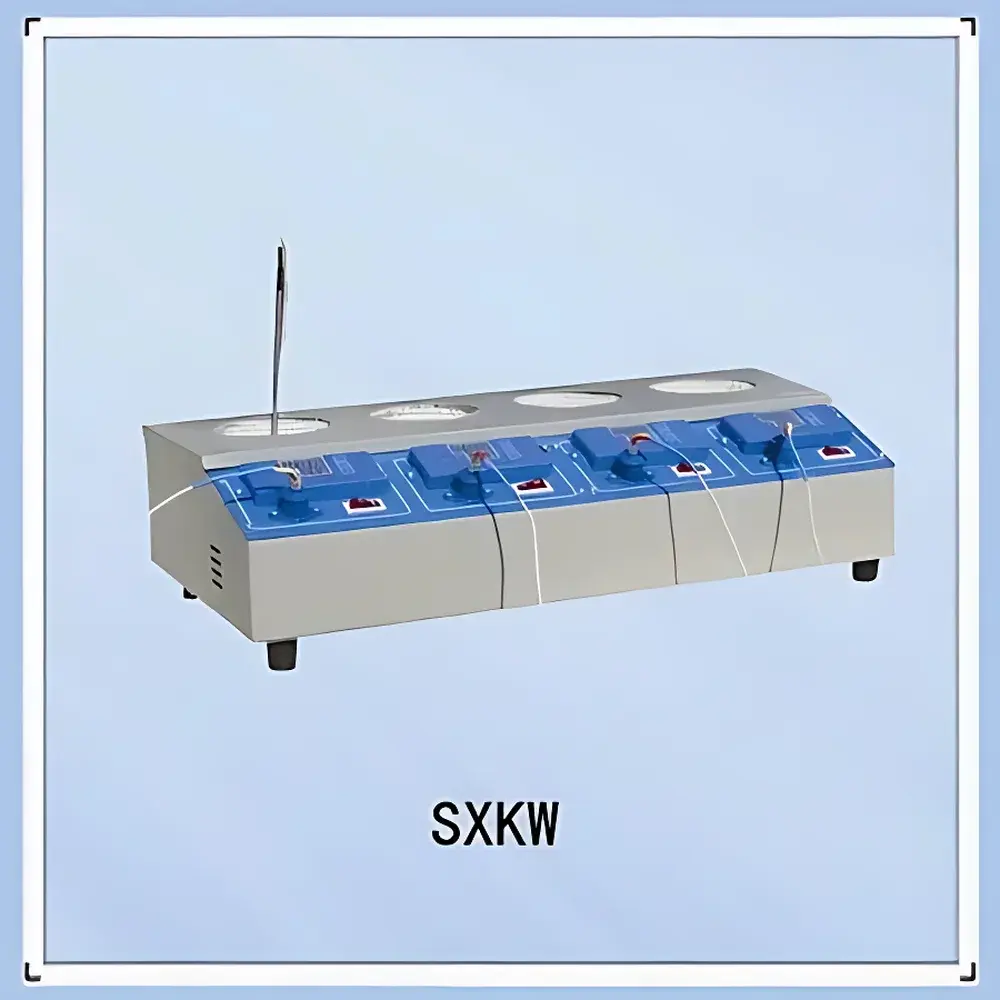
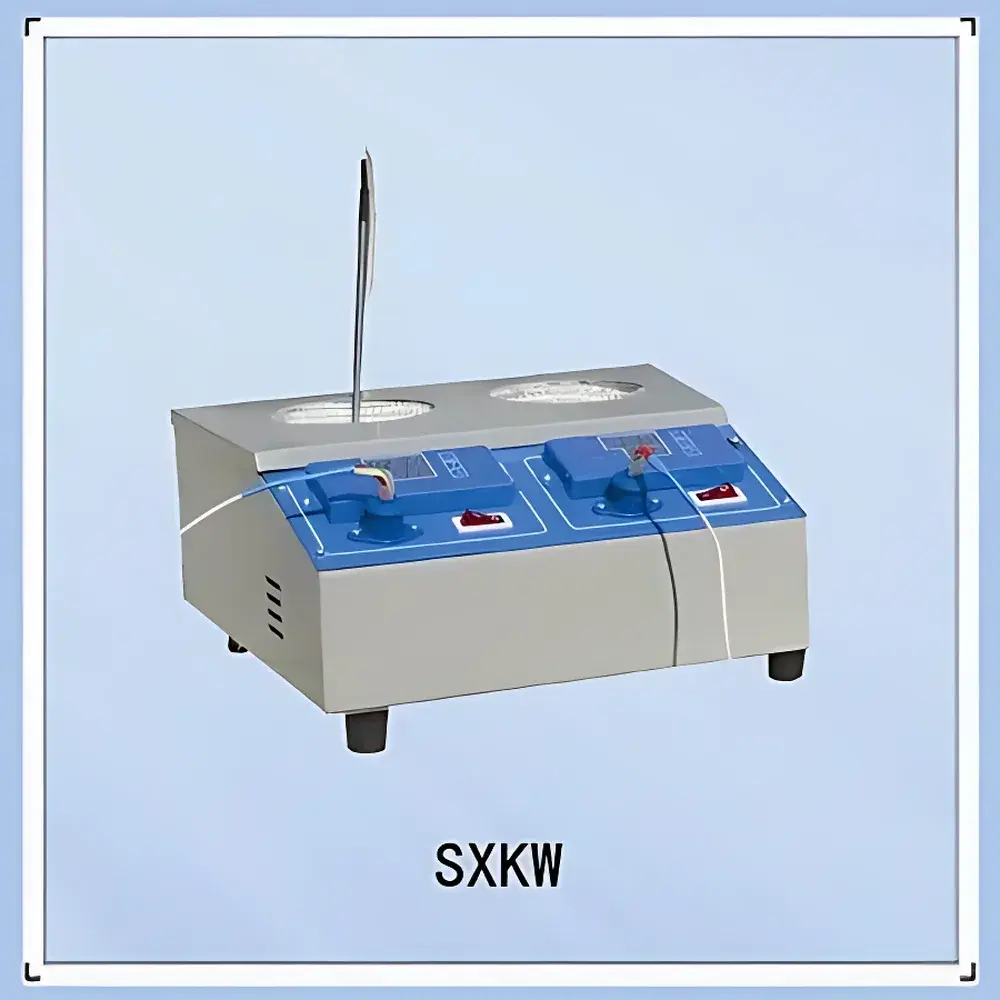
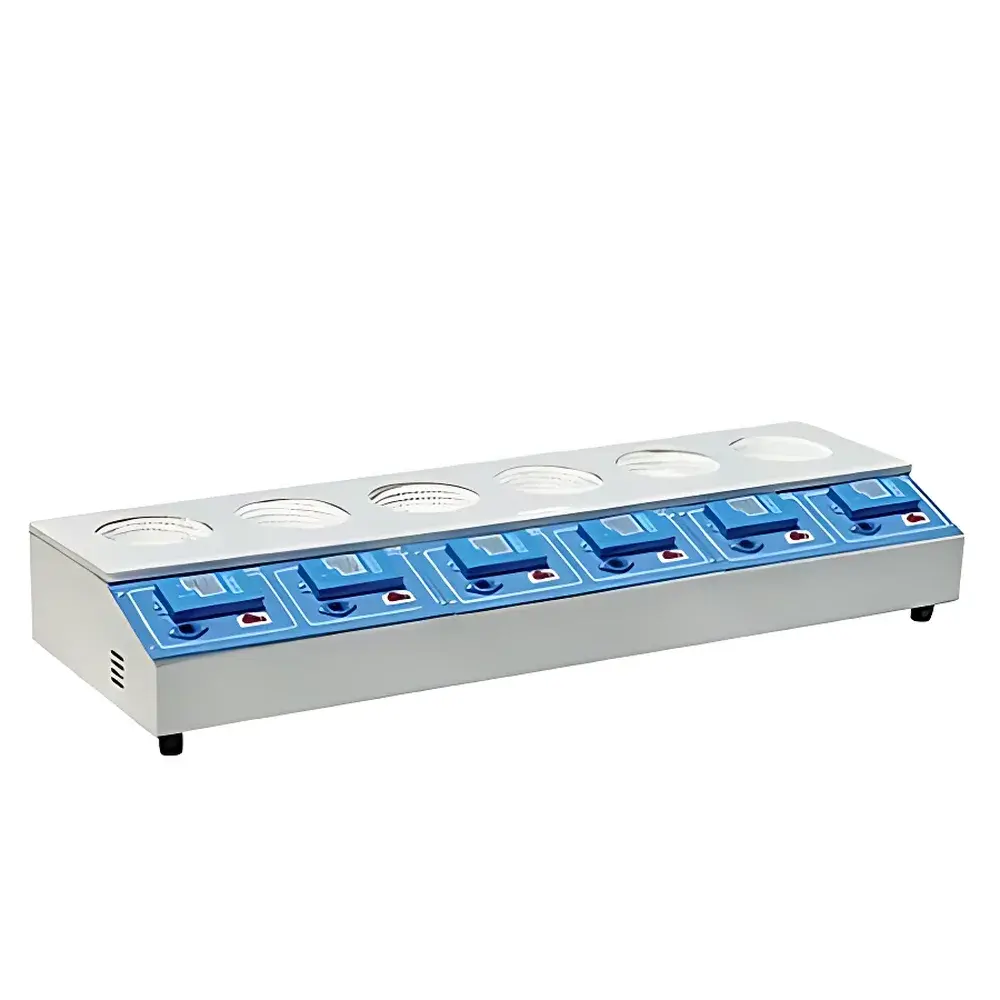
Zhongke Aobo SXKW-100-4 Intelligent Digital Display Multi-Position Electric Heating Mantle
| Brand | Zhongke Aobo |
|---|---|
| Origin | Beijing, China |
| Model | SXKW-100-4 |
| Configuration | 4-position (quadruple) |
| Rated Power | 400 W (for 100 mL × 4 configuration) |
| Max. Flask Capacity per Position | 100 mL |
| Dimensions (L×W×H) | 550 × 290 × 150 mm |
| Net Weight | 7.25 kg |
| Housing Material | Cold-rolled steel with electrostatic powder coating |
| Heating Element | Sealed Ni-Cr resistance wire embedded in high-temp alkali-free glass fiber insulation |
| Control System | PID-based digital temperature controller with LED display |
| Temperature Range | Ambient to 400 °C (adjustable in 1 °C increments) |
| Temp. Stability | ±1 °C at setpoint (under standard lab conditions) |
| Safety Features | Over-temperature cut-off, grounded chassis, no open flame |
Overview
The Zhongke Aobo SXKW-100-4 Intelligent Digital Display Multi-Position Electric Heating Mantle is an engineered solution for precise, uniform, and scalable heating of laboratory glassware—specifically designed for simultaneous thermal treatment of up to four round-bottom flasks (each up to 100 mL capacity). Unlike conventional hot plates or oil baths, this mantle employs a semi-spherical, conformal heating geometry based on the principle of resistive conduction through a thermally optimized insulating matrix. The embedded Ni-Cr alloy heating element—hermetically sealed within alkali-free, high-temperature glass fiber—is distributed to maximize surface contact area and minimize radial thermal gradients across the flask base. This architecture delivers rapid heat-up times (<8 min to 200 °C from ambient), stable setpoint maintenance (±1 °C), and inherently flameless operation—critical for solvent-based synthesis, reflux, distillation, and extraction workflows in regulated environments.
Key Features
- Four independently heated positions with individual thermal coupling—enabling parallel processing without cross-contamination or thermal crosstalk.
- PID-controlled digital thermostat with LED readout (0–400 °C range, 1 °C resolution) and programmable ramp/soak profiles via front-panel interface.
- Robust mechanical construction: cold-rolled steel housing finished with electrostatic epoxy-polyester powder coating for corrosion resistance and long-term dimensional stability.
- Thermal insulation system composed of alkali-free glass fiber—rated for continuous operation at 450 °C—ensuring low external surface temperature (<60 °C at 300 °C internal setpoint) and energy efficiency.
- No exposed heating elements or ignition sources—compliant with OSHA 1910.106 and NFPA 30 requirements for Class I, Division 1 hazardous locations when used with appropriate ventilation.
- Integrated over-temperature safety cutoff (mechanical backup at 450 °C) and earth-grounded chassis meeting IEC 61010-1:2010 Edition 3 for electrical safety in laboratory equipment.
Sample Compatibility & Compliance
The SXKW-100-4 is compatible with standard borosilicate glass round-bottom flasks (ISO 3585 / ASTM E438 Type I, Class A), including 24/40 and 29/32 ground joints. Its semi-spherical cavity design ensures optimal thermal transfer for 100 mL vessels while accommodating minor dimensional variance across manufacturers. The unit conforms to GLP-relevant operational prerequisites: temperature calibration traceability (via optional NIST-traceable PT100 probe input), audit-ready manual log capability, and stable output under variable line voltage (±10% of 220 VAC, 50 Hz). While not intrinsically rated for explosive atmospheres, its flameless design supports use in fume hoods compliant with ANSI/AIHA Z9.5–2022. Documentation includes CE marking (per Directive 2014/30/EU EMC and 2014/35/EU LVD), RoHS 2011/65/EU compliance, and factory calibration certificate.
Software & Data Management
This model operates as a standalone analog-digital hybrid instrument with no proprietary software dependency. All control and monitoring occur locally via the integrated LED interface. For integration into networked lab environments, the rear-panel RS-485 port (Modbus RTU protocol) enables connection to SCADA systems, LIMS, or centralized HVAC/energy management platforms. Optional accessories include a calibrated PT100 sensor (Class B, IEC 60751) for external temperature verification and a USB-to-RS485 converter for data logging via third-party applications (e.g., LabVIEW, MATLAB, or Python-based scripts). Audit trails—including setpoint changes, dwell durations, and fault events—are retained in non-volatile memory for ≥10,000 cycles and support FDA 21 CFR Part 11–aligned electronic record practices when paired with validated logging software.
Applications
- Controlled heating in organic synthesis (Grignard reactions, esterifications, amide couplings) requiring reproducible thermal profiles across replicate vessels.
- Simultaneous Soxhlet extractions using multiple solvent systems (e.g., hexane, chloroform, ethanol) with independent temperature optimization per channel.
- QC/QA batch testing in pharmaceutical manufacturing (USP , ) where uniform thermal exposure of reference standards is required.
- Environmental analysis workflows—including EPA Method 3510C (separatory funnel extraction) and 5035B (purge-and-trap)—where consistent heating of sample vials minimizes analyte loss.
- Academic teaching labs performing kinetic studies, equilibrium determinations, or distillation experiments with multi-group parallelization.
FAQ
Is the SXKW-100-4 suitable for use with volatile organic solvents?
Yes—its flameless resistive heating design and absence of exposed coils or sparks make it appropriate for use with flammable liquids when operated inside a certified fume hood with adequate airflow.
Can temperature calibration be performed in-house?
Yes—using a NIST-traceable reference thermometer inserted into a thermowell-equipped flask, users may verify and adjust offset values via the calibration mode accessible through the front panel.
Does the unit support external temperature feedback control?
Yes—the RS-485 interface accepts real-time PT100 input signals, enabling closed-loop control based on actual flask wall or solution temperature rather than mantle surface reading.
What maintenance is required for long-term reliability?
Annual visual inspection of insulation integrity and terminal tightness; cleaning of exterior surfaces with isopropyl alcohol; no lubrication or consumable replacement is needed under normal operating conditions.
Is documentation provided for regulatory submissions?
Yes—the package includes a Declaration of Conformity, Factory Calibration Report, Electrical Safety Test Record, and User Manual with traceable metrology references—all structured to support ISO/IEC 17025 and GMP Annex 11 documentation requirements.



