
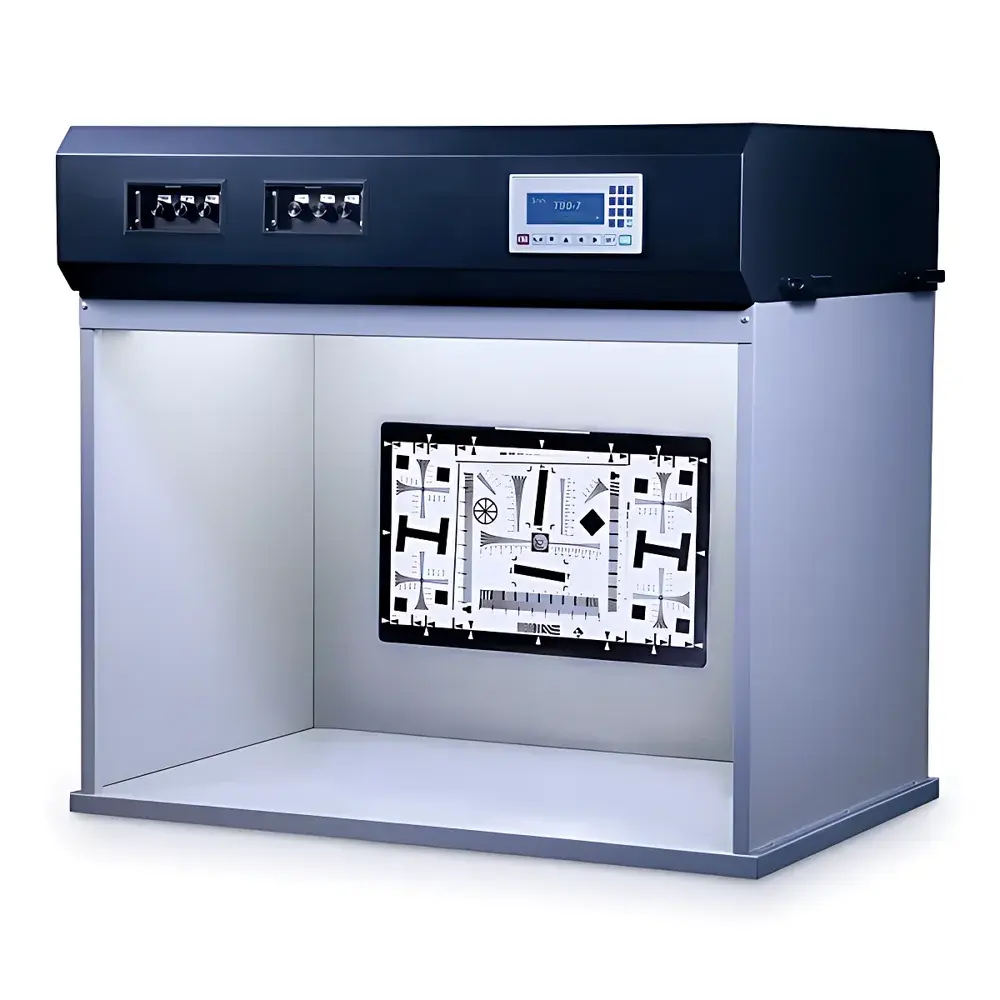
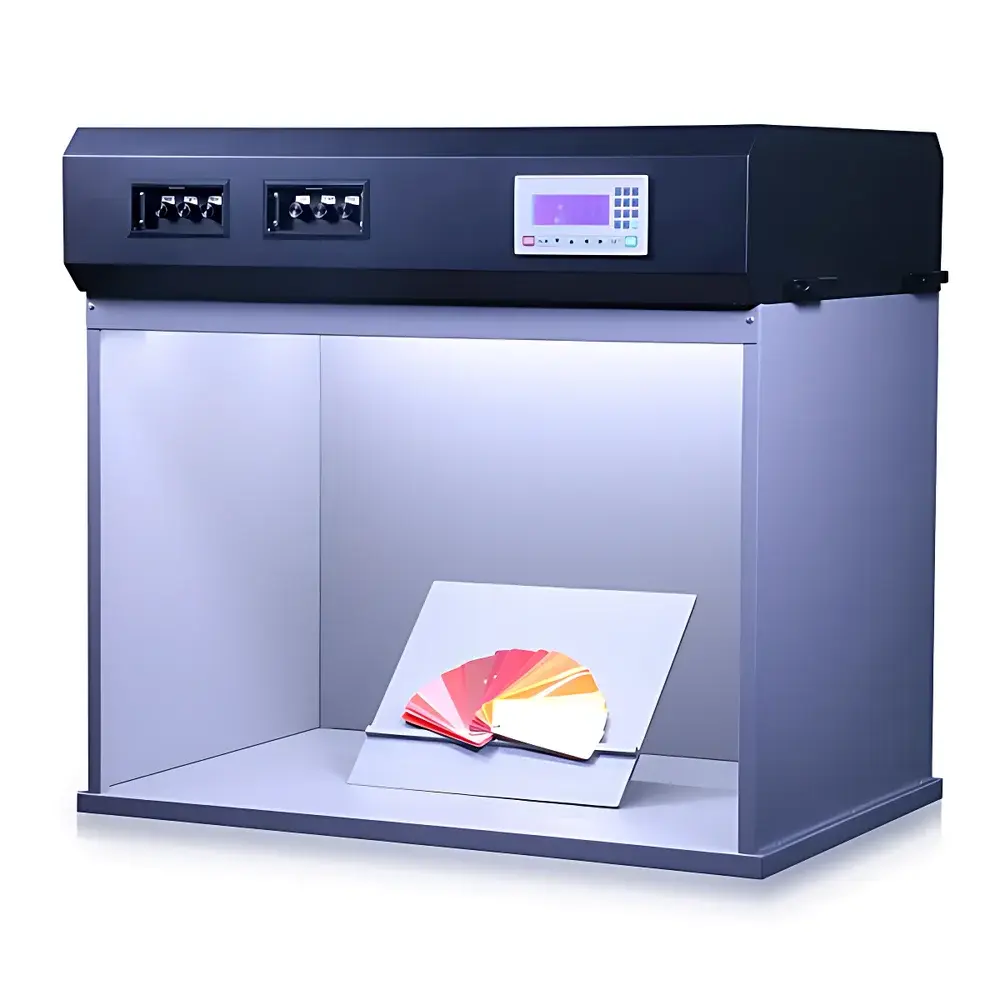
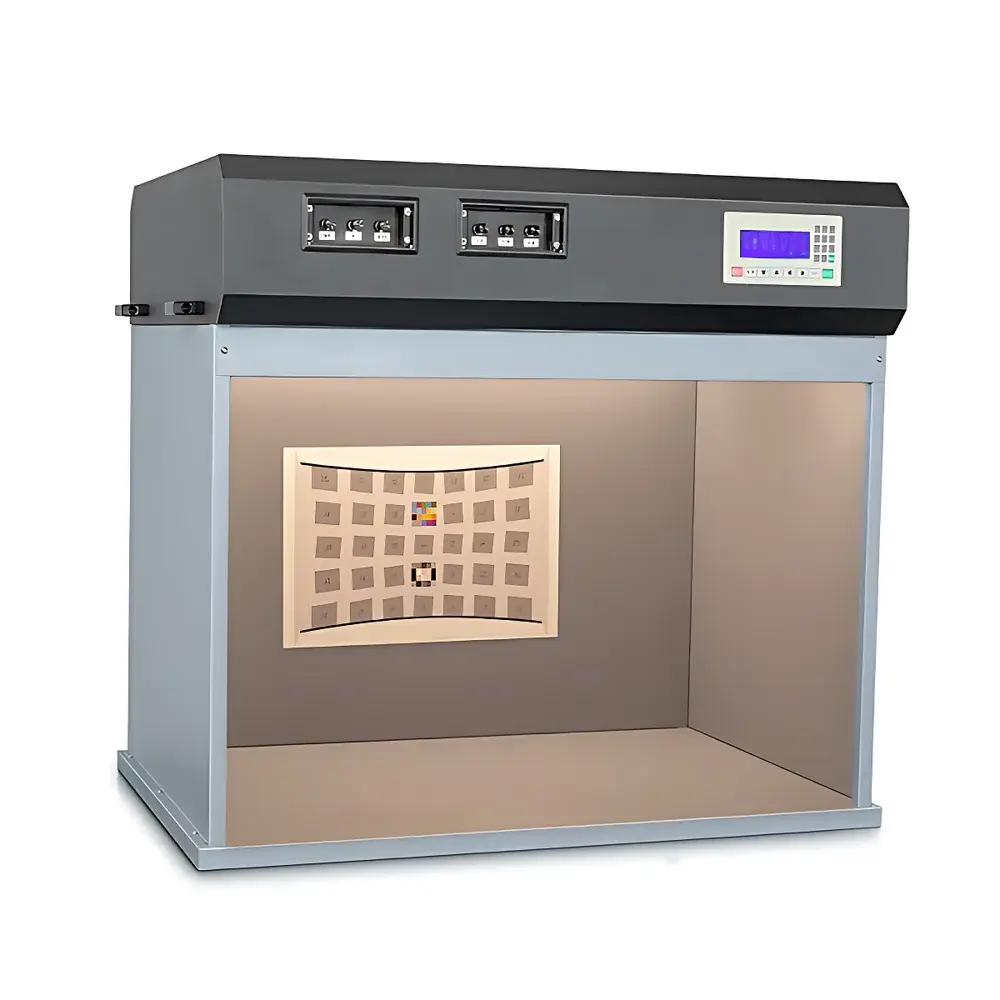
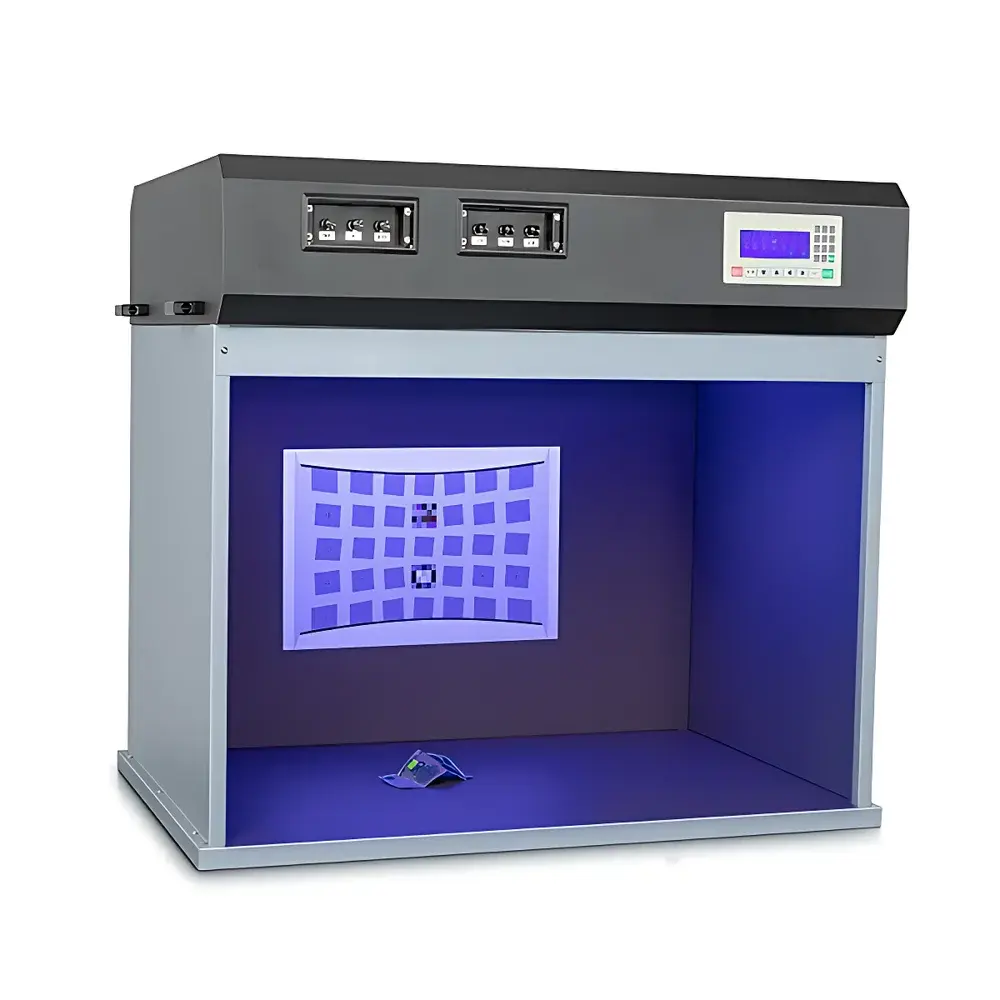
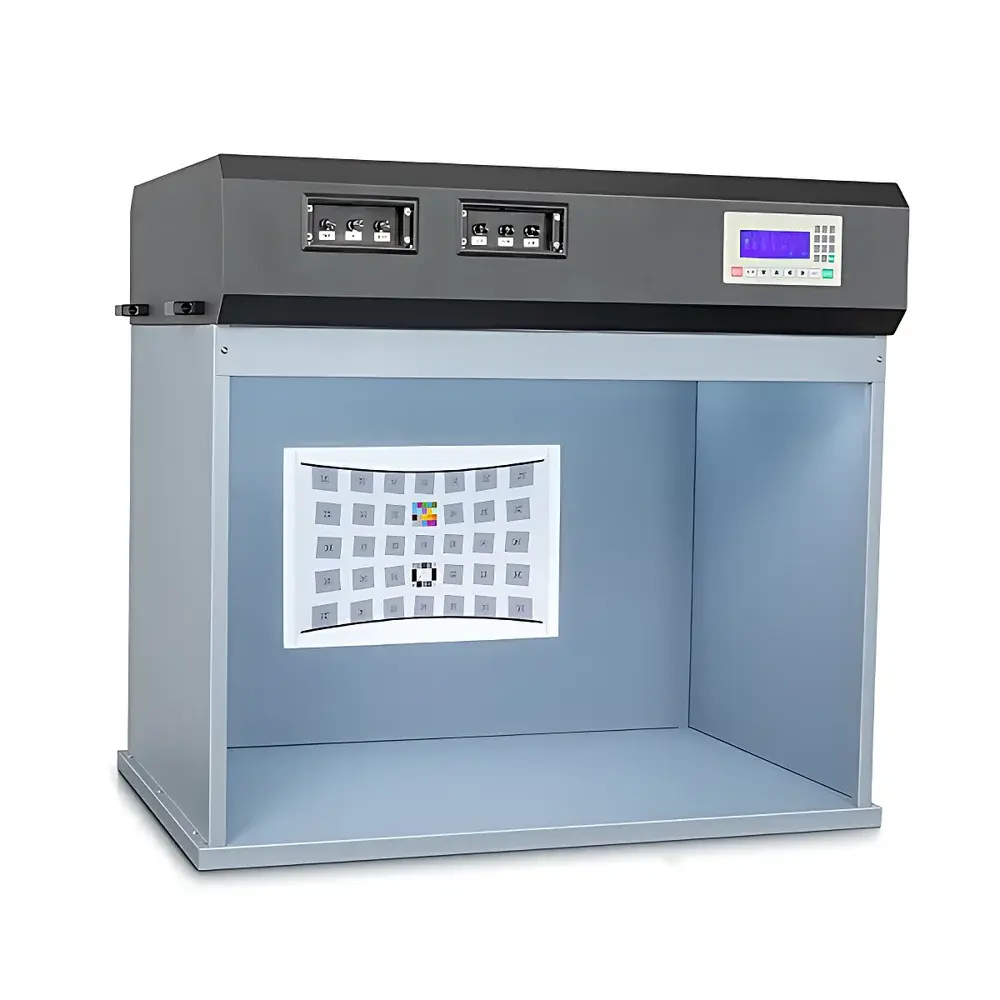
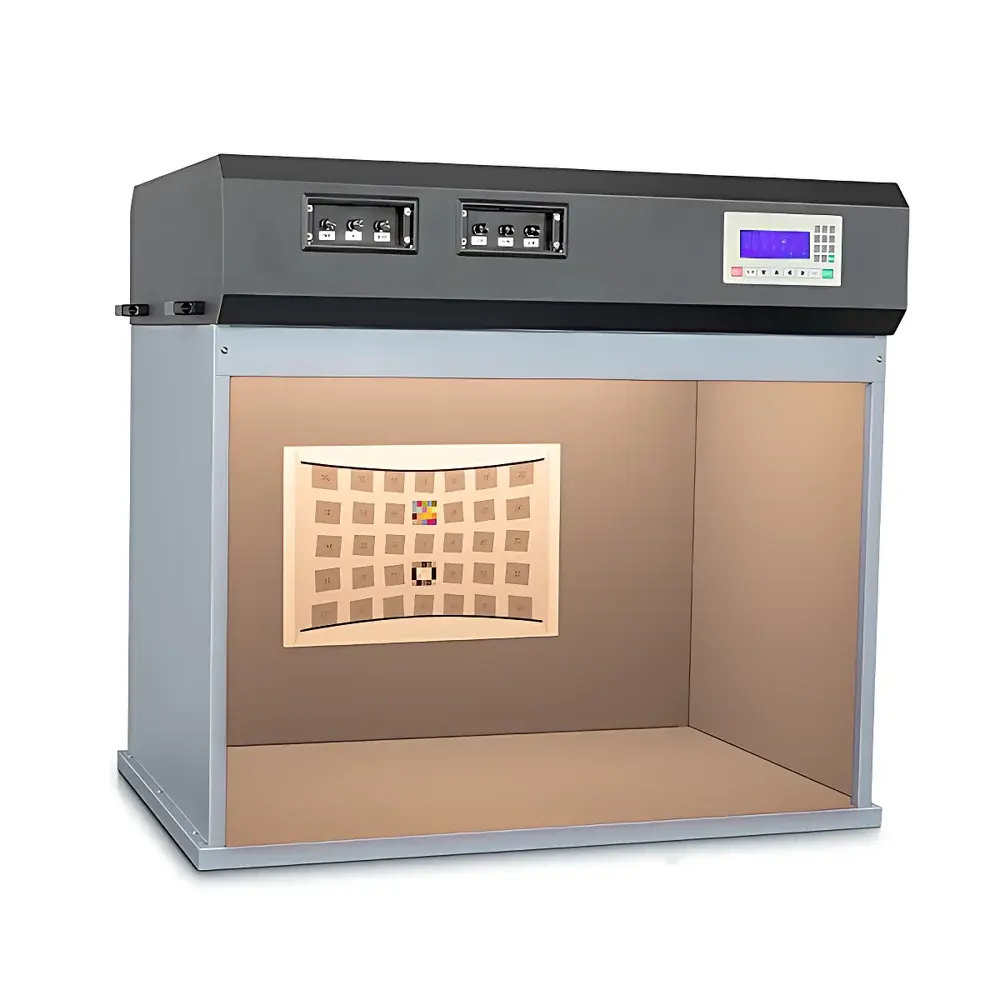
TILO T90-7+ Metal-Enclosed LED Standard Light Source Color Matching Cabinet
| Brand | TILO |
|---|---|
| Origin | Guangdong, China |
| Model | T90-7 |
| Dimensions (W×D×H) | 1008×716×898 mm |
| Weight | 60 kg |
| Power Supply | AC 220–240 V, 50/60 Hz |
| Light Sources | D65, A, D50, UV (360–390 nm), U30, TL84, U35 |
| Standards Compliance | ASTM D1729, ISO 3664:2009, CIE S 002, BS 950-1, DIN 6173-2, ANSI IT8.7/2 |
| LED Lamp Specifications | 3nh TruD65 (2 pcs, 15 W, CCT 6500 ±200 K, Ra ≥95), 3nh TruA (2 pcs, 15 W, CCT 2850 ±200 K, Ra ≥96), 3nh TruD50 (2 pcs, 15 W, CCT 5000 ±200 K, Ra ≥95), 3nh TruUV (2 pcs, 15 W, 360–390 nm) |
| Fluorescent Lamps | PHILIPS F30T12/30U/RS (2 pcs, 30 W, CCT 3000 ±200 K, Ra ≥80), PHILIPS TL-D30W/840 (2 pcs, 30 W, CCT 4000 ±200 K, Ra ≥85), GE F25T8 SPX35 ECO (2 pcs, 25 W, CCT 3500 ±200 K, Ra ≥85) |
| Lamp Lifetime | LED sources ≥25,000 switching cycles |
| Control System | Programmable text display + PLC-based logic controller |
| Functionality | Real-time source usage counter (hours & switch count), zero-resettable counters, dimmable output, spectral metamerism evaluation mode, instant-on operation, no warm-up required |
Overview
The TILO T90-7+ Metal-Enclosed LED Standard Light Source Color Matching Cabinet is an engineered solution for precise visual and instrumental color assessment under controlled, standardized illumination conditions. Designed specifically for camera sensor characterization, image quality testing, and industrial color matching workflows, the cabinet implements a multi-source photometric architecture compliant with international standards including ISO 3664:2009 (graphic technology), ASTM D1729 (color evaluation in industry), CIE S 002 (illuminants for colorimetry), and DIN 6173-2 (standard viewing conditions). Its core function relies on spectral fidelity—each light source delivers tightly specified correlated color temperature (CCT), color rendering index (Ra), and spectral power distribution (SPD) to ensure reproducible color perception across observers and imaging systems. Unlike legacy fluorescent cabinets requiring thermal stabilization, the T90-7+ integrates high-efficiency, thermally stable LED modules that eliminate warm-up delay, flicker, and radiative heat emission—critical for thermal-sensitive camera calibration environments and long-duration automated test sequences.
Key Features
- Metal-enclosed chassis constructed from cold-rolled steel with powder-coated finish, providing electromagnetic shielding, mechanical rigidity, and long-term dimensional stability under laboratory or production floor conditions.
- Seven standardized illuminants: D65 (daylight reference), A (incandescent), D50 (prepress standard), UV (360–390 nm for fluorescence detection), U30 (cool white fluorescent), TL84 (retail store lighting), and U35 (warm white fluorescent)—all independently switchable and dimmable via intuitive PLC-driven interface.
- Hybrid light engine comprising four groups of high-CRI LED arrays (3nh Tru-series) and three groups of precision fluorescent tubes (PHILIPS and GE), each validated per IEC 60081 and ISO/CIE photometric tolerances.
- Real-time operational logging: embedded controller records cumulative usage time and switch count per source, with user-accessible reset functionality—supporting preventive maintenance scheduling and audit-ready traceability.
- No warm-up requirement: LED sources achieve full spectral output within <100 ms; fluorescent lamps stabilize within ≤30 seconds—enabling rapid protocol cycling in QC labs and R&D validation pipelines.
- Programmable source naming and sequence configuration, allowing customization for proprietary lighting protocols or integration into automated test scripts via RS-232 or optional Ethernet interface.
Sample Compatibility & Compliance
The T90-7+ accommodates samples up to 900 × 600 mm in viewing area, with uniform irradiance distribution (±5% variation across central 80% field) verified per ISO 3664 Annex B. Its optical geometry conforms to CIE Publication 15:2018 requirements for viewing booths: matte black interior walls (L* < 5), diffused ceiling illumination, and controlled ambient light exclusion (< 1 lux). All light sources are certified to meet the spectral and photometric criteria defined in ISO 3664:2009 for graphic arts, textile, paint, and plastic industries. The system supports GLP-compliant documentation through timestamped usage logs and configurable operator ID input—facilitating alignment with FDA 21 CFR Part 11 requirements when integrated into regulated imaging validation processes.
Software & Data Management
While the T90-7+ operates as a standalone hardware platform, its PLC-based controller supports ASCII protocol communication over RS-232 for integration with LabVIEW, Python-based test automation suites, or MES/QMS platforms. Usage data—including source activation timestamps, duration, and cycle counts—is exportable as CSV for trend analysis and equipment lifecycle tracking. Firmware updates are delivered via USB memory stick, ensuring version control and regulatory traceability. Optional software add-ons enable synchronized triggering of external imaging devices, automatic exposure adjustment based on selected illuminant, and spectral mismatch index (SMI) calculation for metamerism risk assessment.
Applications
- Camera module and smartphone imaging sensor characterization under standardized lighting—particularly for auto-white balance (AWB) algorithm validation and dynamic range testing.
- Color consistency verification of printed packaging, automotive trim, cosmetic containers, and coated metal parts against master standards.
- Fluorescent pigment and security ink evaluation using the dedicated UV channel (360–390 nm) with minimal visible bleed.
- Metamerism detection in multi-illuminant comparison mode—identifying samples that match under D65 but diverge under TL84 or A, critical for retail and brand assurance programs.
- ISO/IEC 17025-accredited calibration laboratories performing visual color assessment as part of accredited scope (e.g., ISO 13655 for spectral reflectance).
FAQ
Does the T90-7+ support automated integration with machine vision systems?
Yes—via RS-232 serial command set, enabling remote lamp selection, dimming, and status polling. Optional TTL trigger input allows synchronous illumination onset with camera exposure.
What is the expected lifetime of the LED modules?
Rated for ≥25,000 switching cycles at full output, with lumen maintenance ≥90% after 15,000 hours (per LM-80 testing per IESNA TM-21 extrapolation).
Can the cabinet be configured for non-standard illuminants?
User-defined spectral profiles are not supported; however, custom labeling and sequence mapping allow internal designation of alternative names for existing sources.
Is third-party calibration certification available?
TILO provides factory calibration reports traceable to NIM (China National Institute of Metrology); UKAS or DAkkS-accredited calibration services are available through authorized partners upon request.
How is thermal management handled without active cooling?
LED drivers incorporate constant-current regulation with thermal foldback, and the metal enclosure functions as a passive heatsink—surface temperature rise remains <12 K above ambient during continuous operation.






