
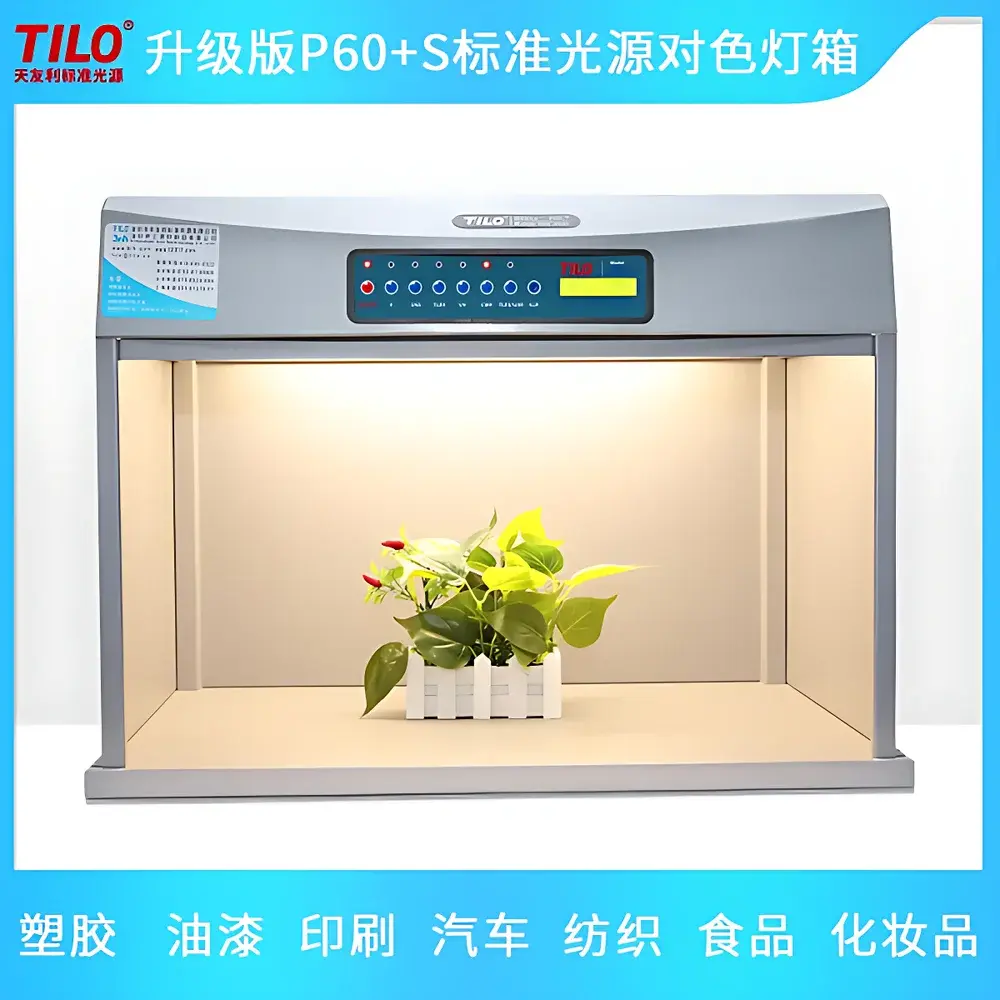
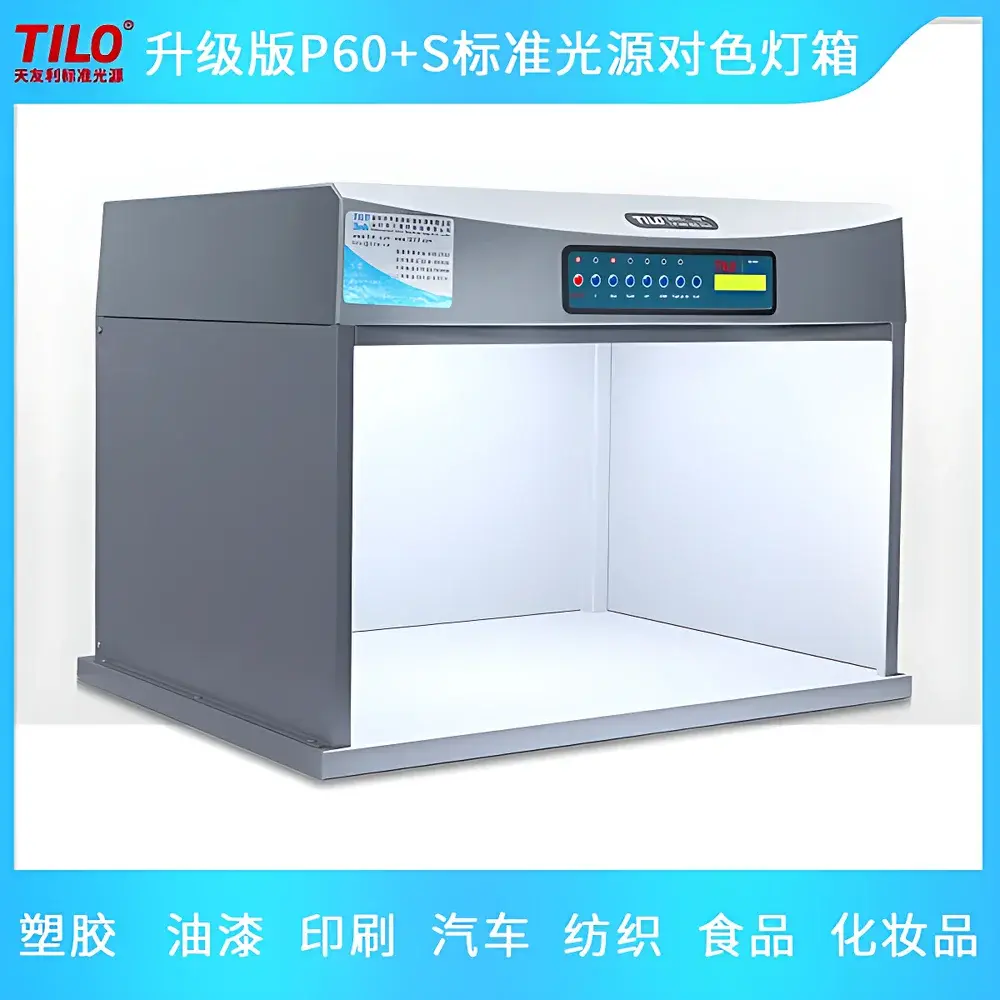
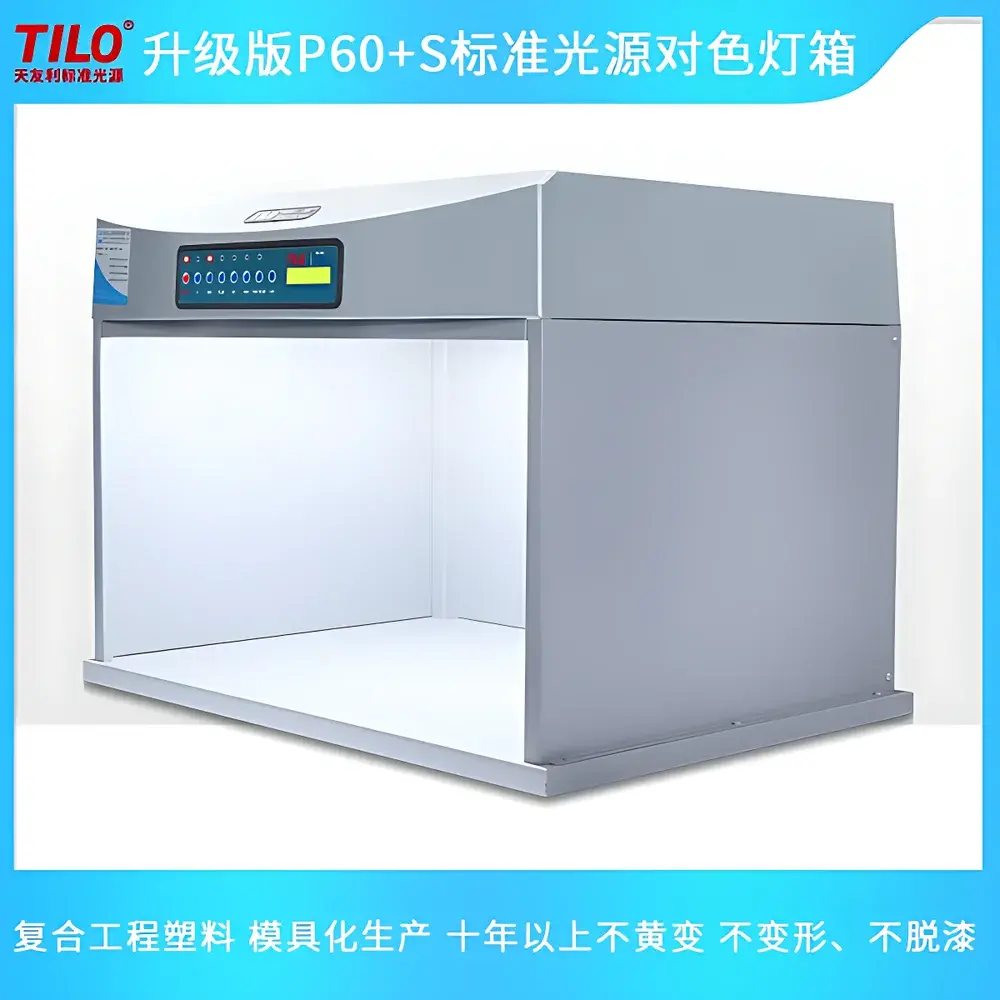
TILO P60+S Six-Source Standard Light Booth with Steel Enclosure
| Brand | TILO |
|---|---|
| Origin | Guangdong, China |
| Manufacturer Type | Authorized Distributor |
| Country of Origin | China |
| Model | P60+S |
| Pricing | Available Upon Request |
Overview
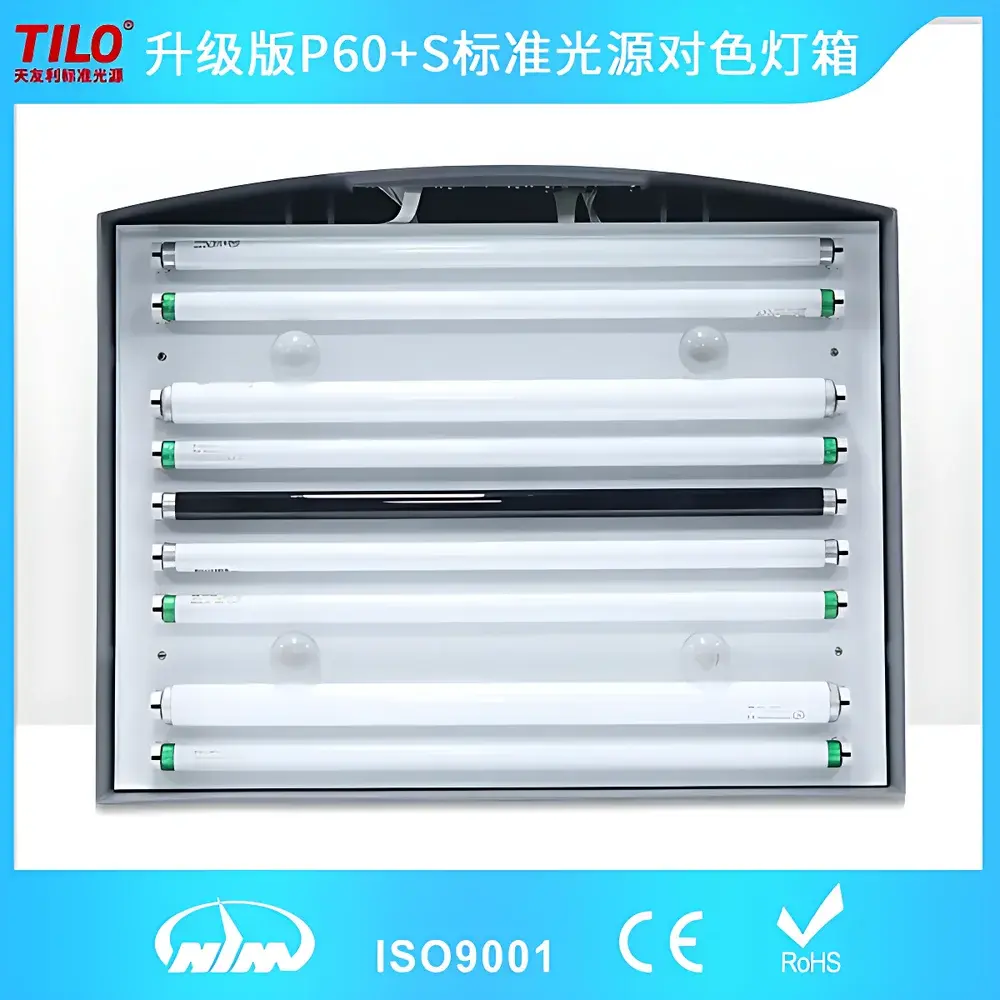
The TILO P60+S Six-Source Standard Light Booth is an engineered optical evaluation system designed for precise, repeatable, and standardized visual color assessment under controlled illumination conditions. Based on CIE-defined standard illuminants and international color matching protocols, the P60+S employs a robust steel-frame enclosure to minimize thermal drift, mechanical deformation, and ambient light intrusion—critical factors affecting inter-observer color judgment consistency. Unlike consumer-grade viewing cabinets, this instrument adheres to the photometric and geometric requirements outlined in ISO 3664:2009 (Graphic technology and photography — Viewing conditions), ASTM D1729–18 (Standard Practice for Visual Appraisal of Colors), and GB/T 3978–2008 (Chinese national standard for standard illuminants and illuminating conditions). Its core function is to eliminate metamerism-related discrepancies during color approval workflows by enabling simultaneous or sequential activation of six spectrally distinct light sources—including D65, TL84, CWF, F/A, UV, and U30—thereby supporting both same-appearance (isochromatic) and metameric pair detection (same-color-different-spectrum) evaluations.
Key Features
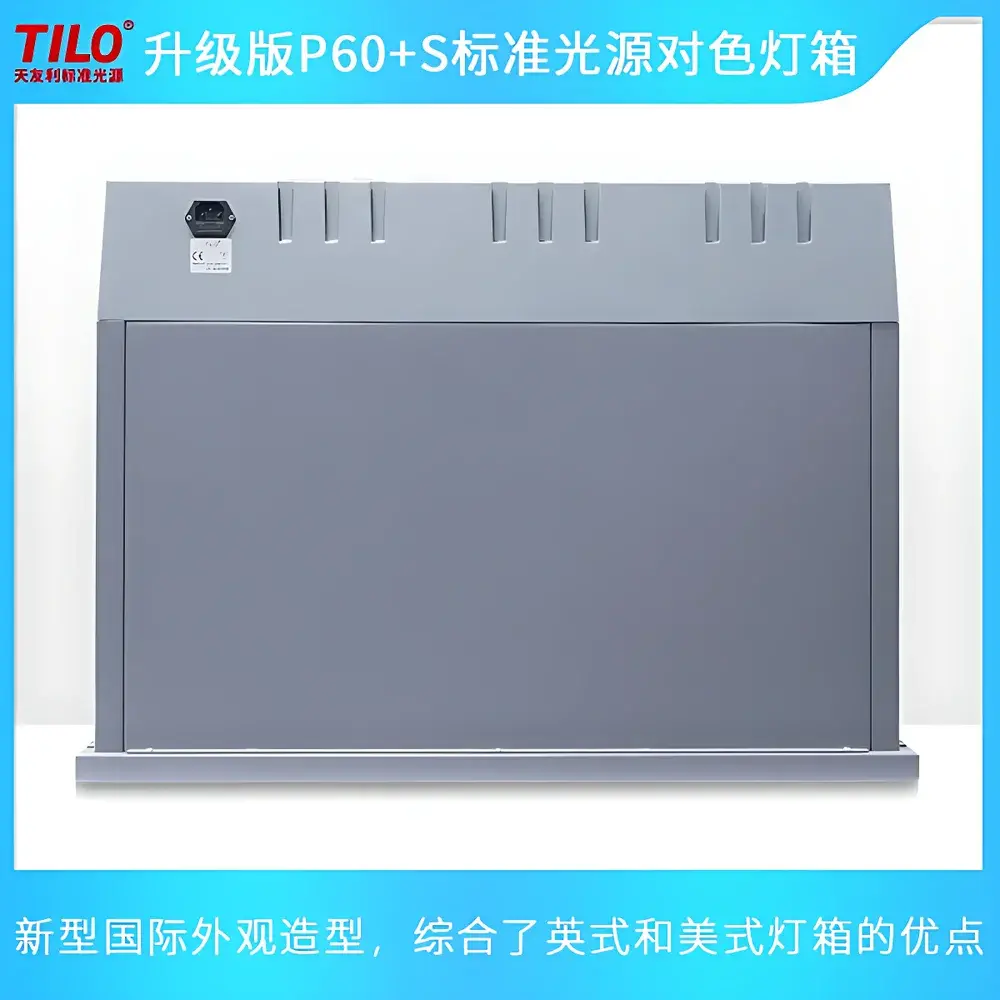
- Structural integrity: Reinforced cold-rolled steel base plate and fully welded enclosure ensure long-term dimensional stability, vibration resistance, and service life exceeding 15 years under industrial use.
- Optical containment: Seamless, light-tight construction with triple-sealed joints and internal matte-black non-reflective coating achieves >99.9% light isolation between source chambers—eliminating cross-illumination and spectral contamination.
- Durable housing: Injection-molded ABS/PC composite panels rated for UV resistance (ISO 4892-3), maintaining color neutrality and surface integrity for ≥120 months without yellowing, warping, or paint delamination.
- Human-centric ergonomics: Optional anti-glare baffle system reduces retinal luminance exposure per IEC 62471 (Photobiological safety of lamps), mitigating observer fatigue during extended visual inspections.
- Operational transparency: Real-time digital display shows cumulative operating hours per lamp, individual switch cycle count, and active illuminant identification—supporting preventive maintenance and audit-ready traceability.
- Instant-on performance: Electronic ballast-free LED modules (where applicable) or high-frequency fluorescent drivers deliver stable output within <0.1 s—no warm-up delay, no flicker, no intensity decay during evaluation.
- Configurable illumination mapping: User-definable label names for each light source (e.g., “D65-ISO”, “TL84-Apparel”) align with internal SOPs or client-specific lighting protocols.
Sample Compatibility & Compliance
The P60+S accommodates flat, rigid, and semi-flexible specimens up to 600 mm × 400 mm × 150 mm (W × D × H), including fabric swatches, plastic injection-molded parts, printed packaging substrates, ceramic glaze tiles, leather hides, and coated metal panels. Its viewing geometry conforms to the 45°/0° (annular illumination, normal viewing) and 0°/45° configurations specified in ISO 7724-1 and ASTM E308. All installed light sources are calibrated against NIST-traceable reference spectroradiometers and meet spectral power distribution tolerances defined in CIE Publication 51 and ISO/CIE 13655:2017 (Spectral measurement of reflectance and transmittance). The unit supports GLP-compliant documentation when integrated with laboratory information management systems (LIMS) via optional RS-232 or USB-C data export.
Software & Data Management
While the P60+S operates as a standalone hardware platform, its digital interface enables integration with third-party color management software (e.g., X-Rite Color iMatch, Datacolor Match Textile, GretagMacbeth SpectraLight QC Suite) via TTL-level trigger signals or Modbus RTU protocol. Firmware updates preserve calibration history and support configurable auto-shutdown timers, lamp aging compensation curves, and user-access-level permissions (operator, supervisor, administrator). Audit trails—including lamp usage logs, source selection timestamps, and configuration changes—are stored in non-volatile memory and exportable as CSV files compliant with FDA 21 CFR Part 11 requirements when used in regulated manufacturing environments.
Applications
- Textile & Apparel: Shade matching across dye lots, batch-to-batch consistency verification, and AATCC TM150-compliant colorfastness assessment under D65 + UV.
- Plastics & Polymers: Detection of fluorescence in masterbatches, pigment dispersion uniformity checks, and automotive interior trim color validation per SAE J1545.
- Printing & Packaging: Spot color reproduction fidelity testing (Pantone®, FOGRA), substrate metamerism screening, and ISO 12647-2 process control.
- Paints & Coatings: Gloss-independent hue evaluation, metallic flake orientation analysis, and VOC-compliant formulation development under CWF and TL84.
- Food & Cosmetics: Regulatory-compliant appearance inspection of labeling, capsule shells, and emulsified formulations where regulatory agencies require standardized lighting (e.g., EU Cosmetics Regulation EC No 1223/2009 Annex I).
FAQ
Does the P60+S comply with ISO 3664:2009 for graphic arts viewing conditions?
Yes—the booth meets all geometric, photometric, and chromaticity requirements for critical color evaluation in printing and publishing applications, including minimum illuminance (2000 lux ± 200 lux at sample plane), uniformity (>80%), and D65 spectral match (Δu’v’ ≤ 0.005).
Can the UV source be used for detecting optical brightening agents (OBAs)?
Yes—the 365 nm UV-A lamp complies with ISO 105-B02 and AATCC Test Method 183 for OBA visualization and quantification when paired with calibrated UV-filtered viewing glasses.
Is lamp replacement a field-serviceable procedure?
Yes—fluorescent tubes and LED modules are modular, tool-free, and labeled with factory-set spectral IDs; replacement requires no recalibration if original TILO-certified components are used.
What is the expected service life of the light sources?
Fluorescent lamps: ≥2000 hours at rated voltage; LED modules: ≥15,000 hours L70 (lumen maintenance to 70% initial output) under continuous operation at 25°C ambient.
Does the unit support network connectivity or remote monitoring?
Not natively—but optional Ethernet-to-serial gateways enable integration into plant-wide SCADA or MES platforms for centralized light booth status tracking and predictive maintenance scheduling.




