
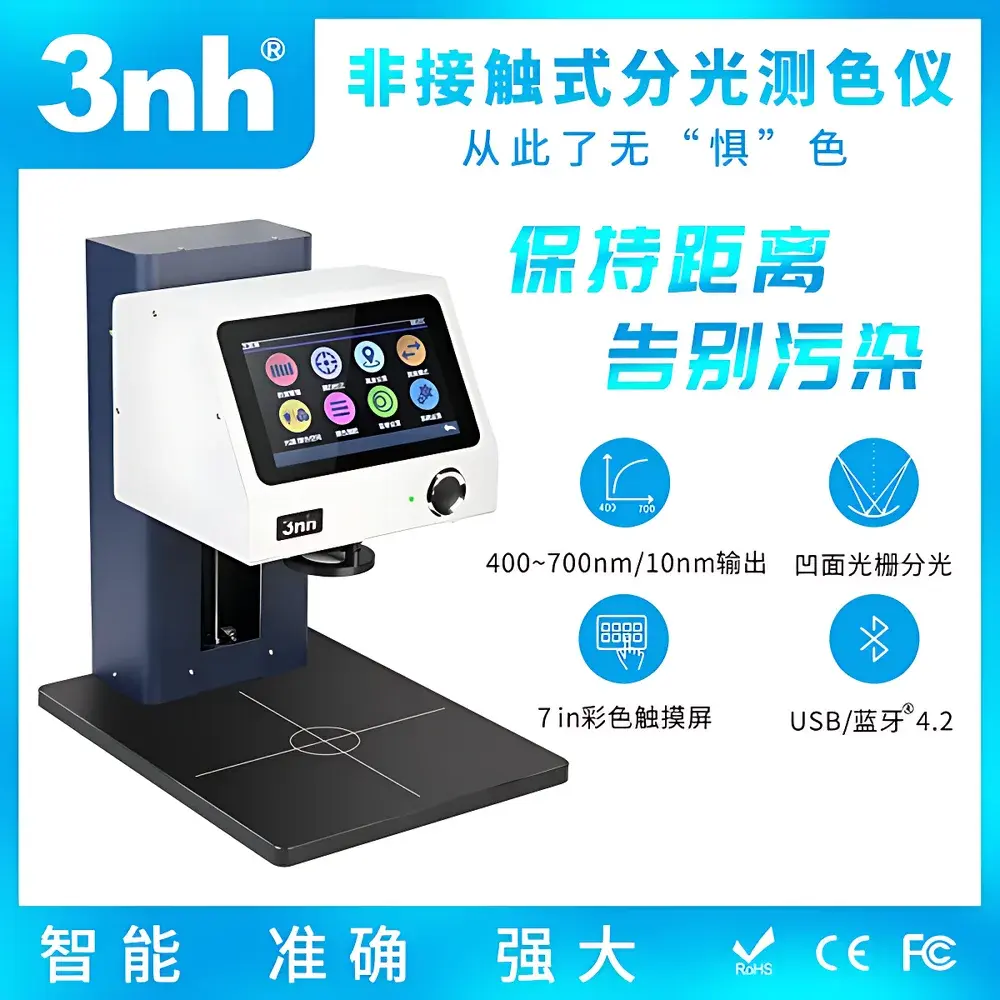
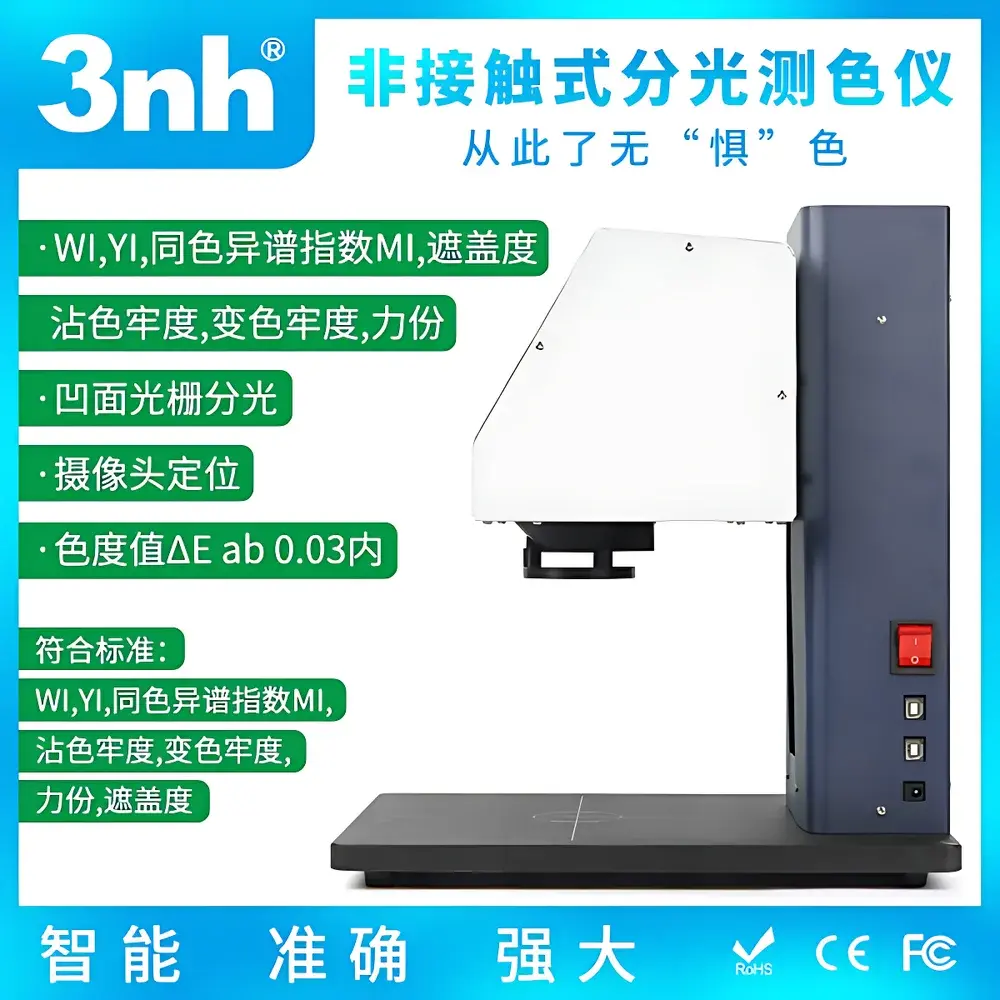
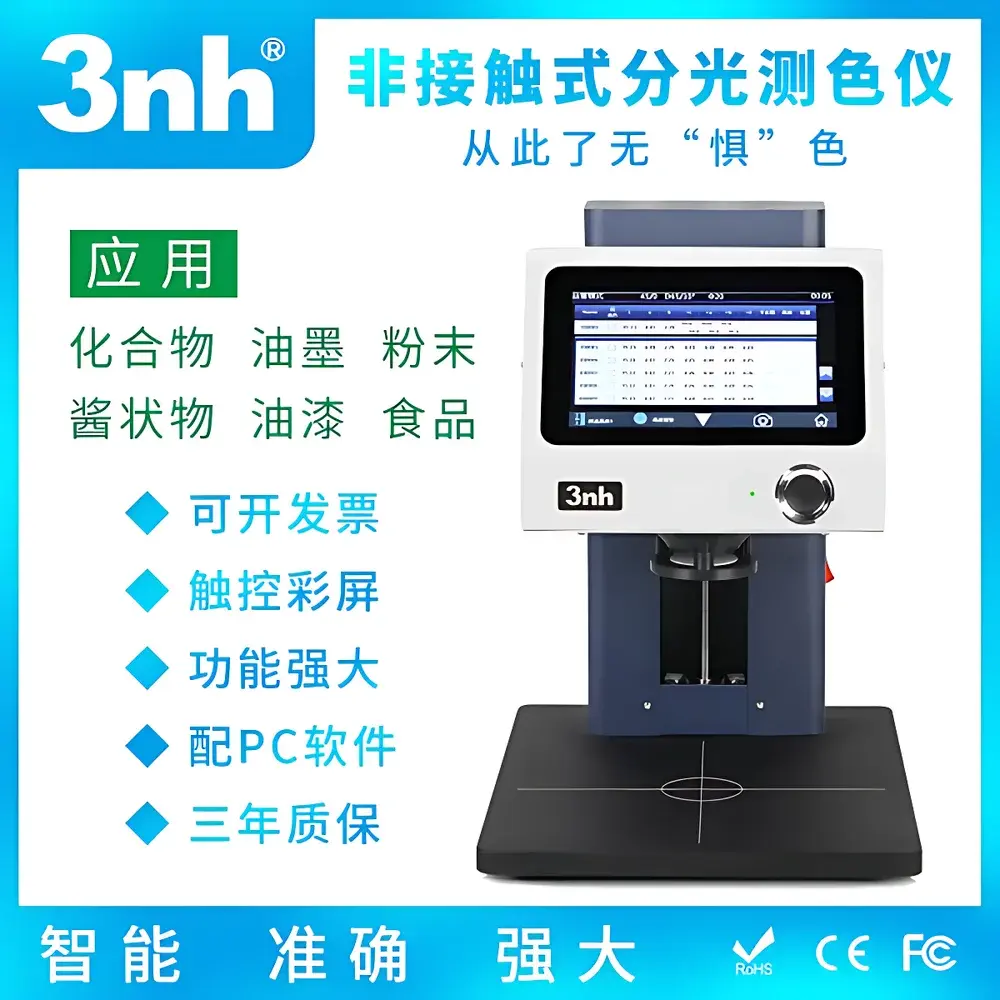
3nh YL4520 Non-Contact Desktop Spectrophotometer
| Brand | 3nh |
|---|---|
| Origin | Guangdong, China |
| Manufacturer Type | Direct Manufacturer |
| Product Type | Spectrophotometer |
| Instrument Mode | Benchtop (Non-Contact) |
| Optical Geometry | 45°/0° (45° Annular Illumination, 0° Viewing) |
| Light Source | Xenon Flash Lamp |
| Spectral Range | 360–780 nm |
| Repeatability | ΔE*ab ≤ 0.05 |
Overview
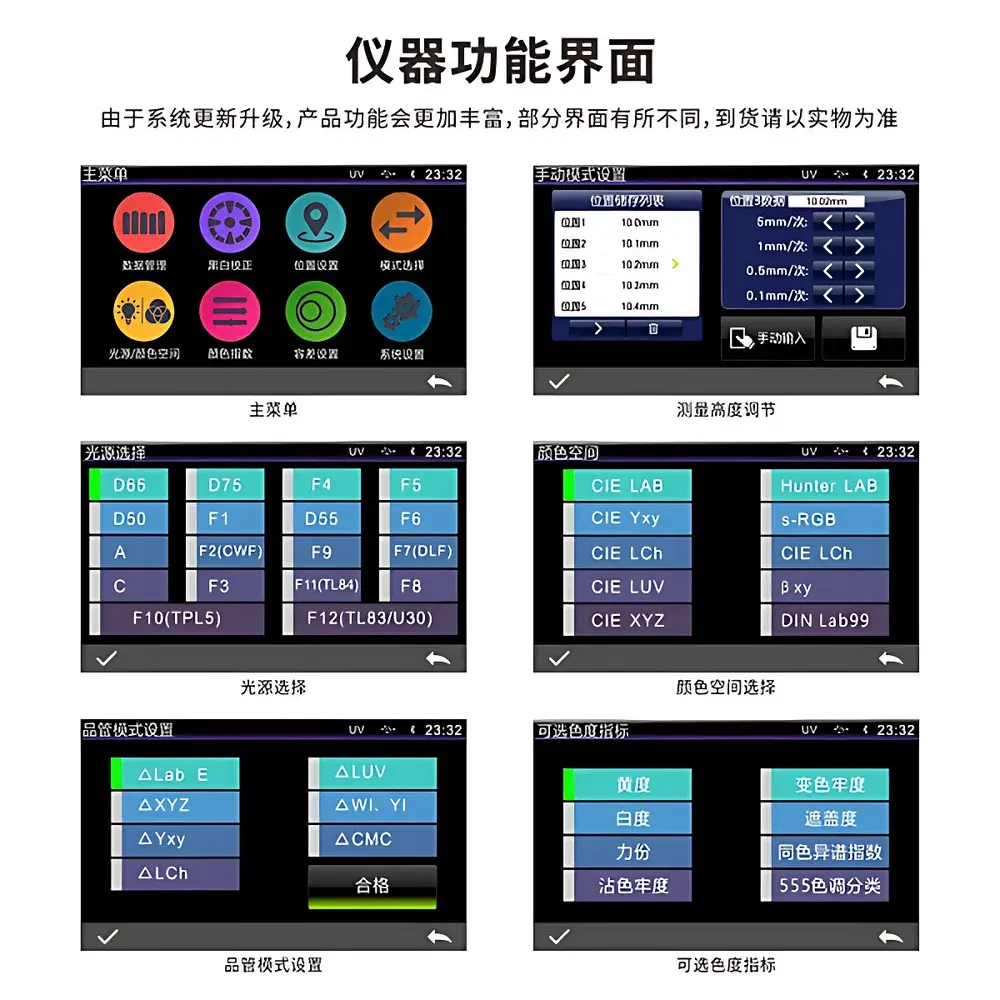
The 3nh YL4520 Non-Contact Desktop Spectrophotometer is a precision optical measurement instrument engineered for high-fidelity colorimetric analysis under standardized CIE illuminants and observer conditions. It operates on the 45°/0° optical geometry—defined by CIE Publication 15:2018 and ISO 7724-1—where a ring-shaped array of xenon flash lamps delivers uniform 45° circumferential illumination, while a single central spectrometer collects reflected light at 0° normal incidence. This geometry eliminates directional bias from surface texture or gloss, making it especially suitable for non-flat, semi-opaque, or heterogeneous samples including liquids, pastes, powders, and granular solids. Unlike contact-based integrating sphere instruments, the YL4520 employs a fixed-focus optical probe with adjustable working distance (typically 10–20 mm), enabling true non-contact operation without sample compression, contamination, or mechanical disturbance—critical for hygienic, sterile, or temperature-sensitive applications in food, pharmaceutical, and cosmetic manufacturing.
Key Features
- Non-contact measurement architecture: Eliminates physical interaction with samples, preserving integrity of viscous, volatile, or biologically active materials.
- Xenon flash lamp illumination: Provides full-spectrum output across 360–780 nm with stable spectral power distribution (SPD), traceable to NIST-traceable standards; enables accurate calculation of CIE XYZ, L*a*b*, L*C*h°, ΔE*ab, ΔE00, and Munsell values under D65, A, F2, and other standard illuminants.
- High photometric repeatability: Achieves ΔE*ab ≤ 0.05 over repeated measurements on homogeneous surfaces—meeting the performance threshold required for inter-laboratory color matching per ASTM D2244 and ISO 13655.
- Benchtop modular design: Integrates compact optical head, embedded ARM-based processing unit, and USB/RS-232 connectivity; supports standalone operation or integration into SCADA and MES systems via Modbus RTU or custom API.
- Thermal-stabilized spectrometer: Utilizes a 128-element linear CCD array with on-chip dark current compensation and real-time wavelength calibration, ensuring long-term spectral fidelity across ambient temperature fluctuations (15–30°C).
Sample Compatibility & Compliance
The YL4520 accommodates diverse physical states without sample preparation: free-flowing liquids (e.g., beverage concentrates, syrups), semi-solid matrices (e.g., cosmetic creams, tomato paste), dry powders (e.g., pigments, dairy powders), and textured surfaces (e.g., brushed metals, matte plastics). Its non-contact operation complies with FDA 21 CFR Part 11 requirements for electronic records when paired with validated software, and supports audit trails, user access control, and electronic signatures. The instrument adheres to ISO 9001-compliant manufacturing protocols and meets electromagnetic compatibility (EMC) requirements per IEC 61326-1 for industrial environments. Measurement uncertainty is characterized per ISO/IEC 17025 guidelines and referenced against certified color standards (e.g., NPL BCRA Series II tiles, NIST SRM 2021).
Software & Data Management
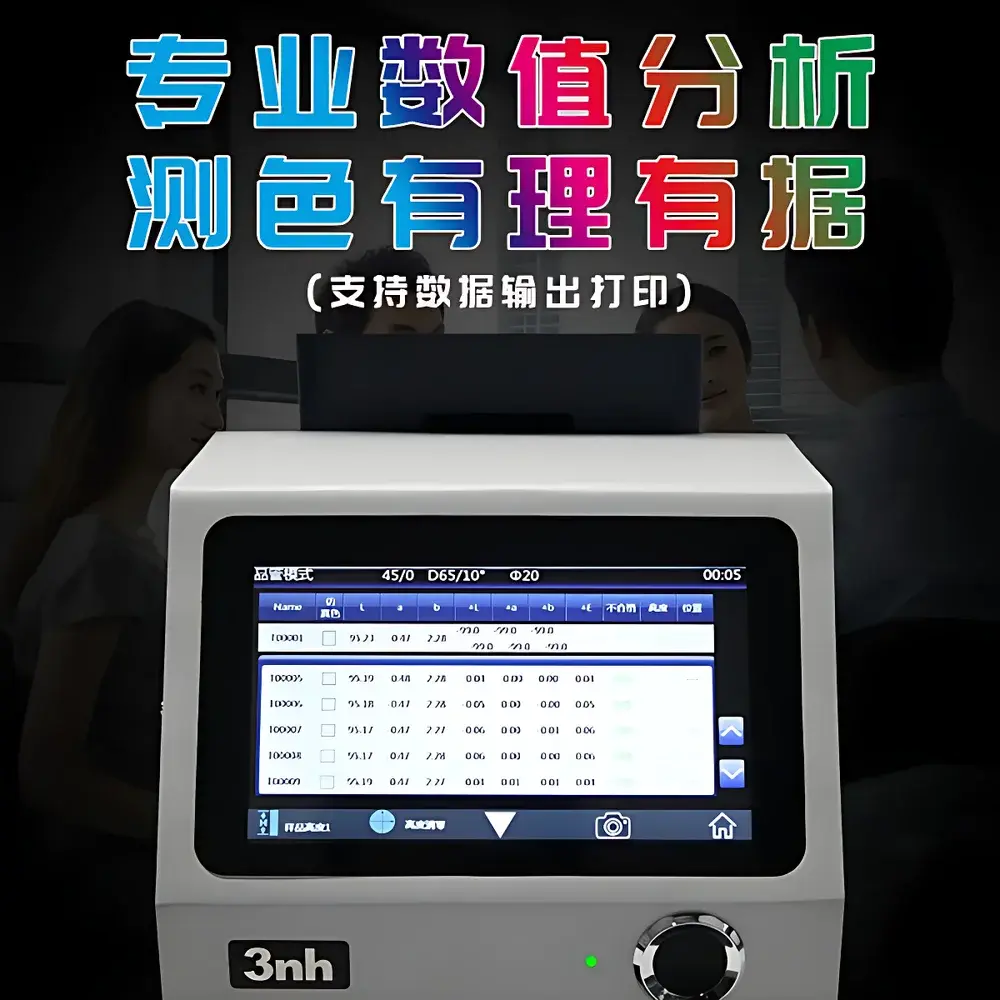
The YL4520 ships with SpectraMagic NX v3.x (Windows-based), a GxP-ready application supporting method-driven workflows, multi-instrument synchronization, and statistical process control (SPC) charting. All raw spectral data (31-point 10-nm intervals from 360–780 nm) are stored in vendor-neutral CSV and XML formats. Software modules include batch comparison, tolerance mapping (ellipsoidal ΔE00 limits), pass/fail reporting, and export to LIMS via ODBC or HL7 interfaces. Audit trail functionality logs all user actions—including parameter changes, calibration events, and result modifications—with timestamps and operator IDs, satisfying GLP/GMP documentation requirements.
Applications
- Food & Beverage: Quantitative assessment of browning (e.g., Maillard reaction in roasted coffee), pigment degradation (e.g., chlorophyll loss in leafy greens), and batch-to-batch consistency in sauces and dairy products.
- Cosmetics: Color stability testing of emulsions under accelerated aging, shade matching for foundations and lipsticks, and regulatory submission support for FDA colorant listings.
- Pharmaceuticals: Visual quality control of coated tablets and capsules per USP , excipient color verification, and cleaning validation endpoint determination.
- Industrial Manufacturing: In-line color verification for injection-molded components, paint film uniformity monitoring, and ceramic glaze consistency during kiln firing cycles.
- Academic Research: Spectral reflectance modeling, material aging studies, and cross-platform color data harmonization across multi-site laboratories.
FAQ
What is the minimum measurable sample area?
The effective measurement aperture is Ø12 mm; samples must fully cover this area at the specified working distance.
Does the YL4520 require annual recalibration?
Yes—recommended annually using certified white tile and green ceramic standards; calibration certificates are traceable to national metrology institutes.
Can it measure transparent or translucent liquids in cuvettes?
Yes, when used with optional liquid holder accessories that maintain fixed path length and eliminate meniscus interference.
Is spectral data export compliant with ASTM E308-22?
Yes—raw 10-nm interval data conforms to ASTM E308-22 Annex A1 format for conversion to CIE tristimulus values.
How is stray light error minimized in the 360 nm region?
Through dual-order sorting filters and UV-enhanced CCD quantum efficiency optimization, achieving <0.1% stray light at 360 nm per ISO 17025 validation reports.




