

3nh 18% Neutral Gray Card (R27 Kodak Q13 / Q14 Calibration Reference Card) – 20 × 25 cm (8 × 10 in) Reflectance Standard for Photographic, Imaging & Color Management Systems
| Brand | 3nh |
|---|---|
| Origin | Guangdong, China |
| Manufacturer Type | OEM/ODM Manufacturer |
| Region of Origin | Domestic (China) |
| Model | 18% Neutral Gray Card |
| Price | USD 47.50 (FOB) |
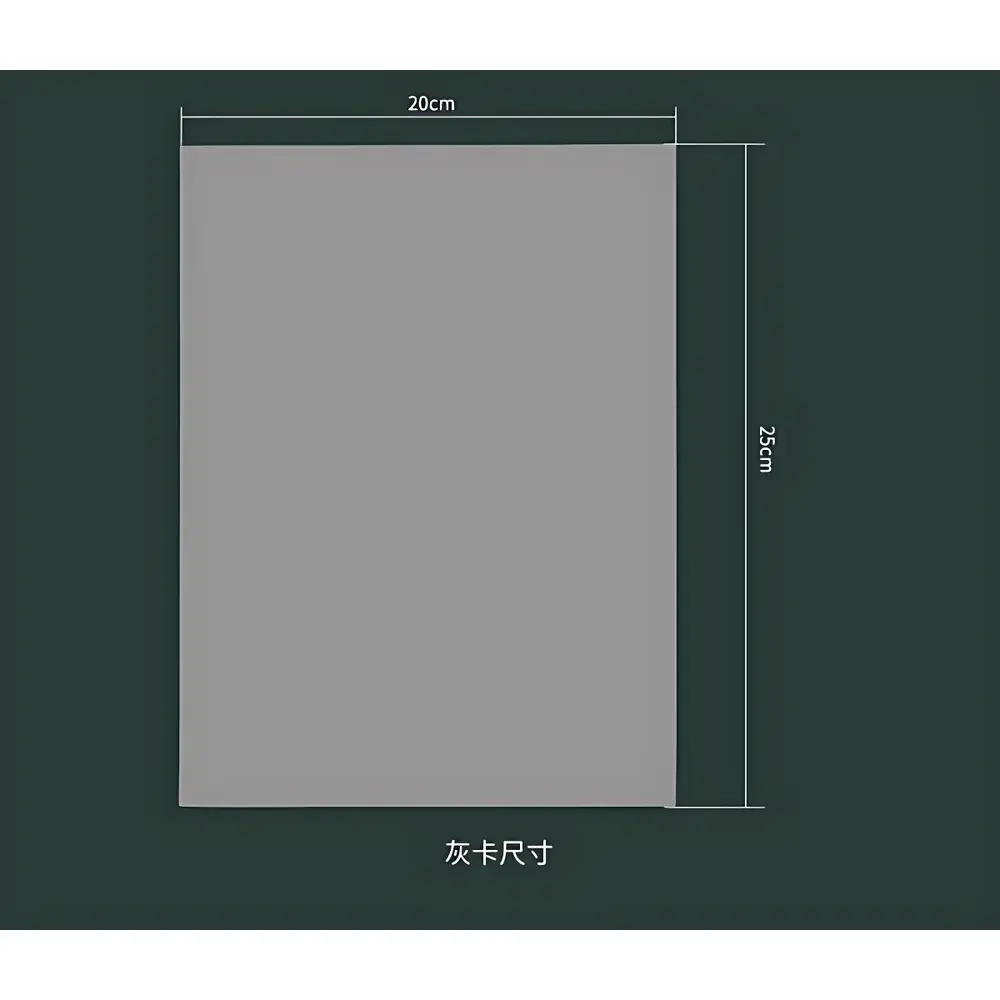
| Size | 20 × 25 cm (8 × 10 in) |
| Reflectance | 18% ± 0.5% at 550 nm (CIE Standard Illuminant D65) |
| Material | Acid-free, spectrally neutral matte cardstock |
| Compliance | ISO 12232:2019 Annex E, ASTM E308-22, ANSI IT8.7/1 |
Overview
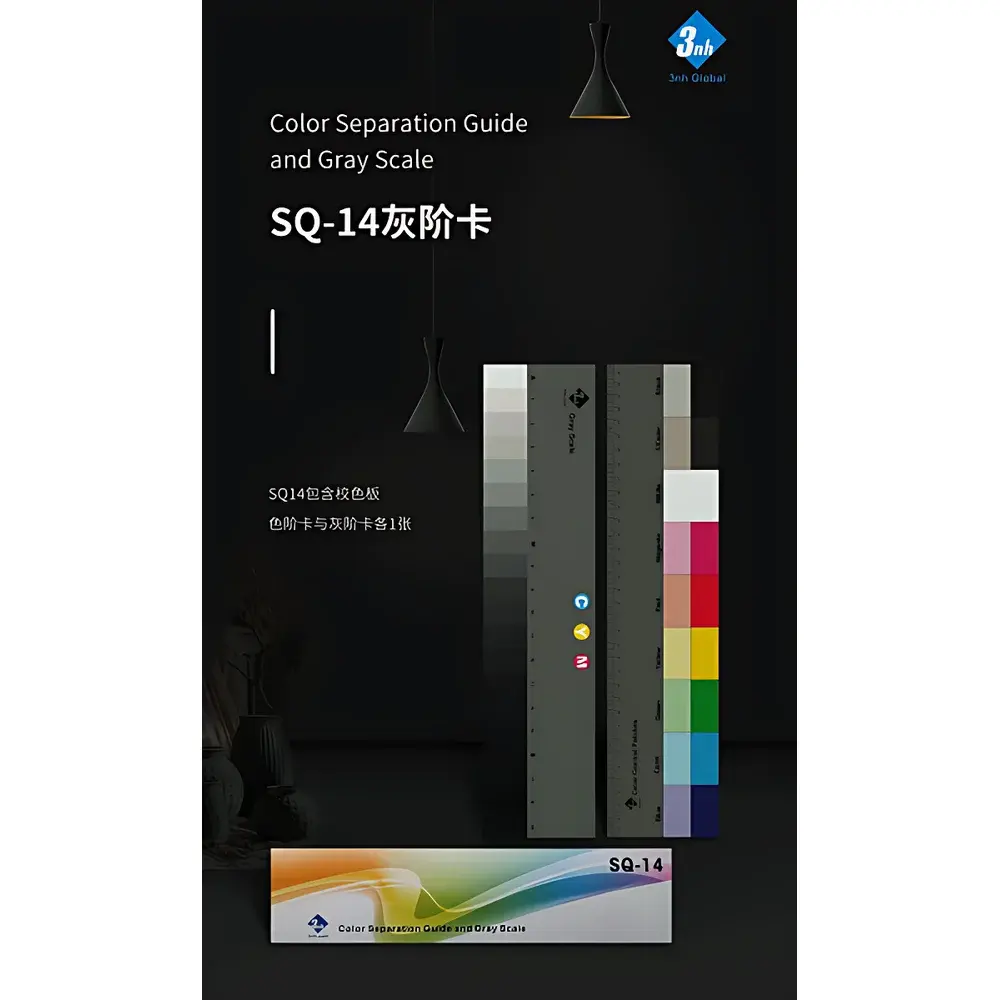
The 3nh 18% Neutral Gray Card (R27 Kodak Q13/Q14 reference standard) is a precision-engineered reflectance calibration target designed for photometric and colorimetric validation across imaging pipelines, digital photography, print proofing, and spectral measurement workflows. Based on the internationally recognized Kodak Q13 (gray scale) and Q14 (neutral gray patch) specifications, this card delivers a stable, spectrally flat 18% diffuse reflectance across the visible spectrum (400–700 nm), with certified uniformity and long-term stability under controlled storage conditions. Its optical performance adheres to the CIE-defined luminance factor (Y = 18%) under D65 illumination — the de facto standard for exposure metering, white balance calibration, and grayscale reproduction in both analog and digital imaging systems. Unlike consumer-grade gray cards, this version is manufactured using ISO-compliant spectrophotometric validation protocols, ensuring traceability to NIST-traceable reference standards during production.
Key Features
- High-fidelity 18% diffuse reflectance (±0.5% tolerance at 550 nm), verified via dual-beam spectrophotometry per ASTM E308-22
- Matte, non-glossy surface engineered to minimize specular reflection and angular dependency (Lambertian behavior confirmed per ISO 13655:2017)
- Acid-free, lignin-free cardstock with UV-stabilized pigments; resistant to yellowing and reflectance drift over time (tested per ISO 18902:2021 for archival stability)
- Dimensionally stable 20 × 25 cm format (8 × 10 in), optimized for studio lighting setups, camera sensor calibration, and spectroradiometer field-of-view alignment
- Pre-printed R27 designation and Q13/Q14 compatibility labeling for seamless integration into legacy Kodak-based color management workflows
- Compact, rigid packaging with integrated usage instructions printed on the reverse — no external documentation required
Sample Compatibility & Compliance
This gray card is compatible with all major DSLR/mirrorless camera exposure metering systems (including Canon EOS, Nikon Z, Sony Alpha, Fujifilm X-series), as well as professional spectroradiometers (e.g., Konica Minolta CS-2000, Ocean Insight HDX), imaging densitometers, and digital press calibration tools. It satisfies functional requirements outlined in ISO 12232:2019 (photographic sensitivity determination), ISO 13655:2017 (spectral measurement geometry), and ANSI IT8.7/1 (color transparency and reflective media characterization). While not a primary metrology artifact, it serves as a secondary transfer standard suitable for routine in-lab verification under GLP-aligned quality control procedures. It is not intended for use in FDA-regulated clinical imaging applications without supplementary validation per 21 CFR Part 11 audit trail requirements.
Software & Data Management
The card requires no proprietary software or drivers. Its utility is realized through integration with industry-standard calibration utilities: Adobe Camera Raw and Lightroom (for custom white balance and exposure profiling), Capture One (for ICC profile generation), and Basler pylon SDK or Thorlabs ThorCam (for machine vision system offset correction). When used with spectroradiometers, raw spectral data (380–780 nm, 1 nm resolution) can be exported in CSV or XML formats compliant with CIE S 026/E:2018 metadata schema. For enterprise environments, the card supports documented change control per ISO/IEC 17025:2017 clause 7.7 — including logbook entries for recalibration intervals (recommended annually under ISO 17025 Clause 6.6.2).
Applications
- Exposure meter calibration and histogram anchoring in studio and field photography
- White balance reference for multi-spectral imaging systems and hyperspectral cameras
- Baseline reflectance check for spectrophotometers (e.g., X-Rite i1Pro3, Datacolor SpyderX) prior to spectral scan sequences
- Gray balance validation in flexographic, gravure, and digital inkjet printing workflows (per ISO 12647-2:2013)
- Reference target for radiometric correction in remote sensing ground truthing and UAV-based NDVI calibration
- Teaching aid in university-level optics, color science, and photographic technology curricula (aligned with CIE Publication 15:2018)
FAQ
Is this card NIST-traceable?
No — it is calibrated against 3nh’s internal ISO 17025-accredited reference standards, which are themselves traceable to NIST SRM 2021a. Full traceability documentation is available upon request with purchase order.
Can it be used for absolute radiometric calibration?
No — it is a relative reflectance standard. Absolute calibration requires a primary standard (e.g., Spectralon® SRM 990) and a calibrated integrating sphere setup.
What is the recommended recalibration interval?
Annual verification is advised under ISO/IEC 17025:2017 Clause 6.6.2 when used in accredited laboratories; otherwise, visual and spectrophotometric spot-checks every 6 months are sufficient for general imaging use.
Does the card meet FDA 21 CFR Part 11 requirements?
The physical card itself does not require Part 11 compliance. However, when used within a validated digital workflow (e.g., spectroradiometric QA in pharmaceutical packaging), its use must be documented in an electronic record system supporting audit trails, electronic signatures, and version control.
How should the card be stored to maintain reflectance stability?
Store flat in its original packaging, away from direct UV exposure, ozone sources, and humidity >60% RH. Avoid contact with solvents, fingerprints, or abrasive cleaning — surface contamination permanently alters diffuse reflectance characteristics.




