
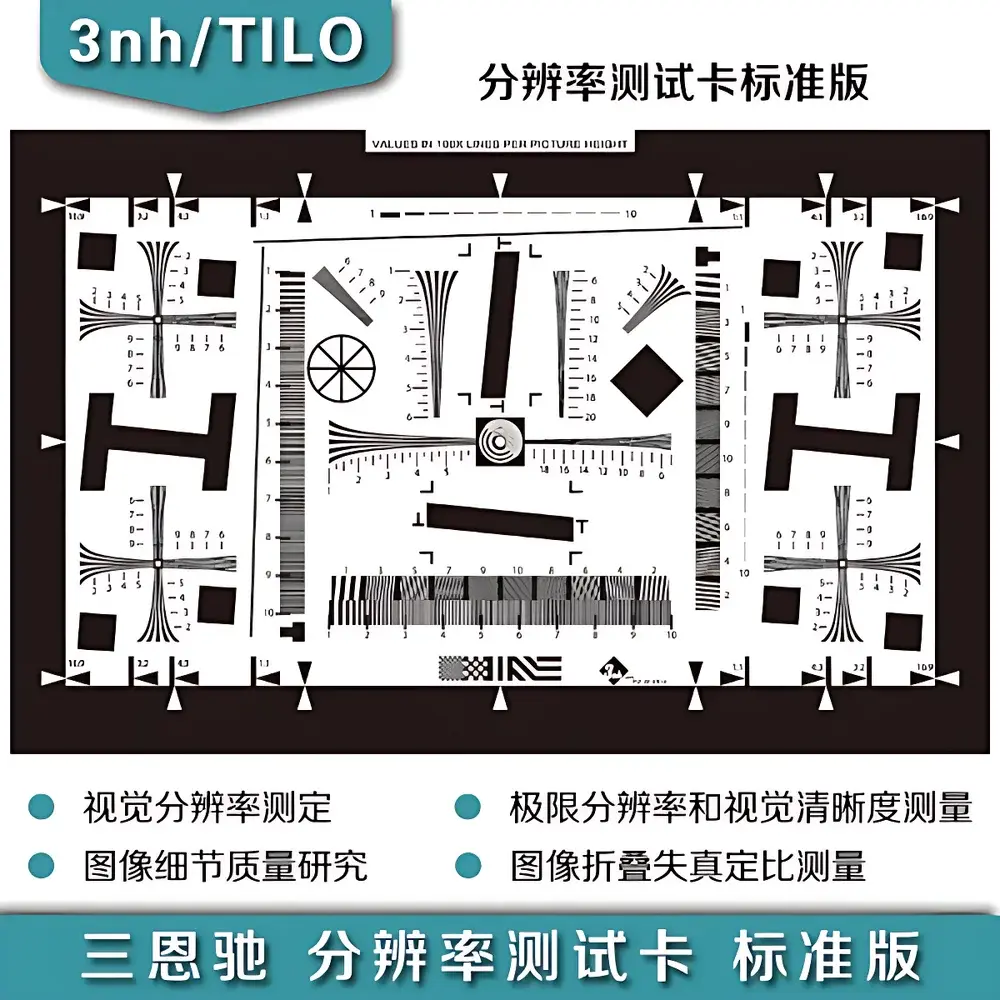
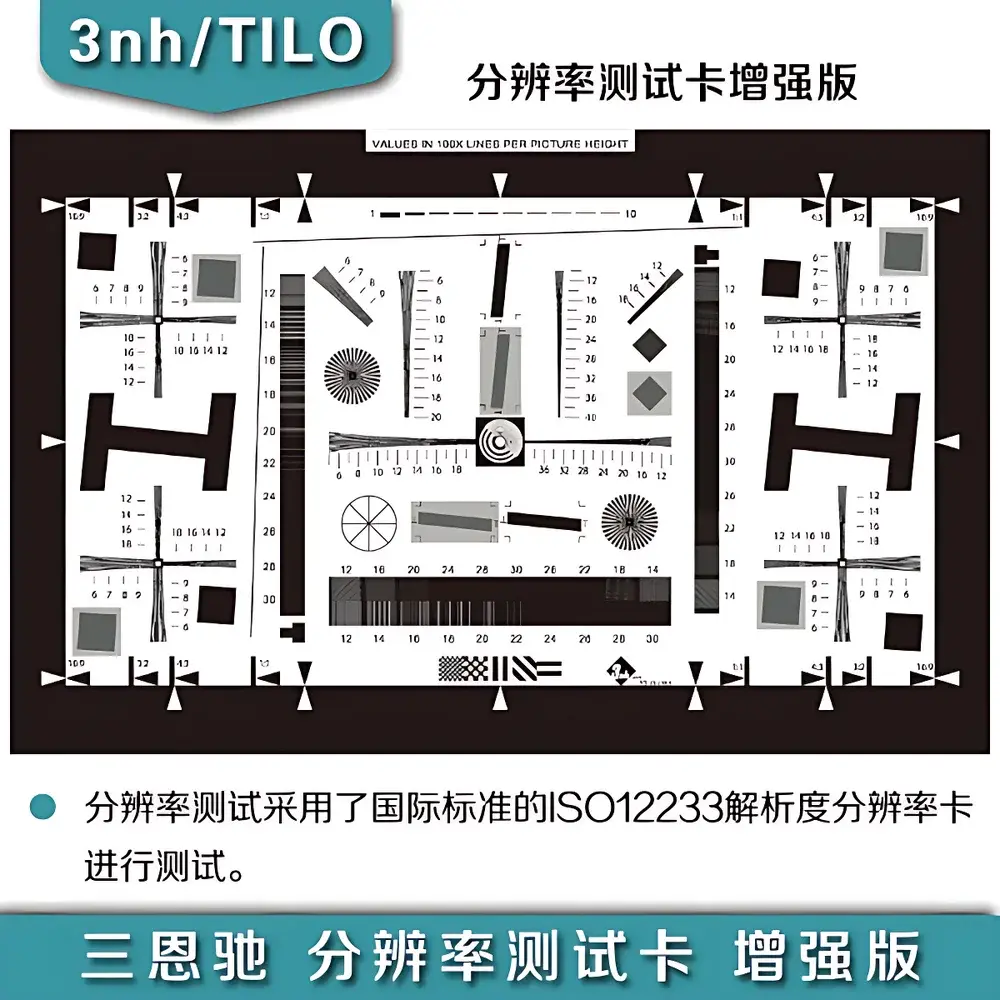
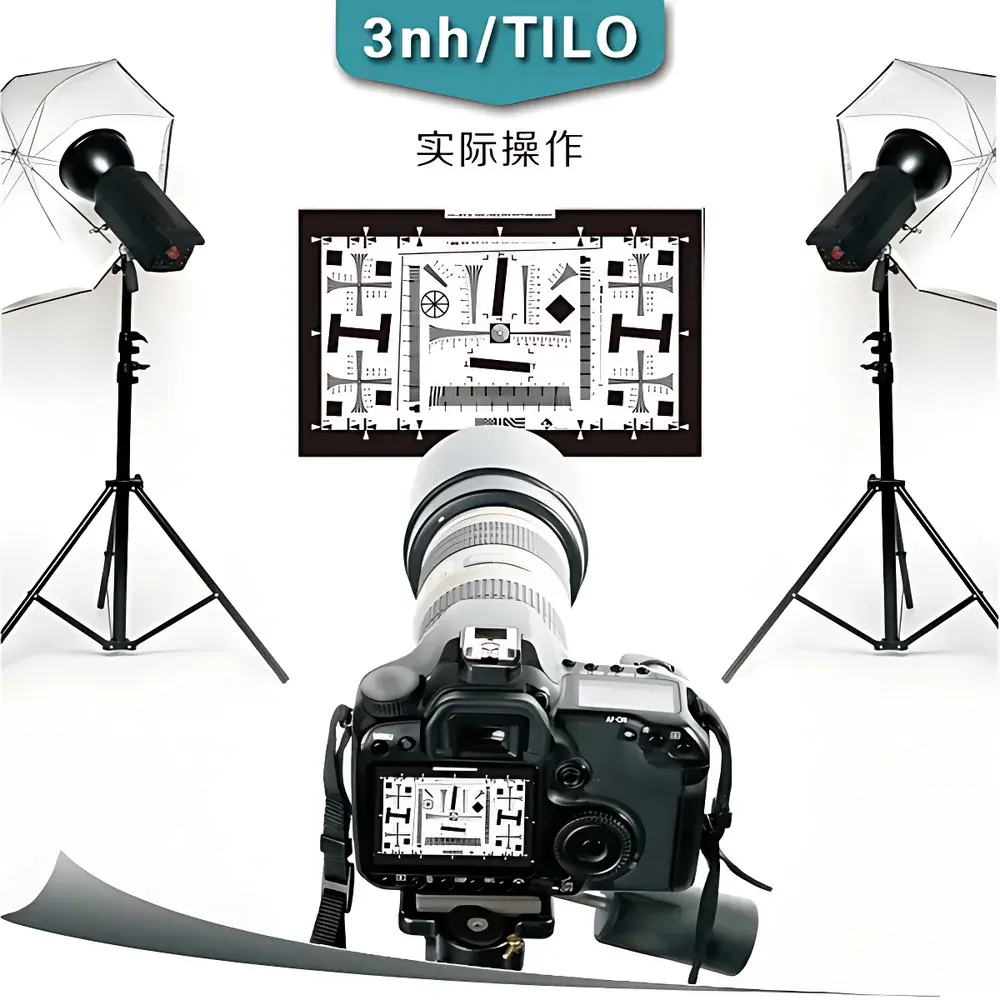
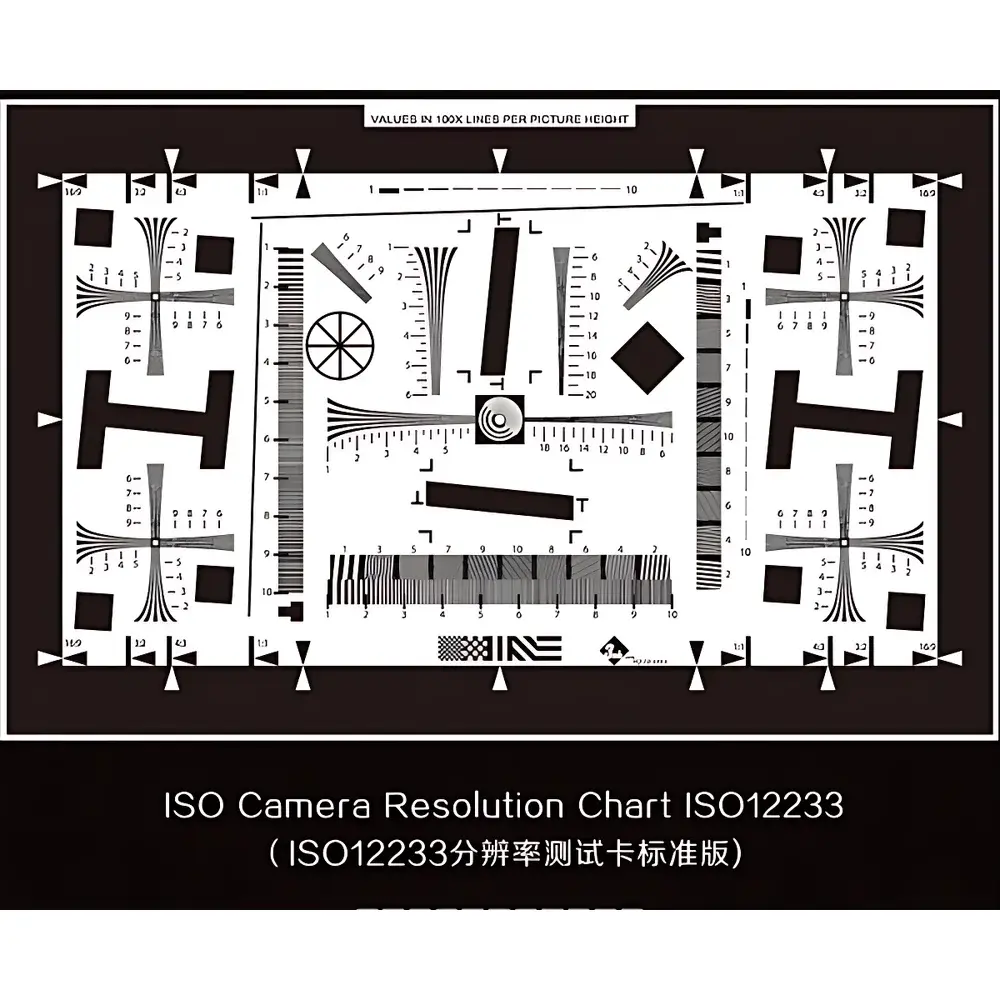
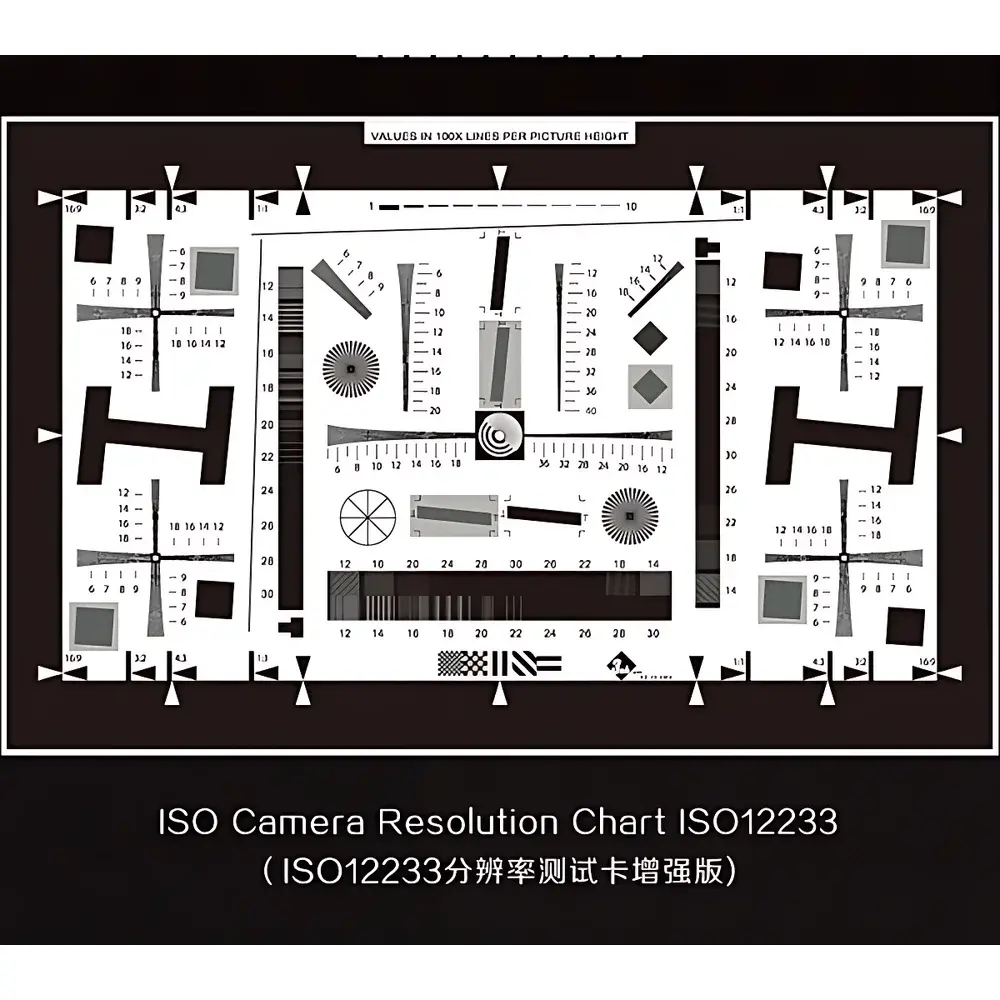
3nh NQ-10-400A ISO 12233 Resolution Test Chart (8× Size, Semi-Matte Photographic Paper)
| Brand | 3nh |
|---|---|
| Origin | Guangdong, China |
| Manufacturer Type | OEM/ODM Manufacturer |
| Country of Origin | China |
| Model | NQ-10-400A |
| Price | USD 560 (FOB Guangdong) |
Overview
The 3nh NQ-10-400A ISO 12233 Resolution Test Chart is a precision-engineered optical calibration standard designed for objective evaluation of spatial resolution performance in digital imaging systems—including industrial machine vision cameras, scientific CMOS/CCD sensors, broadcast lenses, medical endoscopes, and smartphone camera modules. Conforming strictly to ISO 12233:2017 (“Photography — Electronic still picture imaging — Resolution measurements”), this chart enables quantitative assessment of both vertical and horizontal limiting resolution via slanted-edge Spatial Frequency Response (SFR) analysis or visual wedge-based evaluation. The NQ-10-400A represents the 8× magnification variant (160 × 284.4 cm), optimized for large-format sensor characterization and telecentric lens testing under controlled illumination. Its semi-matte photographic paper substrate ensures stable reflectance (≈85% diffuse reflectance, ±3%), minimal glare, and long-term dimensional stability—critical for repeatable metrology-grade measurements across GLP-compliant laboratories and ISO/IEC 17025-accredited test facilities.
Key Features
- Full compliance with ISO 12233:2017 Annex D (Slanted-Edge SFR Method) and Annex E (Visual Wedge Evaluation)
- 8× physical scale (160 cm × 284.4 cm) supporting high-magnification imaging setups and telecentric optical path validation
- High-fidelity semi-matte photographic paper substrate with normative contrast (white field L* ≈ 92, black field L* ≈ 8), minimizing specular reflection and ensuring uniform Lambertian scattering
- Included multi-scale resolution elements: 0.5×, 1×, 2×, 4×, and 8× variants available under unified NQ-10 series nomenclature for cross-platform traceability
- Integrated ISO 12233-compliant features: slanted-edge targets (5° tilt), Siemens star, bar patterns (horizontal/vertical), contrast gradient zones, and registration fiducials
- Dimensionally stable base material certified for ≤0.1 mm height error over 20 cm active region—validated per ISO 12233 Clause 6.2.1
Sample Compatibility & Compliance
The NQ-10-400A chart supports full compatibility with industry-standard resolution analysis software including Imatest Master, DxO Analyzer, Image Engineering IQ Analyzer, and open-source tools such as OpenCV-based SFR calculators. It is routinely deployed in conformance testing per ASTM E3087-21 (Standard Practice for Evaluating Digital Camera Resolution), IEC 62676-5-2021 (Video surveillance systems — Part 5: Performance requirements for cameras), and FDA guidance for imaging device verification in regulated diagnostics. When used with calibrated illumination meeting ISO 7589:2017 spectral power distribution requirements (D50 or A illuminants), the chart facilitates reproducible measurement uncertainty < ±1.2% (k=2) for SFR-derived MTF50 values across sensor formats from 1/4″ to full-frame and beyond. All charts undergo batch-level certification with documented reflectance uniformity maps and dimensional verification reports traceable to NIM (National Institute of Metrology, China).
Software & Data Management
The NQ-10-400A integrates seamlessly into automated test workflows requiring audit-ready data governance. When paired with compliant image acquisition software (e.g., Basler pylon, FLIR Spinnaker SDK, or custom HALCON pipelines), raw TIFF sequences captured from the chart can be processed through validated SFR algorithms that comply with USP and FDA 21 CFR Part 11 requirements for electronic records and signatures. Metadata embedding (EXIF/XMP) supports automatic linkage of exposure parameters, lens ID, illumination settings, and environmental conditions (ambient temperature/humidity logs). Optional 3nh-provided HYRes software includes GLP-mode operation with user access control, electronic signature fields, and immutable audit trails—enabling full traceability from image capture to final MTF report generation.
Applications
- Quantitative resolution validation of lens assemblies in automotive ADAS camera modules (ISO 16505:2015)
- MTF50 and MTF10 benchmarking for medical imaging optics (IEC 62220-1-2:2020)
- Factory-line pass/fail screening of smartphone camera sensor modules using automated SFR pipelines
- Calibration reference for radiometric and geometric correction of aerial survey cameras (ASPRS Accuracy Standards)
- Research-grade spatial response characterization in computational photography labs evaluating AI-enhanced super-resolution algorithms
- Supporting ISO/IEC 17025 accreditation for third-party camera testing laboratories
FAQ
What lighting conditions are required for ISO 12233-compliant measurement?
Illumination must conform to ISO 7589:2017—either CIE Standard Illuminant D50 (daylight) or A (tungsten)—with irradiance uniformity maintained within ±10% across the active chart area. Direct lens flare and stray reflections must be suppressed using low-albedo baffles.
Can this chart be used for both SFR and visual wedge analysis?
Yes. The NQ-10-400A includes dual-purpose geometry: the 5° slanted edge enables automated SFR calculation, while the logarithmic wedge pattern supports human observer-based limiting resolution determination per ISO 12233 Annex E.
Is the chart suitable for measuring ultra-high-resolution sensors (>100 MP)?
The 8× physical scale and sub-10 µm feature fidelity on photographic paper support reliable evaluation up to ~150 MP equivalent resolution when imaged at optimal working distance and f-number, provided diffraction-limited optics are used.
Does 3nh provide calibration certificates with NIST-traceable validation?
Yes. Upon request, accredited dimensional and reflectance calibration reports are issued by CNAS-accredited labs, with traceability to NIM and PTB reference standards.
How should the chart be mounted to ensure measurement integrity?
It must be tension-mounted on a rigid, non-reflective backing board and aligned parallel to the sensor plane within ±0.1° angular tolerance, verified via laser autocollimator or digital inclinometer—per ISO 12233 Section 7.3.





