
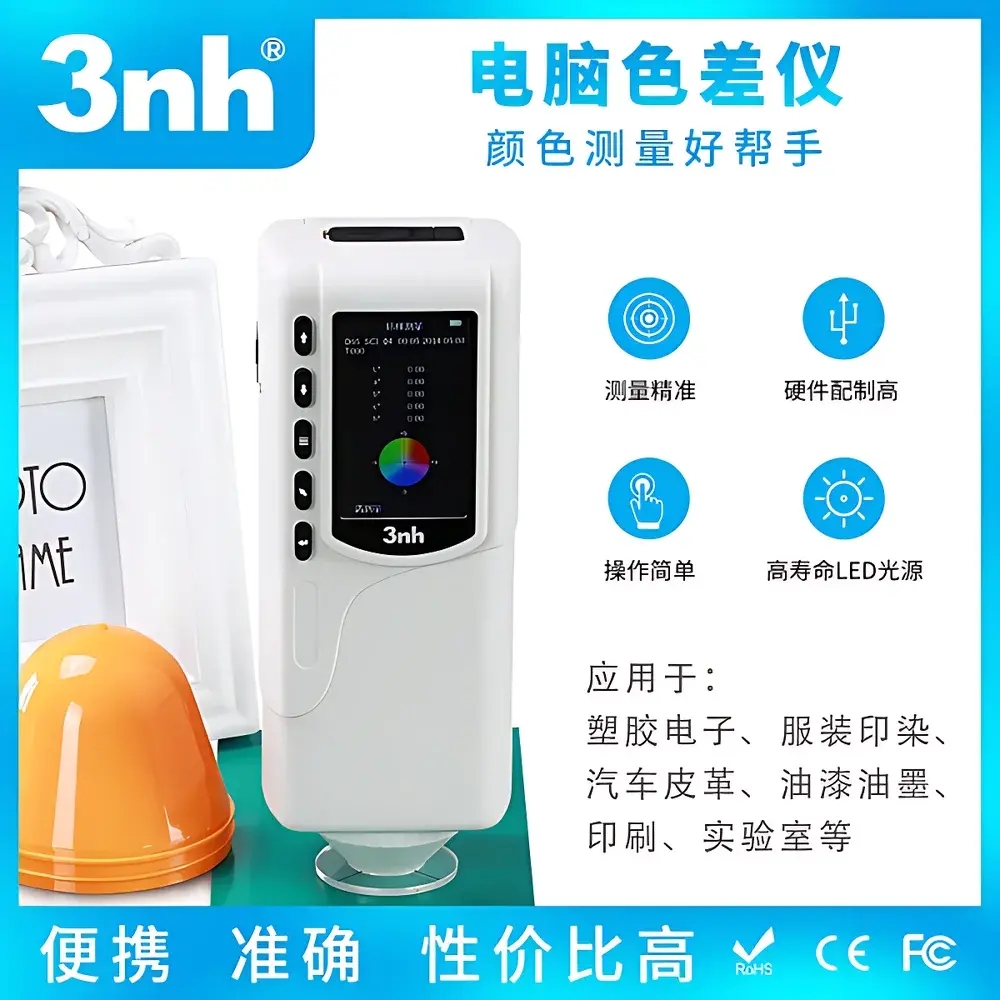
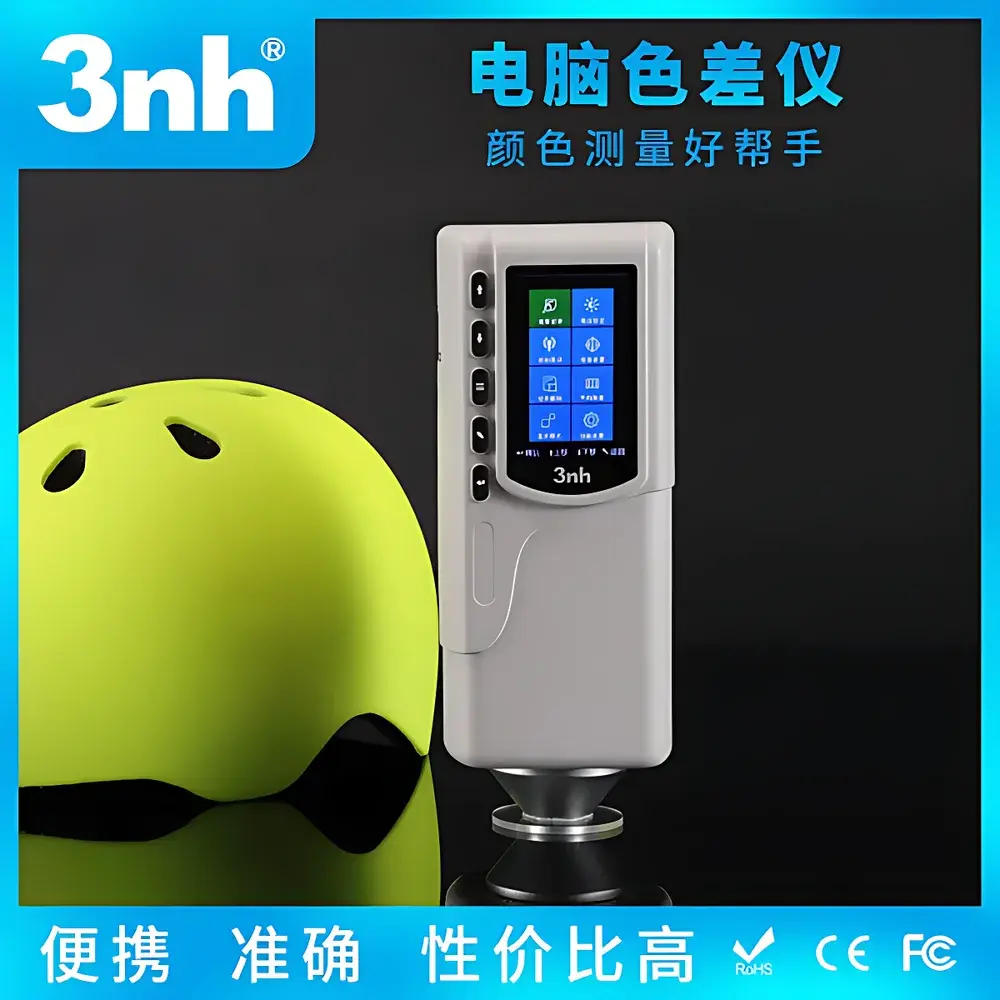
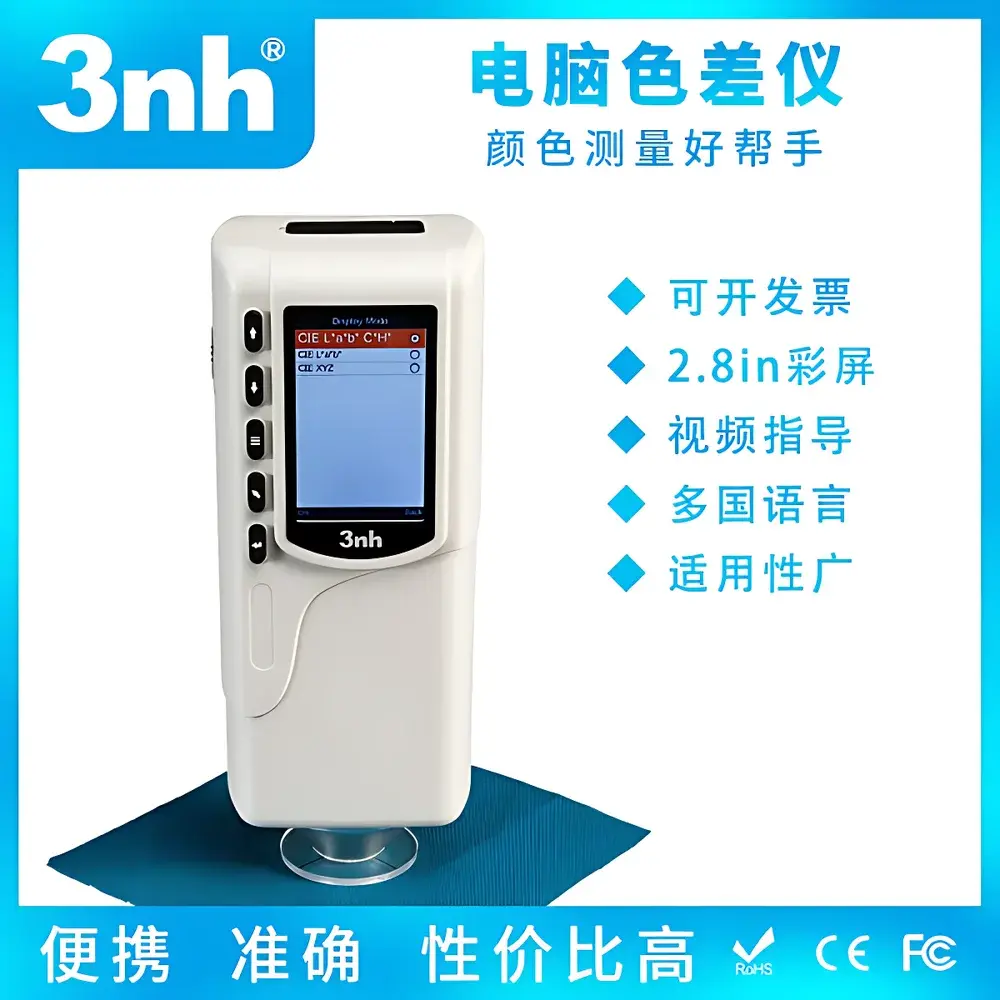
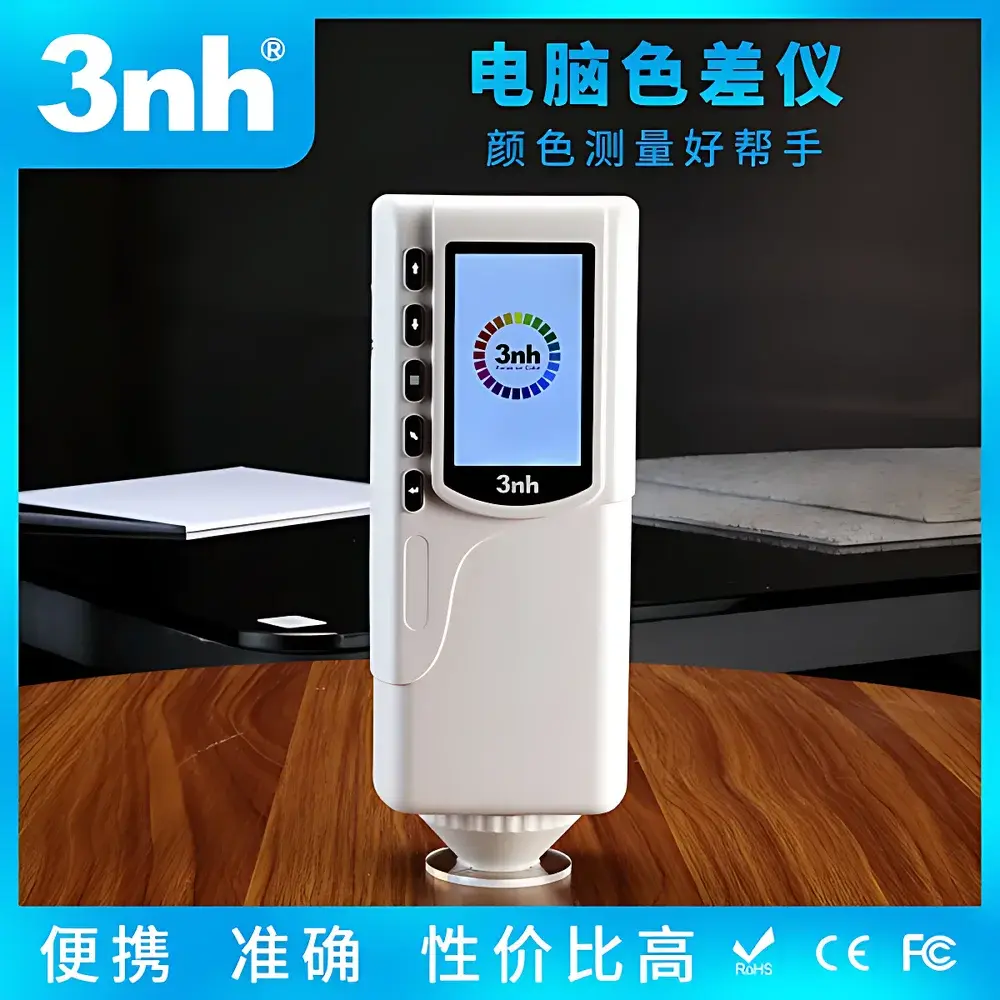
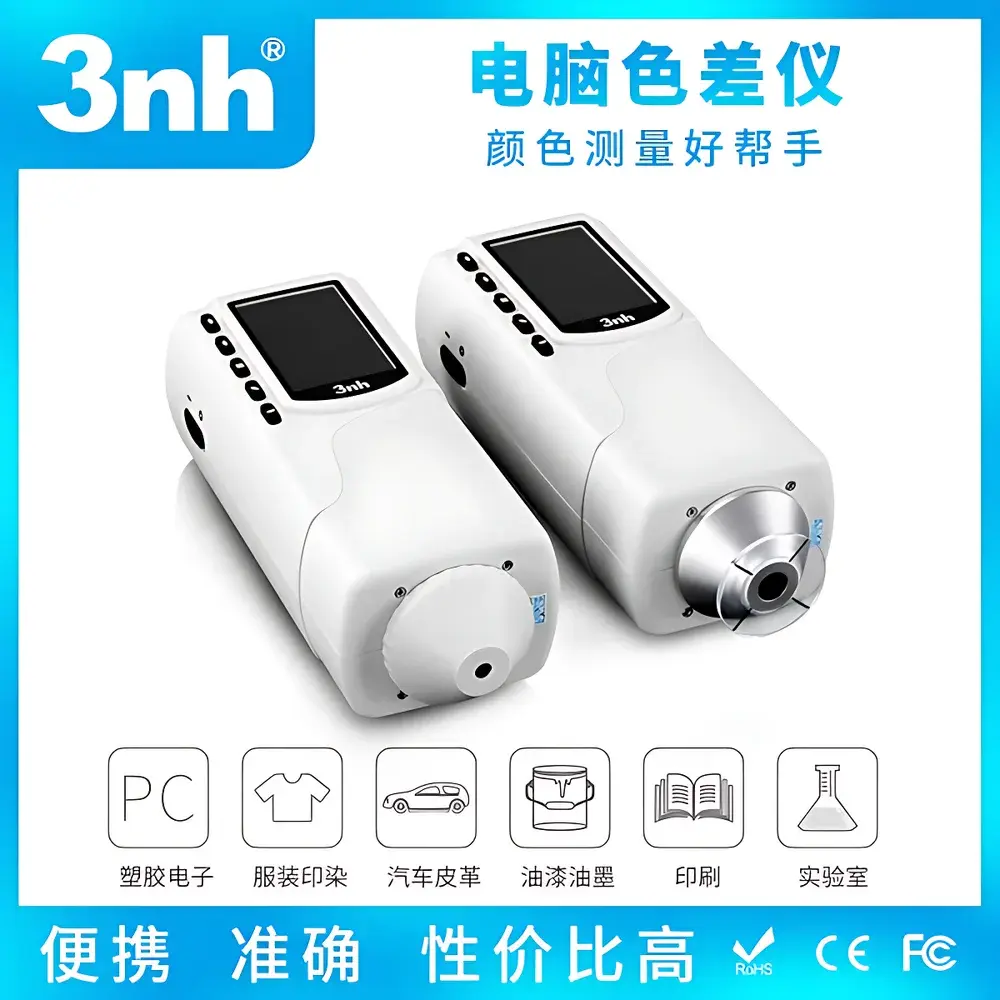
3nh NR20XE+ Portable Color Difference Meter with 20mm Aperture
| Brand | 3nh |
|---|---|
| Origin | Guangdong, China |
| Manufacturer Type | Manufacturer |
| Product Category | Domestic |
| Model | NR20XE+ |
| Product Type | Color Difference Meter |
| Instrument Type | Portable |
| Optical Geometry | 45°/0° |
| Light Source | Full-Spectrum LED |
| Spectral Range | 400–700 nm |
| Repeatability | Φ8 mm / ΔE*ab ≤ 0.08 (after instrument warm-up and calibration, average of 30 measurements on white tile at 5 s intervals) |
Overview
The 3nh NR20XE+ Portable Color Difference Meter is an industrial-grade, hand-held spectrophotometric color measurement instrument engineered for high-precision color quality control in production and laboratory environments. It employs a CIE-compliant 45°/0° optical geometry—where light is incident at 45° from the sample surface and reflected light is collected at 0° normal to the surface—mimicking human visual perception under standardized viewing conditions (CIE Publication No. 15, GB/T 3978). Unlike diffuse/8° (d/8°) instruments, the 45°/0° configuration minimizes interference from surface texture, gloss, and directional reflectance, making it especially suitable for evaluating textured, matte, or structured surfaces such as embossed plastics, woven textiles, coated metal sheets, and printed packaging. The NR20XE+ features a large 20 mm measurement aperture—the largest standard aperture among portable colorimeters in its class—enabling statistically robust averaging over heterogeneous or non-uniform surfaces while maintaining compliance with ISO 13655 and ASTM E308 spectral data handling protocols.
Key Features
- 20 mm Large-Aperture Optics: Ensures representative sampling across textured, granular, or irregular surfaces—including PET pellets, powder coatings, denim fabrics, and corrugated metal—reducing spatial variability and improving inter-instrument agreement.
- Dual Visual Aids: Integrated crosshair targeting and ring-shaped illumination provide precise positioning and consistent lighting geometry, eliminating operator-induced alignment errors during field or line-side measurements.
- Full-Spectrum LED Illumination: Stable, long-life (≥1.6 million measurements), and spectrally uniform LED source covering 400–700 nm ensures traceable spectral response aligned with CIE D65 illuminant and 10° standard observer functions.
- CMOS Dual-Optical-Path Sensor Architecture: Enables real-time dynamic integration time adjustment and dual-channel signal normalization, enhancing signal-to-noise ratio and measurement stability across varying sample reflectance levels.
- Vertical Stand Design: Allows contact measurement on wet, viscous, or liquid-immersed samples—such as wet paint films, gelatin-based pharmaceuticals, or aqueous dye baths—without risk of device contamination or optical path obstruction.
- Onboard Rechargeable Li-Polymer Battery: 3.7 V / 3200 mAh capacity supports ≥8 hours of continuous operation, eliminating disposable battery dependency and enabling uninterrupted shift-based QC workflows.
Sample Compatibility & Compliance
The NR20XE+ accommodates diverse material forms including solid sheets, molded parts, loose powders (with optional powder test kit), liquid suspensions, and flexible substrates. Its 45°/0° geometry is validated per ISO/TR 11664-4:2019 and recommended by ISO 2813 for gloss-insensitive color evaluation. The instrument meets requirements for routine color verification in regulated industries: raw material acceptance (ASTM D2244), batch release (USP for pharmaceutical excipients), and process validation (FDA 21 CFR Part 11–compliant data export via PC software). Built-in calibration traceability aligns with NIST-traceable ceramic standards; inter-instrument agreement (ΔE*ab ≤ 0.4) is verified using BCRA Series II reference tiles per ISO 13655 Annex B.
Software & Data Management
The included Color Quality Management Software (v4.x) provides full spectral data export (CSV, XML), pass/fail tolerance mapping (CIE L*a*b*, ΔE*ab, ΔE00), multi-sample statistical analysis (X̄-R charts, CPK), and audit-ready reporting. Data files include timestamp, operator ID, instrument serial number, and calibration history—supporting GLP/GMP documentation requirements. USB 2.0 interface enables secure transfer without cloud dependency; software runs natively on Windows 10/11 and supports automated report generation compliant with internal SOPs and external customer-facing color specifications.
Applications
The NR20XE+ serves as a primary color verification tool across manufacturing sectors where surface structure impacts visual color assessment. In plastics processing, it validates color consistency of PP/ABS/EVA pellets and extruded profiles. In textile QA, it quantifies shade variation in denim, nonwovens, and dyed yarns—accounting for weave-induced metamerism. For architectural coatings and coil-coated steel, it verifies batch-to-batch match under controlled lighting. In food and pharma, it monitors pigment dispersion in tablets, capsules, and confectionery coatings where moisture content and surface bloom affect appearance. Additional use cases include ink formulation QC, paper brightness grading, and fluorescent additive verification (within visible spectral limits).
FAQ
What does “45°/0°” mean in color measurement?
It refers to the illumination/viewing geometry where light strikes the sample at 45° and the detector collects reflected light at 0° (normal incidence), minimizing influence from surface gloss and texture.
Can the NR20XE+ measure wet or liquid samples?
Yes—the vertical stand design allows direct contact measurement on damp surfaces, viscous gels, or shallow liquid layers without damaging optics or compromising repeatability.
Is the instrument suitable for regulatory submissions?
While the hardware itself is not FDA-cleared, its data output, audit trail, and calibration traceability support 21 CFR Part 11–aligned workflows when used with validated procedures and documented software settings.
How is inter-instrument agreement ensured?
Each unit undergoes factory calibration against BCRA Series II tiles; users perform daily white calibration using the supplied ceramic tile to maintain ΔE*ab ≤ 0.4 across instruments.
Does the software support custom tolerances per product line?
Yes—users define multiple tolerance sets (e.g., ΔL*, Δa*, Δb*, or elliptical ΔE00) per material group, with automatic pass/fail flagging and exportable deviation logs.




