
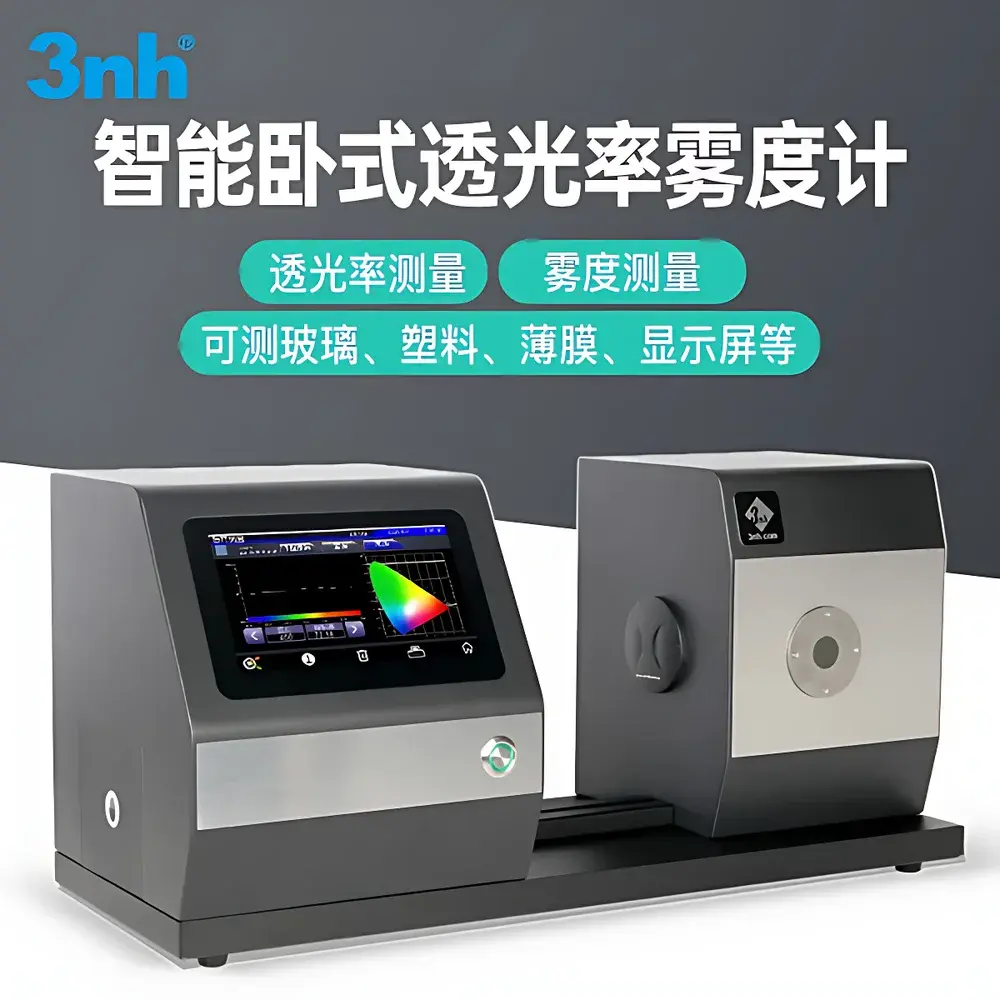
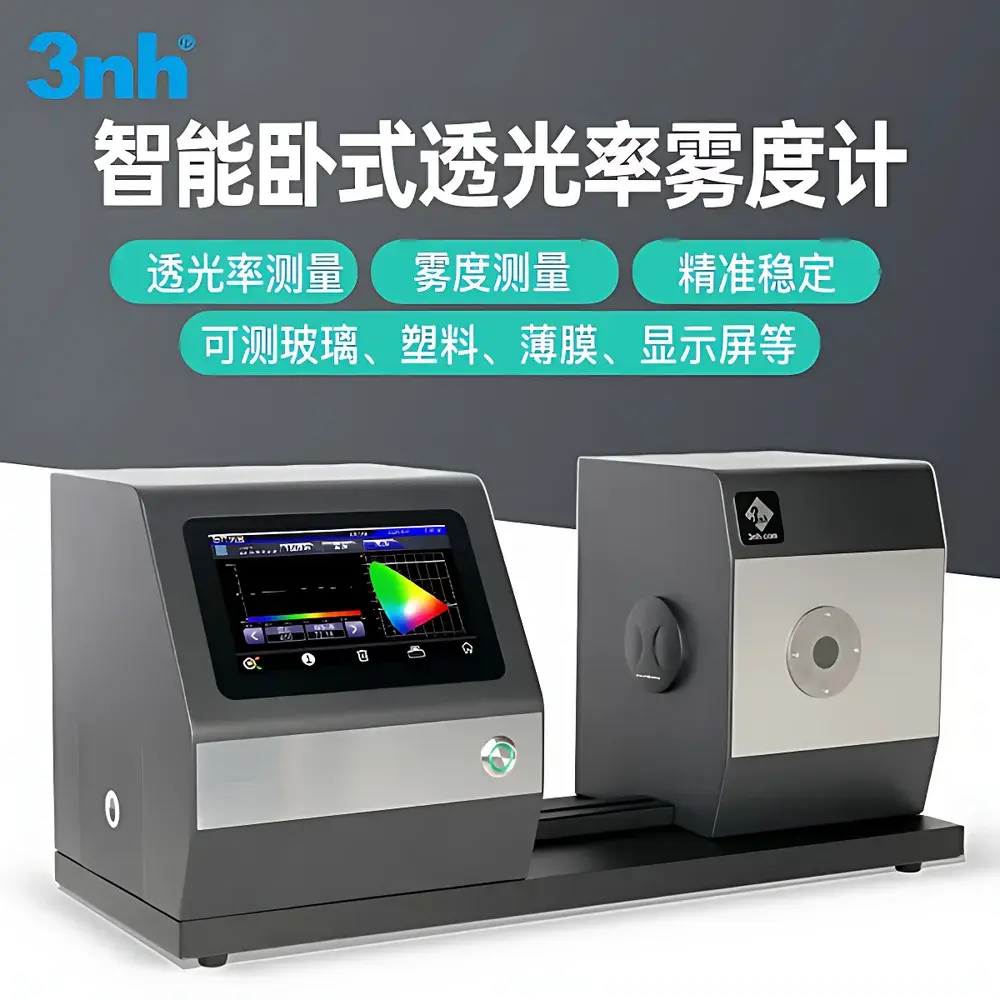
3nh YH1810 Colorimetric Haze and Transmittance Meter
| Brand | 3nh |
|---|---|
| Origin | Guangdong, China |
| Manufacturer Type | Manufacturer |
| Product Origin | Domestic (China) |
| Model | YH1810 |
| Type | Automatic |
| Haze Range | 1–100 |
| Transmittance Range | 0–100% |
| Haze Repeatability (Φ20 mm aperture) | < 0.05 |
| Transmittance Repeatability (Φ20 mm aperture) | < 0.05 |
Overview
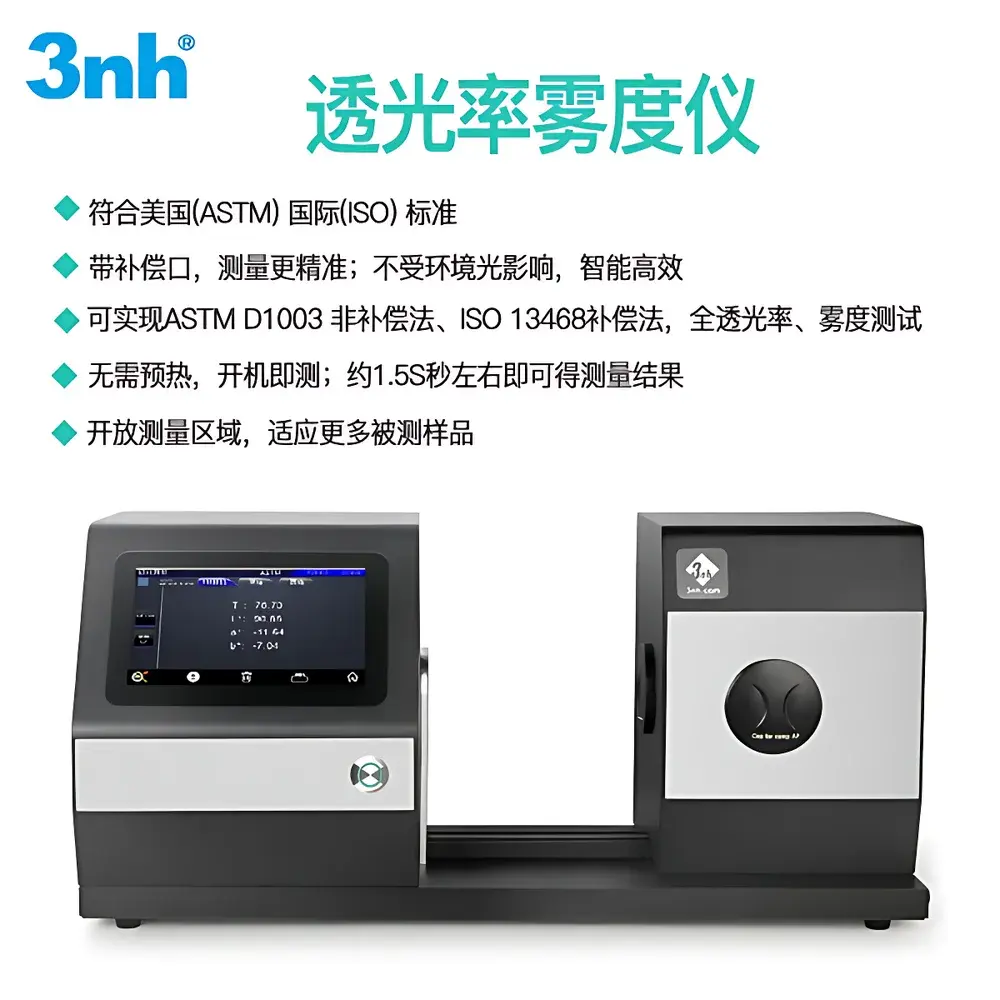
The 3nh YH1810 Colorimetric Haze and Transmittance Meter is an integrated optical measurement instrument engineered for precise, repeatable quantification of haze, total transmittance, clarity (WI), and full spectral colorimetry in transparent and translucent materials. It operates on the principle of collimated transmission geometry (0°/diffuse, or 0/D), compliant with ASTM D1003 (non-compensated method) and ISO 13468 (compensated method), enabling traceable, standards-aligned evaluation of optical performance. The system employs a dual-array 256-pixel CMOS spectroradiometric sensor coupled with a precision concave holographic grating to resolve spectral transmittance across 400–700 nm at 10 nm intervals (FWHM ≈ 10 nm). This architecture supports high-fidelity acquisition of transmission curves, enabling accurate derivation of CIE tristimulus values (XYZ), chromaticity coordinates (Yxy, L*a*b*, LCh), and specialized metrics including yellowness index (YI), absorbance, Gardner and Pt-Co indices — all critical for quality assurance in regulated manufacturing environments.
Key Features
- Standards-compliant dual-mode operation: Supports both ASTM D1003 (non-compensated) and ISO 13468 (compensated) protocols for haze and transmittance, plus ASTM E313/CIE-defined clarity (WI) and ASTM D1925/D313 for YI.
- Full-spectrum colorimetry: Measures and computes 12 standard color spaces (CIE XYZ, Yxy, L*a*b*, LCh, sRGB, βxy) and 5 industry-standard ΔE formulas (ΔE*ab, ΔE*94, ΔE*cmc(2:1), ΔE*cmc(1:1), ΔE*00).
- Multi-illuminant simulation: Integrates 24 standardized illuminants (D65, A, C, D50–D75, F1–F12, CWF, DLF, TL83, TL84, TPL5, U30) and dual observer angles (2° and 10°) for application-specific color evaluation under controlled virtual lighting conditions.
- Dynamic environmental compensation: Built-in temperature sensor and independent reference photodetector continuously monitor thermal drift and LED output stability, ensuring measurement integrity over extended operational cycles.
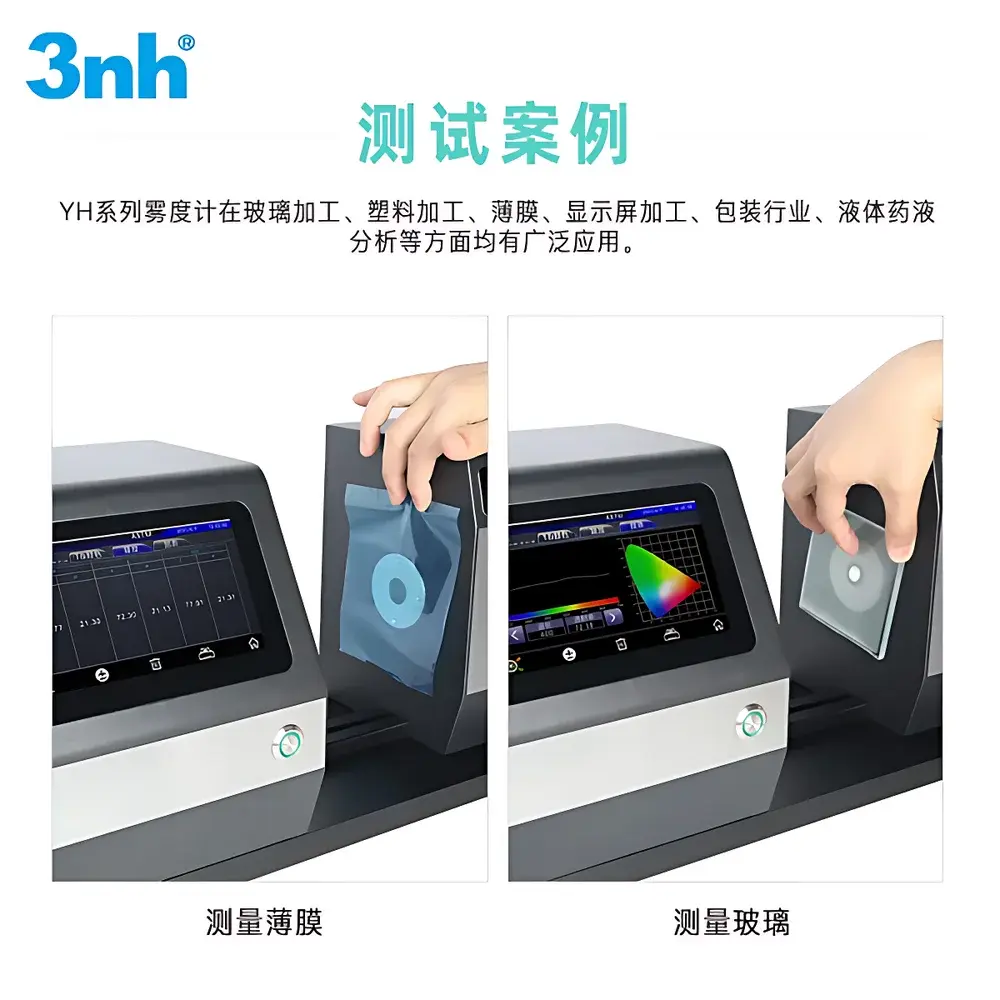
- Flexible sample handling: Open measurement chamber accommodates vertical or horizontal positioning; supports samples up to 105 mm thickness. Interchangeable apertures (Φ4 mm, Φ8 mm, Φ15 mm, Φ20 mm) allow optimization for small-area or large-format specimens.
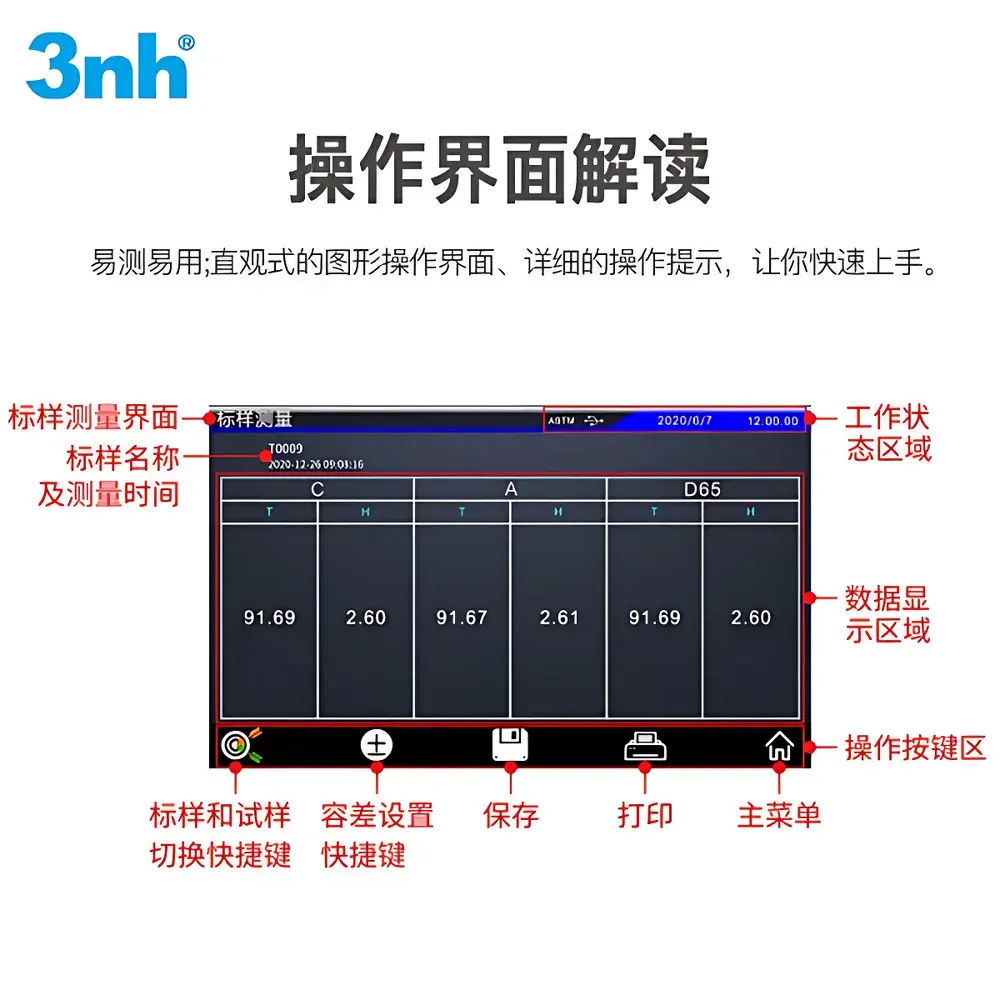
- Robust hardware platform: Features a 7-inch capacitive TFT touchscreen interface, integrated USB 2.0 and RS232 serial ports, Bluetooth 4.2 connectivity, and internal storage for 5,000 standard references and 30,000 sample records.
Sample Compatibility & Compliance
The YH1810 is validated for use with rigid and flexible transparent/translucent substrates including float glass, tempered glass, polycarbonate, acrylic (PMMA), PET, PP, PE films, OLED/LCD cover lenses, pharmaceutical vials, liquid solutions (e.g., parenteral formulations), and laminated packaging. Its optical design meets the geometric and photometric requirements of ASTM D1003, ISO 13468, ISO 14782, JIS K7105, JIS K7361, GB/T 2410, and JJF 1303–2011. For regulated industries, the instrument supports GLP/GMP-aligned workflows via optional audit-trail-enabled software modules compatible with FDA 21 CFR Part 11 requirements when deployed with validated PC-based quality management software.
Software & Data Management
The bundled Quality Management Software (QMS) provides comprehensive data capture, statistical analysis, and reporting functionality. Users can define pass/fail tolerances, generate comparative charts (transmittance vs. haze vs. ΔE), export CSV/PDF test reports with embedded spectral plots and color simulations, and synchronize measurement histories across networked instruments. The software supports automated calibration verification logs, inter-instrument comparison (with ≤0.4 unit inter-unit variance at Φ20 mm), and customizable templates for compliance documentation in ISO 9001, IATF 16949, or ISO 13485 contexts. All firmware updates and QMS releases are distributed via the official 3nh support portal.
Applications
The YH1810 serves as a primary optical characterization tool across multiple industrial sectors: incoming inspection of automotive glazing and headlight lenses; QC release testing of medical device packaging films and IV bag materials; R&D evaluation of anti-glare coatings on display covers; optical validation of optical adhesives and encapsulants in photonics assembly; batch consistency monitoring of colored liquid pharmaceuticals; and clarity assessment of food-grade PET bottles and biodegradable cellulose films. Its ability to simultaneously quantify haze, transmittance, and color makes it particularly valuable for multi-parameter specification control where optical performance directly correlates with functional safety or aesthetic acceptance.
FAQ
Does the YH1810 comply with FDA-regulated color measurement requirements for pharmaceutical packaging?
Yes — when used with validated QMS software and documented calibration procedures, the YH1810 supports data integrity practices aligned with FDA 21 CFR Part 11 for electronic records and signatures.
Can the instrument measure liquids directly?
Yes — using optional cuvette holders and standardized cell path lengths, the YH1810 quantifies transmittance, haze, and color indices (e.g., APHA/Pt-Co, Gardner) in clear to slightly turbid aqueous and organic solutions.
What is the typical warm-up time required before achieving specified repeatability?
Instrument stabilization requires ≤15 minutes after power-on; haze and transmittance repeatability specifications assume pre-warmed operation and post-calibration verification using supplied 0% and 30% haze standards.
Is spectral data export supported for third-party analysis?
Yes — raw 400–700 nm transmittance spectra (10 nm step) and CIE-compliant XYZ values are exportable in ASCII format for integration with MATLAB, Python, or custom LIMS platforms.
How is inter-instrument agreement maintained across a fleet of YH1810 units?
Each unit undergoes factory calibration against NIST-traceable standards; inter-unit variance is verified per JJF 1303–2011 using certified haze reference tiles, with maximum allowable deviation of ±0.4 units at Φ20 mm aperture.






