
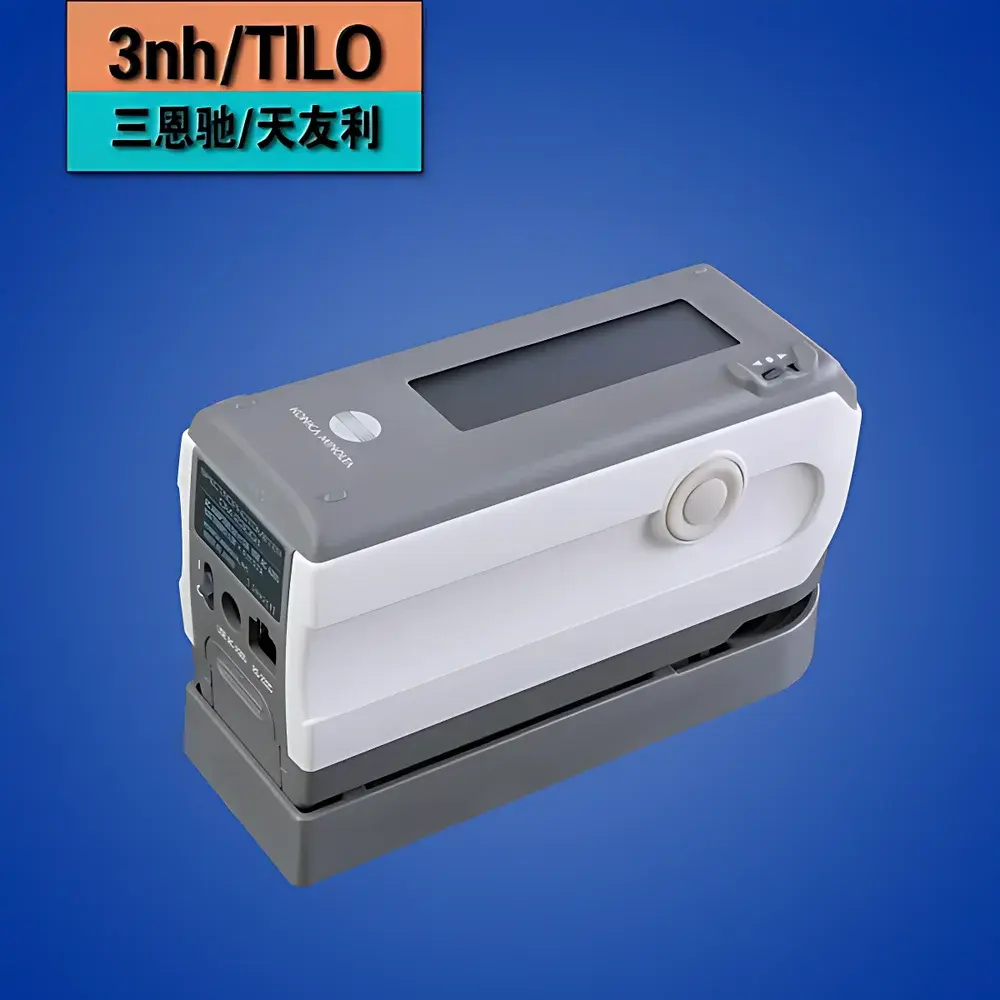
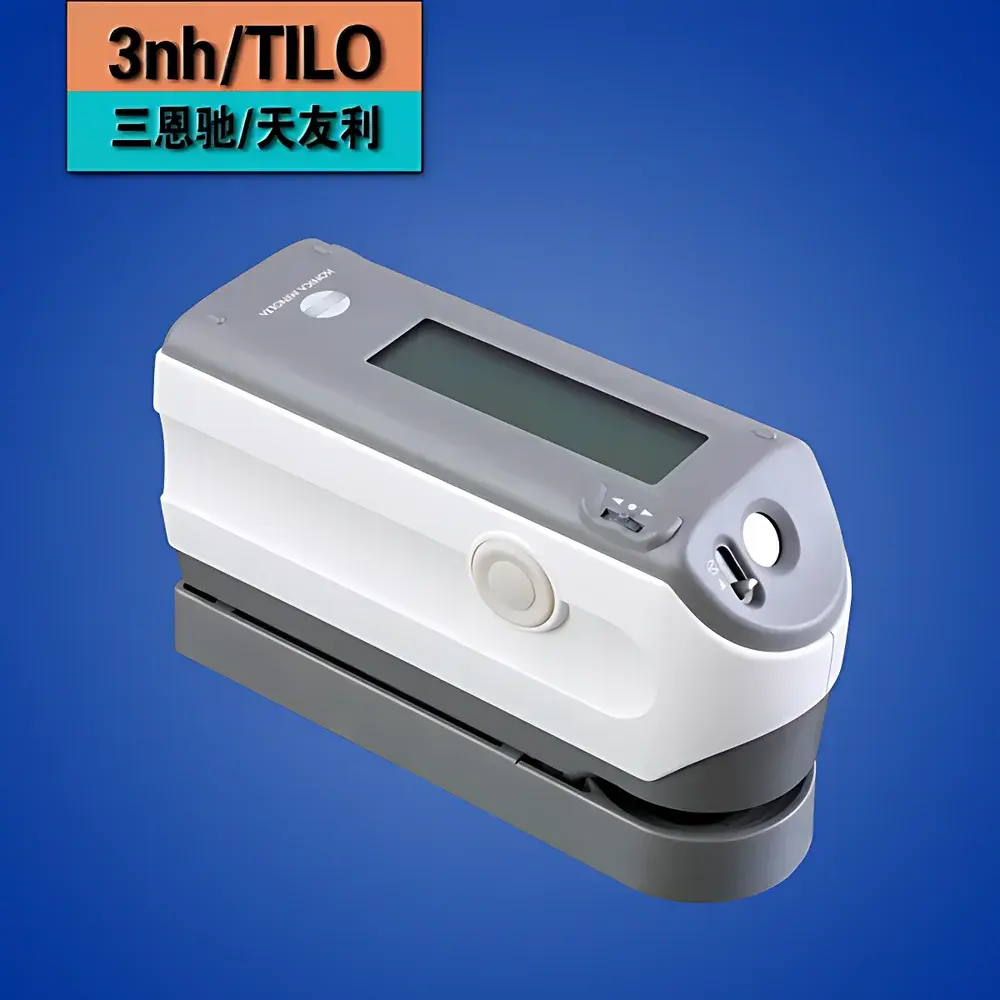
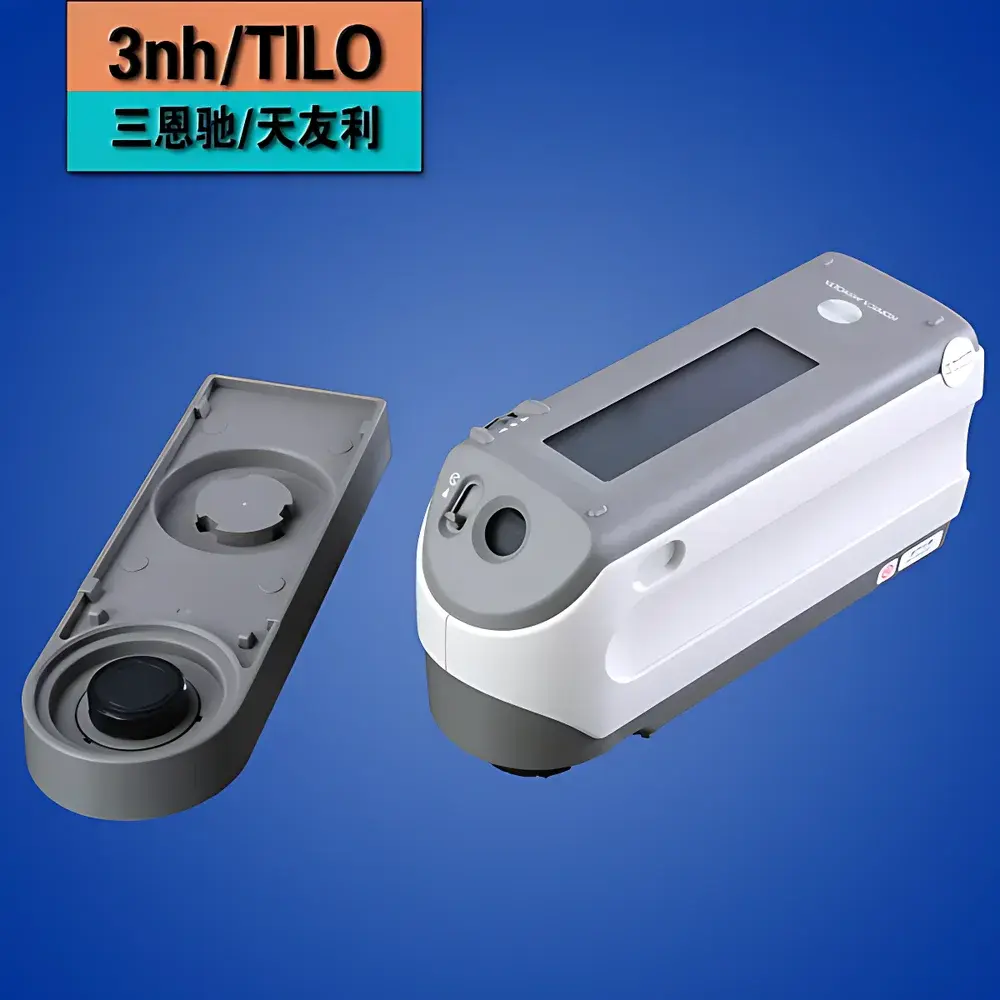
Konica Minolta CM-2600D Spectrophotometer Color Difference Meter
| Brand | Konica Minolta |
|---|---|
| Origin | Shanghai, China |
| Instrument Type | Benchtop |
| Optical Geometry | d/8° integrating sphere |
| Light Source | Three pulsed xenon arc lamps |
| Spectral Range | 360 nm – 740 nm |
| Spectral Bandwidth | ~10 nm |
| Wavelength Interval | 10 nm |
| Reflectance Measurement Range | 0–175% |
| Repeatability | Spectral reflectance SD ≤0.1% (≤0.2% at 360–380 nm) |
| Aperture Options | MAV (Φ8 mm / Φ11 mm) and SAV (Φ3 mm / Φ6 mm), switchable |
| Measurement Time | ~1.5 s (standard), ~2 s (fluorescence mode) |
| Compliance | CIE No. 15, ISO 7724-1, ASTM E1164, DIN 5033-7, JIS Z8722 Condition C |
| UV Control | Digital UV adjustment with 400 nm cutoff filter |
| Observer Angles | 2° and 10° standard |
| Illuminants | A, C, D50, D65, F2, F6, F7, F8, F10, F11, F12 (dual-illuminant evaluation supported) |
| Color Spaces & Indices | L*a*b*, L*C*h, CMC(1:1), CMC(2:1), CIE94, CIEDE2000, XYZ, Yxy, Hunter Lab, MI, WI (ASTM E313), YI (ASTM E313/D1925), ISO Brightness (ISO 2470), Tint (CIE/Ganz), A/T concentration |
| Data Storage | 1,700 measurements (SCI+SCE counted as one entry) |
| Interface | RS-232C |
| Power | 4× AA batteries or AC adapter |
| Dimensions (W×H×D) | 69 × 96 × 193 mm |
| Weight | ~670 g (battery-free) |
| Operating Environment | 5–40 °C, ≤80% RH (non-condensing at ≤35 °C) |
Overview
The Konica Minolta CM-2600D is a high-precision benchtop spectrophotometer engineered for rigorous color quality control in textile dyeing, printing, plastics, coatings, and automotive interiors. It operates on the d/8° integrating sphere principle—compliant with CIE No. 15, ISO 7724-1, and ASTM E1164—to enable simultaneous measurement of both specular component included (SCI) and specular component excluded (SCE) reflectance spectra. This dual-mode capability ensures accurate distinction between surface appearance (SCE) and inherent material color (SCI), critical for evaluating metamerism, texture effects, and gloss influence in dyed fabrics and pigmented substrates. The instrument employs three independently triggered pulsed xenon arc lamps to deliver stable, flash-based illumination across the full 360–740 nm spectral range, eliminating thermal drift and enabling consistent measurement of heat-sensitive or fluorescent samples without pre-warming artifacts.
Key Features
- Simultaneous SCI/SCE acquisition via dual optical path design within a Φ52 mm integrating sphere, supporting compliance-critical workflows in ISO 17025-accredited labs.
- Switchable aperture system: MAV (Φ8 mm measuring / Φ11 mm illumination) for general-purpose textile evaluation and SAV (Φ3 mm / Φ6 mm) for precise small-area analysis of patterned fabrics, embroidery, or printed motifs.
- Digital UV control architecture—no mechanical filter replacement required—enables real-time compensation for optical brightening agents (OBAs) in synthetic fibers and paper substrates per ISO 105-J03 and AATCC Test Method 183.
- Large backlit LCD with graphical L*a*b* chromaticity plot, pass/fail boundary overlay (box or ellipse), and intuitive navigation wheel—designed for glove-compatible, single-hand operation in factory floor environments.
- Integrated spectral data engine supporting 12 industry-standard illuminants (including D65, D50, F2, F7, F11) and dual-illuminant comparison for metamerism assessment per ASTM D2244.
- Robust repeatability: ΔE*ab standard deviation ≤0.04 under standardized white calibration protocol (30 consecutive readings at 10-second intervals), meeting QC requirements for Grade A textile certification per ISO 105-A02.
Sample Compatibility & Compliance
The CM-2600D accommodates flat, rigid, and moderately curved samples up to 10 mm thickness, including woven/knitted fabrics, dyed leather, coated metal panels, and plastic injection-molded parts. Its non-contact measurement geometry avoids sample compression artifacts common in clamp-based systems—essential for pile fabrics, velvet, or foam-backed textiles. The instrument conforms to international regulatory frameworks governing color consistency: it satisfies GLP-relevant traceability requirements through built-in calibration verification routines, supports audit-ready measurement logging (timestamp, operator ID, illuminant, aperture, mode), and enables configuration lock-down for production-line SOP enforcement. All spectral data output adheres to CxF/XRGA-compliant formats for interoperability with enterprise color management platforms (e.g., X-Rite Color iMatch, Datacolor MatchText).
Software & Data Management
Data capture and reporting are managed via Konica Minolta’s proprietary SpectraMagic NX software (Windows-compatible), which provides full spectral database management, statistical process control (SPC) charting, batch deviation trending, and automated PASS/FAIL reporting against user-defined tolerances (ΔE*ab, ΔL*a*b*, or geometric boundaries). The device stores up to 1,700 complete measurement records—including raw spectra, tristimulus values, and metadata—directly onboard. RS-232C interface supports integration into MES/SCADA systems for real-time color deviation alerts and closed-loop process correction. Software modules include multi-language UI (English, German, French, Spanish, Italian, Japanese), CIEDE2000 tolerance mapping, and ASTM D1729-compliant color difference visualization for textile acceptance testing.
Applications
Primary deployment domains include textile dye house quality assurance (batch-to-batch shade matching per ISO 105-A05), print shop ink formulation validation, automotive trim color homogeneity verification across interior components, and regulatory compliance testing for consumer product labeling (e.g., FDA 21 CFR Part 70 for color additives). In R&D settings, the CM-2600D supports spectral curve analysis for OBA quantification, whiteness index optimization (ISO 2470), and yellowness index tracking (ASTM D1925) in polymer degradation studies. Its portability and battery operation allow for on-site verification during fabric sourcing audits or supplier qualification visits—without sacrificing metrological integrity.
FAQ
Does the CM-2600D support fluorescence correction for optically brightened textiles?
Yes—it features digital UV adjustment with a 400 nm cutoff filter and real-time spectral compensation, enabling accurate color measurement of OBAs per ISO 105-J03.
Can the instrument measure curved or textured surfaces reliably?
It is optimized for flat or gently curved samples; for highly irregular topography, use the SAV aperture and ensure consistent sample positioning relative to the port plane.
Is spectral data export compatible with third-party color formulation software?
Yes—SpectraMagic NX exports ASCII .txt and CxF/XRGA files, supporting direct import into major formulation systems including BASF Gellner, PPG CompuColor, and Archroma UCA.
What calibration standards are recommended for daily verification?
Use the supplied white calibration tile (certified per NIST-traceable standards) and optional BCRA Series II tiles for inter-instrument agreement checks per ISO 13655.
How does the CM-2600D differ from the CM-2500D model?
The CM-2600D adds a third xenon lamp for improved signal-to-noise ratio, enables MAV/SAV aperture switching, and incorporates enhanced digital UV control—making it suitable for high-variability dye lots and OBA-heavy substrates.







