
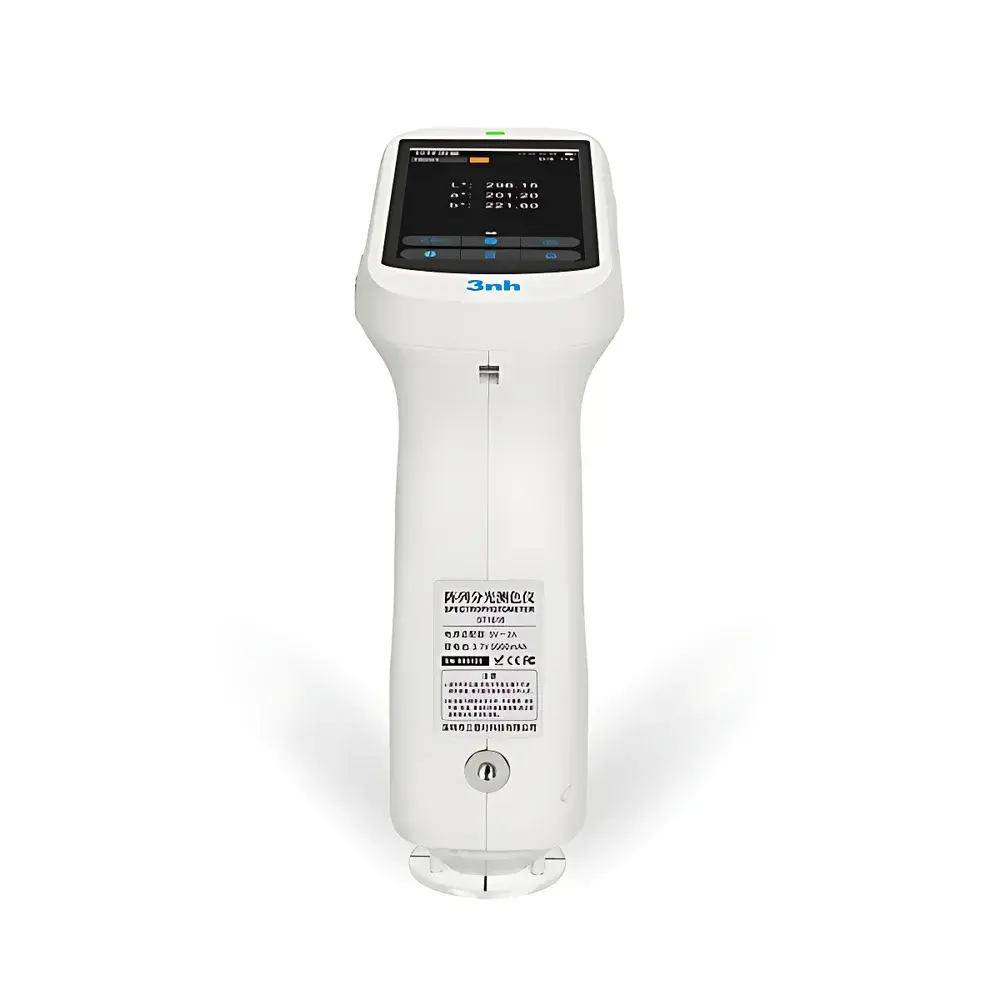
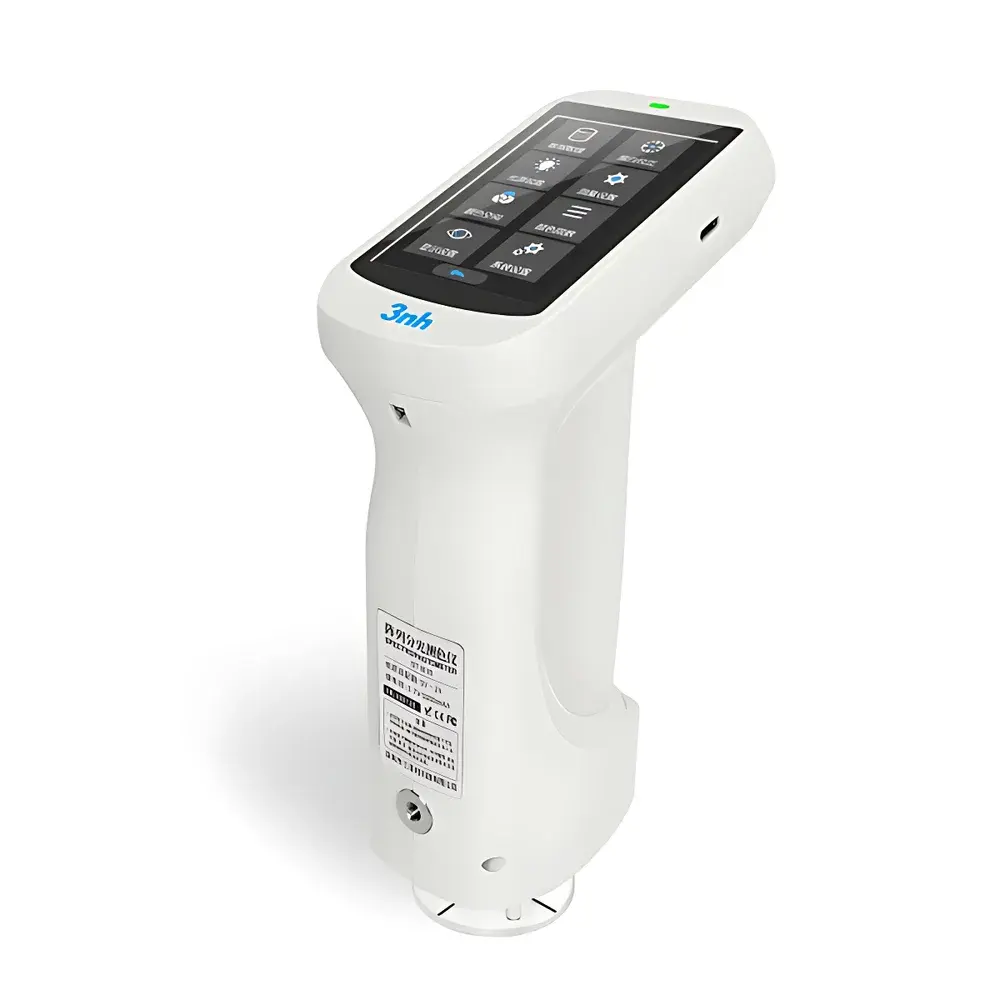
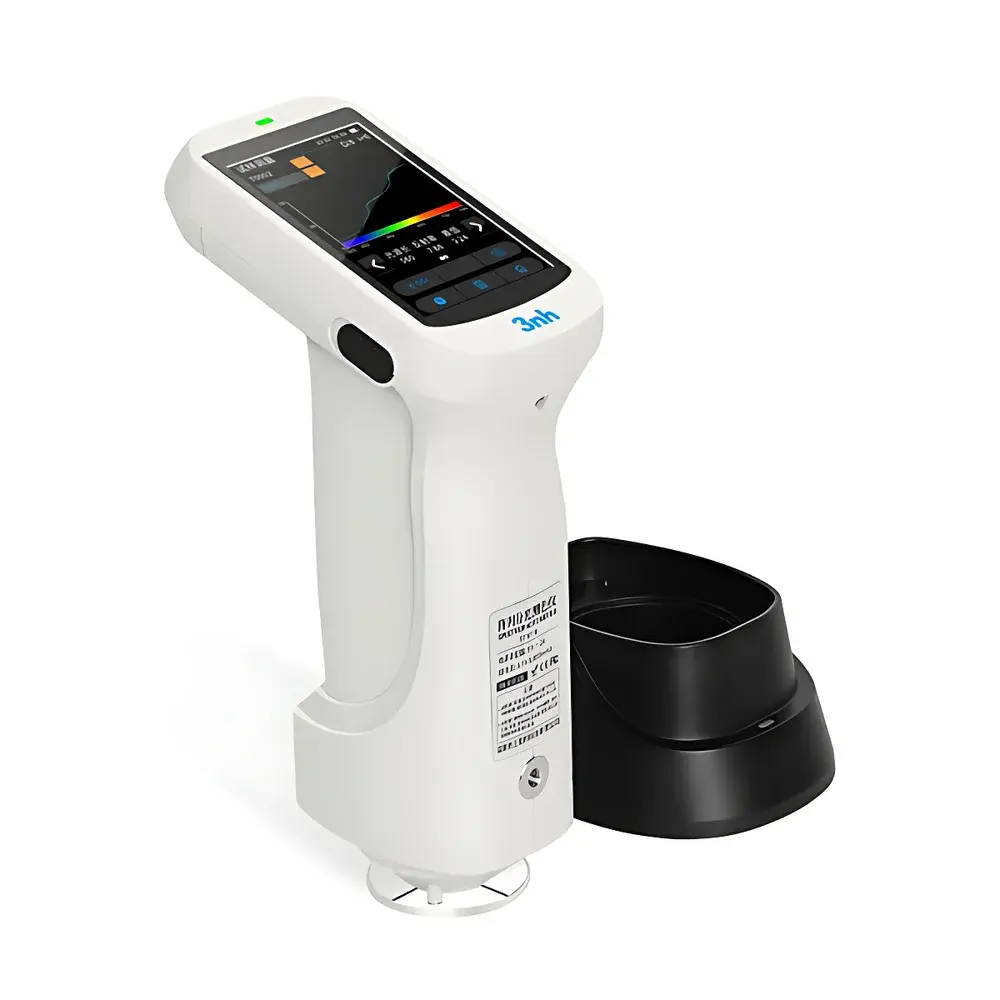
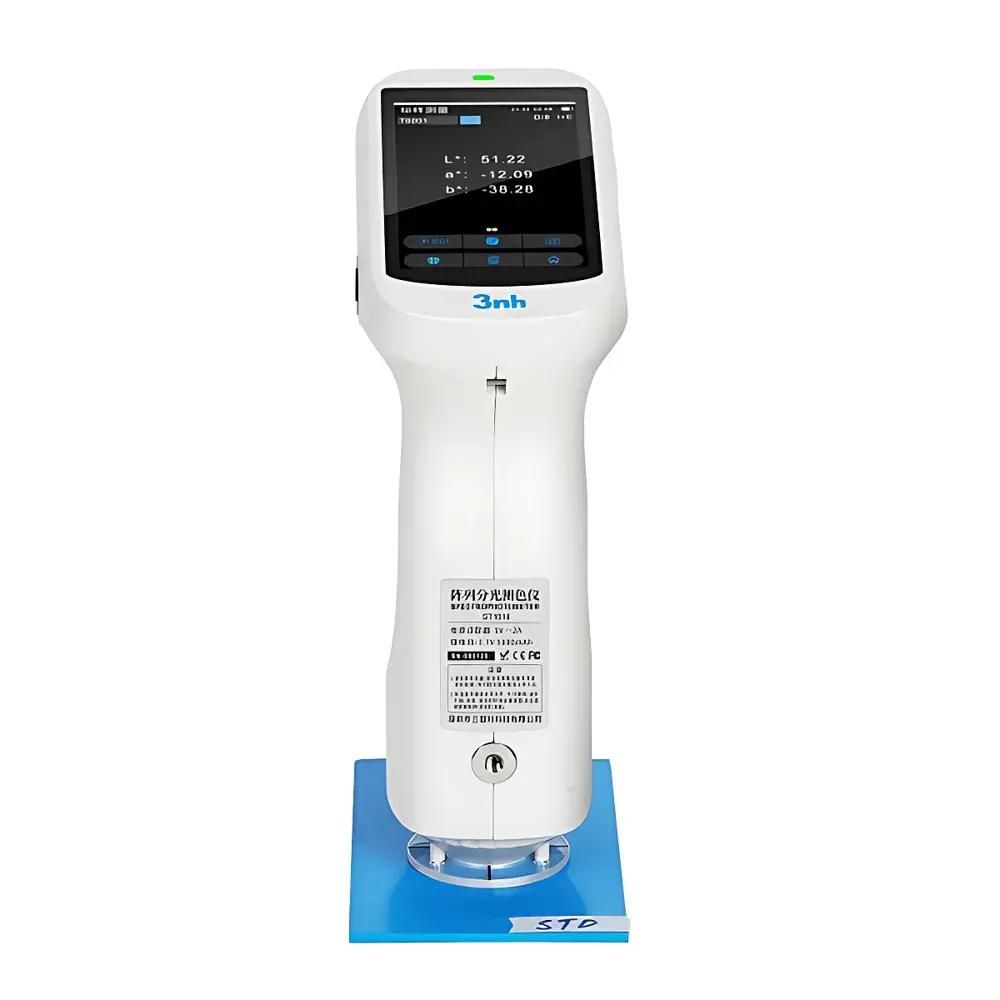
3nh CR-10 Portable High-Accuracy Spectrophotometric Colorimeter
| Brand | 3nh |
|---|---|
| Origin | Guangdong, China |
| Manufacturer Type | Direct Manufacturer |
| Product Category | Domestic |
| Model | CR-10 |
| Product Type | Spectrophotometric Colorimeter |
| Instrument Type | Portable |
| Optical Geometry | d/8° Integrating Sphere |
| Light Source | Full-Spectrum Balanced LED Array |
| Spectral Range | 400–700 nm |
| Repeatability | ΔE*ab ≤ 0.05 (mean, after white tile calibration) |
Overview
The 3nh CR-10 Portable High-Accuracy Spectrophotometric Colorimeter is an engineered solution for precise, repeatable color measurement in industrial quality control and R&D environments. Based on diffraction grating spectrophotometry, the CR-10 captures full spectral reflectance data across the visible spectrum (400–700 nm) using a dual-row 20-channel silicon photodiode array sensor. Its d/8° integrating sphere optical geometry complies with CIE No. 15, ISO 7724-1, ASTM E1164, DIN 5033 Teil 7, and GB/T 3978—ensuring metrological traceability and cross-platform compatibility with reference-grade instruments. Unlike filter-based tristimulus meters, the CR-10 delivers spectrally resolved data that supports advanced color difference calculations (ΔE*ab, ΔE*cmc, ΔE*94, ΔE*00), whiteness (ASTM E313-00, CIE/ISO), yellowness (ASTM D1925), and colorfastness evaluation (AATCC, ISO 105), making it suitable for applications demanding spectral fidelity and regulatory alignment.
Key Features
- Full-spectrum balanced LED illumination: A custom-engineered LED array provides uniform spectral power distribution across 400–700 nm, eliminating gaps common in standard white LEDs and ensuring accurate spectral response under standardized illuminants (D65, A, C, D50, F2, F7, F11).
- High-resolution plane grating optics: Coupled with a 40 mm diameter integrating sphere, the grating-based dispersion system enables fine wavelength sampling, improving spectral accuracy and reducing interpolation error in derived colorimetric values.
- Large-area dual-row silicon photodiode array: With 20 sensing elements per row, the detector offers high dynamic range—resisting saturation under intense illumination while maintaining sensitivity at low reflectance levels—critical for measuring dark or glossy surfaces.
- Intelligent contact-based calibration: The included calibration base automates white tile verification using a certified standard tile (R ≥ 95% across 400–700 nm), ensuring long-term stability and minimizing operator-dependent drift.
- Ergonomic handheld architecture: Designed per ISO 9241-411 human factors guidelines, the CR-10 features tactile measurement buttons, optimized grip contouring, and a 3.5-inch capacitive touchscreen for glove-compatible operation in production settings.
- Robust inter-instrument agreement: Achieves inter-instrument agreement of ΔE*ab ≤ 0.4 (BCRA Series II 12-tile average) and repeatability of ΔE*ab ≤ 0.05 (30 consecutive measurements on calibrated white tile), supporting multi-site color matching and centralized color standards management.
Sample Compatibility & Compliance
The CR-10 accommodates flat, curved, textured, and matte-to-glossy surfaces via its dual aperture options (Φ8 mm and Φ10 mm). It is validated for use with solid plastics, painted panels, textile swatches, coated paper, cosmetic packaging, pharmaceutical tablets, and food-grade films—provided samples fit within the measurement port and meet minimum flatness requirements. All optical and electronic components conform to IEC 61326-1 (EMC for laboratory equipment) and RoHS Directive 2011/65/EU. Measurement protocols align with GLP-relevant practices: audit-trail-capable software logging, user-accessible calibration history, and timestamped spectral data export support traceability in regulated industries (e.g., medical device packaging per ISO 11607, automotive interior trim per SAE J2527).
Software & Data Management
The CR-10 integrates with 3nh’s SQCX Quality Control Software (Windows-based), enabling comprehensive color data governance. SQCX supports unlimited sample storage, statistical process control (SPC) charting (X-bar/R, Cp/Cpk), pass/fail threshold configuration per L*, a*, b* or ΔE, and automated report generation (PDF, Excel, CSV). Spectral data is stored in CIE-compliant .ciex format, facilitating third-party analysis in tools such as MATLAB, Python (colour-science library), or enterprise PLM systems. Software logs include operator ID, instrument serial number, calibration timestamp, environmental conditions (auto-recorded if external hygrothermometer connected), and full spectral curves—meeting documentation requirements for FDA 21 CFR Part 11 (electronic records/signatures) when deployed with appropriate IT validation.
Applications
- Plastics & Electronics: Color consistency verification of injection-molded housings, PCB solder masks, and display bezels under D65 and D50 illuminants.
- Paints & Coatings: Batch-to-batch comparison of automotive OEM coatings, architectural paints, and powder coatings per ASTM D2244.
- Textiles & Apparel: Evaluation of dye lot uniformity, metamerism assessment under multiple illuminants, and compliance with AATCC TM173.
- Printing & Packaging: Spot color verification (Pantone®, DIC), substrate compensation, and print-through measurement on corrugated board and laminated films.
- Pharma & Food: Quantitative assessment of tablet film coating homogeneity, capsule shell color deviation, and natural pigment stability in beverages and confectionery.
FAQ
What spectral resolution does the CR-10 achieve?
The CR-10 employs a plane grating optical system with fixed wavelength sampling intervals; exact resolution is not specified by manufacturer, but spectral data is acquired at sufficient density to compute CIE 1931 2° and 10° observer functions with <0.1% uncertainty in derived XYZ values.
Is the CR-10 compliant with FDA 21 CFR Part 11?
When used with validated SQCX software configurations—including role-based access control, electronic signature workflows, and immutable audit trails—the system supports Part 11 compliance for electronic records in GxP environments.
Can the CR-10 measure transparent or translucent materials?
No—it is designed exclusively for reflective (opaque or semi-opaque) samples. Transmission or haze measurements require dedicated transmission-mode spectrophotometers (e.g., 3nh TS7700 series).
How often must the instrument be recalibrated?
Daily white calibration is recommended before critical measurements; full recalibration against traceable standards is advised every 6–12 months depending on usage frequency and environmental conditions.
Does the CR-10 support M0/M1/M2/M3 measurement modes?
Yes—via software configuration, the CR-10 can simulate M0 (incandescent), M1 (D50 daylight), M2 (UV-cut), and M3 (with polarization) conditions by applying appropriate illuminant and UV component filters digitally during post-processing.



