
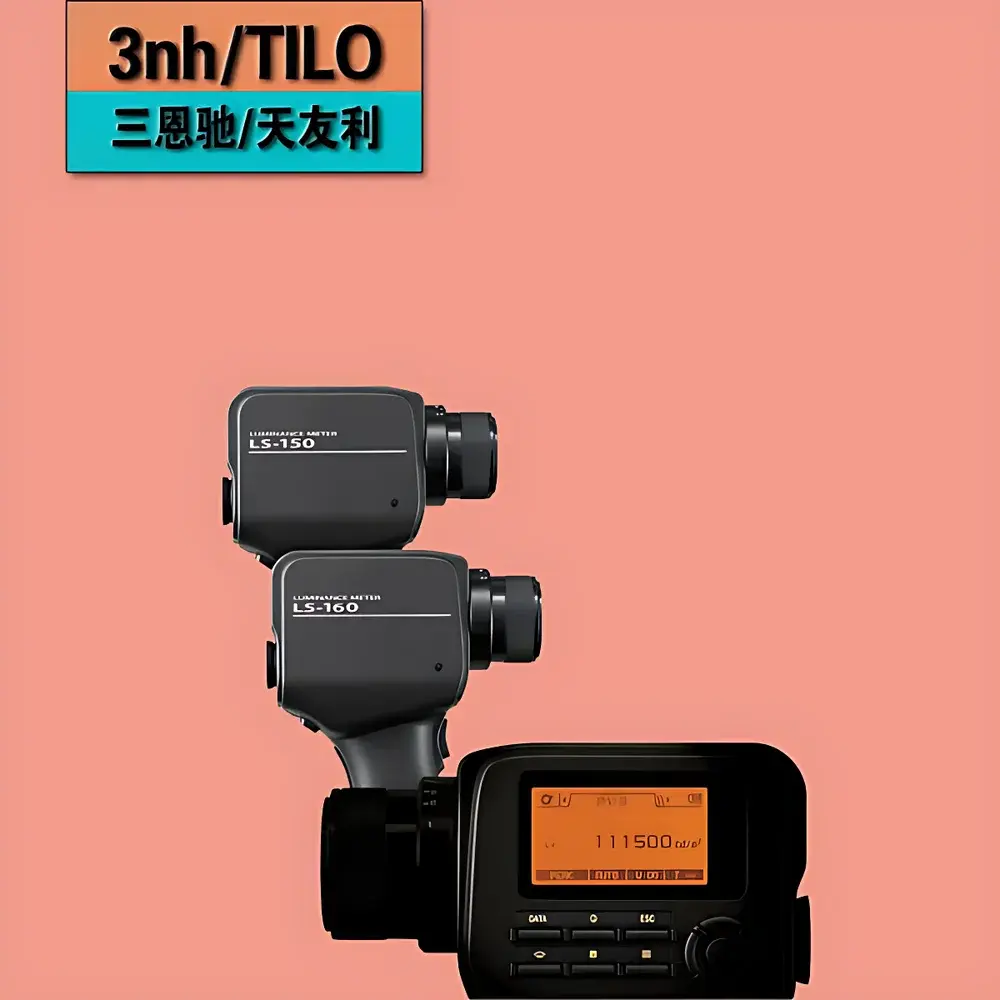
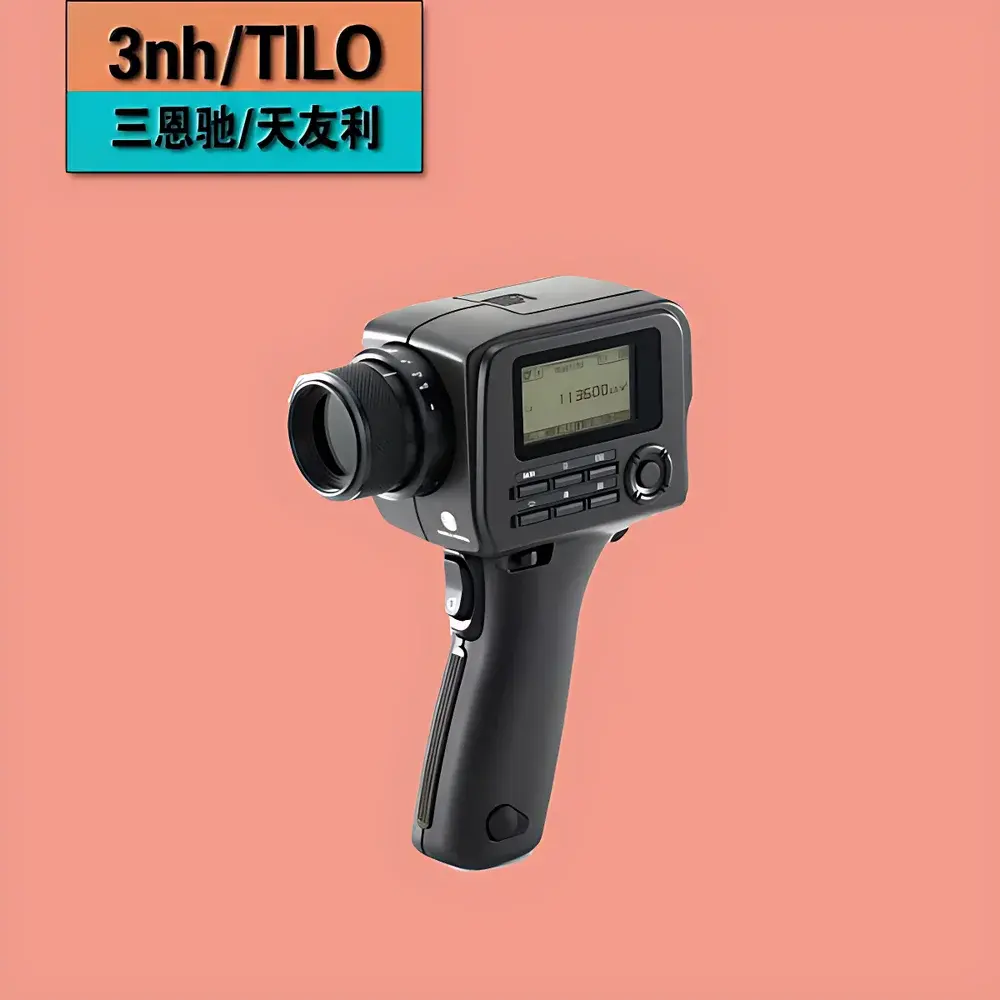
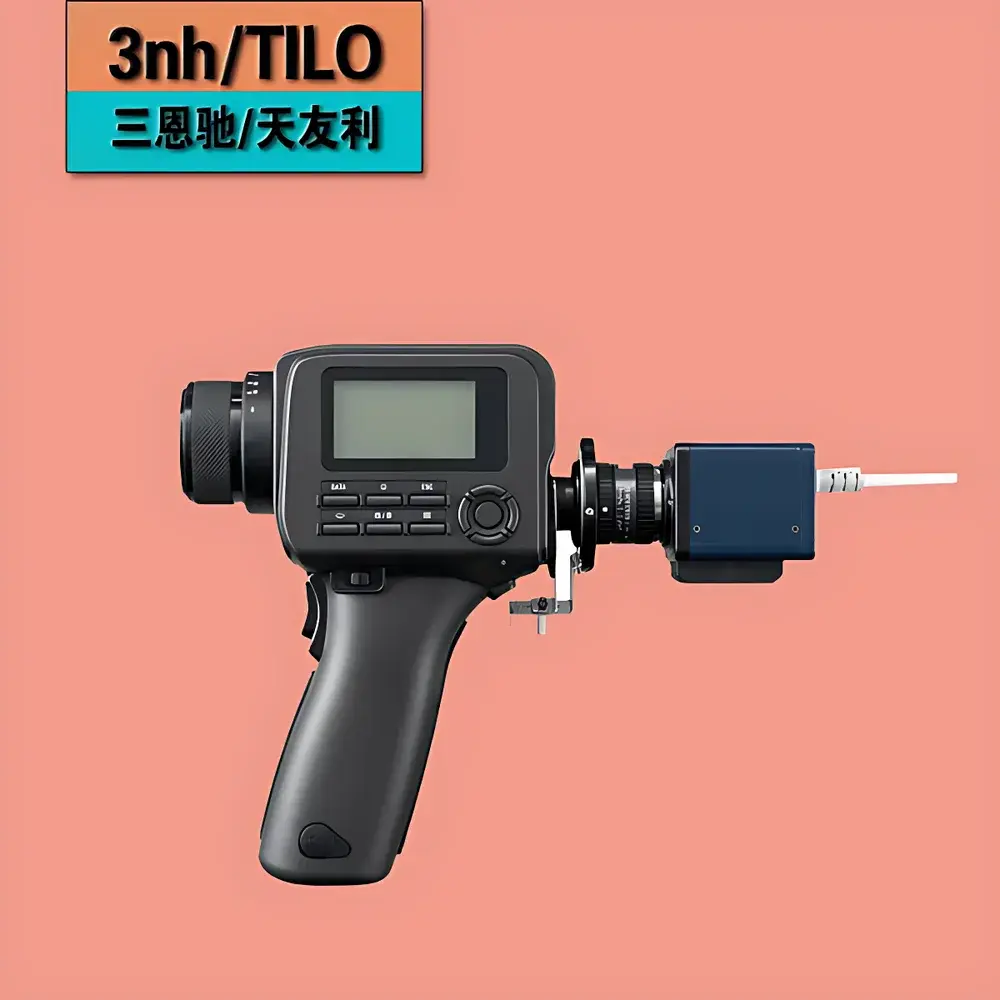
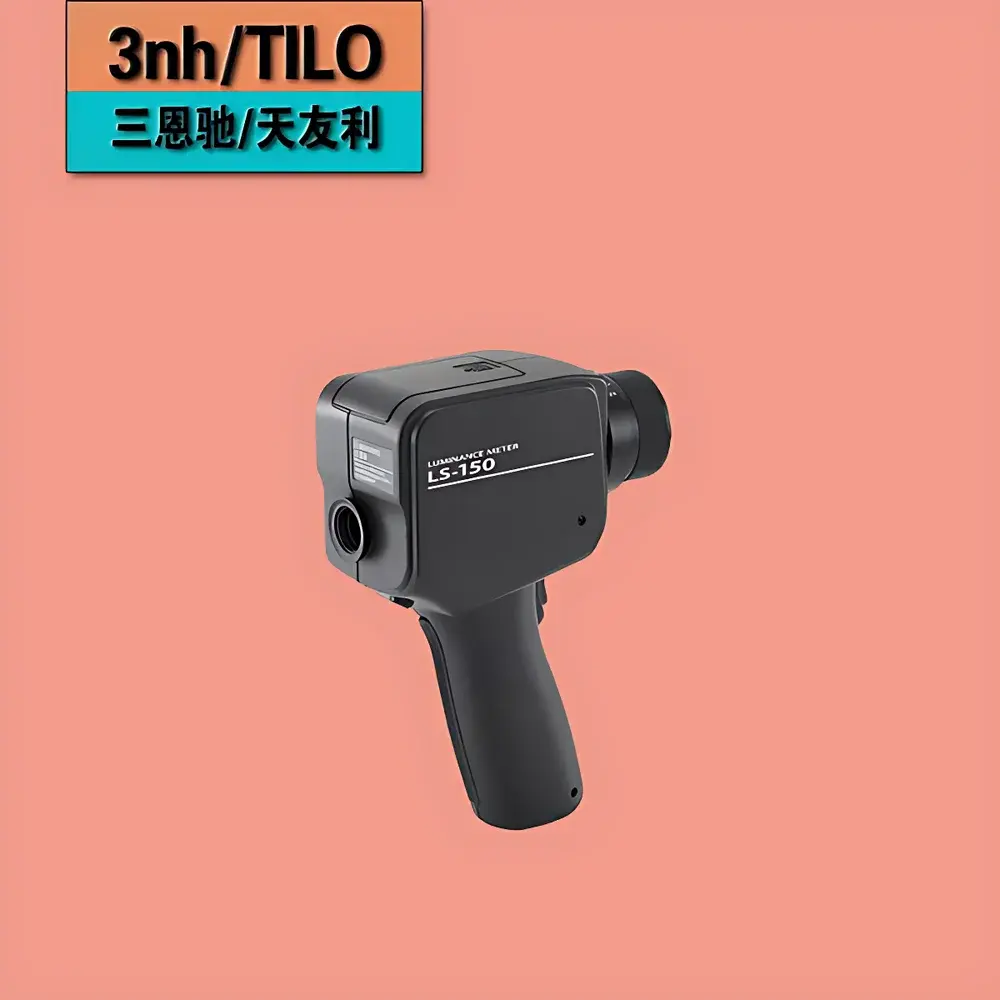
Konica Minolta LS-150 / LS-160 Luminance Meter
| Brand | Konica Minolta |
|---|---|
| Origin | Shanghai, China |
| Manufacturer Type | Authorized Distributor |
| Product Category | Portable Colorimetric Luminance Meter |
| Model | LS-150 / LS-160 |
| Optical Geometry | d/8° integrating sphere |
| Light Source | Tungsten-filament lamp |
| Luminance Range | 0.001–999,900 cd/m² (LS-150) |
| Repeatability | ±0.2% + 1 digit (luminance, reference source A) |
Overview
The Konica Minolta LS-150 and LS-160 are high-precision portable luminance meters engineered for photometric measurement of self-luminous and reflective surfaces under field and laboratory conditions. Based on the CIE standard photopic luminosity function V(λ), these instruments employ a single-lens reflex (SLR) optical architecture to ensure strict spatial correspondence between the viewed and measured area—critical for traceable, repeatable luminance quantification. Unlike conventional spot meters relying on fixed-field optics, the LS-150/160 integrates an SLR viewfinder with real-time luminance readout in both eyepiece and external LCD display, enabling precise targeting even at short working distances. The LS-150 complies with DIN 5032-7 Class B for photometric accuracy, while both models feature enhanced spectral matching to V(λ) compared to predecessor models (LS-100/LS-110), reducing metamerism-related uncertainty in heterogeneous light sources such as LEDs, OLEDs, and fluorescent lamps.
Key Features
- SLR optical system with 9° field of view and f/2.8, 85 mm lens—guarantees zero parallax between aiming and measurement zones
- Two angular apertures: 1° (LS-150) and 1/3° (LS-160), supporting minimum measurable spot diameters of 1.3 mm (with optional close-up lens) and 0.4 mm respectively
- High-dynamic-range silicon photodetector with <1% stray-light rejection and ≤1% polarization error
- Dual-display interface: backlit 4-digit eyepiece LCD + multi-digit external LCD with brightness adjustment
- Onboard memory for 1,000 measurement records, exportable via USB 2.0 (supports bus-powered operation)
- Ten user-configurable calibration channels for inter-instrument consistency across QA/QC labs or multi-site deployments
- Measurement modes: absolute luminance (cd/m² or foot-lamberts), luminance difference (ΔL), ratio (Lmeas/Lref), peak/valley detection, and time-synchronized AC-modulated measurements (20–400 Hz)
Sample Compatibility & Compliance
The LS-150/160 is validated for luminance assessment of diverse optoelectronic and architectural surfaces—including LED signage, traffic signals, aircraft cockpit displays, tunnel wall retroreflectivity, automotive interior lighting, and CRT/EL panel emissions. Its V(λ)-matched spectral response meets requirements for photometric conformity testing per IEC 62471 (photobiological safety), EN 13201 (road lighting), and FAA AC 150/5340-30H (airport visual aids). The LS-150’s DIN 5032-7 Class B certification confirms compliance with German national standards for luminance meter accuracy, repeatability, and temperature stability (≤0.2%/K drift). Both models operate within 0–40°C and ≤85% RH (non-condensing), suitable for outdoor deployment in transportation infrastructure audits and indoor manufacturing QC workflows.
Software & Data Management
Bundled CS-S20w software enables full instrument control, data visualization, statistical analysis (mean, SD, min/max), and report generation compliant with ISO/IEC 17025 documentation requirements. Raw measurement logs include timestamp, instrument ID, calibration channel, measurement mode, and environmental metadata. USB communication supports bidirectional command protocol (SCPI-compatible), allowing integration into automated test sequences. Audit trail functionality records all calibration events, parameter changes, and firmware updates—supporting GLP/GMP-aligned validation protocols. Data exports are available in CSV, TXT, and XML formats; no proprietary binary locking is applied.
Applications
- LED and display manufacturing: verification of luminance uniformity, binning, and aging-induced lumen depreciation
- Transportation safety: photometric validation of railway signal lamps, runway edge lights, and highway variable-message signs per MUTCD and ICAO Annex 14
- Architectural lighting design: in-situ measurement of façade illumination, tunnel entrance adaptation zones, and emergency exit signage compliance
- R&D laboratories: spectral correction factor application (0.001–9.999 range) for non-standard illuminants and custom emission profiles
- Quality assurance: batch-to-batch comparison of backlight units, OLED modules, and projection screen gain characteristics
- Regulatory testing: submission-ready datasets for CE marking, ENERGY STAR certification, and DOE Lighting Facts labeling
FAQ
What is the difference between LS-150 and LS-160 in terms of optical specification?
The LS-160 features a narrower 1/3° measurement angle versus the LS-150’s 1°, enabling higher spatial resolution for micro-scale targets—e.g., individual subpixels on microLED arrays.
Can the LS-150/160 measure pulsed or PWM-driven LEDs?
Yes—both models support synchronized measurement at frequencies from 20 Hz to 400 Hz, capturing true RMS luminance under duty-cycle modulation without aliasing.
Is NIST-traceable calibration included?
Each unit ships with a factory calibration certificate traceable to JCSS (Japan Calibration Service System); optional NIST-traceable recalibration services are available through Konica Minolta authorized service centers.
Does the instrument support ASTM E308 or CIE 15:2018 spectral correction?
While not a spectroradiometer, the LS-150/160 allows manual input of chromaticity-based correction factors aligned with CIE 15:2018 Annex D methodologies for non-V(λ) sources.
How is inter-unit variability managed across a fleet of devices?
The 10-channel user calibration function permits alignment to a master reference source, reducing inter-instrument deviation to <0.5% across identical measurement setups—validated per ISO 5-3:2022 repeatability guidelines.






