
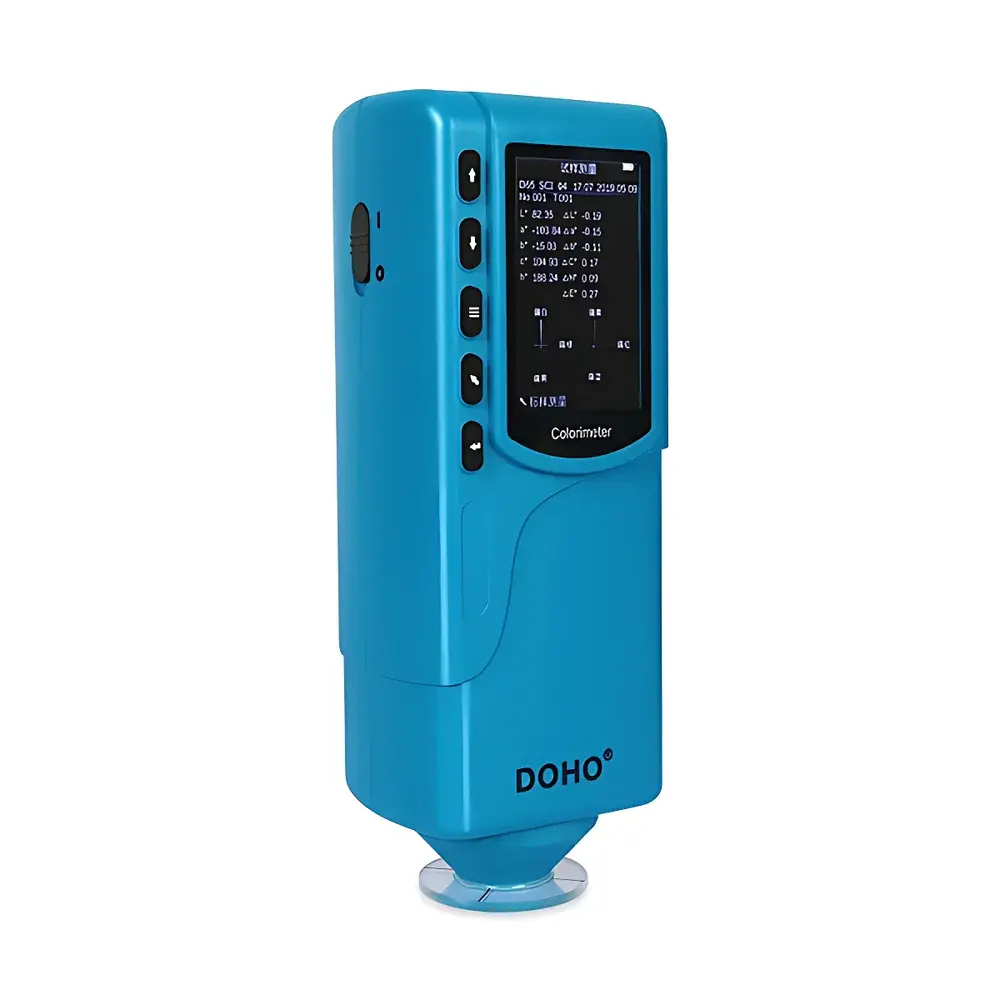
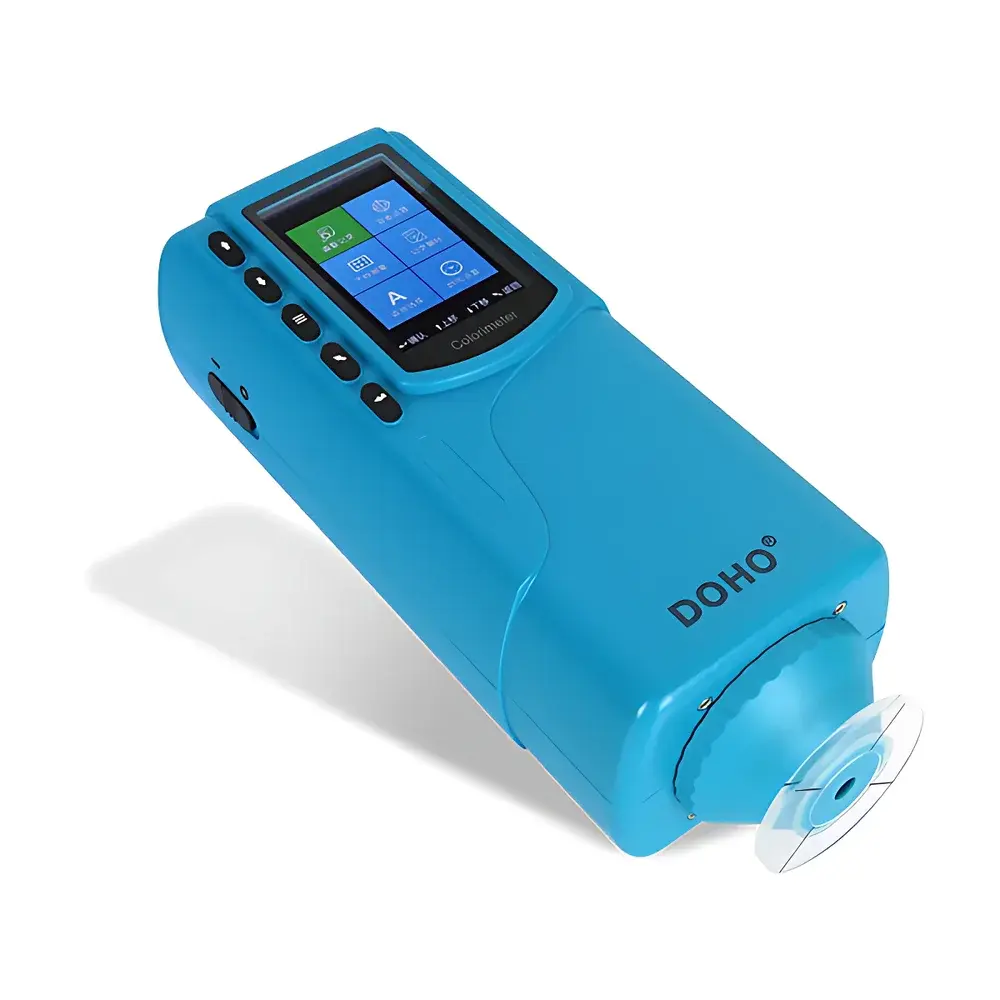
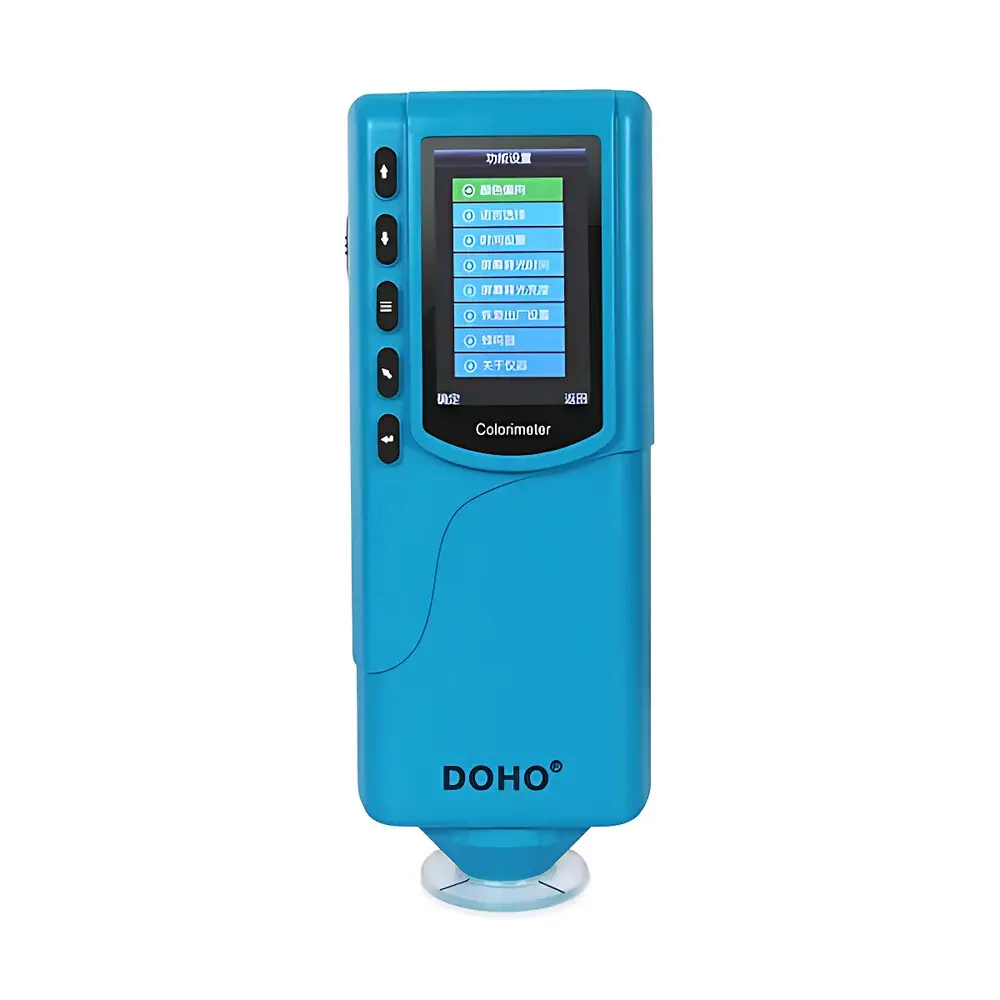
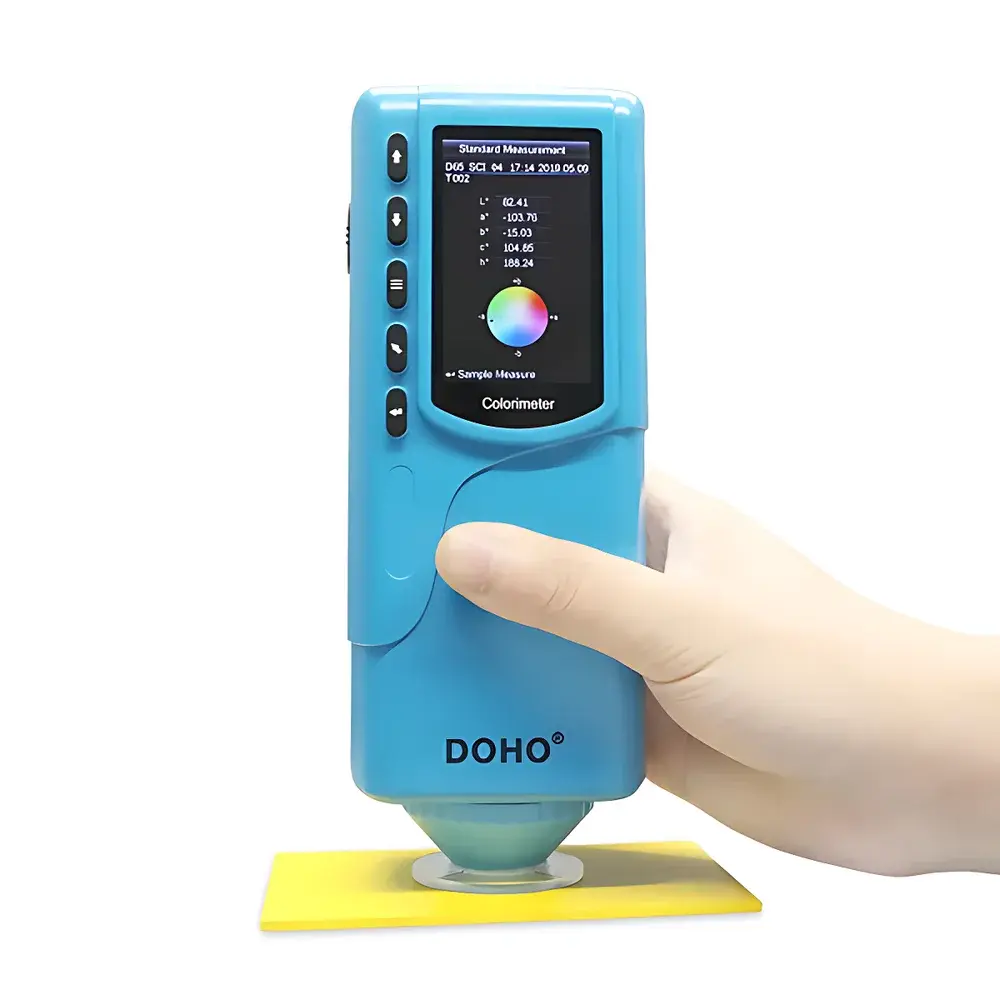
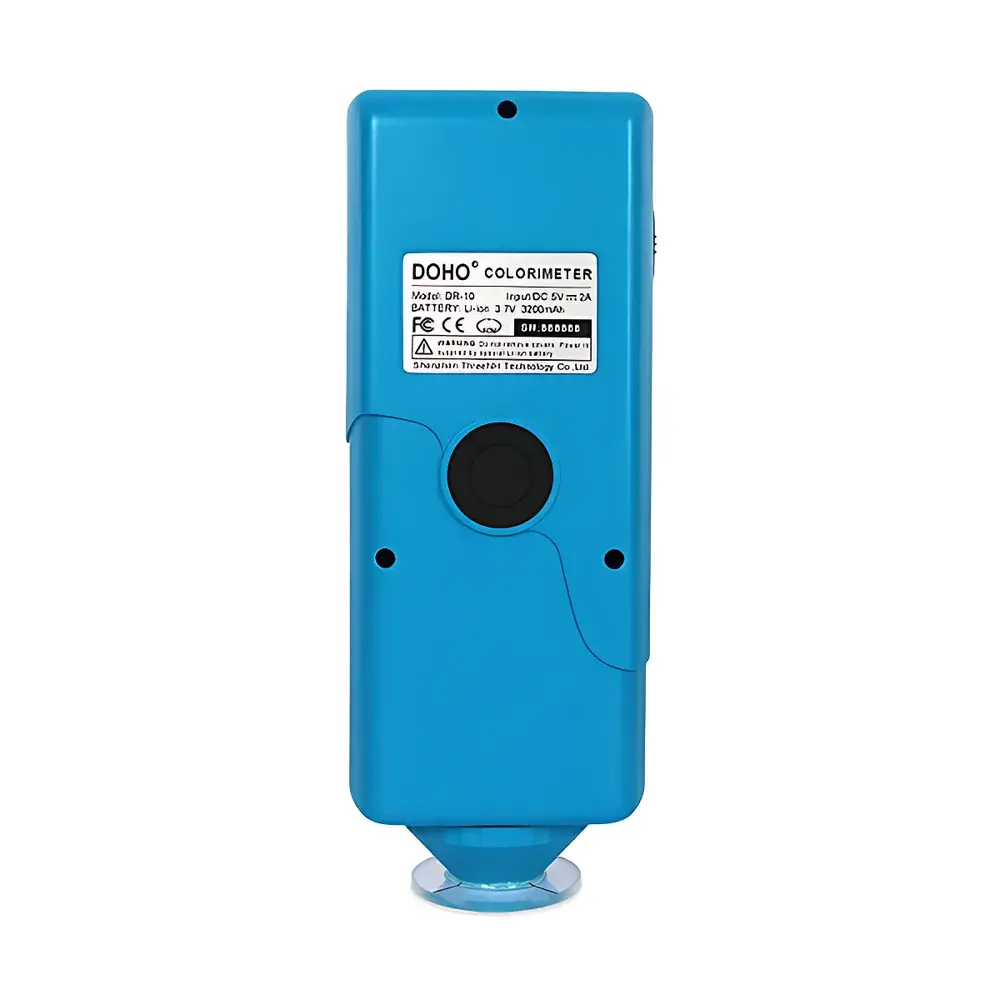
3nh DR-10 Portable Color Difference Meter
| Brand | 3nh |
|---|---|
| Origin | Guangdong, China |
| Manufacturer Type | Manufacturer |
| Origin Category | Domestic |
| Model | DR-10 |
| Product Type | Color Difference Meter |
| Instrument Type | Portable |
| Optical Geometry | 8°/d (8° Illumination / Diffuse Reception) |
| Light Source | LED |
| Spectral Range | 400–700 nm |
| Repeatability | Φ8 mm aperture / ΔE*ab ≤ 0.08 (after warm-up and calibration, average of 30 measurements on white tile at 5 s intervals) |
| Inter-instrument Agreement | ΔE*ab ≤ 0.4 (BCRA Series II 12-color tile set) |
| Display | 2.8″ TFT true-color screen (16:9 aspect ratio) |
| Battery | Rechargeable Li-ion, 3.7 V @ 3200 mAh |
| Dimensions | 205 × 67 × 80 mm |
| Weight | 400 g |
| Measurement Time | 1.5 s |
| Color Space | CIE LAB |
| Color Difference Formula | ΔE*ab |
| Observer Angle | CIE 10° Standard Observer |
| Illuminant | D65 |
| Compliance | CIE No. 15, GB/T 3978 |
| Data Storage | 100 standard samples + 10,000 test samples |
| Interface | USB (power only) |
| Operating Temperature | 0–40 °C |
| Storage Temperature | −20–50 °C |
| Optional Accessories | Mini thermal printer, powder test kit |
Overview
The 3nh DR-10 Portable Color Difference Meter is an entry-level, self-developed color measurement instrument engineered for high repeatability and field-deployable operation in industrial quality control environments. Based on the CIE 15-compliant 8°/d (8° illumination, diffuse reception) optical geometry, the DR-10 employs a stable LED light source spanning the visible spectrum (400–700 nm) and a silicon photodiode array to capture spectral reflectance data. It computes tristimulus values under the CIE 10° standard observer and D65 illuminant, then derives color coordinates in the CIE LAB color space and quantifies color difference using the ΔE*ab metric. Designed for standalone use—without mandatory PC connectivity—the DR-10 delivers rapid, traceable color assessments directly in production lines, laboratories, or remote inspection sites. Its compact form factor, low-power architecture, and integrated ETC (Every Test Calibration) technology ensure consistent accuracy across extended operational cycles without manual recalibration.
Key Features
- ETC Real-Time Calibration: An internal reference white tile enables automatic optical recalibration before every measurement, maintaining long-term stability and minimizing drift-induced error.
- High Repeatability Performance: Achieves ΔE*ab ≤ 0.08 (Φ8 mm aperture, 30 consecutive readings on certified white tile), supporting reliable pass/fail decisions in routine QC workflows.
- Ergonomic Handheld Design: Contoured chassis with palm-fit grip and crosshair targeting aid enables precise, fatigue-resistant positioning during high-frequency sampling.
- Long-Endurance Power System: 3200 mAh rechargeable lithium-ion battery supports >10,000 measurements per full charge—ideal for shift-based or mobile inspection tasks.
- Intuitive On-Device Interface: 2.8″ TFT display renders color values, ΔE*ab deviation plots, directional color bias indicators (e.g., “+a* → redder”), and GO/NO-GO status in real time.
- Durable Industrial Build: Encased in impact-resistant polymer housing with IP52-rated ingress protection against dust and incidental moisture.
Sample Compatibility & Compliance
The DR-10 accommodates flat, matte, and semi-gloss surfaces—including plastics, painted panels, textiles, printed paper, ceramic glazes, and coated pharmaceutical tablets—using its fixed Φ8 mm measurement port. Its 8°/d geometry conforms to ISO/CIE standards for diffuse reflectance measurement, ensuring compatibility with ASTM D2244 (standard practice for calculation of color tolerances), ISO 11664-4 (CIE LAB specification), and GB/T 3978 (Chinese national standard for colorimetric illumination). While not validated for FDA 21 CFR Part 11 compliance out-of-the-box, audit-ready data logs (timestamped, operator-tagged, and instrument-serialized) can be exported via USB for integration into GLP/GMP-aligned documentation systems. The device meets RoHS Directive 2011/65/EU requirements for hazardous substance restriction.
Software & Data Management
The DR-10 operates autonomously but supports optional PC software for advanced analysis, report generation, and database synchronization. On-device memory retains up to 100 reference standards and 10,000 test records, each tagged with date/time stamp, measurement ID, and ΔE*ab vector components (ΔL*, Δa*, Δb*). Exported CSV files include full metadata required for traceability: instrument serial number, firmware version, calibration timestamp, and environmental temperature at time of measurement. Firmware updates are delivered via USB-connected host PC, enabling periodic alignment with evolving color science protocols and regulatory expectations.
Applications
The DR-10 serves as a primary color verification tool across industries where visual consistency impacts brand integrity and regulatory acceptance. In automotive supply chains, it verifies paint match tolerance against OEM master standards. In textile manufacturing, it validates dye lot uniformity pre-shipment. In packaging printing, it monitors CMYK ink density deviation across press runs. In cosmetics, it ensures batch-to-batch lipstick or foundation shade fidelity. In food production, it detects subtle hue shifts in coated confectionery or dried fruit—critical for shelf-life assessment. Its portability also supports field audits of architectural coatings, signage materials, and medical device housings where lab-grade instrumentation is impractical.
FAQ
What does “8°/d” mean in the optical specification?
It denotes an illumination angle of 8° relative to the sample normal, with diffuse reflectance collected over a hemispherical solid angle—per CIE 15 and ISO 5-4, this geometry minimizes texture and gloss influence on color reading.
Is the DR-10 suitable for measuring transparent or translucent samples?
No. The DR-10 is optimized for opaque, reflective surfaces. Translucent films, liquids, or powders require accessories such as the optional powder test box or transmission mode instrumentation.
How often must the instrument be calibrated?
The ETC system performs automatic calibration before each measurement; however, annual verification against NIST-traceable ceramic tiles is recommended for ISO/IEC 17025-compliant labs.
Can measurement data be integrated into LIMS or ERP systems?
Yes—CSV exports contain structured fields compatible with common data ingestion pipelines; custom API integration requires third-party middleware development.
What is the expected lifetime of the LED light source?
Rated for ≥1.6 million measurements or five years of typical industrial use, with negligible lumen depreciation over its service life.




