
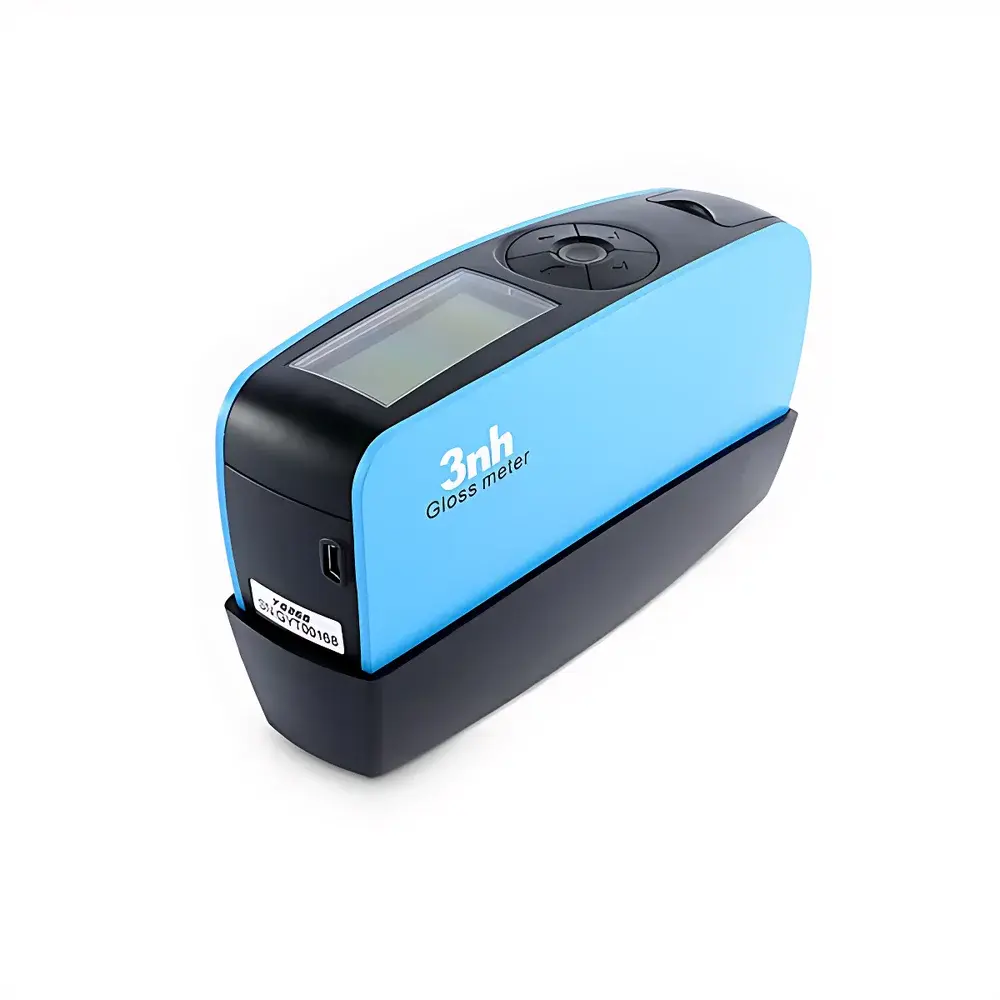
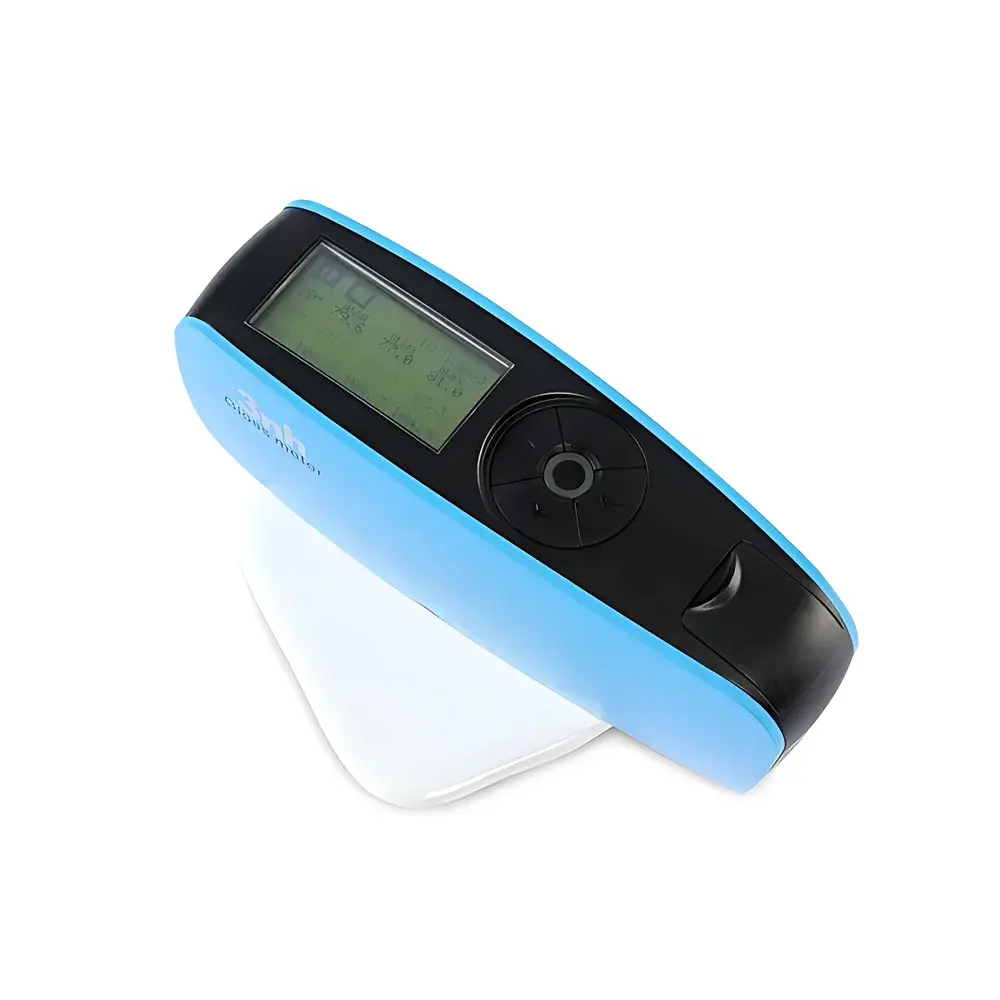
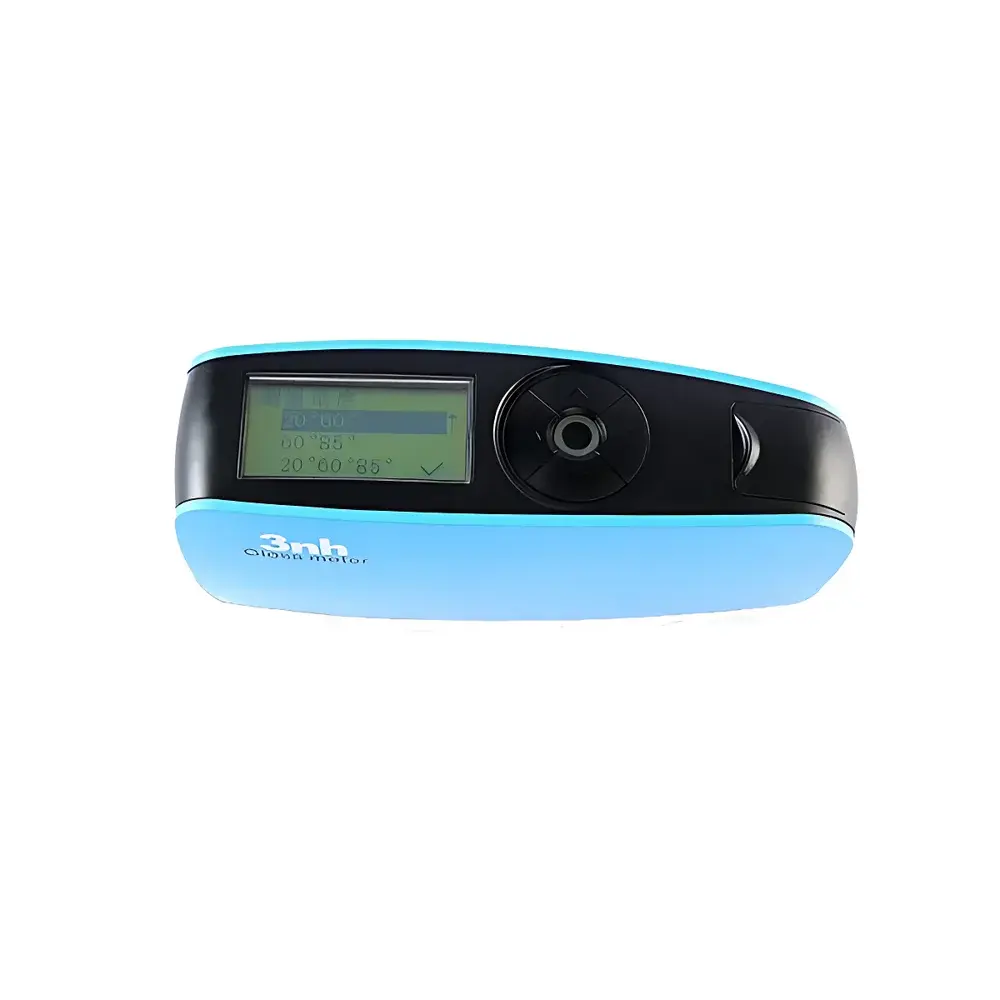
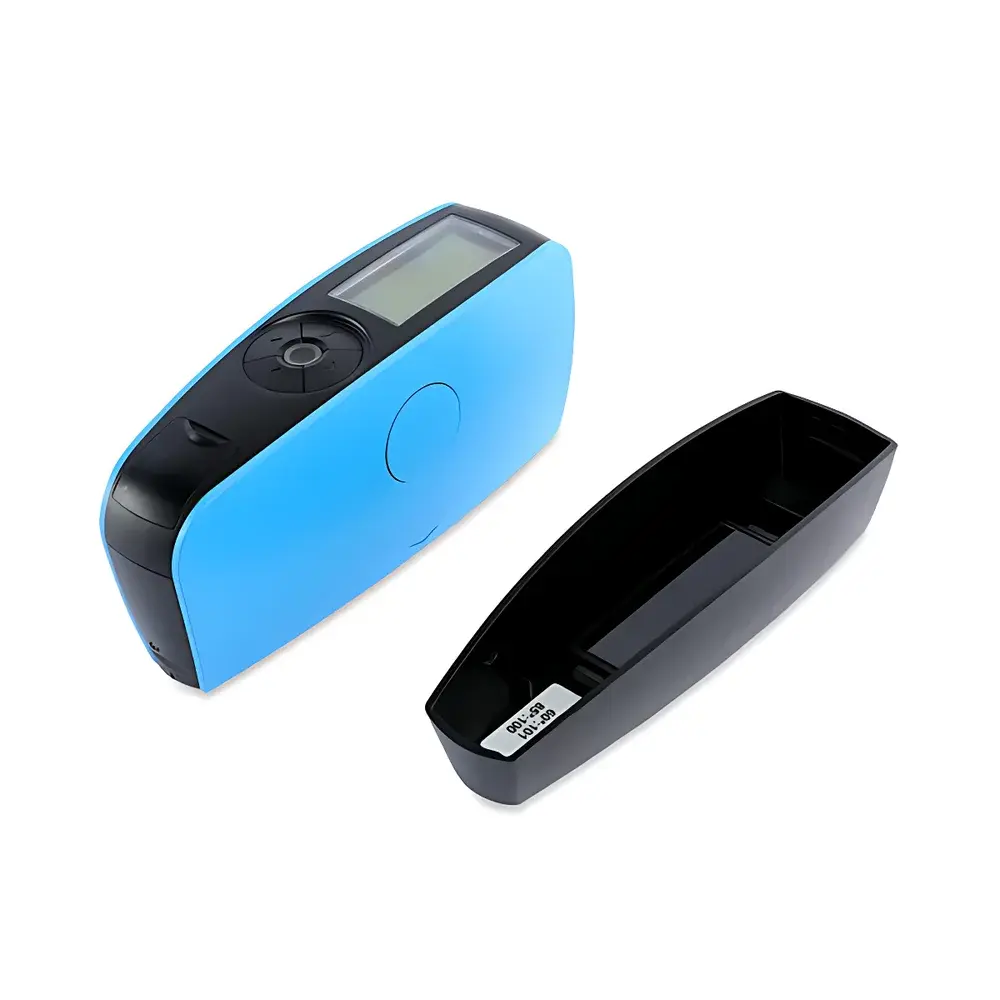
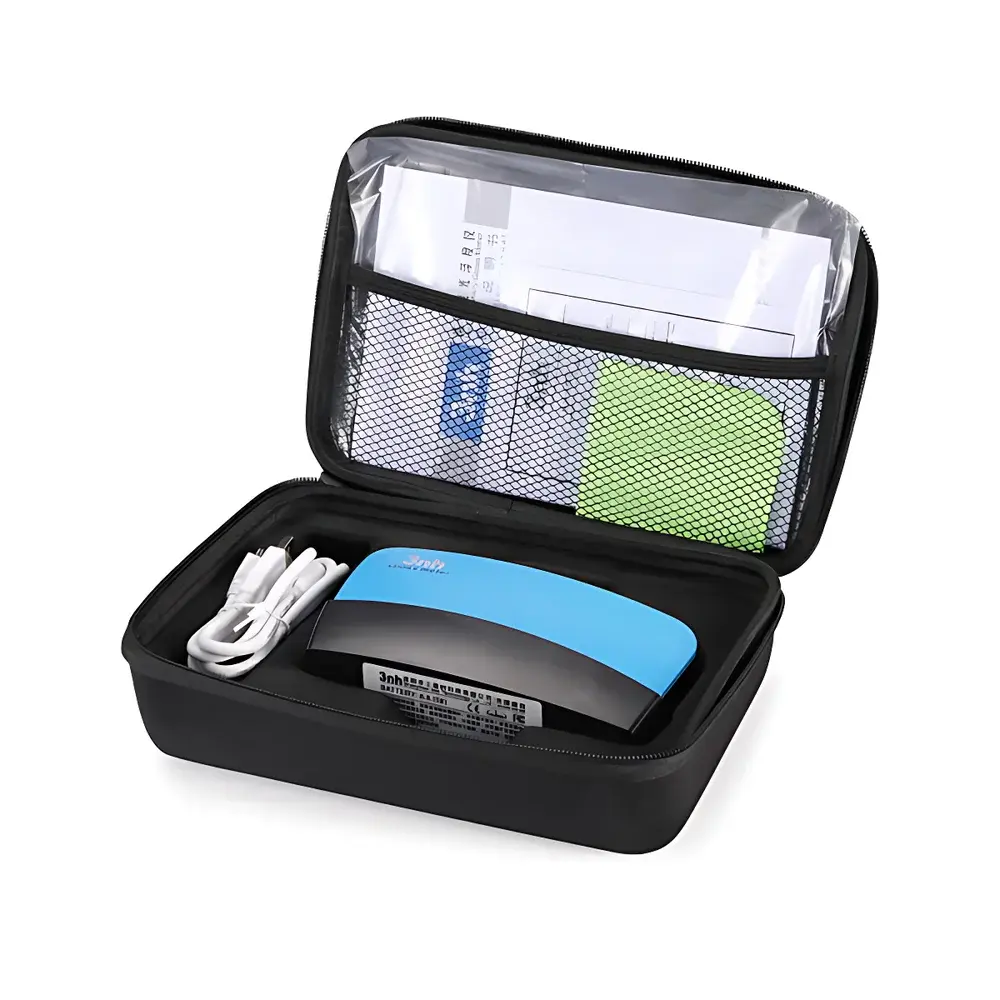
3nh YG268 Tri-Angle Gloss Meter
| Brand | 3nh |
|---|---|
| Origin | Guangdong, China |
| Manufacturer Type | Original Equipment Manufacturer (OEM) |
| Product Category | Domestic |
| Model | YG268 |
| Price | USD 495 (FOB Guangdong) |
| Type | Manual Operation |
| Gloss Measurement Angles | 20°, 60°, 85° |
| Gloss Range (60°) | 0–1000 GU |
| Gloss Repeatability (60°) | ±0.2 GU |
| Standard Calibration Check | Automatic |
| Data Storage Capacity | 35,000 measurements |
| Auto Power-Off | Adjustable (30–120 s) |
| Compliance | ISO 2813, ASTM D523, GB/T 9754, JJG 696 |
Overview
The 3nh YG268 Tri-Angle Gloss Meter is a manually operated, high-reproducibility optical instrument engineered for precise specular gloss quantification across three standardized incident angles—20°, 60°, and 85°—in accordance with internationally recognized metrological frameworks. It operates on the principle of measuring the ratio of reflected luminous flux to incident luminous flux at a defined geometry, expressed in Gloss Units (GU), and is calibrated against certified ceramic or glass reference standards traceable to national metrology institutes. Designed for routine quality control in coatings, plastics, automotive finishes, printed materials, and architectural surfaces, the YG268 delivers stable, operator-independent readings under ambient lighting conditions without requiring environmental enclosures. Its optical architecture features a stabilized LED light source, precision-aperture collimation optics, and a silicon photodiode detector aligned to meet the angular tolerances specified in ISO 2813 and ASTM D523. The instrument satisfies the performance criteria outlined in JJG 696—China’s national verification regulation for working gloss meters—ensuring suitability for accredited laboratory and production-floor applications where regulatory traceability is required.
Key Features
- Tri-angle measurement capability (20°, 60°, 85°) enabling comprehensive surface characterization—from high-gloss automotive clearcoats to matte paper substrates.
- Automatic standard plate verification prior to each measurement cycle, reducing calibration drift risk and supporting documented metrological integrity.
- Ergonomic, curved-body housing with tactile button layout optimized for single-hand operation and minimized parallax error during handheld use.
- Onboard memory capacity of 35,000 measurement records, each timestamped and tagged with angle, sample ID, and operator code (via optional software configuration).
- User-configurable auto power-off interval (30–120 seconds) to extend battery life without compromising operational continuity.
- Compliance with ISO 2813 (plastics and paint), ASTM D523 (automotive and industrial coatings), and GB/T 9754 (Chinese national standard for non-metallic coatings).
Sample Compatibility & Compliance
The YG268 accommodates flat, slightly curved, or textured non-metallic surfaces—including painted metal panels, laminated films, injection-molded polymers, and coated papers—with minimal geometric constraint. Its 6 mm measurement spot size ensures representative sampling across heterogeneous surfaces while avoiding edge effects common in small-area gloss assessment. All internal firmware and hardware design elements adhere to JJG 696 verification requirements, including linearity deviation ≤ ±1.5% across full scale, zero stability < 0.1 GU over 8 hours, and temperature coefficient < 0.05 GU/°C (15–30°C). The device supports GLP-compliant workflows through audit-trail-enabled software integration (see Software & Data Management), and its calibration protocol aligns with ISO/IEC 17025 documentation expectations for in-house reference standard management.
Software & Data Management
The included PC-based Quality Management Software (v3.0+) enables full bidirectional data exchange via USB-C connection. It supports customizable report templates compliant with ISO 9001 quality records, automatic generation of statistical process control (SPC) charts (X̄-R, Cpk), and batch-level pass/fail evaluation against user-defined upper/lower specification limits. Audit trails log all parameter changes, calibration events, and data exports with operator ID and timestamp—meeting FDA 21 CFR Part 11 electronic record requirements when deployed with system-level access controls and digital signature validation. Raw measurement files are exportable in CSV, XML, and PDF formats for integration into LIMS or ERP platforms.
Applications
- Automotive OEM and Tier-1 suppliers performing incoming inspection of painted body panels and trim components.
- Coatings manufacturers validating batch-to-batch consistency of solvent-based and waterborne formulations.
- Packaging converters monitoring gloss uniformity across flexographic and gravure-printed plastic films.
- Architectural coating labs assessing weathering-induced gloss loss in accelerated UV exposure studies.
- Academic research groups conducting fundamental studies on surface topography–gloss correlation using AFM or profilometry cross-validation.
FAQ
Does the YG268 require annual recalibration by an external lab?
No—routine verification using the included certified gloss standard plates satisfies JJG 696 interim verification requirements; however, traceable recalibration every 12 months is recommended for ISO/IEC 17025-accredited environments.
Can the YG268 measure curved surfaces?
It is optimized for flat or gently curved surfaces (radius > 200 mm); for highly contoured geometries, a portable gloss probe with articulated arm may be required.
Is the software compatible with Windows 11 and macOS?
The Quality Management Software is validated for Windows 10/11 (64-bit); macOS support is available via virtualization or cloud-hosted SaaS interface (contact technical support for deployment options).
What is the warranty coverage and service response time?
3nh provides a 24-month limited warranty covering parts and labor; express repair turnaround is 5 business days from receipt at authorized service centers in Shenzhen and Hamburg.
How does the YG268 handle ambient light interference?
Its optical design incorporates spectral filtering and pulsed LED excitation synchronized with detector gating, suppressing ambient irradiance contributions below 500 lux—eliminating the need for darkroom operation in typical factory settings.





