
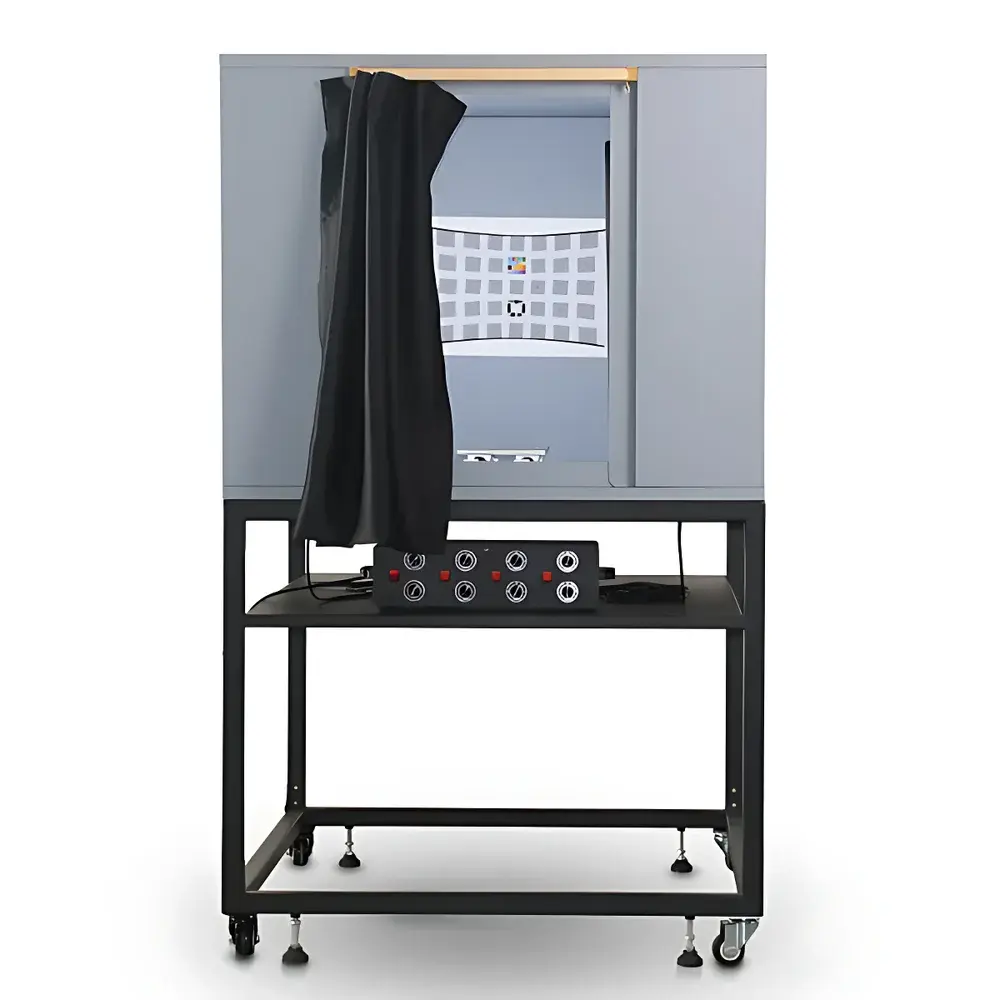
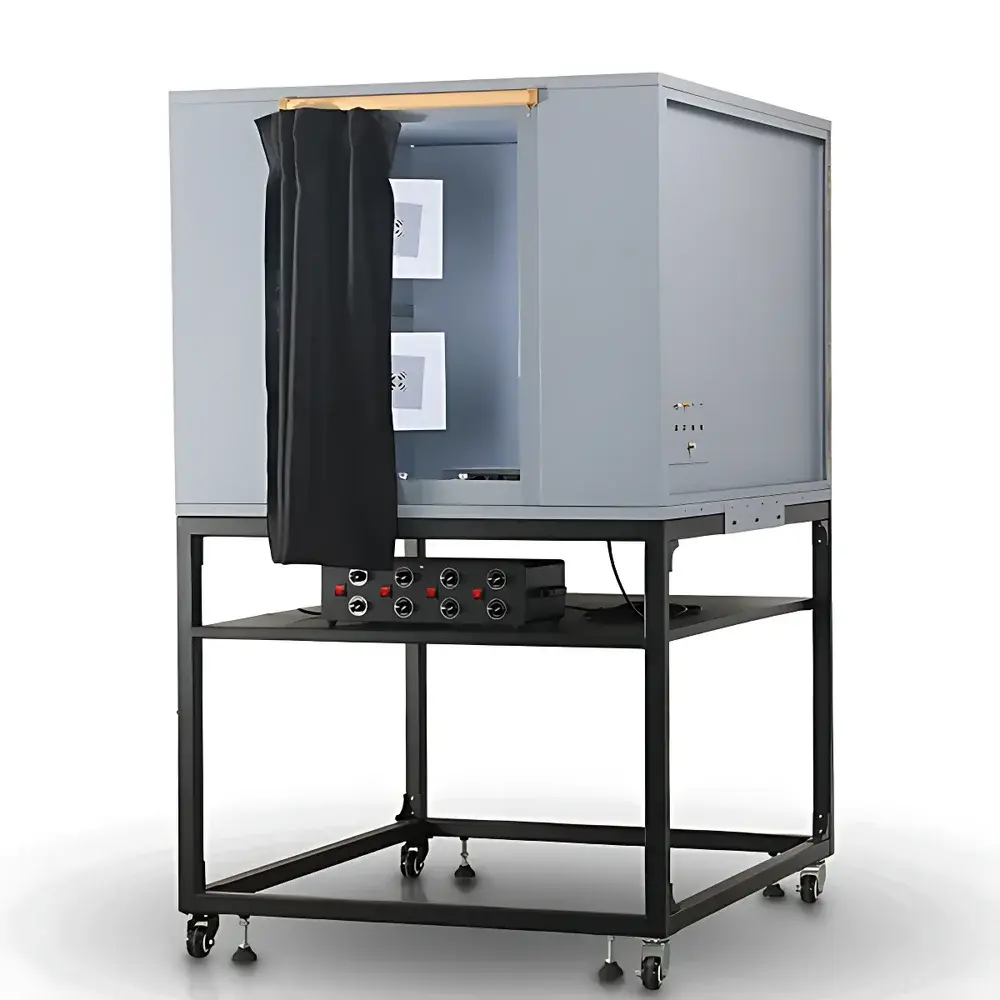
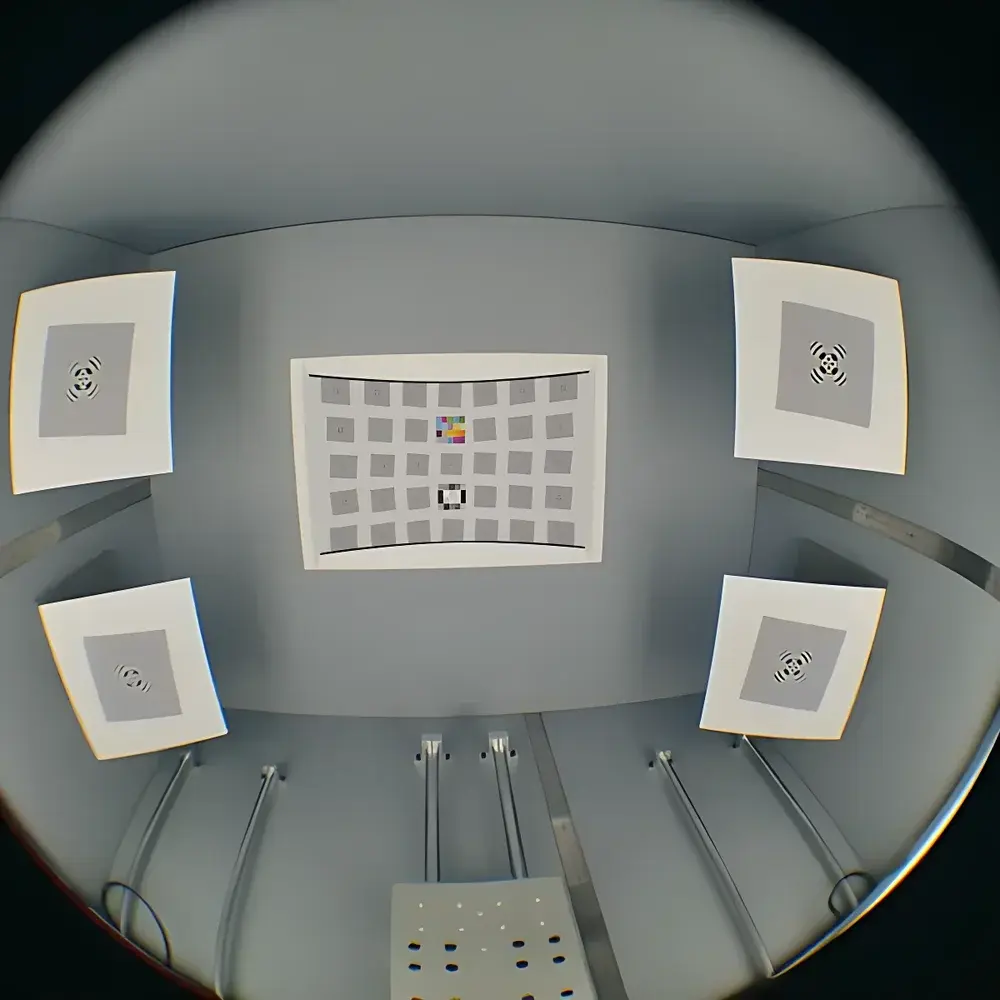
3nh VC-118-S Camera Test Color Matching Light Cabinet
| Brand | 3nh |
|---|---|
| Origin | Guangdong, China |
| Manufacturer Type | OEM/ODM Manufacturer |
| Country of Origin | China |
| Model | VC-118-S |
| Price | USD 3,950 (FOB Shenzhen) |
| Dimensions (L×W×H) | 1150 × 1045 × 1728 mm |
| Internal Chamber Dimensions | 1106 × 1001 × 800 mm |
| Viewing Window | 447 × 700 mm |
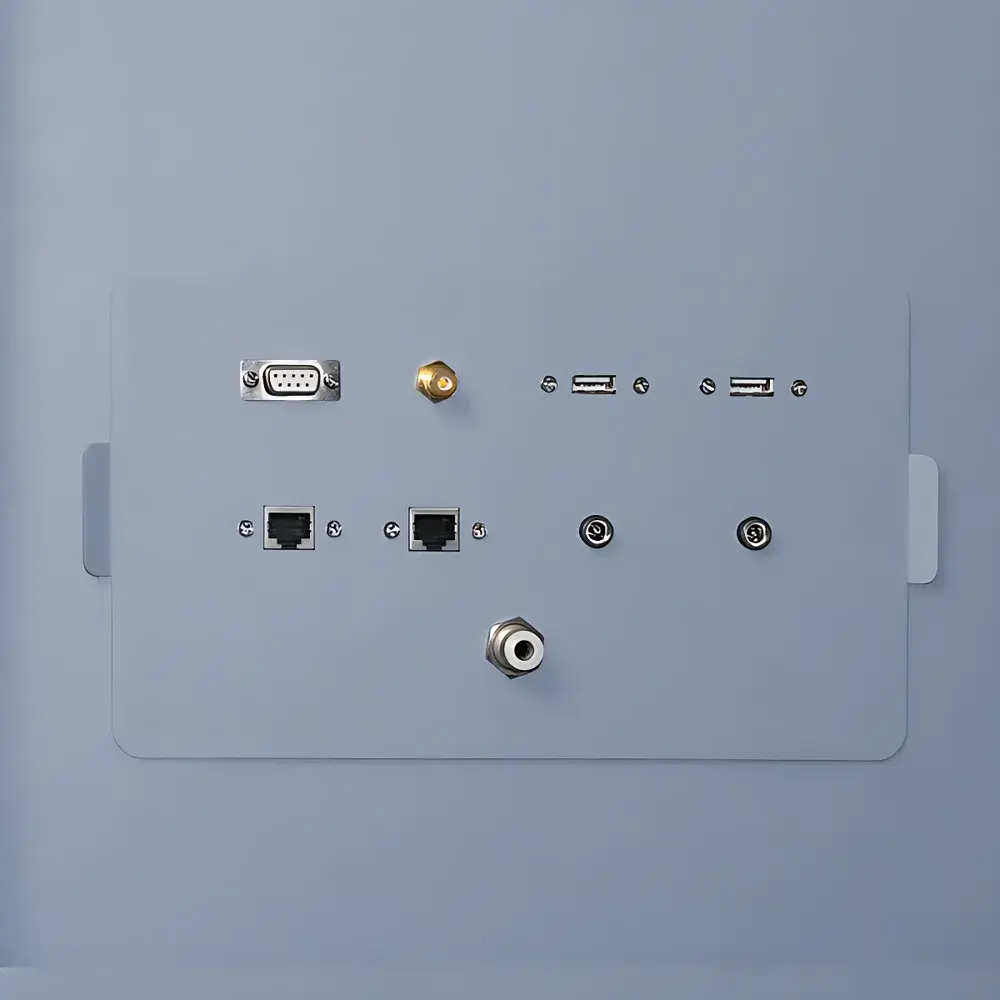
| Interface Panel | 250 × 150 mm (equipped with 1× RS232, 1× AV, 2× USB, 2× Ethernet, 2× DC, 1× PM06 pneumatic quick-connect) |
| Light Control Box | 508 × 248 × 131 mm |
| Operating Environment | 0–40 °C, ≤85% RH (non-condensing) |
| Input Voltage | AC 220 V, 50/60 Hz |
| Max Power Consumption | 160 W |
| Net Weight | 130 kg |
| Standard LED Source | 6500 K ±200 K, CRI >94 |
| Optional LED Sources | 2800 K–7500 K (CRI >91–95) |
| Illuminance Uniformity Adjustment | Dual-axis translational + rotational positioning of LED panels via locking linear rails and knurled thumb screws |
Overview
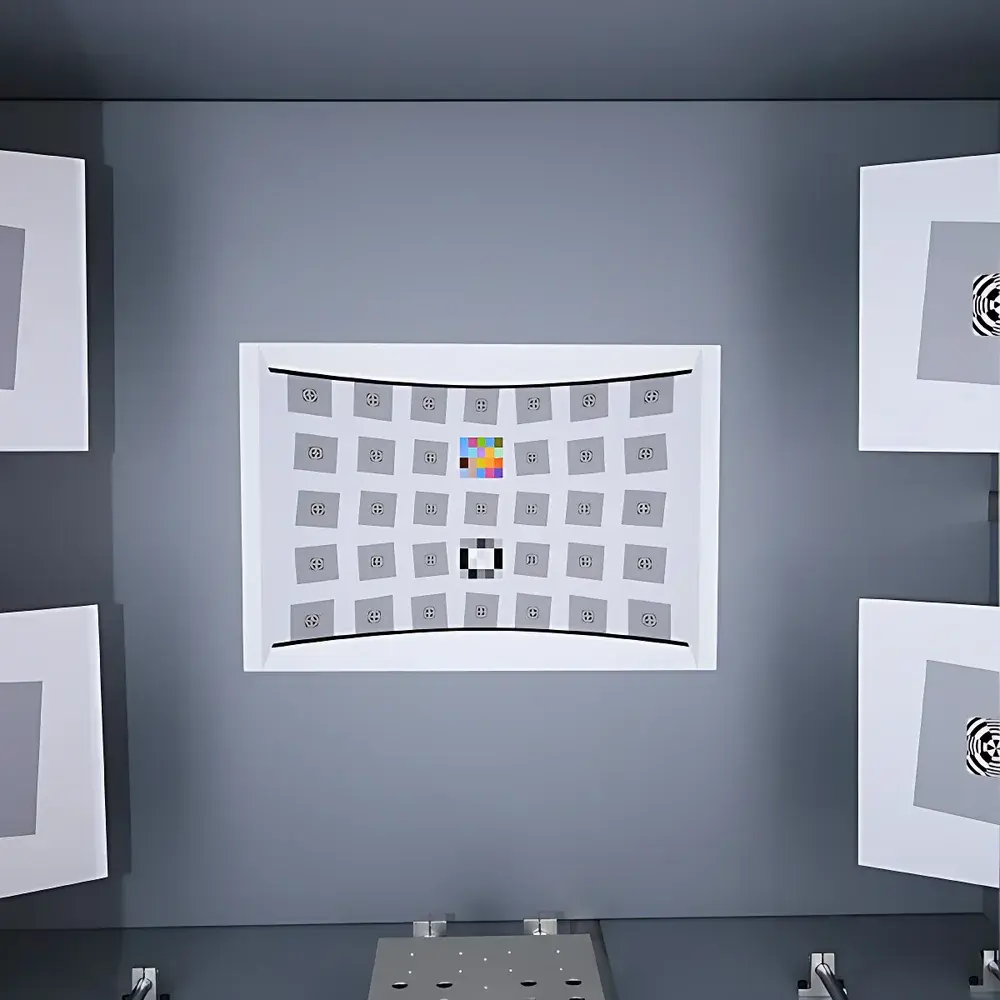
The 3nh VC-118-S Camera Test Color Matching Light Cabinet is an engineered optical test environment specifically designed for objective evaluation and calibration of imaging systems—particularly industrial, automotive, and mobile camera modules—under controlled, spectrally stable illumination. Unlike general-purpose light booths, the VC-118-S integrates mechanical and photometric precision to support standardized photometric testing protocols aligned with ISO 12233:2017 (Electronic still-picture imaging — Resolution and spatial frequency response), IEC 62676-5 (Video surveillance systems — Part 5: Camera performance testing), and IEEE P2020 (Standard for Automotive Image Quality Metrics). Its core function is to provide a repeatable, low-stray-light, high-uniformity illumination field across variable field-of-view (FoV) configurations—from narrow-angle telephoto lenses to ultra-wide 180° fisheye optics—enabling consistent MTF, distortion, chromatic aberration, and color fidelity assessment using magnetically mounted test charts.
Key Features
- Modular dual-LED illumination system with independently adjustable left/right panels, each equipped with high-CRI (>94 at 6500 K), flicker-free, thermally stabilized LEDs calibrated to ±200 K color temperature tolerance.
- Motorized and manually lockable translation stage for camera positioning along the optical axis (Z-direction), enabling precise working distance adjustment from 100 mm to 800 mm—critical for FoV-dependent resolution validation.
- Bi-directional LED panel alignment: Each panel mounts on dual-locking linear rails (X-axis translation) and features knurled thumb-screw-actuated angular rotation (±15°), allowing empirical optimization of irradiance uniformity across the chart surface per ASTM E308-22 Annex A3 guidelines.
- Neutral gray matte-finish chamber interior (L* ≈ 50, a* ≈ 0, b* ≈ 0) with black velvet-lined viewing curtain to eliminate ambient light intrusion and suppress specular reflections during image capture.
- Dedicated interface panel (250 × 150 mm) pre-installed with industry-standard connectors: 2× Gigabit Ethernet ports for GenICam-compliant camera streaming, 2× USB 3.0 for firmware updates or auxiliary sensor integration, 2× regulated DC outputs (12 V / 2 A), 1× RS232 for legacy device synchronization, and 1× PM06 pneumatic quick-coupler for automated chart-handling fixtures.
- Compliance-ready design: Meets CE marking requirements for EMC (EN 61326-1) and safety (EN 61010-1); power supply conforms to IEC 61000-3-2 Class A harmonic limits.
Sample Compatibility & Compliance
The VC-118-S accommodates ISO 12233:2017 standard test charts at 2× magnification (712 × 400 mm), as well as custom-designed wide-angle and fisheye variants—each featuring permanent magnetic backing for rapid repositioning on the non-ferrous aluminum backplate. Chart placement repeatability is maintained within ±0.5 mm across ≥100 cycles due to the chamber’s rigid welded steel frame and vibration-damped leveling feet. All supplied LED modules are certified per IEC 62471 (Photobiological Safety of Lamps) and comply with RoHS 3 and REACH SVHC directives. For regulated environments, optional audit-trail logging (via external PC) supports GLP/GMP traceability when paired with validated software workflows.
Software & Data Management
While the VC-118-S operates as a hardware platform without embedded firmware, its electrical interface architecture enables seamless integration with third-party vision testing suites—including Teledyne DALSA Sapera LT, JAI SDK, and OpenCV-based calibration pipelines. The dual Ethernet ports facilitate synchronized timestamped image acquisition from stereo or multi-camera rigs; RS232 allows TTL-level triggering of chart illumination sequences in compliance with ISO/IEC 17025 clause 7.7 (equipment control). Optional 3nh-provided LabVIEW drivers (NI-VISA compatible) support programmable dimming profiles and interlock status monitoring—fully auditable under FDA 21 CFR Part 11 when deployed with electronic signature-capable host systems.
Applications
- Automotive ADAS camera validation (AEB, LDW, surround-view) per ISO 16505 and SAE J2803 test conditions.
- Smartphone and tablet front/rear camera module production line QA, including dynamic range (EMVA 1288), SNR, and color accuracy (ΔE00 against CIE D65 reference).
- Medical endoscope and surgical camera certification requiring stable CCT and spectral constancy over ≥8-hour continuous operation.
- R&D labs performing lens distortion mapping, vignetting analysis, and spectral sensitivity profiling using monochromatic or multispectral LED arrays (optional add-on).
- AR/VR headset passthrough camera characterization under mixed-illuminant scenarios (e.g., D65 + TL84 co-illumination via external source coupling).
FAQ
What standards does the VC-118-S support for camera resolution testing?
It is fully compatible with ISO 12233:2017 Annex D (slanted-edge MTF method) and supports chart sizes required for both 1× and 2× magnification configurations.
Can the LED color temperature be changed without hardware modification?
Yes—users may order factory-configured LED modules spanning 2800 K to 7500 K (all with CRI >91); hot-swapping requires only mechanical replacement and recalibration of irradiance uniformity.
Is remote control of brightness and power sequencing possible?
Via optional 3nh-supplied API libraries (C/C++, Python), all four LED channels support analog voltage input (0–10 V) or digital PWM control through the interface panel’s auxiliary I/O header.
Does the cabinet meet cleanroom compatibility requirements?
The chamber’s powder-coated steel construction and absence of outgassing plastics (per ASTM E595) allow deployment in ISO Class 7 cleanrooms; optional HEPA-filtered air purge kits are available.
What maintenance intervals are recommended for long-term photometric stability?
Annual recalibration of illuminance uniformity (using NIST-traceable photometer) and LED spectral output (via portable spectroradiometer) is advised; no consumables require replacement within first 20,000 operating hours.




