
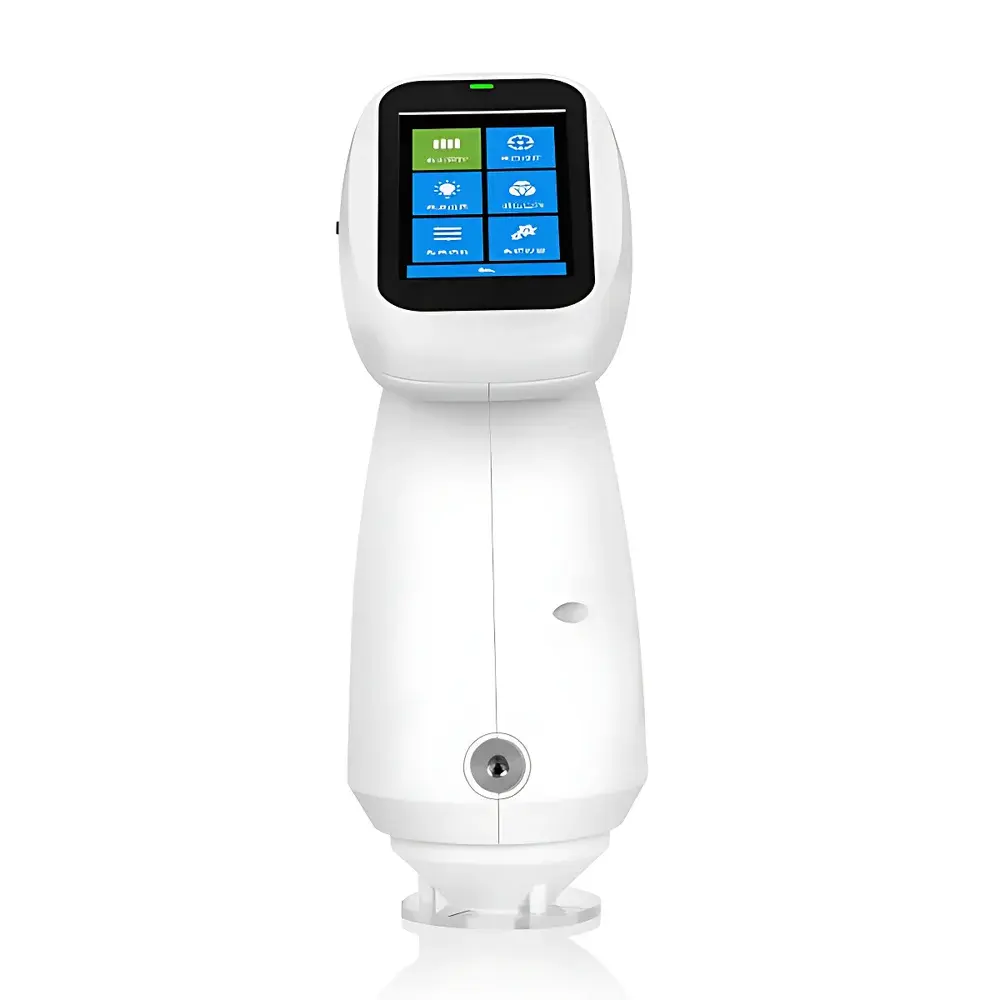
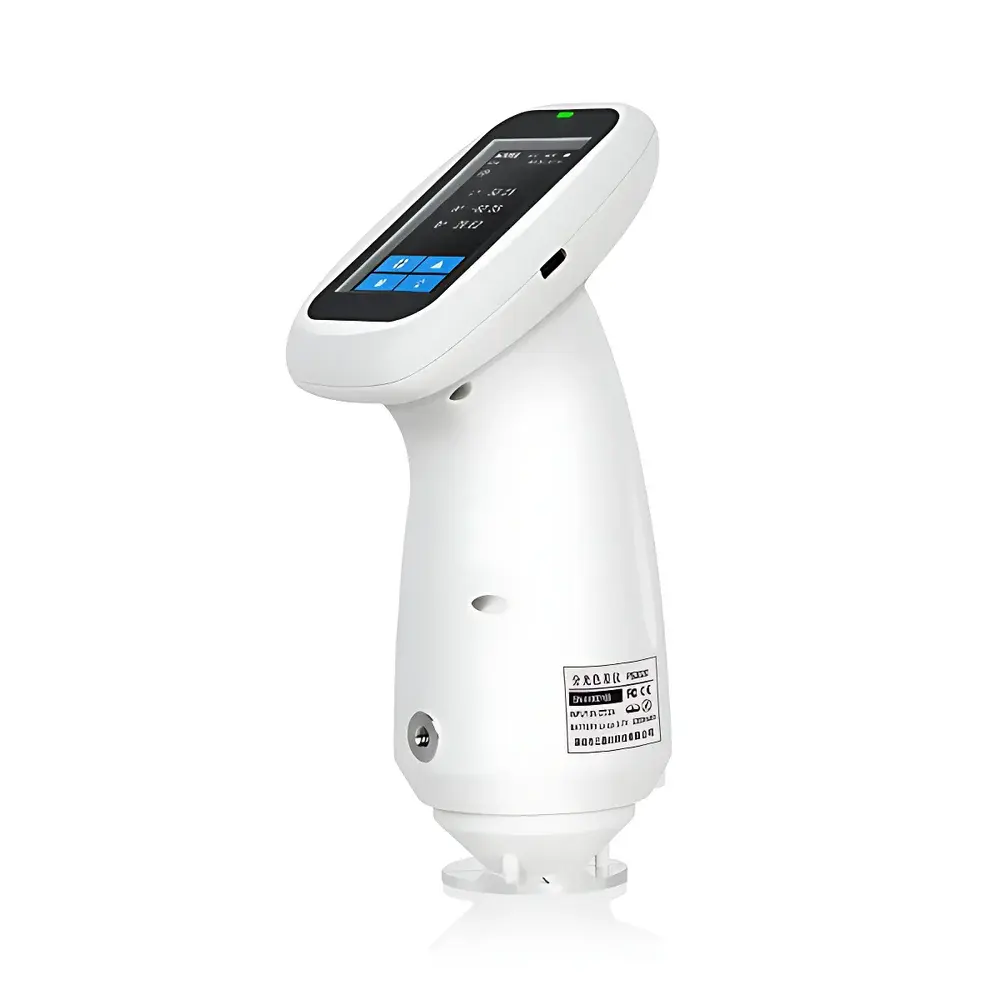
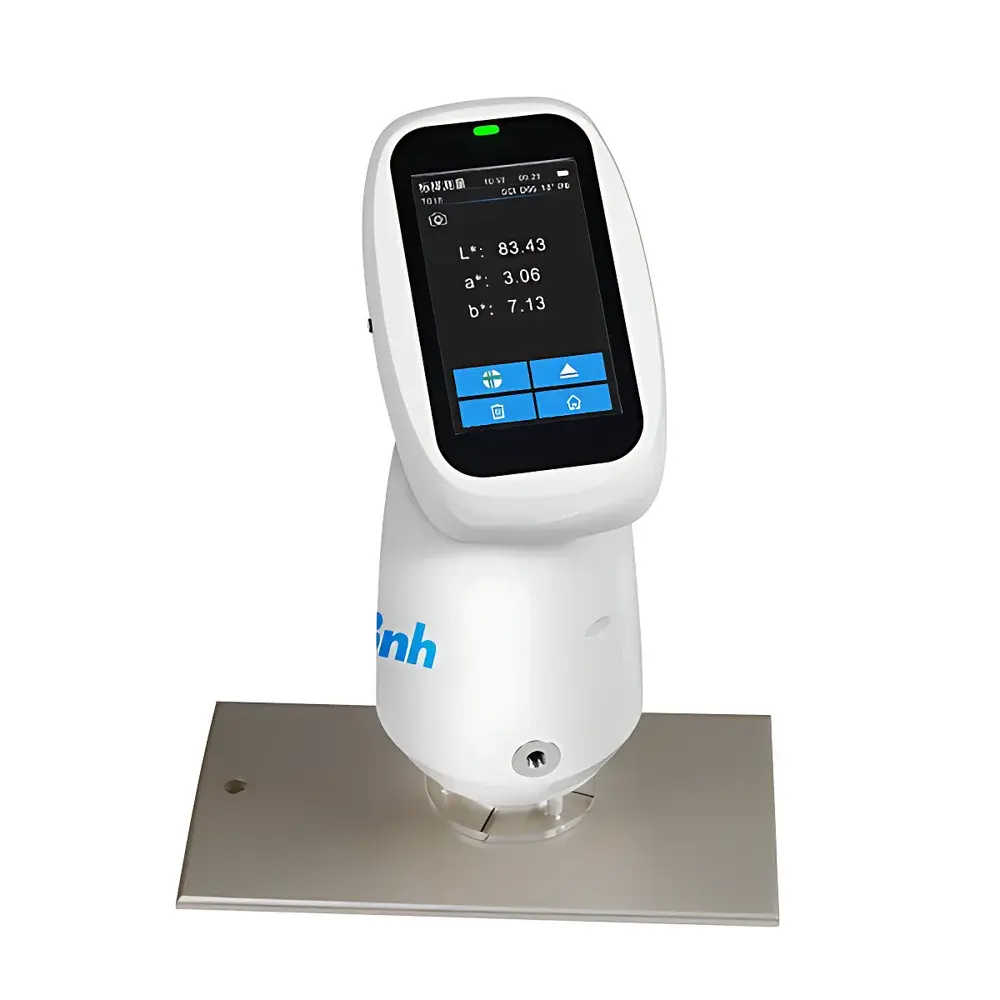
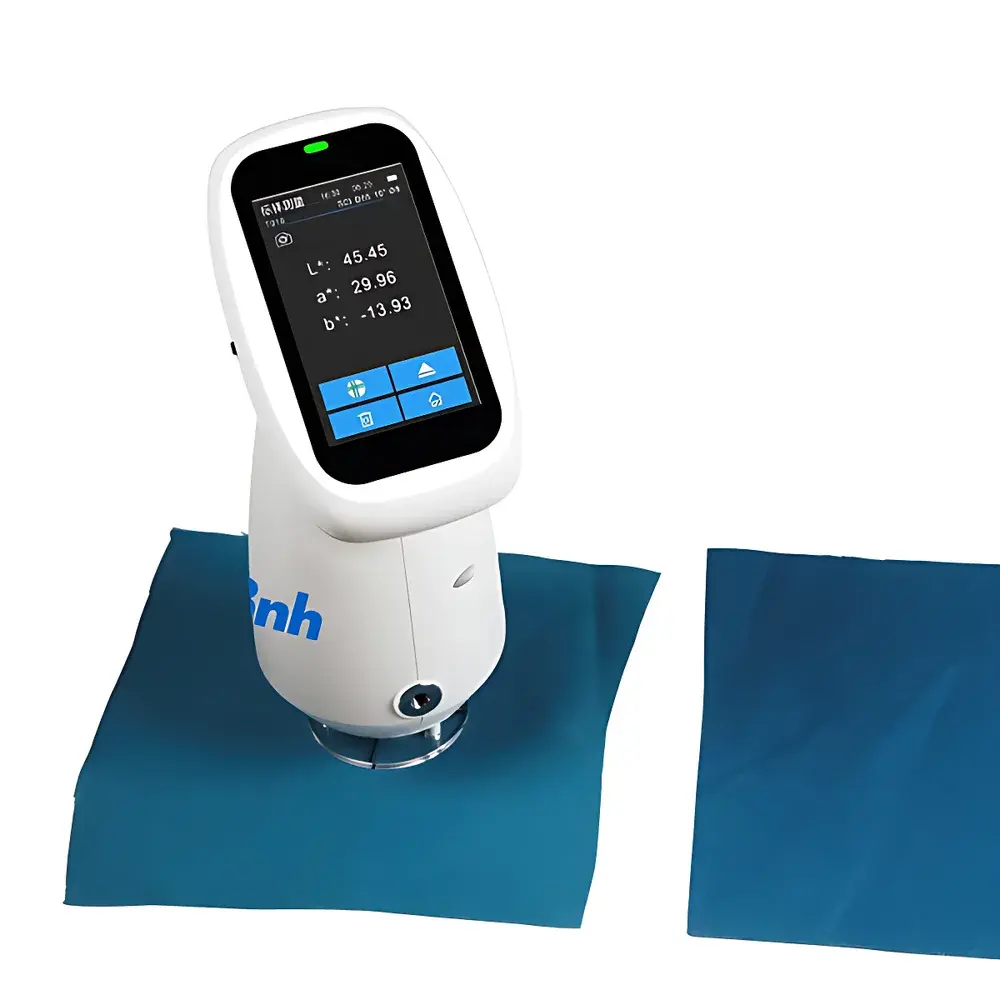
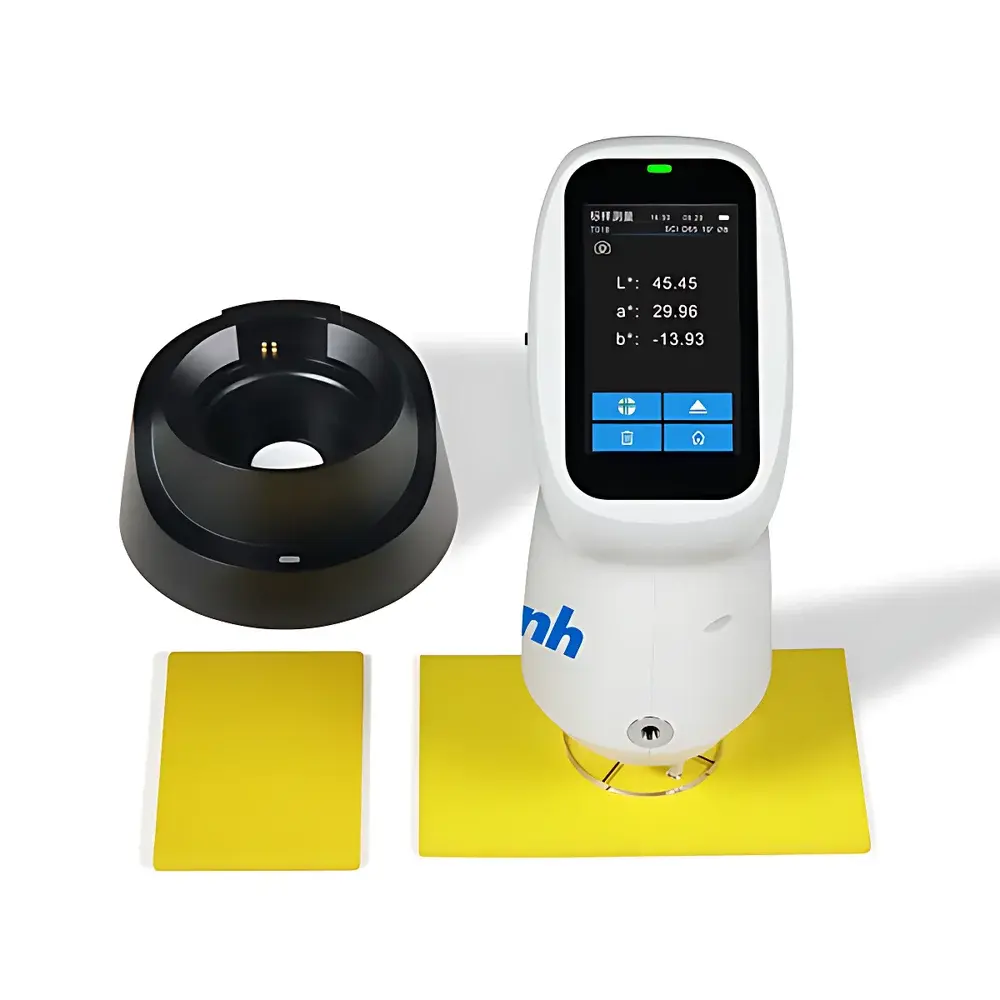
3nh PS2010 Portable Spectrophotometric Colorimeter
| Brand | 3nh |
|---|---|
| Origin | Guangdong, China |
| Manufacturer Type | Direct Manufacturer |
| Product Category | Domestic |
| Model | PS2010 |
| Instrument Type | Portable |
| Optical Geometry | d/8° integrating sphere |
| Light Source | Full-spectrum LED array |
| Spectral Range | 400–700 nm |
| Repeatability | ΔE*ab ≤ 0.04 (SD, after warm-up and white calibration, 30 measurements at 5 s intervals) |
Overview
The 3nh PS2010 Portable Spectrophotometric Colorimeter is an engineered solution for high-precision, field-deployable color measurement in industrial quality control environments. Based on the CIE-compliant d/8° geometry with integrated sphere optics, the PS2010 implements simultaneous SCI (Specular Component Included) and SCE (Specular Component Excluded) measurement modes—enabling accurate characterization of both diffuse and specular reflectance components across diverse surface finishes. Its core optical architecture leverages a dual-channel CMOS spectrometer coupled with a full-spectrum LED illumination system spanning 400–700 nm, ensuring uniform spectral power distribution without gaps or intensity spikes commonly observed in narrow-band white LEDs. This spectral fidelity supports reliable quantification of fluorescent materials, metamerism-sensitive samples, and pigmented substrates under standardized illuminants. Designed for traceability to national metrological standards, each unit undergoes individual calibration against NIM-traceable reference tiles and ships with a certified metrological verification report compliant with JJG 595–2019 (Chinese National Verification Regulation for Colorimeters) and aligned with ISO/IEC 17025 requirements for measurement uncertainty reporting.
Key Features
- Simultaneous SCI/SCE acquisition in a single measurement cycle, conforming to CIE No. 15, ISO 7724-1, ASTM E1164, DIN 5033-7, and GB/T 3978–2008
- Dual-path CMOS spectral sensor delivering high signal-to-noise ratio and thermal stability across ambient operating ranges (0–40 °C)
- Full-spectrum LED source with spectrally balanced output from 400–700 nm; eliminates measurement bias induced by spectral discontinuities in conventional white LEDs
- Φ8 mm fixed aperture optimized for flat, rigid, and moderately textured surfaces (e.g., plastic housings, painted panels, ceramic glazes, textile swatches)
- Integrated auto-calibration cradle enabling contact-based, motor-assisted white tile verification using a ≥95% reflectance standard tile with spatial uniformity <0.2% RSD
- Capacitive 2.8-inch TFT display with intuitive touch interface supporting real-time spectral curve visualization, ΔE vector mapping, and pass/fail threshold overlays
- Built-in rechargeable Li-ion battery (3.7 V, 5000 mAh) rated for >8000 measurements per charge and >120,000 total actuations over instrument lifetime
Sample Compatibility & Compliance
The PS2010 is validated for use across regulated and non-regulated production environments involving plastics, coatings, textiles, printing inks, ceramics, and cosmetic packaging. Its d/8° geometry meets ASTM D2244 (color difference evaluation), ISO 12647-2 (process control in offset lithography), AATCC Evaluation Procedure 1 (color measurement), and GB/T 27922–2011 (national standard for service industry color management). The instrument supports compliance workflows requiring audit trails: raw spectral data, calibration logs, operator ID tags, and timestamped measurement records are exportable via USB and fully compatible with GLP/GMP documentation systems. While not FDA 21 CFR Part 11–certified out-of-the-box, its data structure permits integration into validated LIMS platforms through SQCX software’s secure CSV/Excel export protocols.
Software & Data Management
The bundled SQCX Quality Control Software (Windows-compatible, free download from 3nh official repository) provides centralized color database management, statistical process control (SPC) charting, tolerance zone definition (ellipsoidal or rectangular in CIELAB/CIEDE2000), and automated report generation (PDF/Excel). It supports multi-instrument synchronization, historical deviation trending, and cross-location color matching using BCRA Series II reference tiles. Raw spectral reflectance curves (10 nm resolution), tristimulus values (XYZ), chromaticity coordinates (x,y; u’,v’), and derived metrics—including Whiteness Index (ASTM E313, CIE Ganz), Yellowness Index (ASTM D1925), metamerism index (Mt), and Munsell notation (via mobile app extension)—are stored with metadata (observer angle: 2°/10°, illuminant, geometry mode). All exported files retain embedded calibration timestamps and instrument serial identifiers for full data lineage.
Applications
- Plastics manufacturing: batch-to-batch color consistency validation for injection-molded housings and extruded profiles
- Paint & coating QC: spectral match verification against master standards prior to line release
- Textile dyeing: shade sorting and fastness assessment using ΔE*00 and CMC(2:1) tolerances per AATCC TM173
- Printing & packaging: spot color verification on flexo/gravure substrates under D50 and F11 (TL84) illuminants
- Ceramic tile production: glaze color uniformity monitoring across kiln batches using DIN Lab99 space
- Electronics assembly: housing color conformity testing under D65 and A illuminants per IEC 62368-1 Annex H
FAQ
Does the PS2010 support measurement of curved or irregular surfaces?
The Φ8 mm aperture requires stable, planar contact; concave/convex surfaces may yield inconsistent results due to incomplete sphere illumination. For non-flat geometries, optional accessories (e.g., powder test kit, flexible positioning arm) are recommended.
Is spectral data export available in vendor-neutral formats?
Yes—raw reflectance spectra (400–700 nm @ 10 nm intervals), XYZ, and LAB values export as CSV or TXT files with SI-compliant units and CIE-standard observer/illuminant metadata.
What is the instrument’s inter-instrument agreement specification?
Maximum inter-unit variation is ΔE*ab ≤ 0.4 when measuring the BCRA Series II 12-tile set under MAV/SCI conditions, consistent with ISO 13655:2017 requirements for portable spectrophotometers.
Can the device be used in outdoor daylight environments?
Ambient light rejection is achieved via synchronized pulsed LED excitation and time-gated detection; however, direct sunlight exposure on the aperture during measurement is discouraged to prevent stray-light-induced errors.
How often must the white calibration tile be replaced?
The supplied ≥95% reflectance tile is rated for 2 years under typical factory use (≤10 calibrations/day); annual re-certification against NIM traceable standards is advised for ISO 9001–certified labs.



