
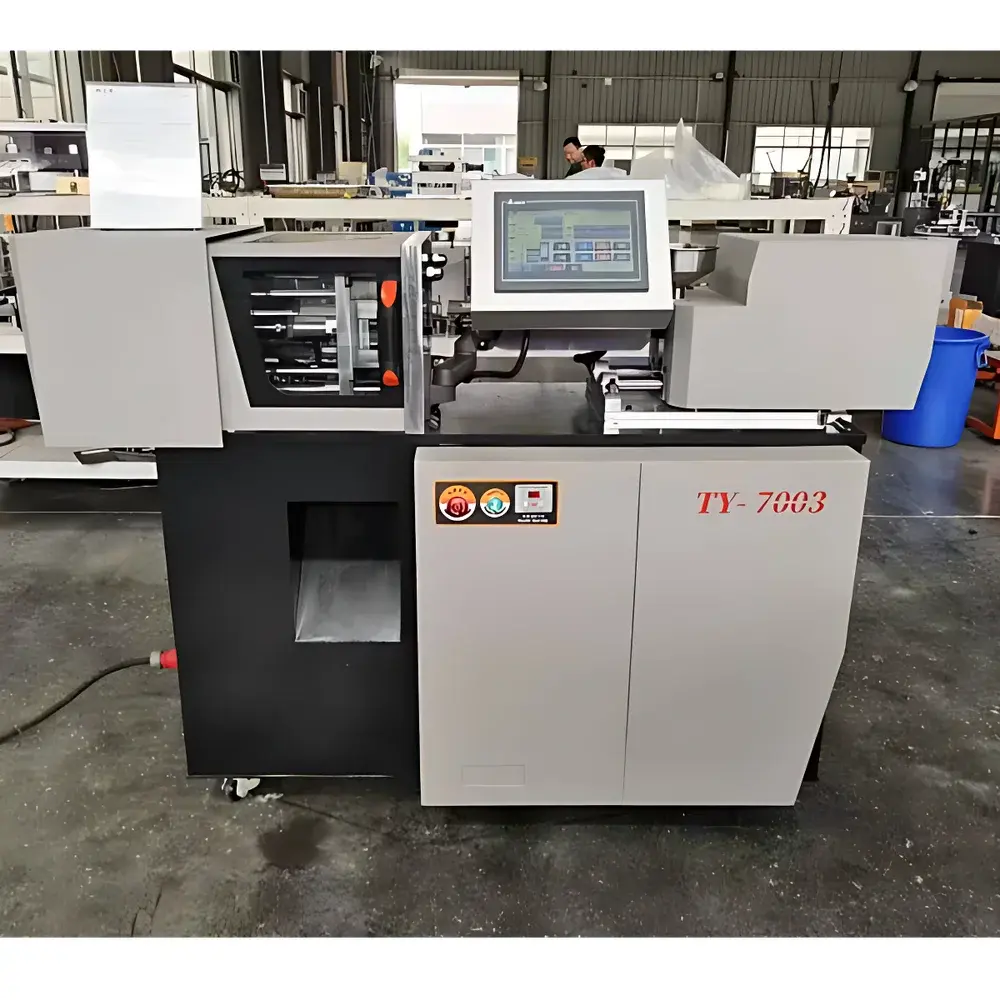
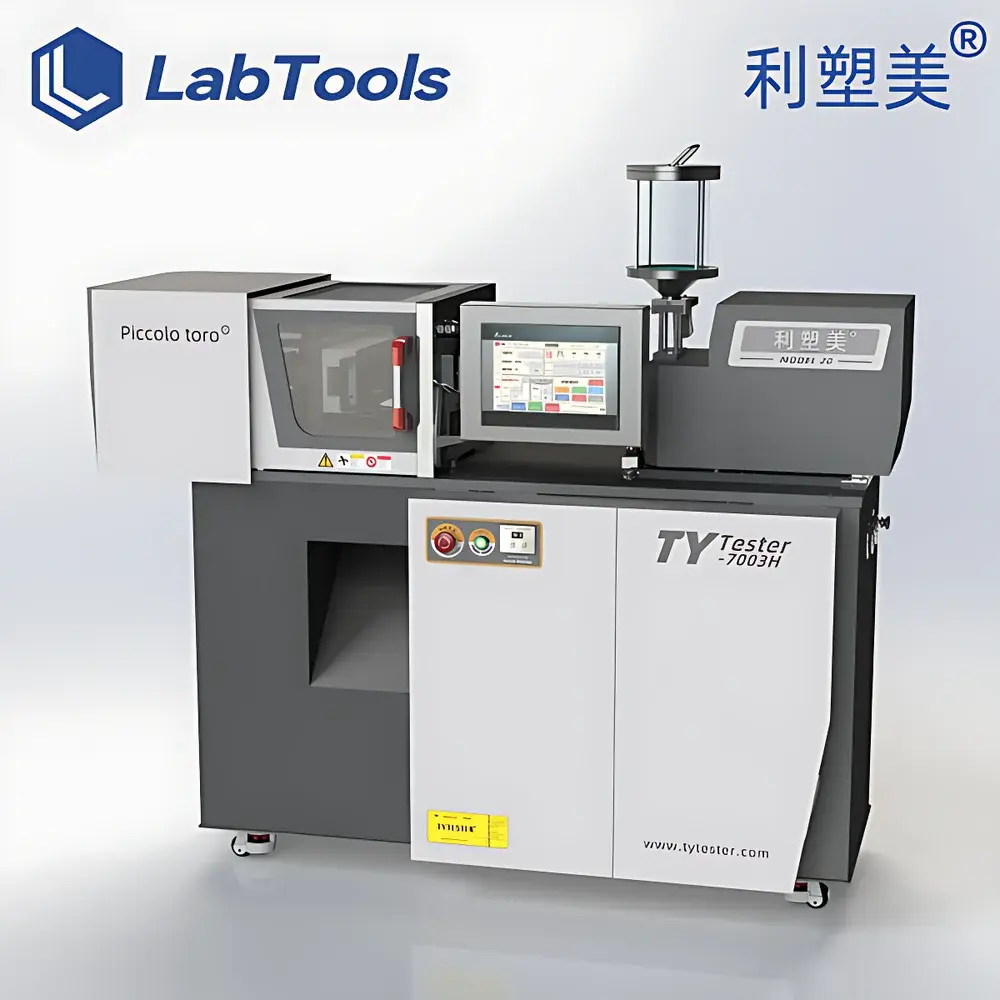
TianYuan TY-7003H Hydraulic Precision Micro Injection Molding Machine
| Brand | TianYuan |
|---|---|
| Origin | Jiangsu, China |
| Manufacturer Type | Direct Manufacturer |
| Country of Origin | China |
| Model | TY-7003H |
| Screw Diameter | 20 mm |
| Length-to-Diameter Ratio | 20:1 |
| Clamping Force | 150 kN (15 T) |
| Maximum Shot Volume | 31 cm³ |
| Overall Dimensions | 1650 × 600 × 1260 mm |
| Injection Rate | 0.05–5.3 cm³/s (adjustable) |
| Three-Zone Barrel Temperature Range | Ambient to 360 °C |
| Temperature Control Accuracy | ±0.5 °C (steady-state) |
| Injection Pressure Range | 0–137 MPa |
| Mold Opening Stroke | 120 mm |
| Mold Size Capacity | 360 × 90 × 72 mm (L×W×H) |
| Ejector Stroke | 0–30 mm |
| Power Supply | 3-phase 5-wire AC 380 V ±10 %, 50/60 Hz, 5.5 kW |
| Material Compatibility | PP, PE, PA, ABS, TPU, PLA, and other thermoplastics |
Overview
The TianYuan TY-7003H Hydraulic Precision Micro Injection Molding Machine is an engineered platform for controlled, repeatable micro-scale polymer processing in research, development, and prototyping environments. Designed as a laboratory-grade downscaled counterpart to industrial injection molding systems, it employs a single-screw plasticization mechanism coupled with hydraulic actuation to deliver precise control over melt homogeneity, injection timing, pressure profile, and thermal history—critical parameters governing part morphology, dimensional stability, and material property fidelity. Unlike plunger-type micro-injectors, the TY-7003H’s 20:1 L/D screw configuration ensures superior shear-induced melting and mixing, enabling consistent processing of engineering thermoplastics—including hygroscopic and thermally sensitive grades such as PA, TPU, and PLA—under tightly regulated thermal conditions (±0.5 °C stability across three independently controlled barrel zones). Its compact footprint (1650 × 600 × 1260 mm) and mobile-ready frame support integration into university teaching labs, corporate R&D cleanrooms, and ISO-compliant pilot facilities where space, safety, and traceability are prioritized.
Key Features
- Hydraulic-driven clamping and injection system delivering stable 150 kN clamping force and up to 137 MPa injection pressure, with real-time pressure feedback for process validation.
- 20 mm diameter precision-ground screw with optimized flight geometry and 20:1 length-to-diameter ratio for uniform melt temperature distribution and minimal residence-time variation.
- Three-zone electrically heated barrel (ambient to 360 °C), each zone independently PID-controlled with ±0.5 °C steady-state accuracy—compliant with ASTM D3641 and ISO 294-4 thermal calibration requirements.
- PLC-based human-machine interface (HMI) with color touchscreen, supporting multi-segment injection profiling (up to 3 stages), position/pressure/time-triggered transitions, and programmable hold times.
- Dual mechanical and electronic safety interlocks—including mold guard sensors, emergency stop circuitry, and hydraulic pressure cut-off—meeting CE machinery directive (2006/42/EC) and local occupational health standards.
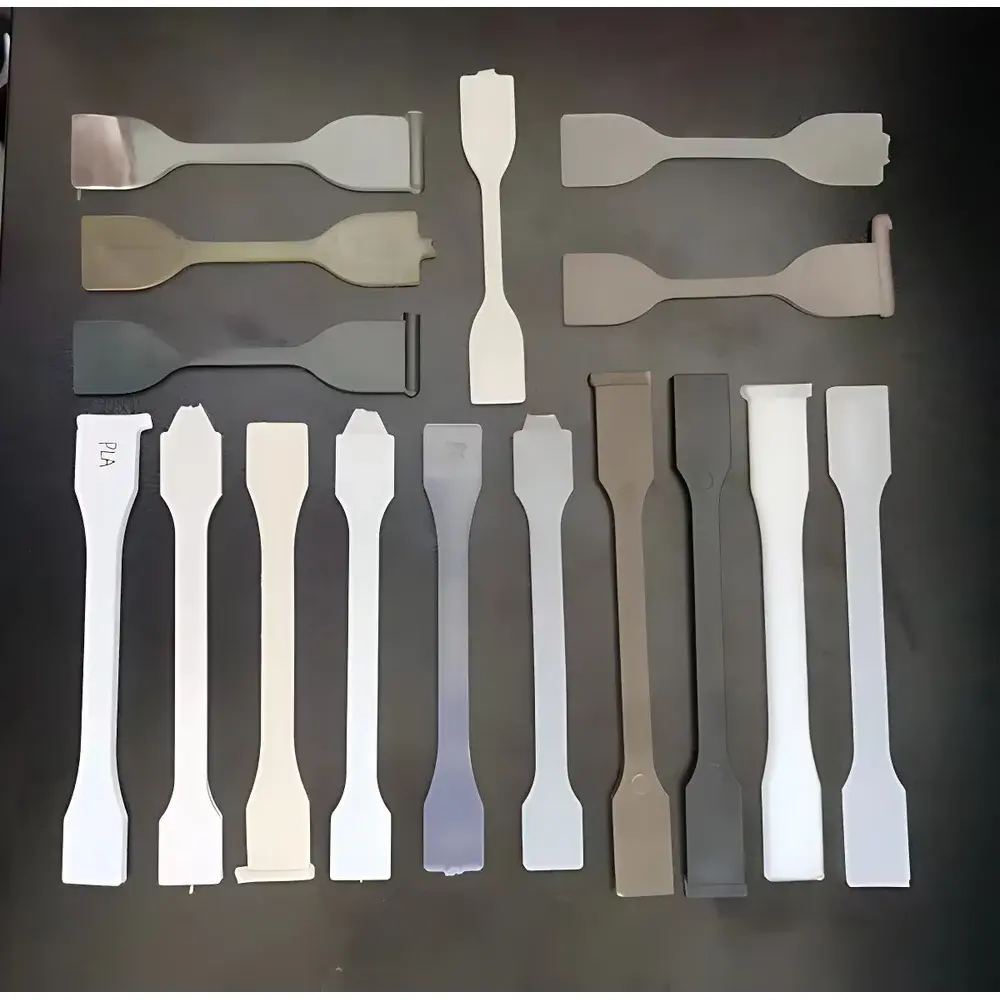
- Modular mold mounting system accommodating standard 360 × 90 × 72 mm cavity frames; compatible with ASTM D638, D256, D1003, and IEC 60243-1 test specimen geometries.
Sample Compatibility & Compliance
The TY-7003H supports reproducible fabrication of micro-specimens used in standardized mechanical, optical, and electrical characterization—including tensile bars (ISO 527-2), Izod/Charpy impact specimens (ISO 180, ASTM D256), dielectric test plaques (IEC 60243-1), and optical transmission samples (ASTM D1003). It accommodates common thermoplastic resins without degradation when operated within validated thermal windows: PP (190–230 °C), ABS (210–250 °C), PA6 (240–270 °C), TPU (180–220 °C), and PLA (170–200 °C). All thermal and pressure setpoints are logged with timestamped audit trails, supporting GLP-compliant documentation per FDA 21 CFR Part 11 when integrated with validated data acquisition software. The machine’s design excludes volatile organic emissions during operation and operates below 65 dB(A), satisfying ISO 14001 noise and environmental performance benchmarks.
Software & Data Management
Control firmware includes built-in recipe storage (≥100 profiles), cycle-by-cycle parameter logging (injection speed, peak pressure, melt temperature, clamp force), and CSV export via USB interface. Optional Ethernet connectivity enables integration with LabVIEW™ or Python-based automation frameworks for DOE-driven experimentation. Process data files include metadata tags for operator ID, material lot number, mold ID, and ambient conditions—facilitating traceability under ISO/IEC 17025 and internal QA/QC protocols. All firmware updates are digitally signed and version-controlled; system logs retain full operational history for ≥30 days, supporting root-cause analysis during nonconformance investigations.
Applications
- Academic polymer science instruction: hands-on demonstration of viscosity-temperature relationships, crystallinity effects on shrinkage, and gate freeze-off dynamics.
- Material formulation screening: rapid evaluation of filler dispersion, plasticizer migration, and thermal stabilizer efficacy using sub-gram resin quantities.
- Micro-component prototyping: production of functional parts ≤31 cm³—e.g., micro-gears, lens mounts, sensor housings, and medical device connectors—with tolerance repeatability ≤±0.02 mm.
- Regulatory pre-validation: generation of representative samples for biocompatibility testing (ISO 10993), flammability assessment (UL 94), and thermal deformation analysis (ISO 75).
- Process window mapping: determination of optimal melt temperature, injection speed, and holding pressure combinations to minimize warpage, weld line visibility, and void formation.
FAQ
What safety certifications does the TY-7003H comply with?
The unit conforms to CE Machinery Directive 2006/42/EC, including risk assessment per EN ISO 12100 and safeguarding per EN ISO 13857. Electrical design meets IEC 60204-1. Full compliance documentation is provided upon request.
Can the machine be used for filled or abrasive polymers?
Yes—when equipped with hardened nitrided screws and barrels (optional upgrade), it supports glass-, mineral-, or metal-filled compounds. Unmodified units are recommended for unfilled or low-abrasion thermoplastics only.
Is mold heating available as standard or optional?
Mold temperature control (ambient to 150 °C) is available as a factory-installed option with integrated thermocouple feedback and PID regulation.
Does the system support automated data export for LIMS integration?
Raw cycle data exports to CSV via USB; API-level integration with LIMS or MES platforms requires optional OPC UA gateway module (part no. TY-OPC-UA-KIT).
What maintenance intervals are recommended for hydraulic components?
Hydraulic oil replacement every 2,000 operating hours or annually (whichever occurs first); filter elements inspected quarterly. Maintenance log templates are included in the user manual.





