
Lei-Tech LK-AISOFT AI-Powered Grain Size Analysis Software
| Brand | Lei-Tech |
|---|---|
| Origin | Tianjin, China |
| Manufacturer Type | Direct Manufacturer |
| Product Origin | Domestic (China) |
| Model | LK-AISOFT |
| Price | USD 14,000 (approx.) |
Overview
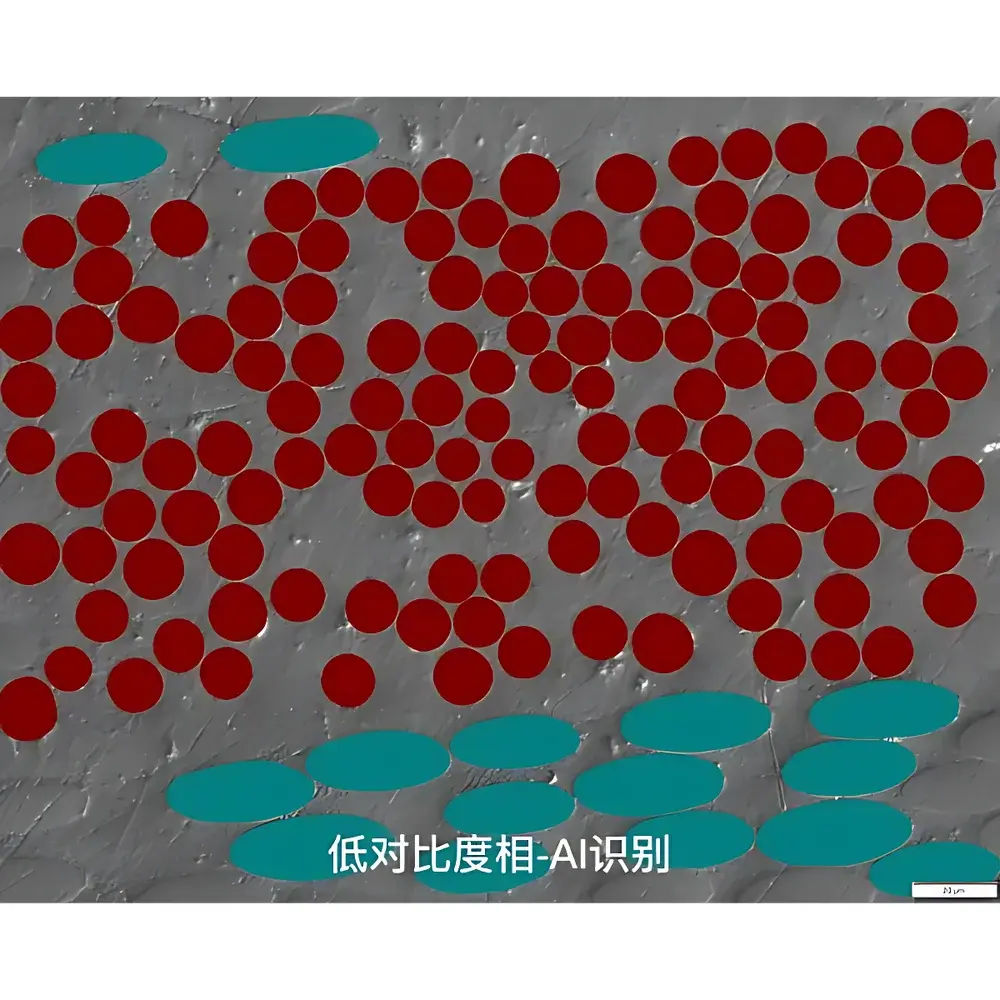
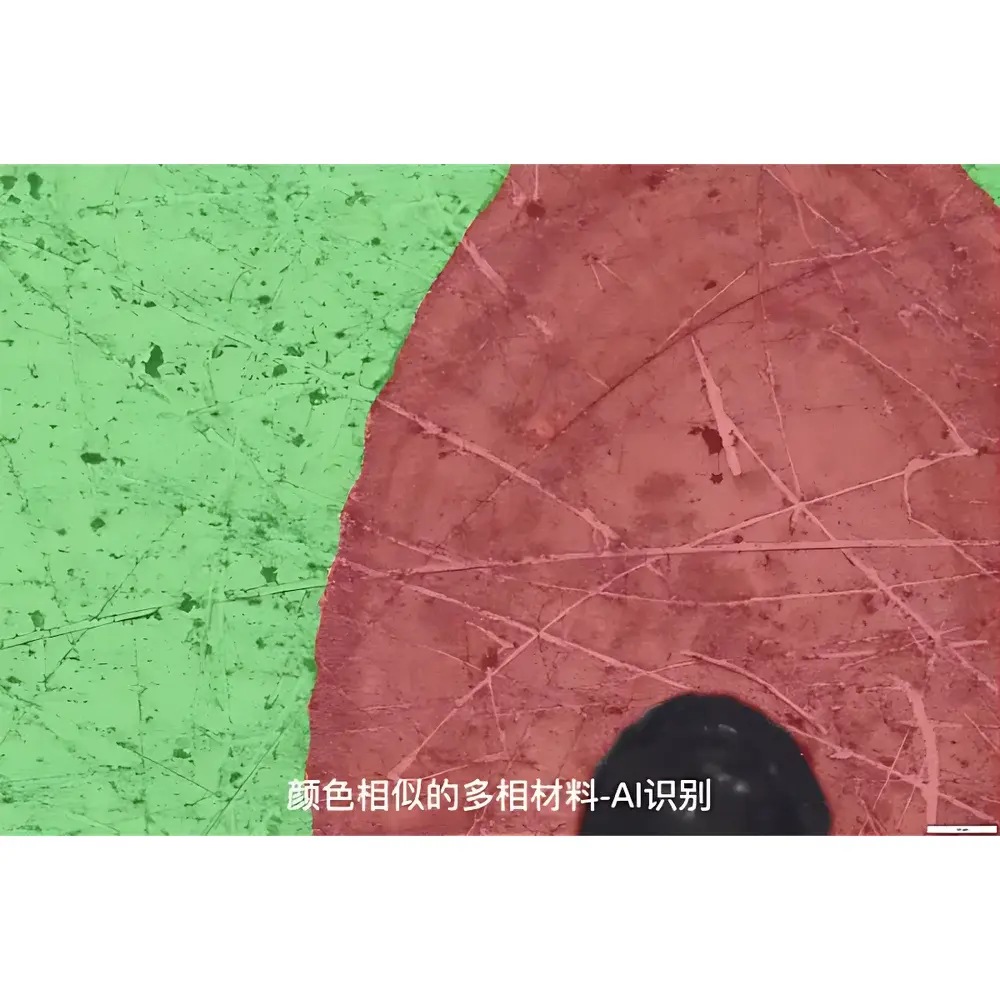
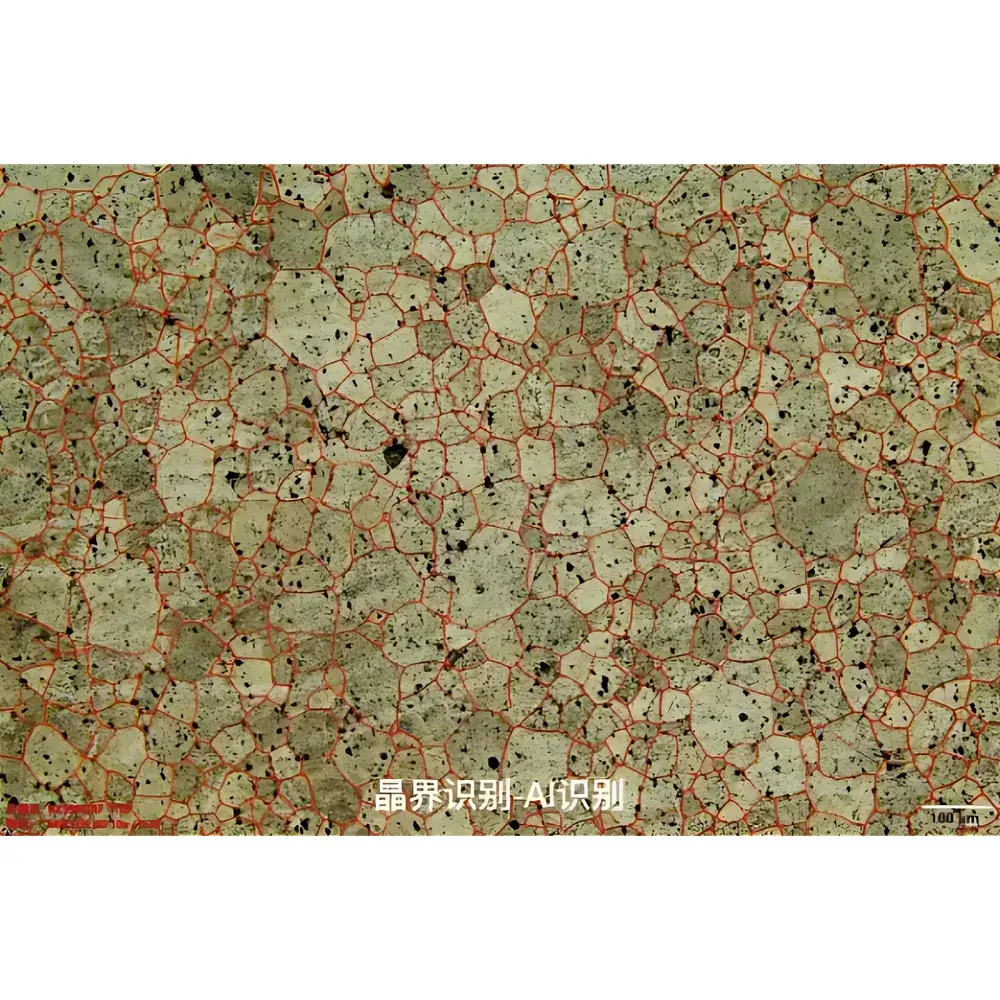
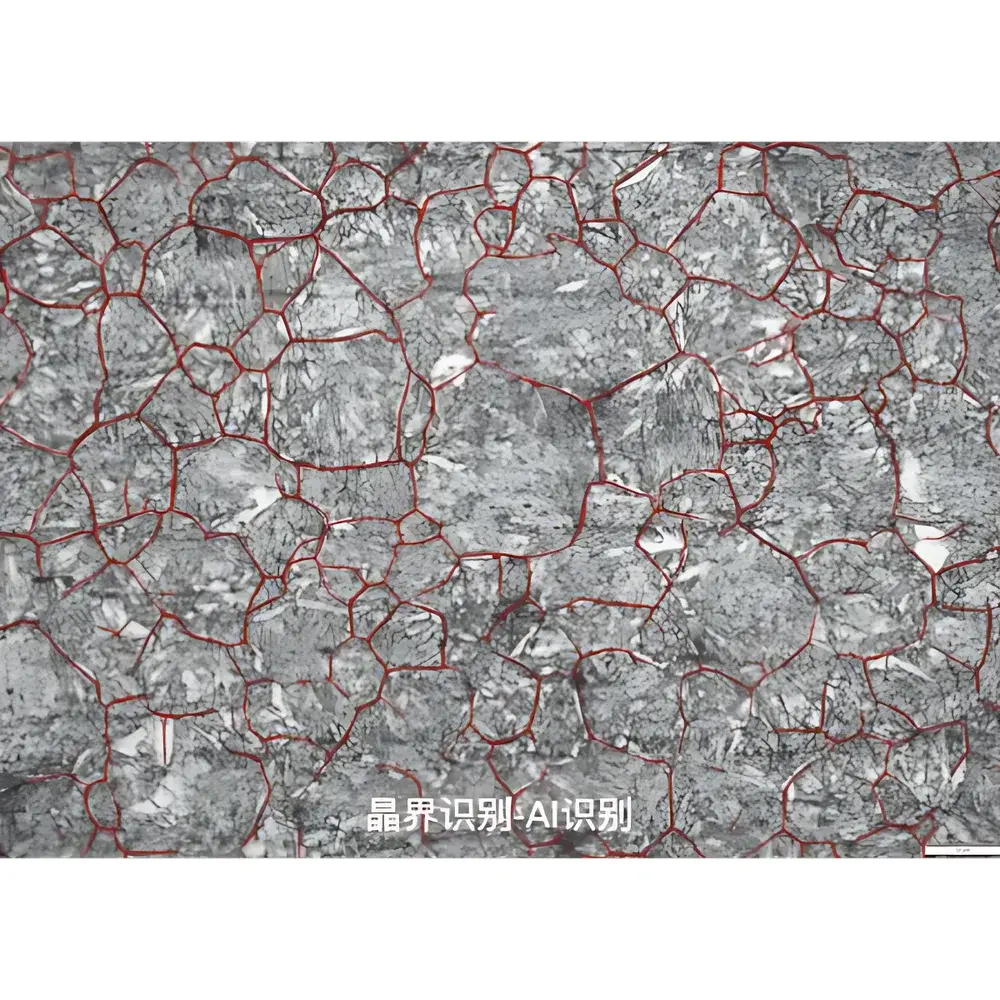
The Lei-Tech LK-AISOFT AI-Powered Grain Size Analysis Software is a domain-specific image analysis platform engineered for quantitative microstructural characterization in metallurgy, ceramics, geology, and advanced materials R&D. Built upon deep learning architectures trained on thousands of annotated metallographic and ceramic micrographs, the software performs automated grain segmentation, boundary detection, size distribution calculation (per ASTM E112, ISO 643, and GB/T 6394), and morphology classification without manual thresholding or operator-dependent parameter tuning. It operates as a standalone application or integrates natively with standard optical microscopes (including brightfield, darkfield, DIC, and polarized light configurations) via TWAIN/DCAM-compliant camera drivers. Unlike conventional rule-based image analyzers, LK-AISOFT employs convolutional neural networks (CNNs) to resolve low-contrast grain boundaries, overlapping phases, and heterogeneous etching artifacts—enabling robust grain identification under variable illumination, focus drift, and staining inconsistencies common in industrial QC labs.
Key Features
- AI-driven grain segmentation with adaptive boundary refinement, supporting both equiaxed and anisotropic grain systems
- Compliance-ready reporting engine generating ASTM E112-compliant grain size numbers (G-number), area-weighted & number-weighted distributions, and statistical summaries (mean, median, std. dev., skewness)
- Multi-scale analysis capability: simultaneous evaluation of primary grains, secondary precipitates, and inclusion populations within a single field-of-view
- Real-time batch processing across hundreds of images with configurable QC flags (e.g., insufficient contrast, out-of-focus detection, staining artifact alerts)
- Hardware-agnostic microscope control interface supporting USB3/UVC cameras, motorized stage coordination, and Z-stack acquisition for 3D grain volume estimation
- Modular architecture allowing optional add-ons: phase quantification (ferrite/pearlite/austenite), inclusion rating per ASTM E45, and thermal history inference modules
Sample Compatibility & Compliance
LK-AISOFT supports standard metallurgical sample preparation workflows—including mechanical polishing, electrochemical etching (e.g., Nital, Kroll’s reagent), and heat-tinting—without requiring proprietary consumables or calibration slides. Input formats include TIFF, PNG, BMP, and vendor-specific RAW (Olympus, Zeiss, Leica) with embedded metadata preservation. All measurement algorithms are traceable to internationally recognized standards: grain size calculations conform to ASTM E112-22 (standard test methods for determining average grain size), ISO 643:2021 (steel—micrographic determination of ferritic or austenitic grain size), and GB/T 6394-2017 (determination of average grain size of metals). Audit trails, user access logs, and electronic signature support align with GLP and GMP documentation requirements; raw image archives and processed result files are stored with SHA-256 checksums for data integrity verification.
Software & Data Management
The software runs on Windows 10/11 (64-bit) with NVIDIA CUDA-enabled GPUs recommended for accelerated inference. Data management follows a hierarchical project structure: each project encapsulates raw images, processing parameters, AI model version, and export reports in a self-contained folder with embedded XML metadata. Export options include CSV (for statistical analysis in Python/R/Minitab), PDF reports with embedded high-resolution thumbnails and histogram overlays, and structured JSON for integration into LIMS or PLM systems. Role-based permissions (administrator, analyst, reviewer) enforce separation of duties; all user actions—including parameter edits, report approvals, and model updates—are timestamped and logged in an immutable audit trail compliant with FDA 21 CFR Part 11 Annex 11 requirements.
Applications
- Quality assurance of hot-rolled and annealed steel sheets, where rapid G-number verification ensures compliance with automotive OEM specifications (e.g., GMW14872, Ford WSS-M1A366-A2)
- R&D of nickel-based superalloys, enabling correlation between solution heat treatment temperature/time and γ′ precipitate dispersion metrics
- Process validation in additive manufacturing (LPBF, EBM), quantifying grain columnarity and texture evolution across build layers
- Failure analysis laboratories assessing recrystallization behavior post-welding or creep exposure in power generation components
- Academic materials science departments conducting high-throughput microstructure–property mapping studies under DOE-funded initiatives
FAQ
Does LK-AISOFT require cloud connectivity or subscription licensing?
No. The software operates offline with perpetual node-locked or floating licenses. No telemetry, cloud storage, or mandatory online activation is required.
Can it analyze non-metallic samples such as sintered ceramics or geological thin sections?
Yes. Pre-trained models cover alumina, silicon carbide, zirconia, and quartz-bearing rocks. Custom model fine-tuning services are available for specialized material classes.
How is measurement reproducibility validated across different operators and labs?
Each installation includes a NIST-traceable reference slide set (certified grain size standards) and built-in repeatability assessment tools that compute intra- and inter-operator CV% per ISO 5725-2.
Is source code or API access available for enterprise integration?
A documented RESTful API and Python SDK are provided under commercial OEM agreements, enabling custom workflow orchestration and real-time dashboard integration.



