
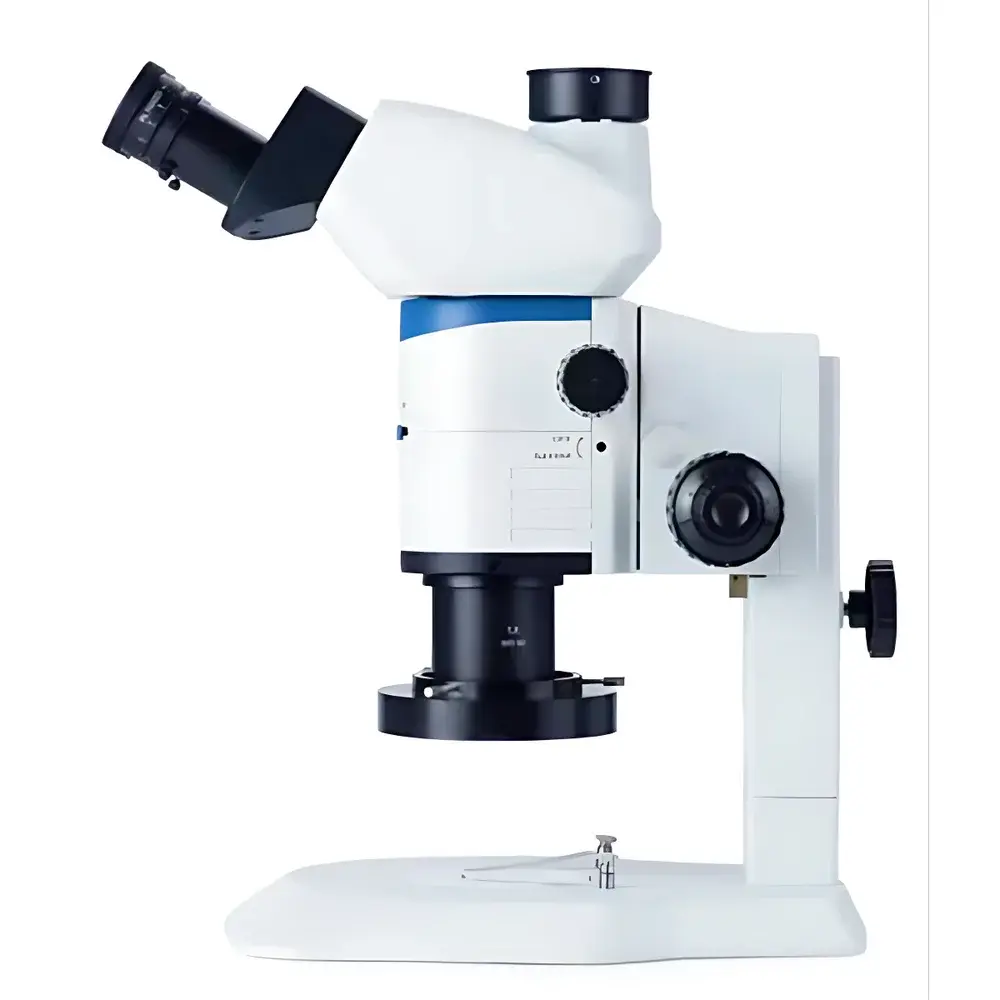
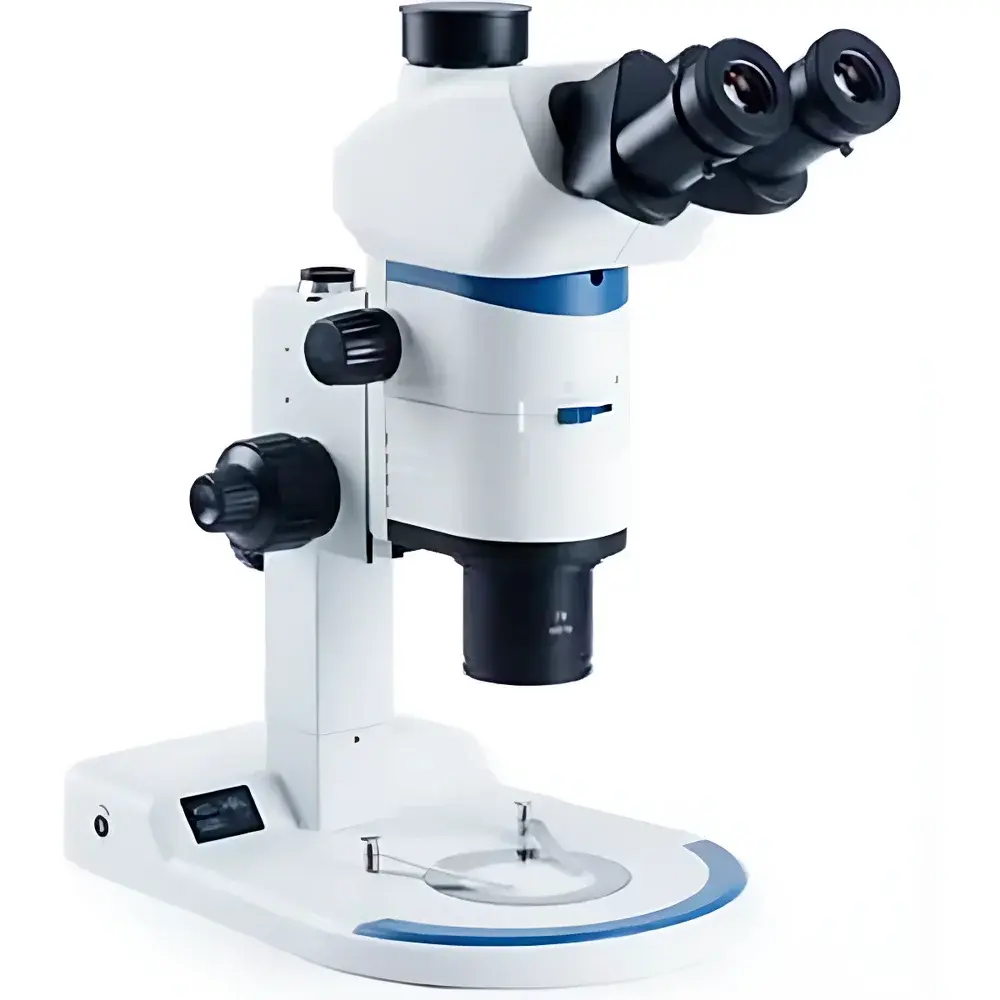
LEI-TECH LK-TSSW12 Galilean Stereo Microscope
| Brand | LEI-TECH |
|---|---|
| Origin | Tianjin, China |
| Manufacturer Type | Direct Manufacturer |
| Model | LK-TSSW12 |
| Optical System | Galilean |
| Total Magnification Range | 6.3×–80× |
| Eyepiece | Widefield WF10×/22 mm, Adjustable Diopter |
| Zoom Objective | 0.63–8× Continuous Zoom (12.5:1 Ratio) with Detent-Positioned Magnification Marks |
| Primary Objective | 1× Achromatic Apochromatic Corrected Objective |
| Working Distance | 80 mm |
| Focusing Mechanism | Coaxial Coarse/Fine Focus, 50 mm Travel, 2 µm Fine Adjustment Resolution |
| Observation Head | Tiltable Trinocular Tube (5°–45°), Dual Light Path Selection (100% Binocular or 100% Trinocular), Interpupillary Adjustment 50–76 mm |
| Illumination | Adjustable Color Temperature LED Ring Light (3000–5600 K), Brightness Control, Optional Oblique Lighting Module |
| Base | Ultra-Thin Pillar Stand with Integrated Illumination Controls |
| Compliance | Designed for ISO 10993-1 pre-screening support, GLP-aligned documentation architecture, compatible with ASTM E2912 and ISO 13536 visual inspection workflows |
Overview
The LEI-TECH LK-TSSW12 Galilean Stereo Microscope is an ergonomically engineered, high-stability stereoscopic imaging platform designed for routine and advanced visual inspection in life science laboratories, quality control environments, and precision manufacturing facilities. It employs a true Galilean optical architecture—characterized by parallel light paths and shared primary objective optics—to deliver flat-field, low-distortion stereoscopic images with exceptional depth perception and minimal chromatic aberration. Unlike Greenough-style systems, the Galilean configuration ensures consistent magnification across the entire field of view and eliminates the need for dual independent objectives, thereby enhancing long-term alignment stability and repeatability. The system supports total magnifications from 6.3× to 80× via a continuously variable zoom objective (0.63×–8×) coupled with 10× widefield eyepieces and optional auxiliary lenses. Its 80 mm working distance enables unobstructed manipulation of specimens—including live tissue samples, microelectronics assemblies, solder joints, and botanical sections—under direct hand-tool access.
Key Features
- Galilean Parallel-Optics Design: Delivers uniform resolution and true-to-life spatial fidelity across the full field; optimized for extended observation sessions and quantitative morphological assessment.
- 12.5:1 Zoom Ratio with Mechanical Detents: Twelve calibrated magnification stops (0.63×, 0.8×, 1×, …, up to 8×) allow rapid, repeatable magnification selection; manual override permits smooth interpolation between detents without mechanical backlash.
- Achromatic-Apochromatic Primary Objective: Corrects axial chromatic error for red, green, blue, and near-violet wavelengths, ensuring faithful color reproduction critical for histological differentiation, pigment analysis, and material surface characterization.
- Ergonomic Tilting Trinocular Head: Adjustable tilt range (5°–45°) accommodates seated and standing postures; dual light-path selector supports simultaneous binocular observation and camera integration without optical splitting losses.
- Precision Coaxial Focusing System: 50 mm vertical travel with 2 µm fine-focus resolution; low-friction coaxial knobs reduce operator fatigue during prolonged inspections or serial section documentation.
- Variable-Color-Temperature LED Illumination: Tunable white-light output (3000 K–5600 K) with independent brightness control enables optimal contrast enhancement for translucent, reflective, or low-contrast specimens—fully compliant with ISO 8578 illumination uniformity guidelines.
Sample Compatibility & Compliance
The LK-TSSW12 accommodates diverse sample geometries—from Petri dishes and multi-well plates to PCB substrates, wafer fragments, and irregularly shaped industrial components—without requiring stage modification. Its open working volume and vertical clearance permit integration with micromanipulators, patch-clamp rigs, or soldering stations. From a regulatory standpoint, the microscope’s mechanical stability, traceable calibration landmarks (e.g., engraved magnification indices), and non-drifting optical alignment support audit-ready documentation per GLP (Good Laboratory Practice) and GMP (Good Manufacturing Practice) frameworks. While not a medical device itself, its optical performance meets foundational requirements referenced in ISO 13536 (optical inspection of electronic assemblies) and ASTM E2912 (standard guide for stereomicroscopic examination of materials). The absence of mercury or halogen lamps ensures RoHS compliance and eliminates thermal drift artifacts common in older illumination architectures.
Software & Data Management
The trinocular port is mechanically aligned for C-mount (1×) and CS-mount (0.5×) digital cameras, supporting seamless integration with third-party imaging software such as NIS-Elements, ZEN Blue, or open-source platforms like MicroManager. All major OEM camera drivers are natively recognized under Windows 10/11 and Linux-based acquisition environments. Metadata embedding—including magnification, illumination settings, timestamp, and user ID—is supported via standard TWAIN and GenICam protocols. Audit trails for image acquisition parameters can be exported in CSV or XML format, satisfying basic FDA 21 CFR Part 11 record-keeping prerequisites when paired with validated laboratory information management systems (LIMS). Firmware updates are delivered via USB flash drive with SHA-256 checksum verification to ensure integrity.
Applications
- Life Sciences: Dissection of zebrafish embryos, Drosophila staging, plant meristem analysis, fungal hyphae morphology, and microdissection of neural tissues.
- Quality Assurance: Visual inspection of weld seams, coating uniformity on medical devices, solder joint integrity in Class III electronics, and defect mapping on silicon wafers.
- Materials Science: Fracture surface topography, fiber orientation analysis in composites, particle dispersion evaluation in polymer blends, and corrosion pit profiling.
- Forensics & Education: Toolmark comparison, fiber transfer analysis, and undergraduate microscopy pedagogy where reproducibility, ease of use, and cost-of-ownership are prioritized over ultra-high NA objectives.
FAQ
Is the LK-TSSW12 suitable for photomicrography with DSLR or scientific CMOS cameras?
Yes—the trinocular tube provides parfocal C-mount compatibility with standardized 1× relay optics; adapter rings for Canon EF, Nikon F, and Sony E mounts are available through authorized distributors.
Does the microscope support fluorescence observation?
No—this model is configured exclusively for transmitted and reflected brightfield illumination; fluorescence capability requires retrofitting with dedicated filter cubes, excitation sources, and barrier filters, which are not part of the base specification.
What is the warranty coverage and service response protocol?
LEI-TECH provides a 24-month limited warranty covering parts and labor; technical support is available 24/7 via encrypted web portal, with on-site service dispatch within 72 business hours in Tier-1 metropolitan areas across North America, EU, and APAC regions.
Can the color temperature and brightness controls be automated via external software?
Manual adjustment only—the illumination module lacks RS-232 or USB command interface; however, third-party programmable LED controllers (e.g., Thorlabs LEDD1B) may be integrated externally using analog voltage input.
Are calibration certificates provided with shipment?
A factory-issued optical alignment report (including magnification verification at three zoom positions and reticle scale validation) is included; ISO/IEC 17025-accredited calibration is available as an optional add-on service.





