
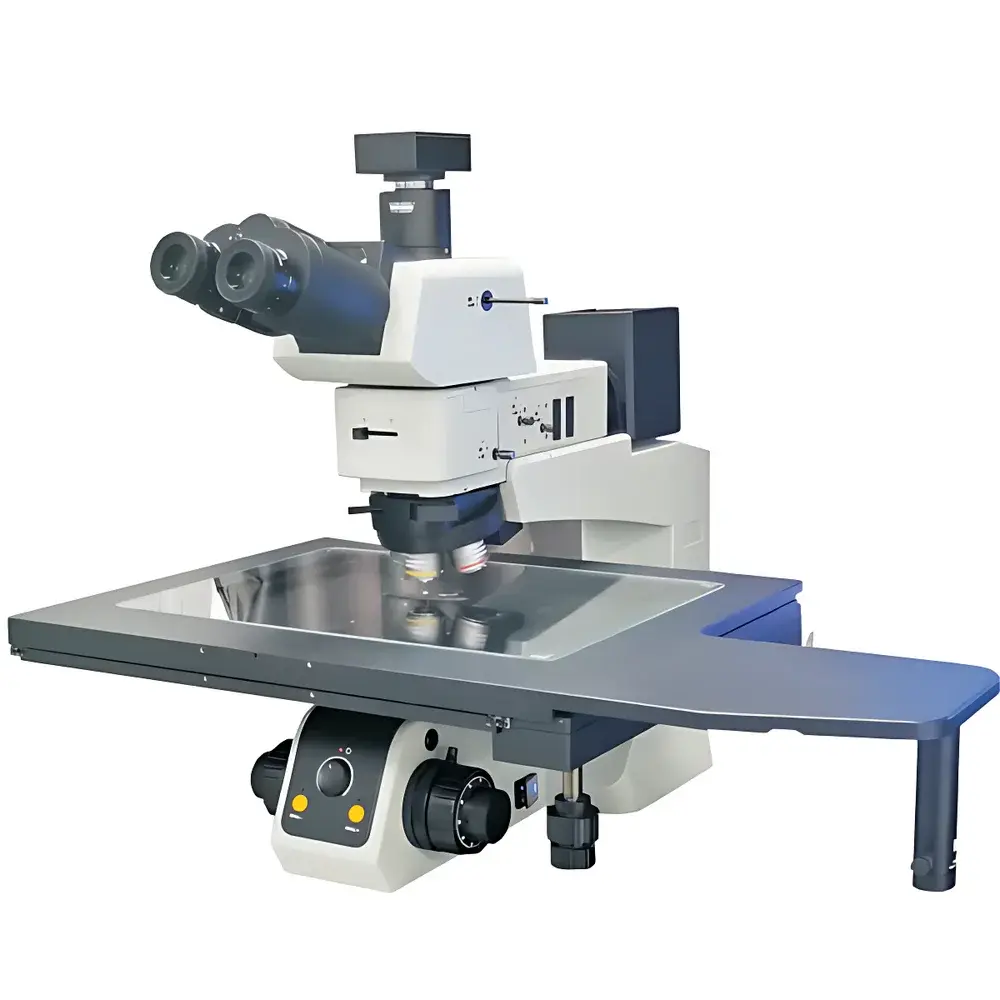
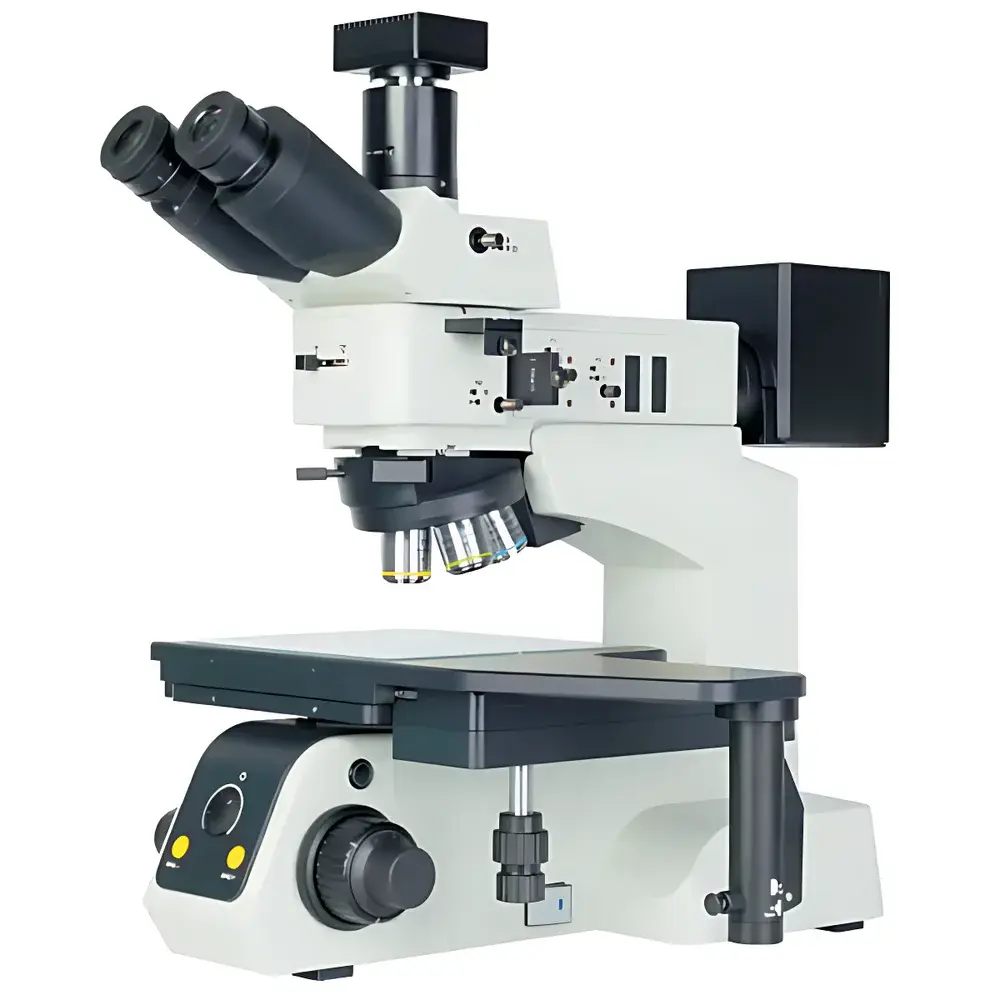
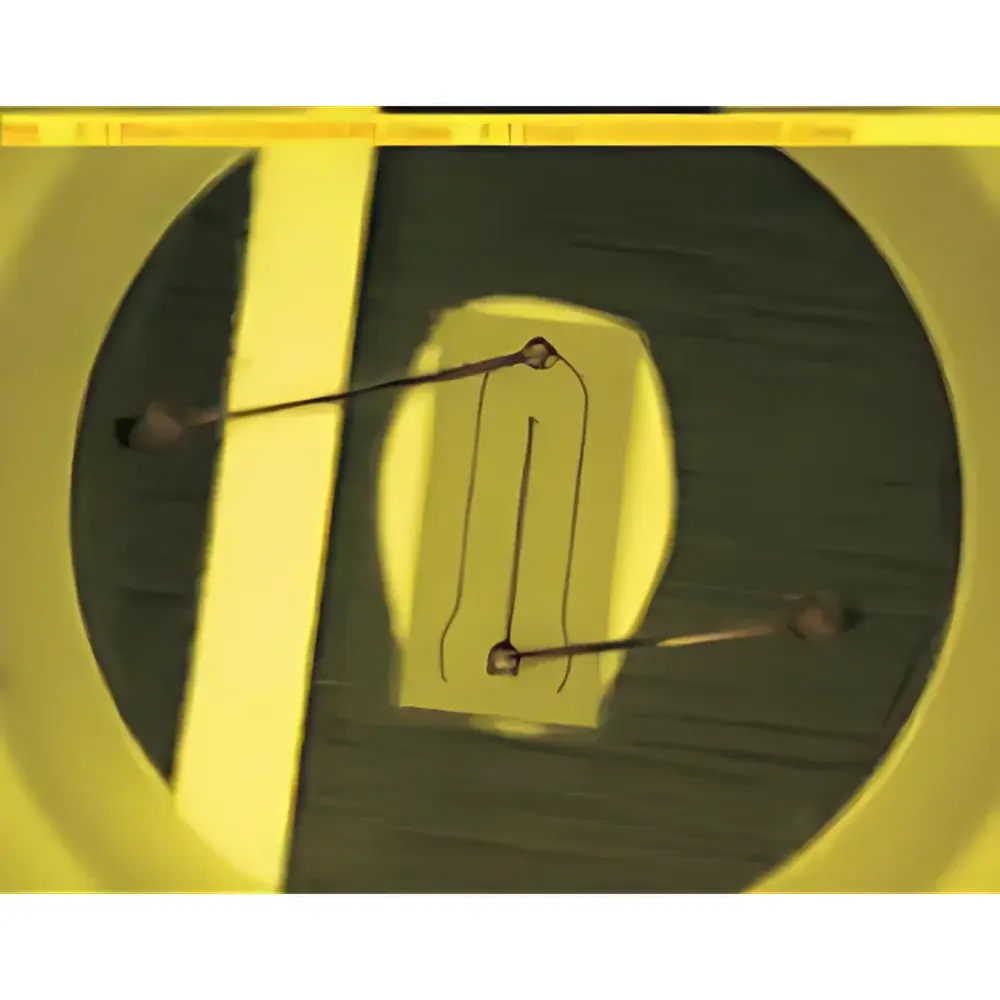
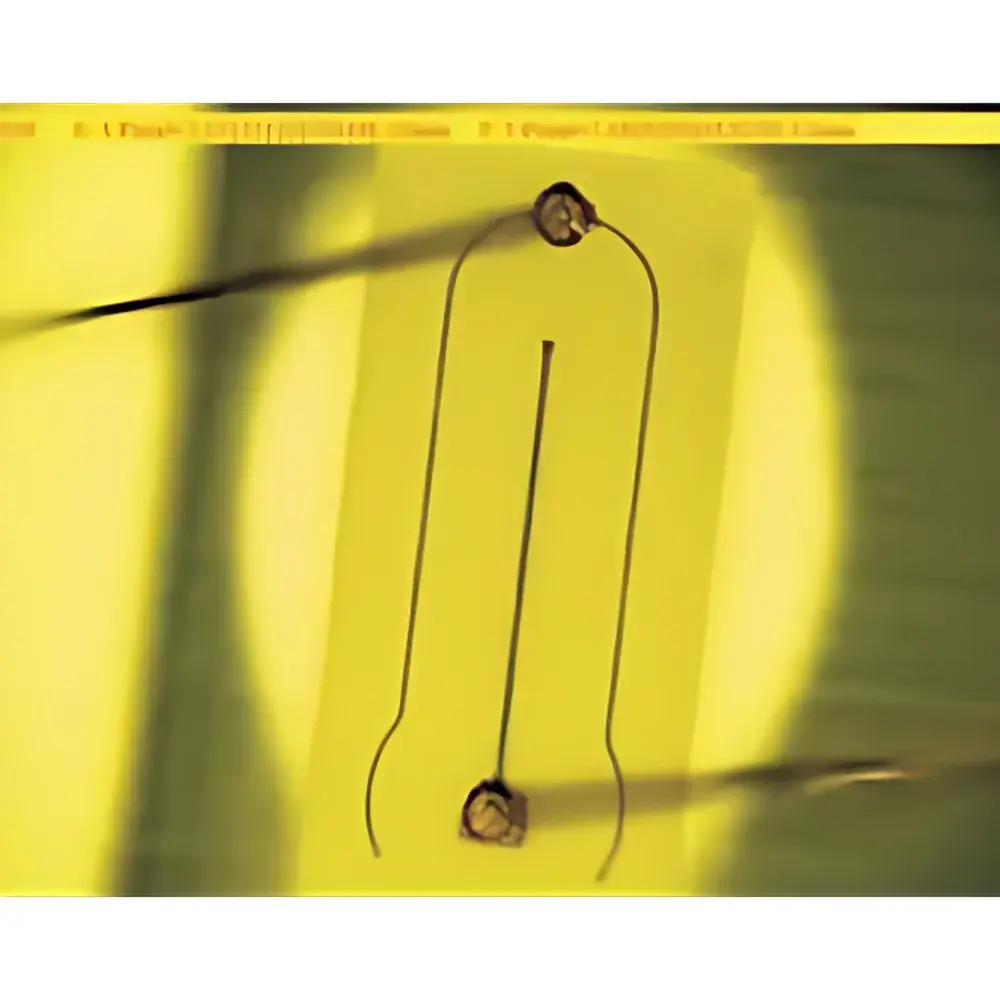
LEI-TECH LK-JX Series Upright Metallurgical Microscope
| Brand | LEI-TECH |
|---|---|
| Origin | Tianjin, China |
| Manufacturer Type | Direct Manufacturer |
| Product Category | Domestic |
| Model | LK-JX Series |
| Mounting | Upright |
| Image Analysis System | Integrated |
| Total Magnification Range | 50×–1000× |
| Eyepiece Configuration | Trinocular |
| Objective Lenses | 5×, 10×, 20×, 50× (100× optional) |
| Optical System | Infinity-Corrected Achromatic & Semi-Apochromatic Metallurgical Optics |
| Illumination | Dual-Mode LED Transmitted + 12 V/100 W Halogen Reflected (Brightfield/Darkfield Switchable) |
| Focus Mechanism | Coaxial Manual Coarse/Fine Z-Axis Adjustment |
| Stage Options | 4″, 6″, 8″, or 12″ Mechanical XY Platform (Rotary Stage Optional) |
| Observation Modes | Brightfield, Darkfield, DIC (Optional) |
| Software Functions | Real-Time Extended Depth of Field (EFI), Multi-Field Image Stitching (MIA), 2D Measurement, Annotation, Data Export, and GLP-Compliant Metadata Logging |
Overview
The LEI-TECH LK-JX Series Upright Metallurgical Microscope is an engineered solution for high-resolution microstructural analysis of opaque, polished, and etched metallic and ceramic specimens. Built upon an infinity-corrected optical architecture (UISC — Universal Infinity-Space Correction), the system eliminates spherical and chromatic aberrations across the full magnification range (50× to 1000×), enabling quantitative imaging with high contrast, flatness of field, and consistent resolution from edge to edge. Unlike finite-conjugate systems, the UISC design permits modular insertion of auxiliary components—including DIC prisms, polarization analyzers, and fluorescence filter cubes—without compromising parfocality or illumination uniformity. The microscope supports both reflected-light (epi-illumination) and transmitted-light observation paths, each independently controllable via dual-source management: a thermally stable 12 V/100 W halogen lamp with preset intensity memory for brightfield/darkfield metallurgical contrast, and a high-CRI 5 W white LED with NA 0.5 condenser for transmitted illumination. This dual-path flexibility ensures compatibility with diverse specimen preparation protocols—from standard metallographic polishing to thin-sectioned intermetallics or sintered composites.
Key Features
- Trinocular observation head with three-position beam-splitter (100% eyepiece / 100% camera / 20% eyepiece + 80% camera), enabling simultaneous visual inspection and high-fidelity digital capture without optical compromise
- Coaxial manual coarse/fine Z-axis focusing mechanism with ergonomic low-profile knobs, delivering precise depth control down to 1 µm increments
- 5-position objective turret with integrated DIC slot and standardized M25 × 0.75 threading;标配 semi-apochromatic brightfield/darkfield objectives (5×, 10×, 20×, 50×), with optional 100× oil-immersion lens for sub-micron feature resolution
- Modular mechanical XY stage options (100 × 150 mm to 310 × 310 mm) with low-handled coaxial controls, fine vernier scales, and optional rotary motion for angular grain orientation mapping
- Dual-illumination management: independent on/off and intensity control for reflected and transmitted light sources; built-in centerable field and aperture diaphragms compliant with ISO 9001 calibration traceability requirements
- Integrated USB 3.0 digital imaging interface supporting up to 12 MP CMOS sensors, with real-time extended depth of field (EFI) synthesis and multi-field image stitching (MIA) algorithms embedded in firmware
Sample Compatibility & Compliance
The LK-JX platform accommodates specimens ranging from standard 25 mm diameter metallographic mounts to large-area castings, weld cross-sections, and additive-manufactured parts up to 310 mm × 310 mm (LK-JX-12 model). Its robust upright configuration and long-working-distance objective compatibility (including optional ultra-long WD lenses) support analysis of coated, plated, or rough-surfaced samples without stage collision. All optical components meet ISO 10110 surface quality standards; illumination uniformity complies with ASTM E3-22 Annex A3 for quantitative metallography. The system supports GLP- and GMP-aligned workflows through audit-trail-enabled software logging (user ID, timestamp, measurement parameters, calibration status), satisfying FDA 21 CFR Part 11 requirements when paired with validated image analysis modules.
Software & Data Management
The bundled LEI-Vision Pro software suite provides ISO/IEC 17025-compliant image acquisition, annotation, and metrology functions. It includes calibrated 2D measurement tools (line, angle, radius, area, particle count), customizable report templates with embedded metadata (magnification, objective ID, illumination mode, exposure settings), and export formats compatible with LIMS integration (CSV, TIFF, PDF/A-1a). EFI and MIA processing occur in real time at full sensor resolution—no post-acquisition stitching latency. Raw image data retains EXIF-style headers containing instrument configuration history, ensuring full traceability for internal QA audits or third-party accreditation reviews.
Applications
- Quantitative grain size analysis per ASTM E112 and ISO 643
- Phase identification and distribution mapping in multiphase alloys (e.g., austenite/ferrite ratios in duplex stainless steels)
- Defect characterization: porosity, inclusions, cracking, delamination, and interfacial integrity assessment in brazed or welded joints
- Coating thickness verification using focused ion beam (FIB)-correlated cross-section imaging
- Research-grade microstructure evolution studies under thermal cycling or mechanical loading (when integrated with environmental stages)
- Failure analysis laboratories requiring repeatable, auditable documentation for root cause investigation reports
FAQ
Is the LK-JX series compliant with international metrology standards for metallographic analysis?
Yes — optical path design, illumination uniformity, and measurement traceability align with ASTM E3-22, ISO 643, and ISO 10110-7. Calibration certificates are available upon request.
Can the system be upgraded to support automated stage control or motorized focus?
Motorized nosepiece and Z-drive are available as factory-installed options; retrofit kits require service engineer validation to preserve optical alignment integrity.
What DIC prism configurations are supported?
Standard Wollaston-type prisms for 10×–50× objectives are offered; custom matching for 100× or long-WD lenses requires optical path recalibration.
Does the software support multi-user role-based access control?
Yes — LEI-Vision Pro v4.2+ includes configurable user profiles with permission tiers (operator, supervisor, administrator) and encrypted local database logging.
Are service contracts and remote diagnostics available outside mainland China?
Global technical support is provided via ISO 9001-certified regional service centers in Southeast Asia, Eastern Europe, and Latin America; remote diagnostic sessions use TLS-encrypted screen-sharing with session recording opt-in.





