
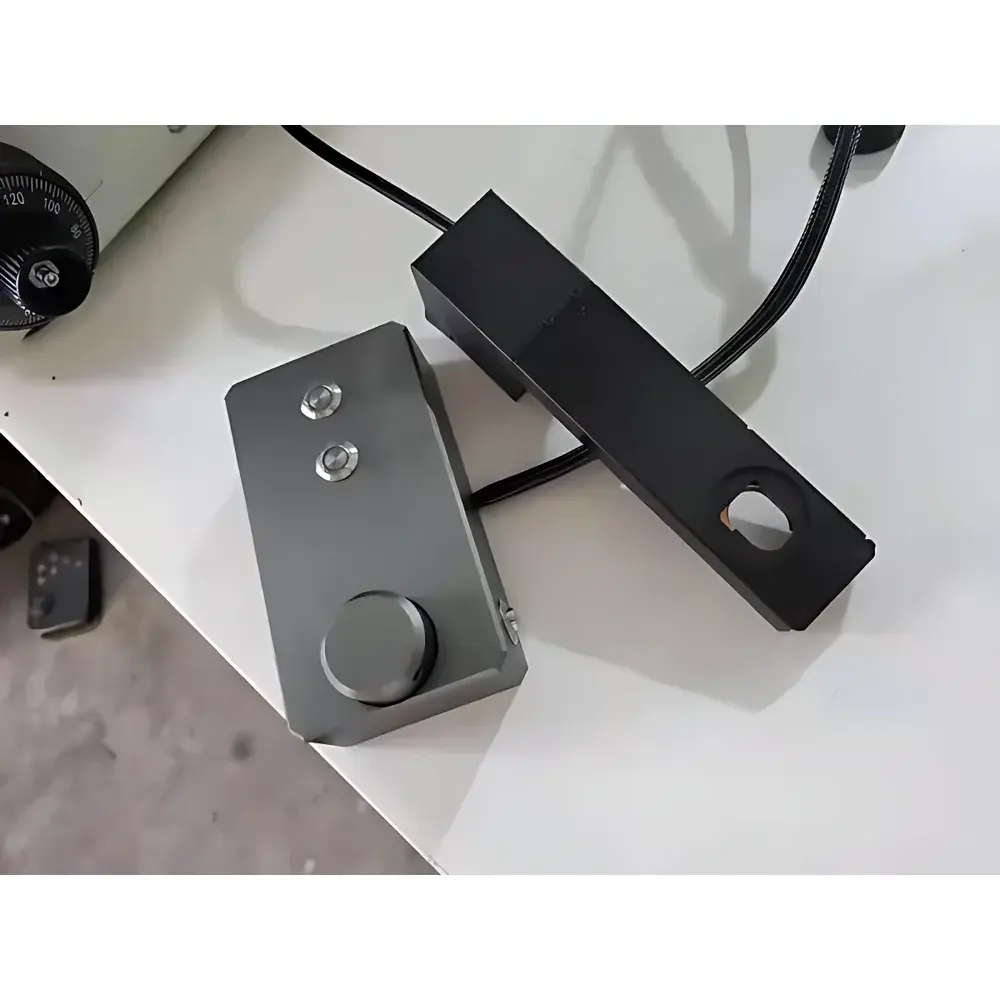
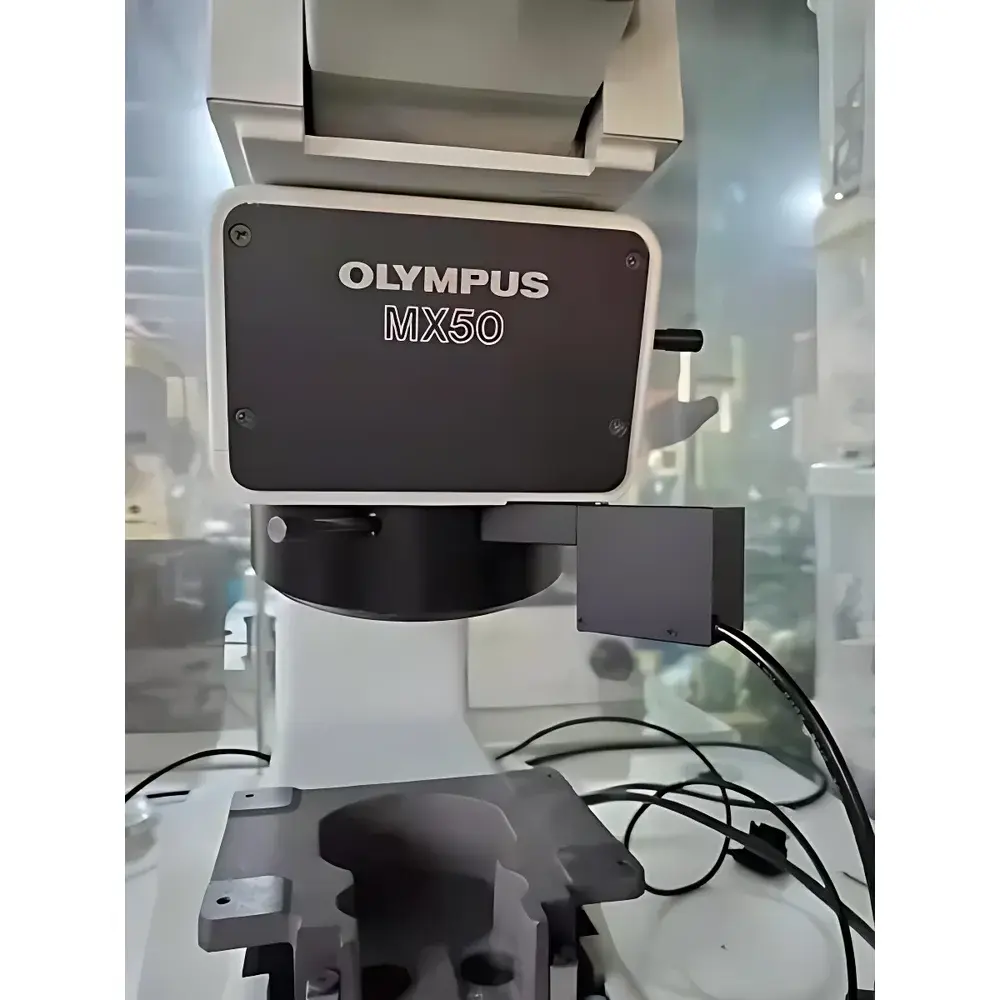
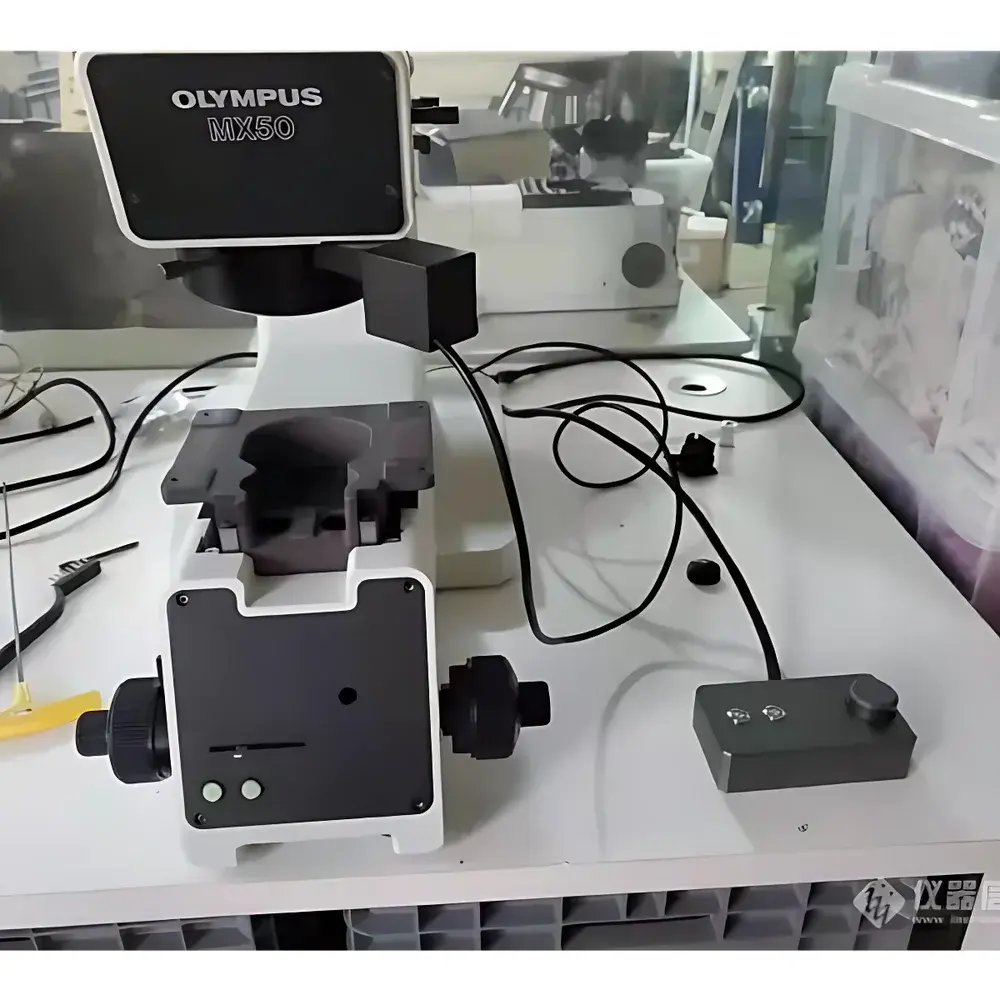
Lei-Tech LK-AUTO-DIC Motorized DIC Insertion System
| Brand | Lei-Tech |
|---|---|
| Origin | Tianjin, China |
| Manufacturer Type | OEM/ODM Manufacturer |
| Country of Origin | China |
| Model | LK-AUTO-DIC |
| Price Range | USD 1,400 – 7,000 (FOB) |
| Component Category | Optical Component |
| Compatibility | Olympus U-D5BDREMC / U-D6REMC / U-D6BDREMC Motorized Nosepiece |
Overview
The Lei-Tech LK-AUTO-DIC Motorized DIC Insertion System is an engineered optical actuation module designed for precise, repeatable integration and retraction of Differential Interference Contrast (DIC) prism assemblies into the optical path of upright and inverted research-grade microscopes. Based on stepper motor-driven linear translation and rotational indexing mechanisms, the system enables automated alignment of Wollaston or Nomarski prisms relative to the objective’s rear focal plane—ensuring optimal shear vector orientation and interference contrast fidelity across magnifications. Unlike manual DIC sliders or fixed prism mounts, the LK-AUTO-DIC eliminates mechanical hysteresis and operator-induced misalignment, supporting quantitative phase-sensitive imaging workflows in materials science, semiconductor metrology, and life sciences laboratories where reproducibility and traceability are critical.
Key Features
- Native compatibility with Olympus U-D5BDREMC, U-D6REMC, and U-D6BDREMC motorized nosepieces—enabling synchronized DIC prism insertion with objective selection.
- Dual-control interface: local operation via ergonomic handheld keypad or remote command via USB virtual COM port (RS-232 emulation), with ASCII-based command set provided for seamless integration into LabVIEW, Python, MATLAB, or custom microscopy control suites.
- Intelligent path optimization algorithm minimizes mechanical travel time by selecting shortest angular displacement between positions; configurable override to enforce unidirectional (clockwise-only) indexing for applications requiring deterministic mechanical wear distribution.
- Optomechanically decoupled DIC carriage design ensures sub-micron repeatability (< ±0.8 µm positional stability over 10⁴ cycles) without inducing stress or tilt into the microscope’s optical axis.
- Modular cabling architecture supports field-customizable cable lengths (standard: 1.5 m; optional: up to 5 m) with shielded twisted-pair wiring compliant with IEC 61000-6-3 EMI emission limits.
- Integrated firmware supports firmware-over-the-air (FOTA) updates via USB, enabling future feature expansion without hardware revision.
Sample Compatibility & Compliance
The LK-AUTO-DIC is classified as a Class 1 laser product per IEC 60825-1:2014 and complies with CE marking requirements under the EU Machinery Directive 2006/42/EC and Electromagnetic Compatibility Directive 2014/30/EU. It operates within ambient temperature ranges of 15–30 °C and relative humidity ≤70% non-condensing—conditions aligned with ISO 14644-1 Class 8 cleanroom environments. While not a medical device, its mechanical positioning accuracy and audit-ready control logs meet GLP documentation prerequisites for regulated QC labs performing ASTM E2191 (Standard Guide for Microscopy Image Analysis) or ISO/IEC 17025-accredited dimensional metrology.
Software & Data Management
The included 2D measurement software (v3.2+) provides native DIC synchronization: upon objective change, the software automatically triggers prism insertion/removal and updates calibration scale factors based on objective-specific magnification and tube lens configuration. The application exposes a documented C++ DLL API and Python bindings (via ctypes), allowing developers to embed DIC state management into custom image acquisition pipelines. All motor position commands, timestamps, and error codes are logged in CSV-compliant audit trails—including support for FDA 21 CFR Part 11-compliant electronic signatures when deployed with validated third-party identity management middleware.
Applications
- Automated multi-objective DIC imaging in metallurgical failure analysis, where consistent shear direction across 5×–100× objectives is required for grain boundary contrast normalization.
- In-line process monitoring of thin-film deposition uniformity using real-time DIC contrast quantification coupled with motorized stage navigation.
- High-throughput biological screening involving time-lapse DIC + fluorescence co-registration, where prism retraction prevents phototoxicity during widefield excitation phases.
- Calibration laboratories performing ISO 10110-5 surface roughness validation on optical components, leveraging DIC’s sensitivity to nanoscale topographic gradients.
- Academic core facilities implementing shared-resource microscope scheduling systems, where DIC state persistence across user sessions reduces setup overhead and inter-user variability.
FAQ
Is the LK-AUTO-DIC compatible with Nikon or Zeiss motorized nosepieces?
Yes—custom adapter plates and firmware profiles are available for Nikon Eclipse Ti2-E and Zeiss Axio Imager.Z2 systems upon request. Integration requires verification of native RS-232/USB protocol mapping and mechanical footprint alignment.
Does the system support DIC prism auto-alignment (centering) or only insertion/removal?
The LK-AUTO-DIC performs precise axial insertion/retraction only. Fine centering and azimuthal rotation of the DIC prism remain manual procedures performed during initial optical alignment per manufacturer specifications.
Can the control software run on Linux or macOS?
The GUI measurement application is Windows-native (64-bit, Win 10/11). However, the underlying command protocol is OS-agnostic; Linux/macOS users may implement control via Python serial libraries using the published ASCII command set.
What is the mean time between failures (MTBF) for the actuator mechanism?
Based on accelerated life testing per MIL-HDBK-217F, the stepper motor and lead-screw assembly exhibits an MTBF of ≥120,000 cycles at rated load, corresponding to >5 years of typical academic lab usage (≈60 cycles/day).
Is technical documentation available in English for regulatory submission purposes?
Yes—full English-language Declaration of Conformity, EC Type Examination Report (notified body certified), mechanical drawings, and firmware validation summary are supplied with each unit and accessible via secure customer portal.





