
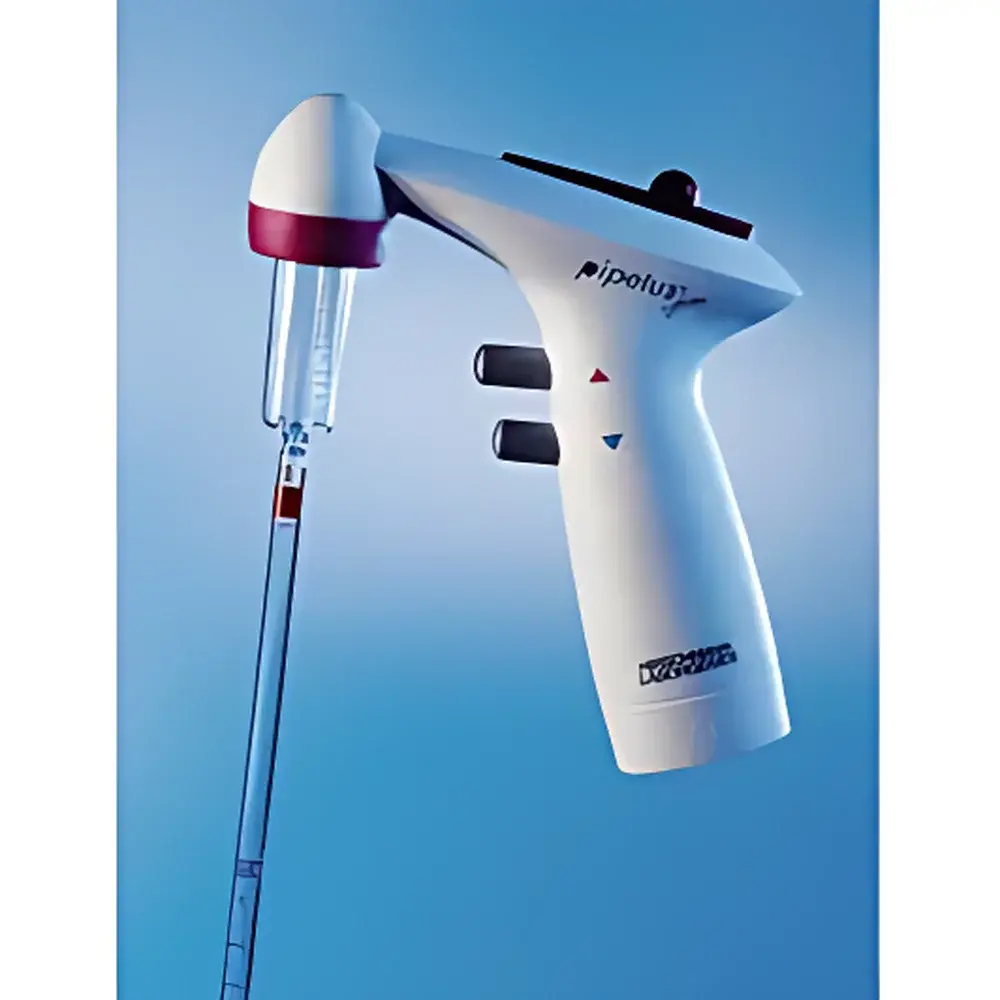
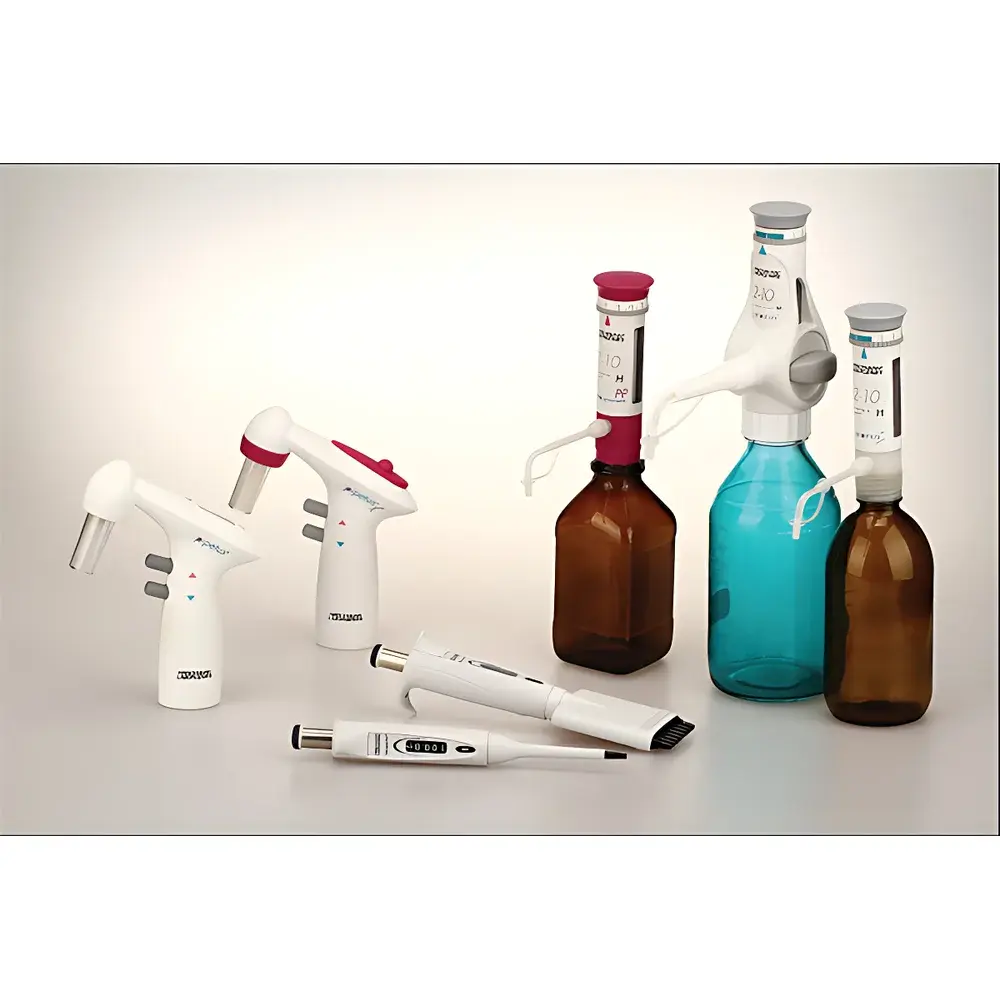
Hirschmann Pipetus-Junior Manual Pipette Controller
| Brand | Hirschmann (Germany) |
|---|---|
| Origin | Germany |
| Model | Pipetus-Junior |
| Type | Single-Channel Manual Pipette Controller |
| Volume Range | 0.1–200 mL |
| Accuracy | ±0.5% |
| Weight | 130 g |
| Material | Polyamide 6 (PA6) |
| Sterilization | Autoclavable at 121 °C (excluding PTFE filter) |
| Filtration | 0.2 µm hydrophobic PTFE filter |
| Safety Valve | Replaceable |
| Compliance | Suitable for biosafety cabinets and explosion-proof environments |
Overview
The Hirschmann Pipetus-Junior Manual Pipette Controller is an ergonomically engineered, fully mechanical liquid handling device designed for precise, repeatable, and contamination-free aspiration and dispensing of volumes from 0.1 mL to 200 mL using standard graduated or volumetric transfer pipettes. Unlike motorized alternatives, it operates entirely without electricity—leveraging optimized pneumatic mechanics and calibrated spring-loaded actuation to deliver performance comparable to electronic controllers while eliminating battery dependency, electromagnetic interference, and operational complexity. Its core principle relies on controlled negative pressure generation via thumb-actuated suction and gravity-assisted dispensing, enabling high reproducibility in routine and regulated laboratory workflows—including those governed by GLP, ISO/IEC 17025, and biosafety level 2 (BSL-2) protocols.
Key Features
- Ergonomic, one-handed operation with intuitive tactile feedback—reducing operator fatigue during extended use.
- Integrated three-function control: single-press aspiration (2 mL pre-set volume), continuous dispensing via sustained trigger pressure, and dedicated blow-out activation for complete delivery from blow-out pipettes.
- Autoclavable housing (121 °C, 20 min, saturated steam) — all components except the disposable 0.2 µm hydrophobic PTFE filter and replaceable safety valve withstand full-cycle sterilization.
- Chemical resistance ensured by polyamide 6 (PA6) construction, compatible with aqueous solutions, alcohols, and common organic solvents (excluding strong oxidizers and concentrated acids).
- No external power source required—ideal for field laboratories, cleanrooms, explosion-hazard zones (ATEX-compliant when used per manufacturer guidelines), and mobile analytical setups.
- Precision meniscus control enabled by fine-tuned airflow regulation, supporting accurate volumetric reading at the calibration mark of Class A and Class B glass pipettes.
Sample Compatibility & Compliance
The Pipetus-Junior is validated for use with standard borosilicate glass and polystyrene graduated pipettes (0.1–200 mL), including Mohr, Serological, and TC/TD types. Its integrated 0.2 µm PTFE filter prevents aerosol ingress into the controller body and eliminates cross-contamination between samples—a critical requirement in clinical diagnostics, cell culture, and molecular biology applications. The device meets material biocompatibility requirements per ISO 10993-5 and supports compliance with USP Analytical Instrument Qualification when incorporated into IQ/OQ protocols. Its manual architecture inherently satisfies FDA 21 CFR Part 11 data integrity principles for non-electronic instruments, as no electronic records are generated.
Software & Data Management
As a purely mechanical instrument, the Pipetus-Junior does not incorporate embedded electronics, firmware, or digital interfaces. Consequently, it requires no software installation, calibration certificate management, or audit trail configuration. All operational parameters—including volume setting, aspiration rate, and dispensing speed—are manually controlled and operator-determined in real time. This design eliminates cybersecurity risks, firmware update dependencies, and validation overhead associated with connected devices—making it especially suitable for laboratories maintaining strict separation between analog instrumentation and digital data systems.
Applications
- High-volume reagent preparation in QC/QA labs (e.g., buffer dilution, media formulation).
- Cell suspension handling in mammalian and microbial culture workflows.
- Sample aliquoting for ELISA, PCR setup, and chromatographic sample introduction.
- Calibration solution dispensing in metrology and reference material laboratories.
- Field-deployable liquid transfer in environmental monitoring and food safety testing where portability and power independence are essential.
- Biosafety-critical tasks inside Class II laminar flow hoods and containment enclosures.
FAQ
Can the Pipetus-Junior be autoclaved? Why is the filter excluded?
Yes—the main housing and actuation mechanism are rated for full-cycle autoclaving at 121 °C for 20 minutes. The 0.2 µm PTFE filter is excluded because prolonged exposure to saturated steam degrades its hydrophobic properties and pore integrity; replacement filters are supplied separately (Order No. 9902001).
What pipette types are compatible?
Graduated (Mohr, Serological) and volumetric (TC/VD) glass and plastic pipettes ranging from 0.1 mL to 200 mL. Adapters are not required; the universal conical tip ensures secure, leak-free sealing.
How is accuracy maintained without electronic feedback?
Accuracy derives from precision-machined airflow pathways, consistent spring tension, and operator training in meniscus alignment—validated against gravimetric methods per ISO 8655-3. The stated ±0.5% tolerance applies to trained users following standardized technique.
Is the device suitable for volatile or corrosive solvents?
It is compatible with ethanol, isopropanol, acetone, and diluted acids/bases. For aggressive solvents (e.g., chloroform, concentrated HNO₃), consult the chemical resistance chart for PA6 and use appropriate filtration and ventilation.
Does it support regulatory documentation for GMP environments?
Yes—its mechanical simplicity enables straightforward IQ/OQ execution. A full qualification package—including test protocols, traceable calibration references, and maintenance logs—is available upon request from authorized Hirschmann distributors.



