
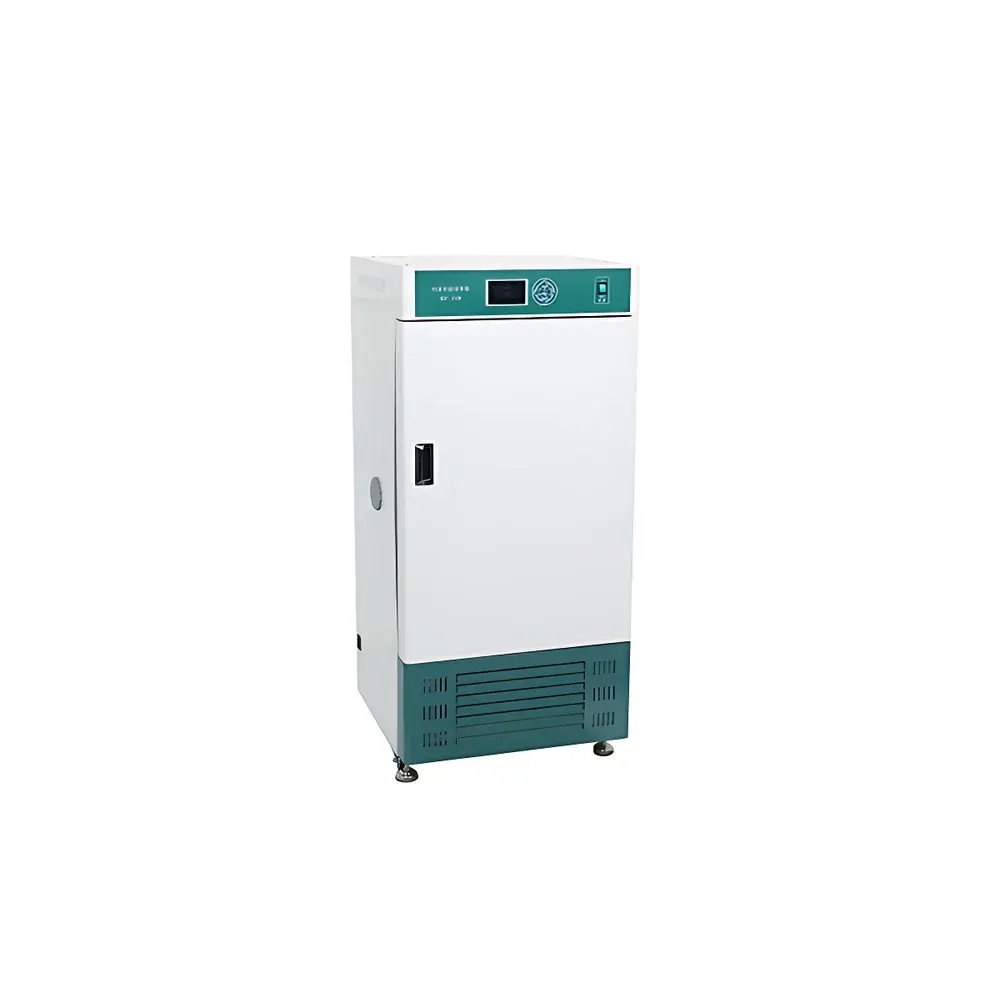
Zhongke Aobo SPX Series Biochemical Incubator
| Brand | Zhongke Aobo |
|---|---|
| Origin | Beijing, China |
| Model | SPX Series |
| Temperature Range | 5–50 °C (standard configuration) |
| Temperature Resolution | 0.1 °C |
| Temperature Uniformity | ±1 °C |
| Power Supply | 220 V, 50 Hz |
| Capacity Options | 50–450 L |
| Refrigeration | Eco-friendly R134a-free compressor cooling system |
| Air Circulation | Forced-air convection via internal fan |
| Safety Features | Over-temperature protection, compressor overheat protection, microprocessor fault detection, magnetic door seal, grounding terminal |
Overview
The Zhongke Aobo SPX Series Biochemical Incubator is a precision-engineered, forced-air convection incubator designed for stable, long-term temperature-controlled environments in life science laboratories. Based on thermodynamic equilibrium principles and active refrigeration-heating dual-mode control, it maintains consistent thermal conditions across the entire working chamber—critical for applications requiring strict adherence to ISO 17025, CLSI M22-A3, and USP environmental stability guidelines. Unlike static incubators, the SPX series employs a centrifugal blower and optimized airflow ducting to ensure uniform temperature distribution (±1 °C) and rapid recovery after door opening—validated per ASTM E1685–22 Annex A1 protocols. Its operational range of 5–50 °C supports both mesophilic microbial culture and low-temperature biochemical reaction studies, making it suitable for BOD5 assays, fungal propagation, bacterial colony isolation, and seed germination testing under controlled abiotic conditions.
Key Features
- Stainless steel inner chamber (AISI 304 grade) with seamless, radius-rounded corners—compliant with ISO 14644-1 Class 5 cleanroom surface requirements for easy decontamination and reduced microbial retention.
- Intelligent microprocessor-based controller with real-time digital display, programmable timer (up to 999 hours), audible/visual over-temperature alarm, and automatic cut-off upon thermal excursion exceeding user-defined thresholds.
- Eco-conscious refrigeration system using non-ozone-depleting refrigerant alternatives; integrated high-efficiency condenser and low-noise compressor rated for ≥20,000 hours MTBF.
- Double-layer tempered glass observation window with anti-fog coating and magnetic door gasket ensuring >95% sealing integrity (tested per IEC 60529 IPX1 drip resistance standard).
- Comprehensive safety architecture: independent mechanical over-temperature limiter, compressor thermal overload relay, power failure memory function, and dedicated grounding terminal for Class I electrical safety compliance (IEC 61010-1).
- Modular expansion interface: RS-485 port for SCADA integration, USB data logging (U-disk storage), optional thermal printer output, and SMS-based remote alert module (requires GSM gateway).
Sample Compatibility & Compliance
The SPX incubator accommodates standard microbiological consumables—including Petri dishes (90 mm and 150 mm), test tubes (13 × 100 mm, 16 × 150 mm), multi-well plates (6–96-well), and Erlenmeyer flasks (up to 2 L)—without airflow obstruction. Shelf configurations support adjustable stainless steel trays with 30 mm vertical spacing, enabling flexible load arrangement while preserving laminar air exchange. The unit meets essential regulatory prerequisites for GLP-compliant laboratories: traceable calibration certificate (NIST-traceable reference sensor included), audit-ready event log (power cycles, temperature deviations, door openings), and configurable data retention (≥30 days at 1-minute intervals). It is validated for use in EPA Method 521 (BOD testing), ISO 8199 (water quality—microbiological monitoring), and AOAC Official Method 977.27 (yeast and mold enumeration).
Software & Data Management
The embedded firmware supports time-stamped data recording directly to removable USB storage media in CSV format—compatible with Excel, LabArchives, and ELN platforms. Optional PC software (Windows/Linux/macOS) enables remote monitoring, real-time graphing, deviation reporting, and PDF report generation with digital signature fields. All logged parameters—including setpoint, actual chamber temperature, runtime, alarm status, and door-open duration—are timestamped with UTC synchronization and include CRC-32 checksums for data integrity verification. For regulated environments, the system can be configured to meet FDA 21 CFR Part 11 requirements when paired with validated third-party electronic signature modules and role-based access control policies.
Applications
- Biochemical oxygen demand (BOD5) analysis per ISO 5815-1 and APHA Standard Methods 5210B.
- Cultivation and maintenance of bacteria (e.g., Escherichia coli, Staphylococcus aureus), yeasts (Saccharomyces cerevisiae), molds (Aspergillus niger), and anaerobic strains under aerobic or microaerophilic conditions.
- Pharmaceutical stability testing of raw materials and finished products per ICH Q1A(R2) guidance.
- Aquatic toxicology assays involving Daphnia magna and algae (Pseudokirchneriella subcapitata) under OECD 202 and 201 protocols.
- Plant tissue culture initiation and callus proliferation at sub-ambient temperatures (e.g., 15–22 °C for Arabidopsis thaliana).
- Enzyme activity assays requiring precise thermal stabilization during kinetic measurements (e.g., amylase, protease, lipase).
FAQ
What is the recommended ambient operating environment for the SPX incubator?
Ambient temperature should be maintained between 10–30 °C with relative humidity ≤80% RH, non-condensing. Minimum clearance of 50 cm from walls and heat sources is required for adequate ventilation and compressor cooling efficiency.
Can the SPX series be used for CO₂-controlled cell culture?
No. This model is a temperature-only incubator without gas mixing, humidification, or CO₂ sensing capabilities. For mammalian cell culture, refer to dedicated CO₂ incubators compliant with ISO 13408-1.
Is factory calibration documentation provided?
Yes—a NIST-traceable calibration certificate is included, covering temperature accuracy verification at three points (10 °C, 25 °C, 40 °C) using a calibrated PT100 reference probe per ISO/IEC 17025 clause 6.5.
How often does the unit require preventive maintenance?
Compressor oil and filter inspection is advised every 12 months; condenser coil cleaning every 6 months in dusty environments; door gasket integrity check quarterly.
Does the incubator support network connectivity for centralized lab management systems?
RS-485 Modbus RTU protocol is standard; Ethernet or Wi-Fi modules are available as OEM add-ons with custom firmware for integration into LIS/HIS or building automation systems.
Related Products





