
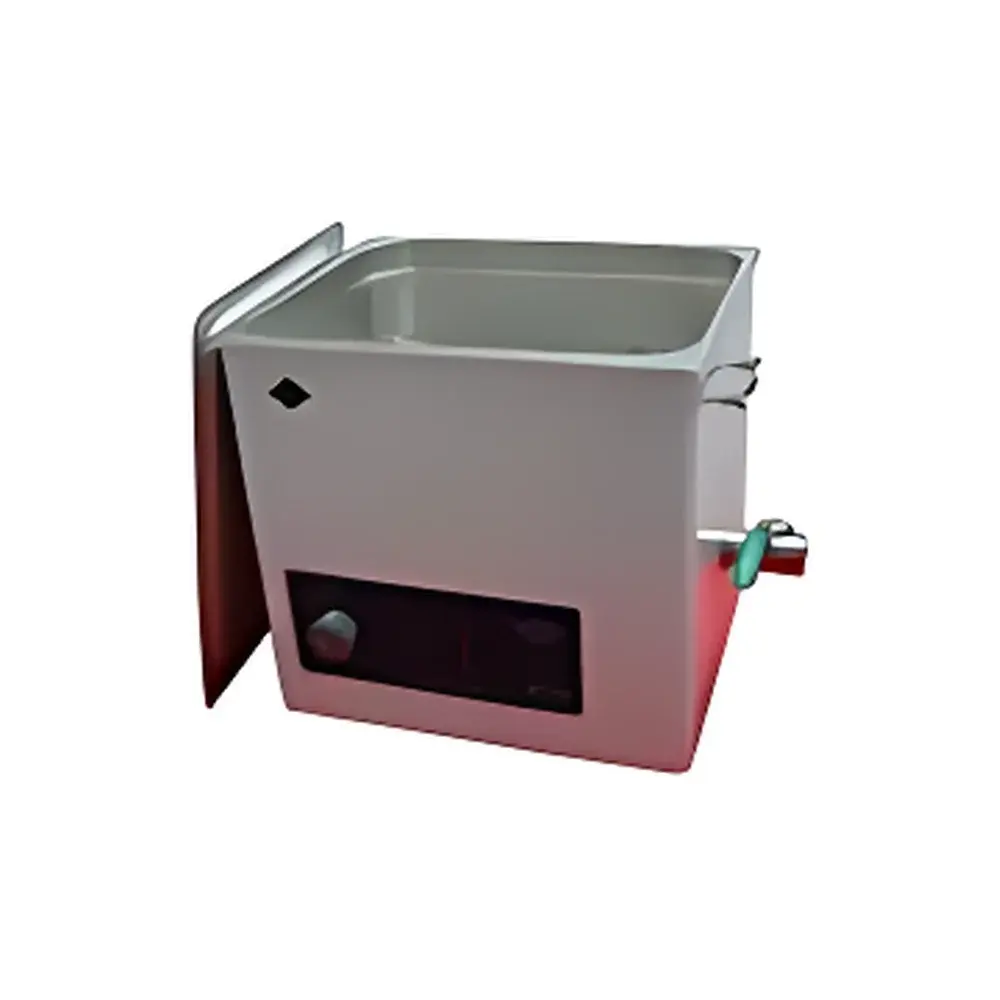
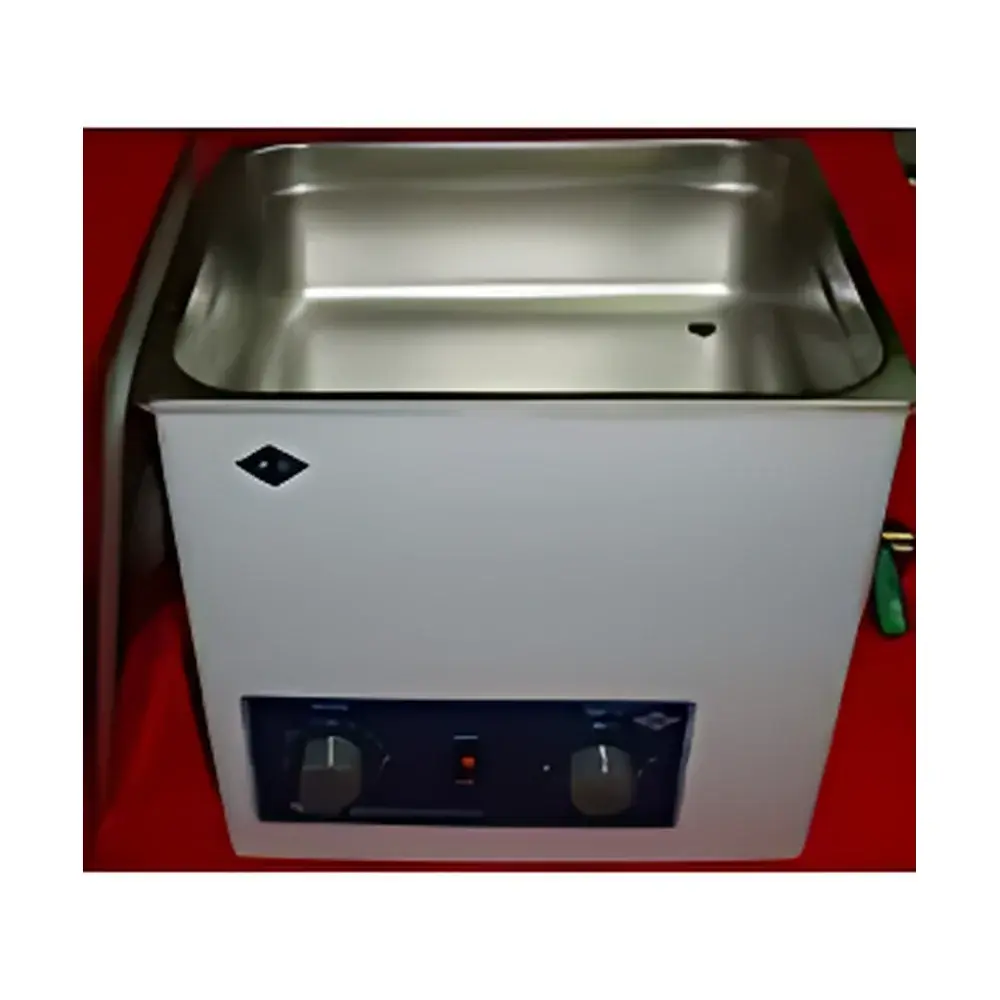
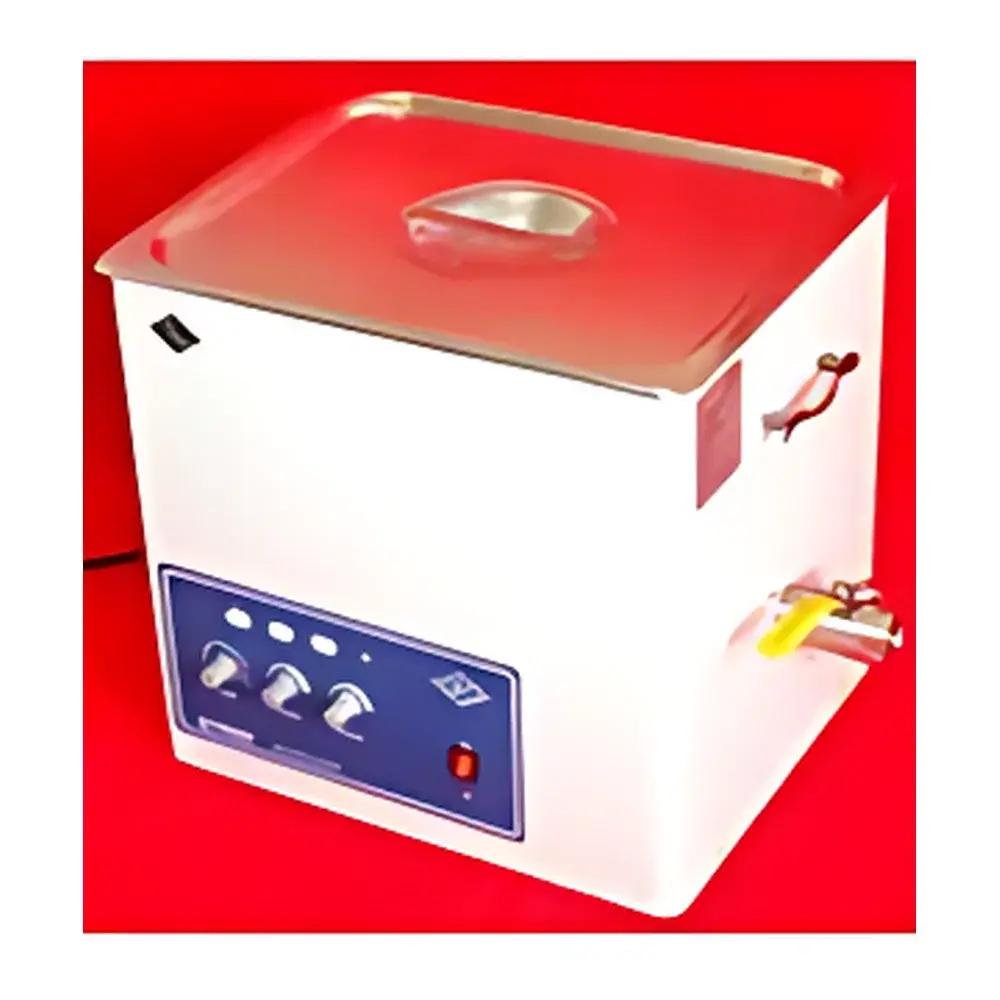
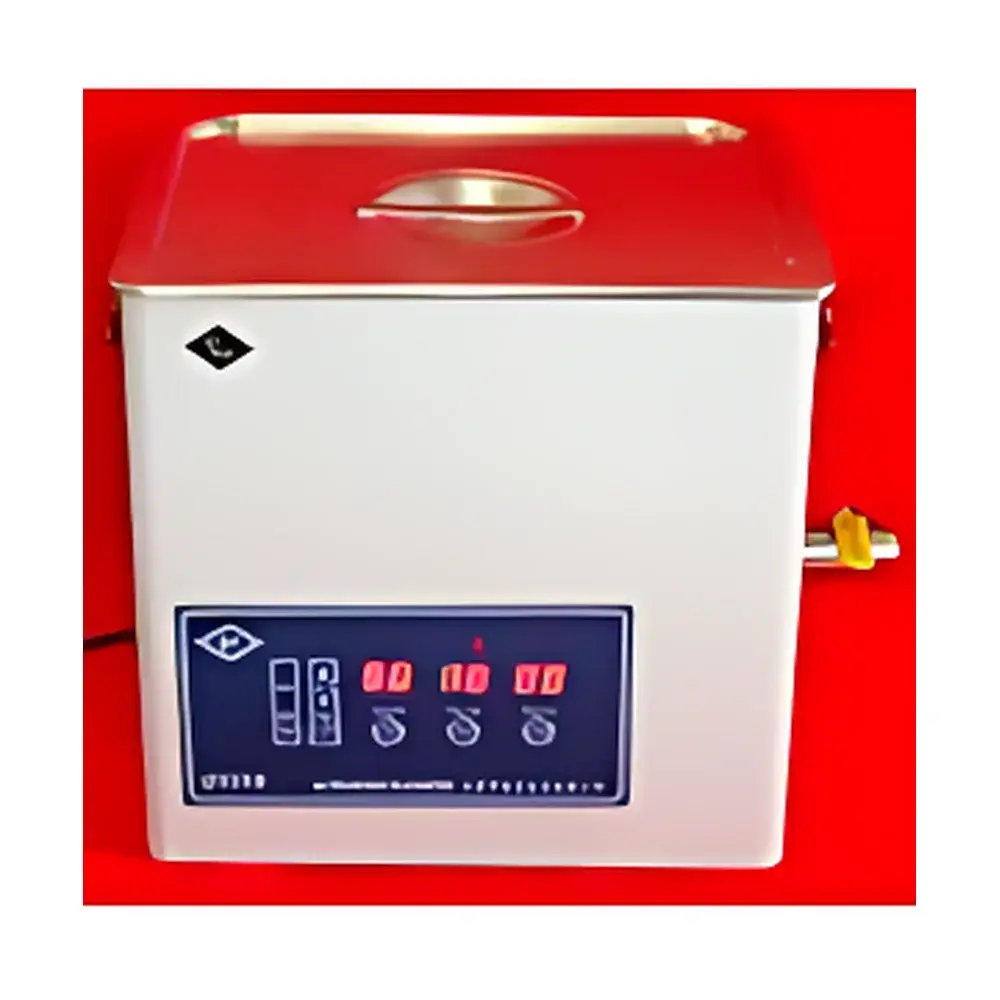
QingTuo QT75 Series 7.5L Benchtop Ultrasonic Cleaner
| Key | Capacity: 7.5 L |
|---|---|
| Ultrasonic Frequency | 40 kHz |
| Tank Dimensions (W×D×H) | 300 × 240 × 100 mm |
| External Dimensions | 410 × 270 × 300 mm |
| Tank Material | 304 Stainless Steel |
| Housing Material | Imported Anodized Aluminum with Anti-Corrosion Coating |
| Ultrasonic Power Output | 200 W (Adjustable: 100/200 W dual-stage or 20–100% continuous) |
| Timer Range | 0–30 min (basic), 1–20 min (heating), 1–99 min (digital) |
| Heating Power | 600 W (models with heating) |
| Temperature Control Range | 0–80 °C |
| Net Weight | 6.0 kg |
| Gross Weight | 7.0 kg |
| Compliance | CE-marked design principles, GLP-aligned operational logging capability (with digital models), RoHS-compliant components |
Overview
The QingTuo QT75 Series 7.5L Benchtop Ultrasonic Cleaner is an engineered solution for precision cleaning of delicate and complex-surface laboratory, medical, and industrial components. It operates on the principle of cavitation—high-frequency ultrasonic energy (40 kHz) transmitted through liquid media generates microscopic vacuum bubbles that implode near solid surfaces, producing localized high-pressure shockwaves and microstreaming effects. This physical mechanism effectively dislodges particulate contaminants, organic residues, biofilms, and embedded debris without mechanical abrasion or chemical aggression. Designed for integration into QC labs, dental clinics, optics workshops, and R&D cleanrooms, the QT75 platform prioritizes thermal stability, acoustic uniformity, and long-term operational reliability—especially critical when processing heat-sensitive items such as inkjet printheads, endoscopic instruments, or MEMS devices.
Key Features
- High-reliability piezoelectric transducers (not ceramic discs) ensure stable acoustic output over extended duty cycles—eliminating thermal runaway and premature cracking associated with low-grade ceramic elements.
- Dual-power mode (100 W / 200 W) enables optimization between gentle cleaning of fragile substrates (e.g., optical lenses, watch movements) and aggressive removal of machining oils or solder flux from metal parts.
- 304 stainless steel seamless tank construction resists corrosion from aqueous and mild alkaline solutions; precision-stamped geometry ensures consistent cavitation field distribution across the entire 7.5 L volume.
- Optional heating function (600 W, 0–80 °C adjustable) supports temperature-enhanced cleaning kinetics—particularly effective for waxy, viscous, or polymerized residues—while maintaining compliance with ASTM D4292 and ISO 13485 environmental controls.
- Digitally controlled variants (QT75K, QTSXR75) provide programmable time/temperature profiles, real-time parameter feedback via LED interface, and repeatable process documentation—supporting audit-ready workflows under FDA 21 CFR Part 11 and GLP requirements.
- Standard inclusion of a stainless steel noise-dampening lid reduces ambient sound pressure levels to ≤55 dB(A) at 1 m distance, improving lab ergonomics and meeting OSHA PEL guidelines for sustained exposure.
Sample Compatibility & Compliance
The QT75 accommodates a broad range of sample geometries and material classes—including but not limited to stainless steel surgical tools, titanium dental implants, silicone-based infant feeding accessories, sapphire-coated optical filters, and PCB assemblies. Its non-contact cleaning mechanism preserves dimensional integrity and surface finish—critical for metrology-grade components. All models comply with IEC 61000-6-3 (EMC emissions) and IEC 61000-6-2 (immunity). Heating-equipped versions incorporate thermal cut-off protection and NTC-based closed-loop temperature regulation to prevent overheating (>70 °C threshold triggers automatic shutdown per UL 61010-1 safety protocols). The unit’s construction materials meet USP extractables criteria for pharmaceutical contact surfaces.
Software & Data Management
Digital models integrate firmware with timestamped operation logging—recording start time, duration, power level, and temperature setpoint for each cycle. Exportable CSV logs support traceability in regulated environments. No proprietary software installation is required; data retrieval occurs via front-panel USB port or manual readout. Firmware updates are delivered via secure HTTPS download and validated using SHA-256 checksums—ensuring integrity during GxP-aligned maintenance procedures. Audit trail functionality includes user ID tagging (via optional external authentication module) and immutable event timestamps compliant with ALCOA+ principles.
Applications
- Pre-analytical sample preparation: removal of residual proteins from HPLC vial inserts and autosampler needles.
- Dental laboratory hygiene: decontamination of removable prostheses, orthodontic appliances, and impression trays prior to sterilization.
- Electronics manufacturing: post-reflow cleaning of SMT stencils, wafer carriers, and RF connectors.
- Research instrumentation maintenance: restoration of quartz cuvettes, spectrophotometer prisms, and AFM probe holders.
- Museum conservation: gentle particulate removal from coinage, engraved seals, and antique optical instruments without solvent exposure.
FAQ
What is the recommended cleaning solution for general-purpose use?
Deionized water or a 1–2% aqueous solution of non-ionic detergent (e.g., Liquinox®) is suitable for most applications. Avoid chlorinated or strongly acidic solvents unless explicitly validated for compatibility with 304 stainless steel.
Can this unit be used for sterilization?
No. Ultrasonic cleaning removes bioburden but does not achieve sterility. It must be followed by validated terminal sterilization (e.g., autoclaving, ethylene oxide) per ISO 17664 and AAMI ST79.
Is degassing functionality available on all models?
Degassing control (20–100% intensity, 1–99 min timer) is standard only on QT75K and QTSXR75 variants. Basic and heating-only models lack active degas mode but support passive air release via pre-cycle stand time.
How often should the tank solution be replaced?
Solution change frequency depends on load and soil type. As a baseline: replace after every 8 hours of cumulative operation or immediately upon visible turbidity, foaming, or pH shift beyond ±0.5 units.
Does the unit support external drain connection?
No built-in drain valve is provided. Manual emptying via tilting or siphon is required. Optional third-party drain kits may be retrofitted with engineering review for structural integrity.



