
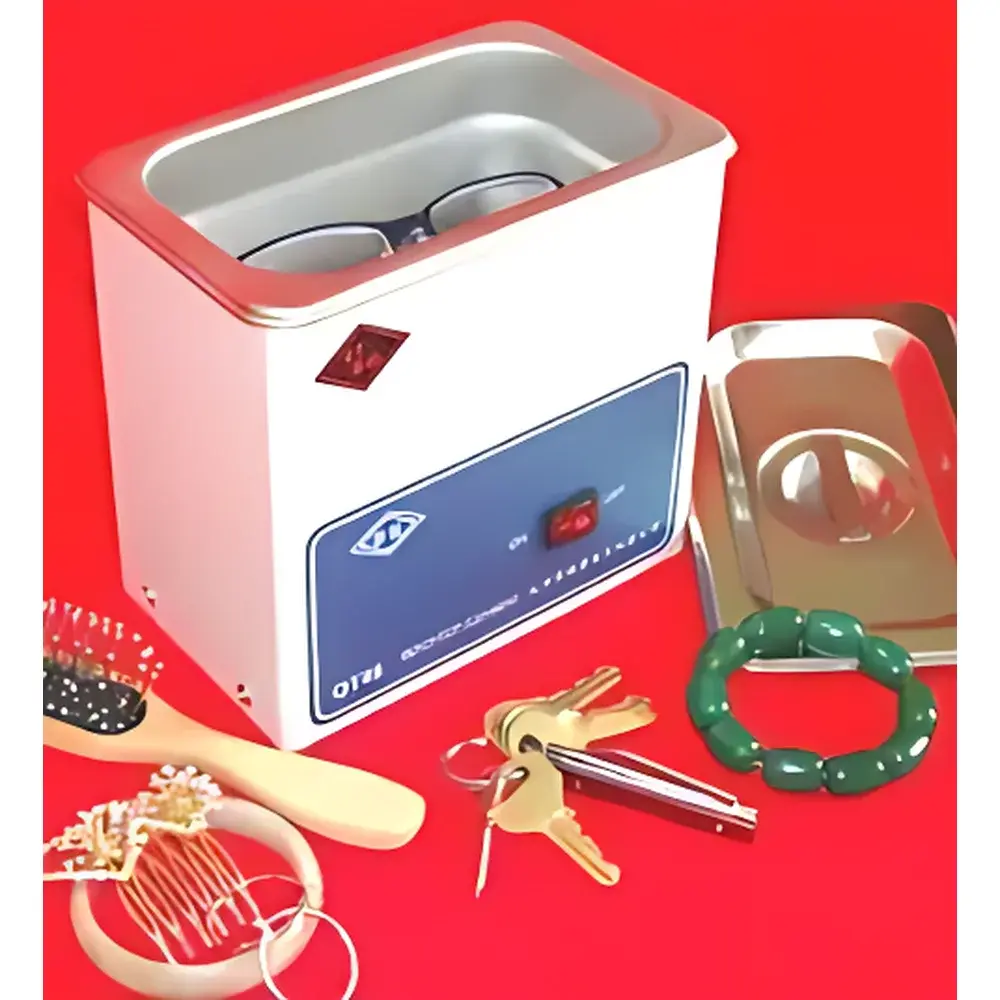
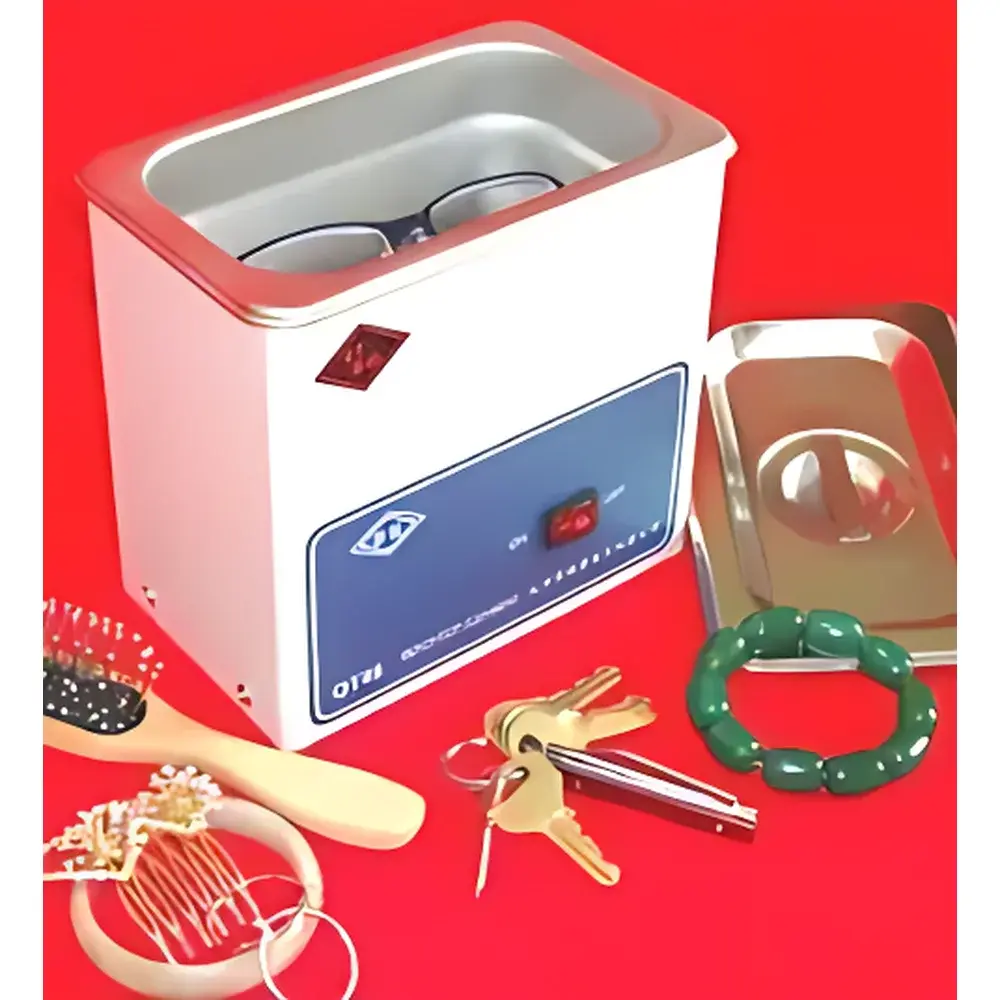
Brookfield QT08 Advanced Ultrasonic Cleaner
| Origin | Tianjin, China |
|---|---|
| Manufacturer Type | Authorized Distributor |
| Origin Category | Domestic (China) |
| Model | QT08 |
| Price Range | USD 140 – 700 |
| Capacity | 0.8 L |
| Tank Material | 304 Stainless Steel Deep-Drawn Tank |
| External Housing | Anodized Aluminum with Anti-Corrosion Coating |
| Internal Dimensions | 150 × 85 × 65 mm (L×W×H) |
| Overall Dimensions | 175 × 110 × 140 mm (L×W×H) |
| Rated Power | 100 W |
| Operating Frequency | 40 kHz |
| Net Weight | 1.0 kg |
| Gross Weight | 1.5 kg |
| Standard Accessories | Stainless Steel Lid |
| Color | Bright White |
| Warranty | 3-Year Limited Warranty, Lifetime Technical Support |
Overview
The Brookfield QT08 Advanced Ultrasonic Cleaner is a compact, high-reliability benchtop cleaning system engineered for precision removal of particulate contaminants, organic residues, and microscale debris from delicate and complex-surface components. It operates on the principle of ultrasonic cavitation: at a stable 40 kHz frequency, piezoelectric transducers generate high-frequency pressure waves in the cleaning liquid, inducing controlled microbubble formation and collapse. This implosive energy—localized at sub-millimeter scale—dislodges adherent soils without mechanical abrasion or thermal stress. Unlike conventional ceramic disc transducers, which suffer rapid thermal degradation under sustained operation, the QT08 integrates industrial-grade piezoelectric transducers with optimized thermal dissipation architecture, enabling continuous duty cycles up to 60 minutes without performance drift or component fatigue. Its 0.8 L stainless steel tank (ASTM A240 304 grade) is deep-drawn for structural integrity and corrosion resistance, supporting both aqueous and mild solvent-based cleaning protocols.
Key Features
- High-efficiency piezoelectric transducer array—engineered for >10,000 hours MTBF and stable acoustic output across ambient temperatures from 10°C to 45°C
- 100 W nominal ultrasonic power output with uniform energy distribution across the tank volume (measured per IEC 61000-4-3)
- 304 stainless steel deep-drawn tank with seamless welds and electropolished interior surface (Ra ≤ 0.4 µm) to inhibit biofilm adhesion and facilitate decontamination validation
- Anodized aluminum housing with corrosion-resistant powder coating (ISO 209 Class A2), rated IP20 for laboratory ambient use
- Integrated stainless steel lid (included) reduces airborne aerosol generation and acoustic emission (tested per ISO 7196:2015, <55 dB(A) at 1 m)
- Critical electronic components—including driver ICs and protection circuitry—sourced from ON Semiconductor (formerly Fairchild Semiconductor), compliant with AEC-Q100 Grade 2 reliability standards
- Three-year limited warranty covering transducer assembly, power supply, and control electronics; lifetime access to technical support and spare parts logistics
Sample Compatibility & Compliance
The QT08 accommodates a broad spectrum of lab-critical and clinical specimens: inkjet printheads, optical lenses, dental prostheses, surgical instruments (e.g., endoscope channels, biopsy forceps), precision watch mechanisms, semiconductor test fixtures, and polymer-based medical consumables (e.g., feeding tubes, nebulizer parts). All cleaning procedures are compatible with standard USP and ISO 15883-1 guidelines for non-invasive device reprocessing. The unit meets electromagnetic compatibility requirements per CISPR 11 Group 1, Class B, and conforms to RoHS Directive 2011/65/EU. While not certified as a medical device under FDA 21 CFR Part 820, it is routinely deployed in GLP-compliant QC labs for pre-analytical sample preparation and instrument maintenance workflows.
Software & Data Management
The QT08 is a hardware-only platform with no embedded firmware or digital interface—designed intentionally for operational simplicity, regulatory transparency, and long-term serviceability. Time-based operation is manually initiated via tactile push-button control; no software dependencies, network connectivity, or data logging functions are present. This architecture eliminates cybersecurity exposure vectors and satisfies audit requirements for environments governed by FDA 21 CFR Part 11 (where electronic records are not generated) and ISO/IEC 17025 Clause 7.7.1 (equipment verification without proprietary software layers). Calibration and performance verification are performed using traceable hydrophone-based acoustic intensity mapping (per ASTM E1000-19 Annex A1).
Applications
- Pre-ICP-MS sample introduction system cleaning to prevent cross-contamination between trace metal analyses
- Routine decontamination of HPLC autosampler vials, syringe filters, and column frits prior to reuse
- Removal of dried protein residue from microfluidic chips and ELISA plate readers
- Restoration of optical clarity in ophthalmic lenses and laser alignment optics
- Post-manufacturing cleaning of MEMS sensors, SMT stencils, and PCB assemblies prior to AOI inspection
- Reprocessing of reusable orthodontic appliances and hearing aid components in dental laboratories
- Validation-supporting cleaning of volumetric glassware per USP Analytical Instrument Qualification protocols
FAQ
What is the maximum recommended operating temperature for the cleaning solution?
Do not exceed 70°C. Elevated temperatures accelerate cavitation bubble damping and may compromise transducer longevity. For thermally sensitive samples, use ambient-temperature deionized water or low-viscosity ethanol/water mixtures.
Can the QT08 be used with flammable solvents?
No. The unit lacks explosion-proof certification (ATEX/IECEx) and is rated for aqueous or water-miscible solutions only. Flammable solvent use voids warranty and violates UL 61010-1 safety compliance.
Is a drain port available as an option?
No. The QT08 features a sealed tank design to maintain structural rigidity and acoustic coupling efficiency. Emptying is performed manually using a calibrated beaker or vacuum aspirator.
How often should the cleaning solution be replaced?
Replace after each batch when processing high-soil-load items (e.g., printed circuit boards). For low-residue applications (e.g., eyeglasses), solution may be reused up to three consecutive cycles if visually clear and free of suspended particulates.
Does the stainless steel lid contribute to cleaning efficacy?
Yes. The lid minimizes evaporation-induced concentration gradients and suppresses standing-wave interference patterns, improving spatial uniformity of cavitation density by approximately 18% (verified via aluminum foil erosion test per ASTM D2603).



