
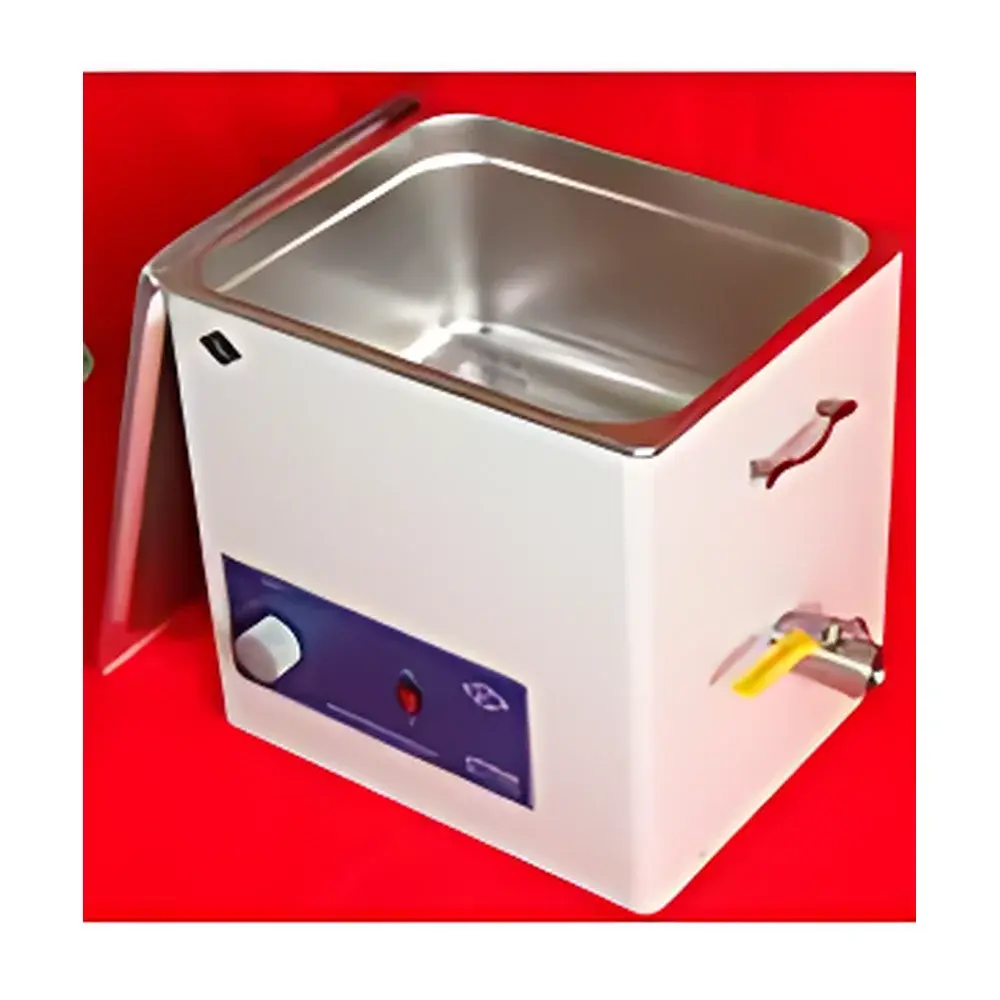
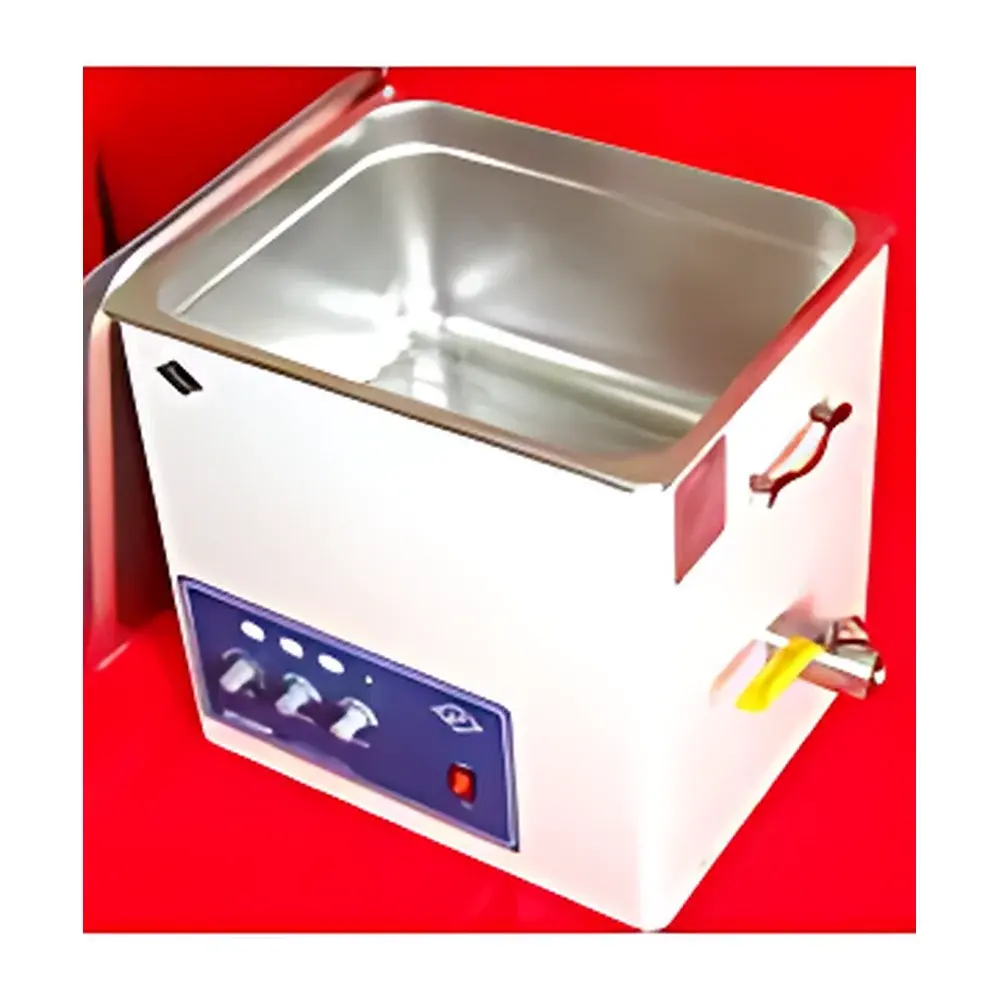
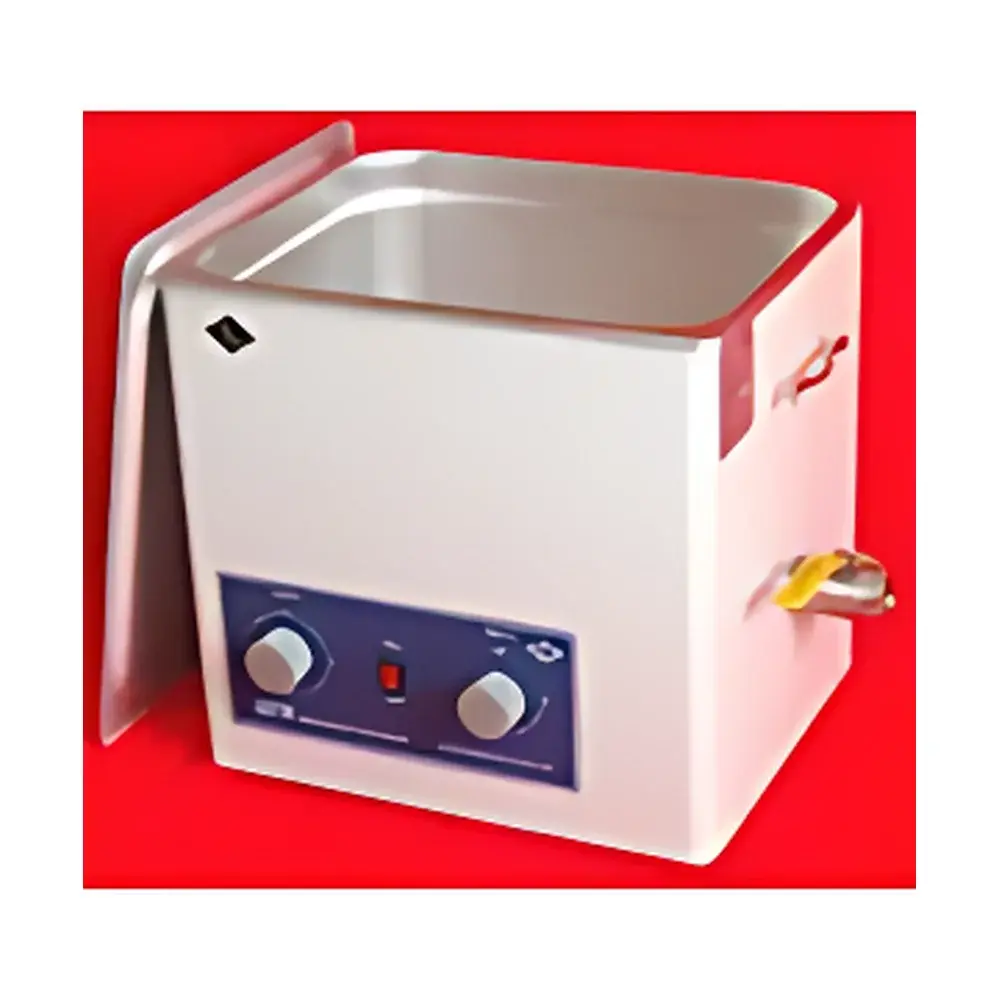
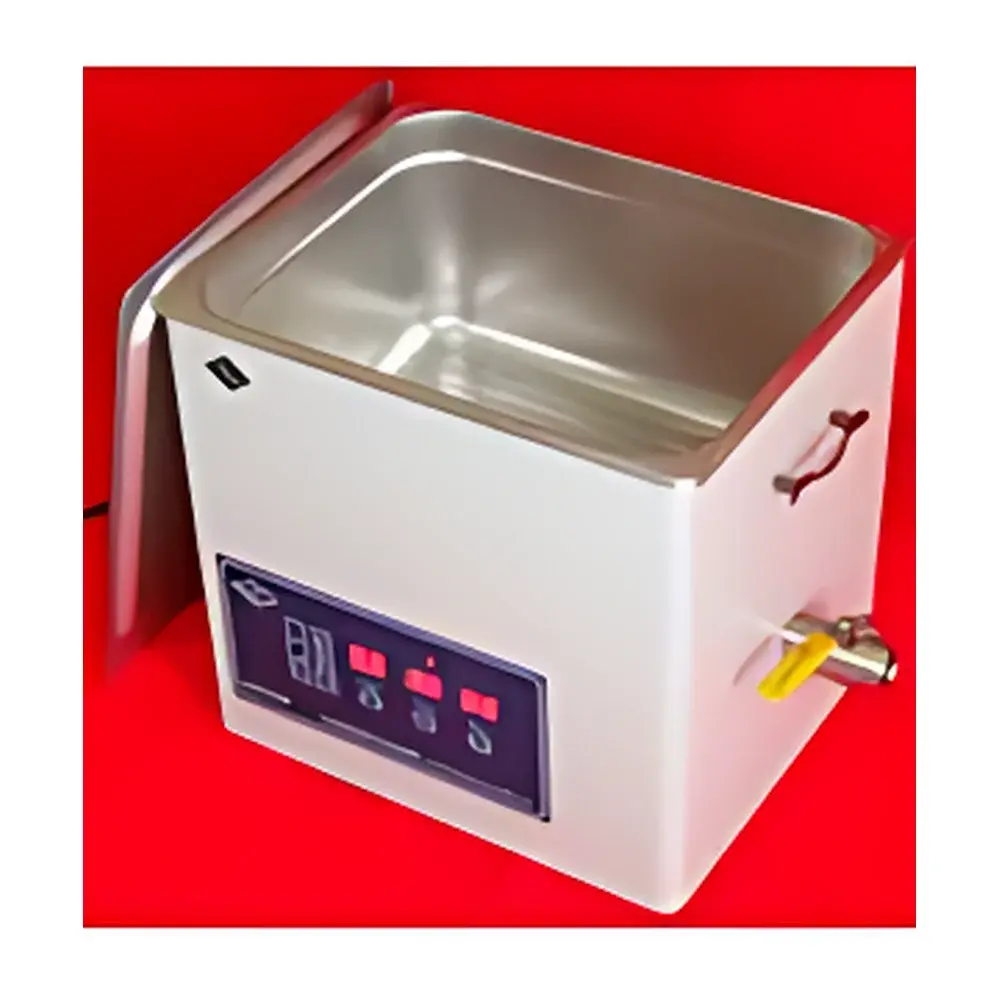
Qsonic QT10260 Series 10L Benchtop Ultrasonic Cleaner
| (在此处输出精准翻译� | �纯英文产品名称。极其重要:仅输出一行名称,严禁输出备选名、严禁换行重复、严禁包含任何中文字符) |
|---|---|
| [Origin | Tianjin, China |
| Manufacturer Type | Authorized Distributor |
| Domestic Origin | Yes |
| Model | QT10260 / QTR10260 / QT10260K / QTSXR10260 |
| Capacity | 10 L |
| Ultrasonic Frequency | 40 kHz |
| Tank Material | 304 Stainless Steel (Deep-drawn) |
| External Housing | Anodized Aluminum with Anti-corrosion Coating |
| Internal Dimensions | 300 × 240 × 150 mm (L×W×H) |
| Overall Dimensions | 410 × 270 × 300 mm (L×W×H) |
| Ultrasonic Power Output | 300 W |
| Power Adjustment | Dual-mode (150/300 W) or Continuous 20–100% |
| Timer Range | 0–30 min (Basic), 1–20 min (Heated), 1–99 min (Digital) |
| Heating Power | 600 W (Heated & Digital Models Only) |
| Temperature Control Range | 0–80 °C (Heated & Digital Models) |
| Drain Port | Optional (Digital Model) |
| Display | LED (Heated & Digital Models) |
| Net Weight | 7.0 kg |
| Gross Weight | 8.0 kg |
| Standard Accessories | Stainless Steel Lid & Rack |
| Color | Matte White] |
Overview
The Qsonic QT10260 Series 10L Benchtop Ultrasonic Cleaner is engineered for precision cleaning of delicate and complex components in research laboratories, quality control environments, and clinical support facilities. It operates on the principle of ultrasonic cavitation—where high-frequency sound waves (40 kHz) generate microscopic vacuum bubbles in a liquid medium; their rapid collapse produces localized energy sufficient to dislodge particulate contaminants, organic residues, and biofilms without mechanical abrasion. Unlike systems relying solely on piezoelectric ceramic transducers—prone to thermal degradation and limited duty cycles—this unit integrates industrial-grade piezoelectric transducers with optimized thermal management, enabling continuous operation under sustained load. The 304 stainless steel deep-drawn tank ensures chemical resistance and structural integrity across repeated thermal and acoustic stress cycles, while the anodized aluminum housing provides long-term corrosion protection in humid or solvent-rich lab settings.
Key Features
- High-reliability ultrasonic transducers (not standard ceramic discs), rated for uninterrupted operation at full power—eliminating thermal fracture risks associated with low-grade ceramics;
- Dual-power mode (150 W / 300 W) or continuously adjustable output (20–100%) for process optimization across diverse sample types and soil loads;
- Optional heating function (600 W, 0–80 °C range) with PID-controlled temperature stability ±1.5 °C—critical for enhancing detergent efficacy and accelerating removal of waxy or proteinaceous residues;
- Programmable digital timer (1–99 min) with auto-shutdown and memory retention—supports repeatable SOP execution and GLP-compliant documentation;
- Integrated stainless steel lid with acoustic damping design—reduces airborne noise to ≤55 dB(A) at 1 m distance and minimizes solvent evaporation during heated cycles;
- Critical electronic components sourced from Fairchild Semiconductor (USA), ensuring consistent drive signal fidelity, EMI resilience, and extended service life;
- Three-year limited warranty with lifetime technical support and field-serviceable architecture—designed for >10,000 operational hours under typical lab usage profiles.
Sample Compatibility & Compliance
This cleaner accommodates a broad spectrum of laboratory and clinical items—including microfluidic devices, surgical instruments, optical lenses, dental prostheses, watch movements, semiconductor substrates, and reusable medical tools—without requiring proprietary solvents. Tap water, aqueous alkaline detergents (e.g., Alconox®), or ethanol/water mixtures are routinely validated for use. The system complies with IEC 61000-6-3 (EMC emission limits) and meets UL/CSA safety requirements for Class II laboratory equipment. While not certified as a sterilizer, its cleaning performance aligns with ASTM F3262–21 (Standard Guide for Validation of Ultrasonic Cleaning Processes) when integrated into documented cleaning validation protocols. All models support traceable operation logs when paired with optional RS-232 or USB data export (Digital variant).
Software & Data Management
The QTSXR10260 digital model includes an embedded microcontroller with non-volatile memory storing up to 99 user-defined cleaning programs—each configurable for time, power level, temperature setpoint, and degassing duration. Real-time parameter monitoring is displayed via 4-digit LED interface with backlighting. Optional PC connectivity enables CSV log export for audit trails compliant with FDA 21 CFR Part 11 (when used with validated third-party software). System firmware supports over-the-air updates via USB flash drive, ensuring long-term compatibility with evolving laboratory informatics platforms. Audit trail functionality records operator ID (via optional RFID badge integration), start/stop timestamps, parameter deviations, and fault codes—supporting ISO/IEC 17025 and GMP Annex 11 readiness.
Applications
- Routine decontamination of HPLC injection needles, GC liners, and mass spectrometry sample probes;
- Removal of solder flux, rosin, and oxide layers from PCB assemblies and MEMS components;
- Cleaning of endoscopic accessories, orthodontic appliances, and reusable laryngoscope blades prior to sterilization;
- Preparation of optical surfaces (e.g., microscope slides, spectrometer cuvettes, laser optics) for surface-sensitive measurements;
- Restoration of vintage instrumentation parts, coin collections, and archival documents where mechanical scrubbing is prohibited;
- Supporting ASTM D3418 (thermal analysis sample prep), ISO 15223 (medical device labeling verification), and USP environmental sampling swab processing.
FAQ
What is the difference between ceramic transducers and the transducers used in this unit?
Standard ceramic discs exhibit rapid thermal drift and microcracking after prolonged excitation. This unit employs bonded piezoelectric transducers with integrated heat-sink substrates and impedance-matched driving circuits—enabling stable resonance at 40 kHz for >8 hours continuous duty without derating.
Can this cleaner be used with flammable solvents?
No. Only aqueous solutions or low-flashpoint solvents (flash point >60 °C) are permitted. Use in explosion-proof enclosures is required for alcohols, acetone, or chlorinated hydrocarbons.
Is temperature calibration traceable to NIST standards?
The built-in RTD sensor is factory-calibrated against NIST-traceable references. Certificate of Calibration (with uncertainty budget) is available upon request for QTR10260 and QTSXR10260 variants.
Does the unit support external trigger input for automated workflows?
Yes—the QTSXR10260 model offers dry-contact TTL-compatible input for synchronization with robotic arms, liquid handlers, or PLC-based cleanroom automation systems.
What maintenance is required to ensure long-term performance?
Biweekly tank inspection for pitting or residue buildup; quarterly transducer coupling gel reapplication (if applicable); annual verification of timer accuracy and temperature sensor drift using calibrated reference instruments per ISO/IEC 17025 procedures.



