
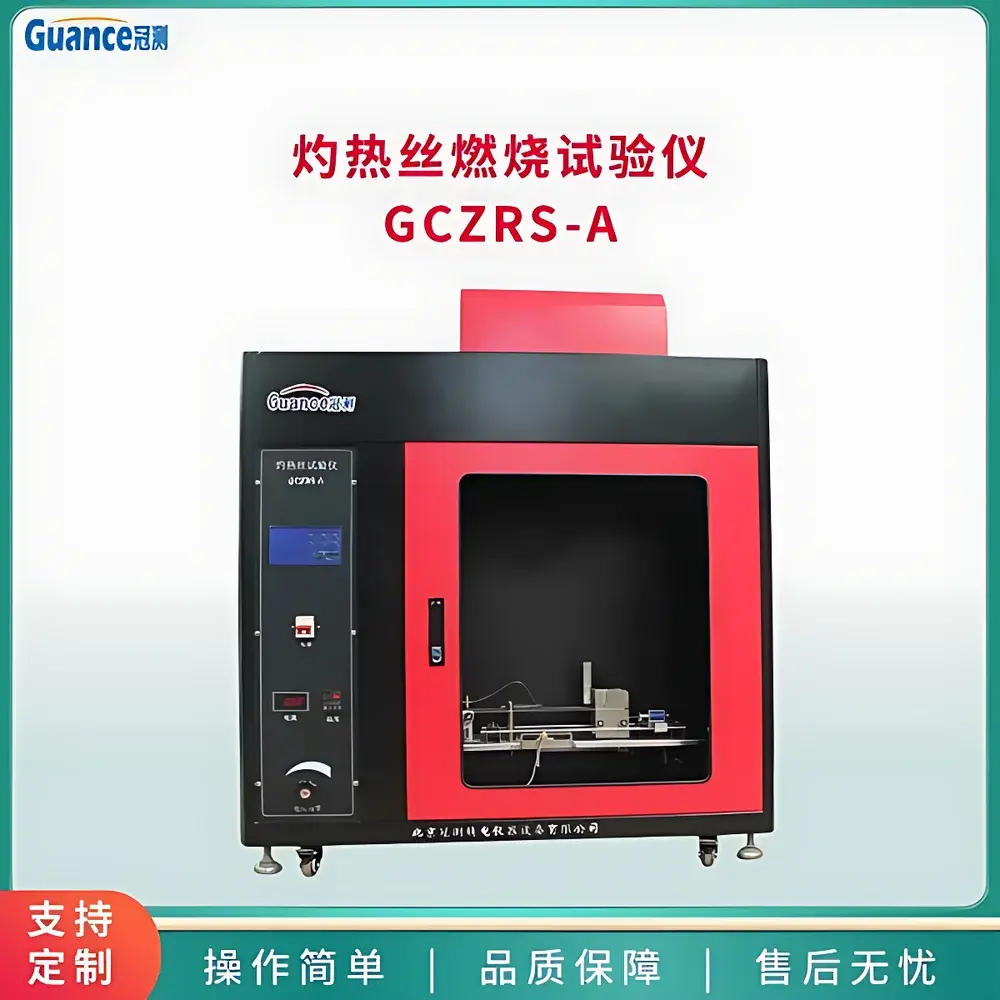
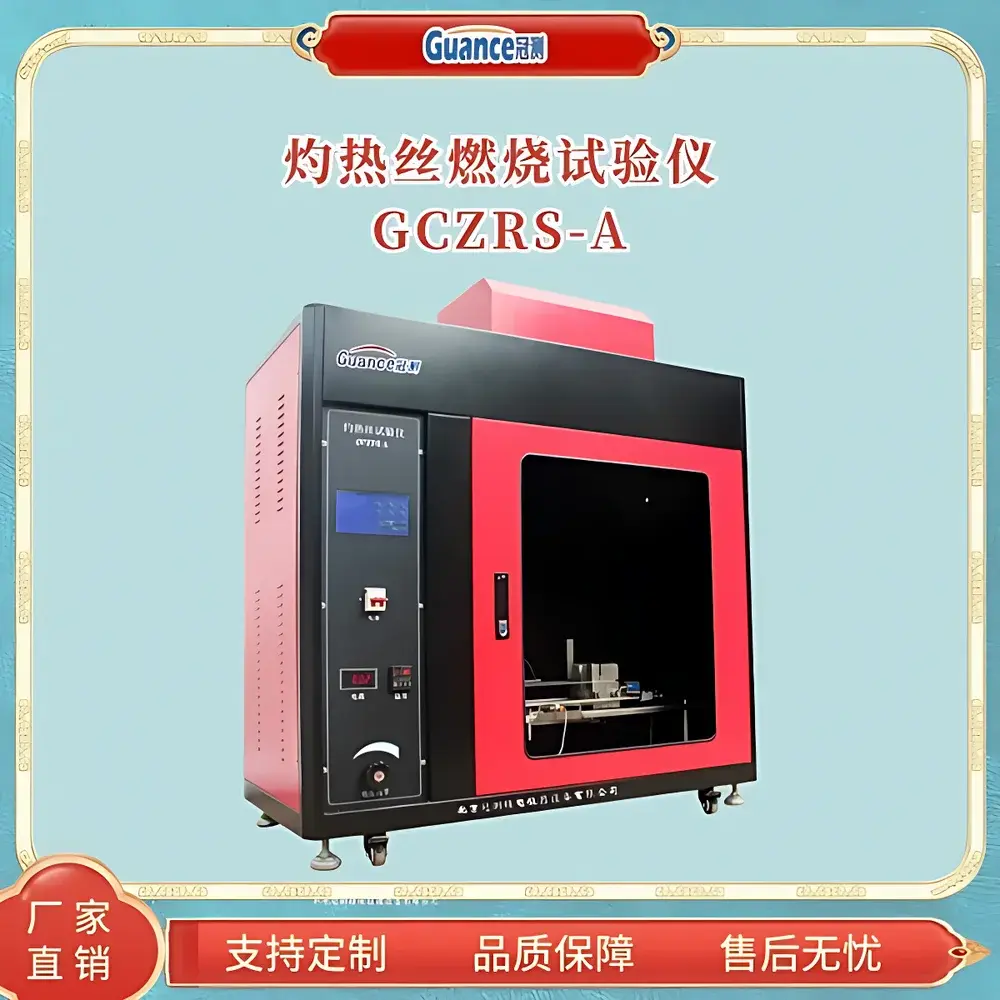
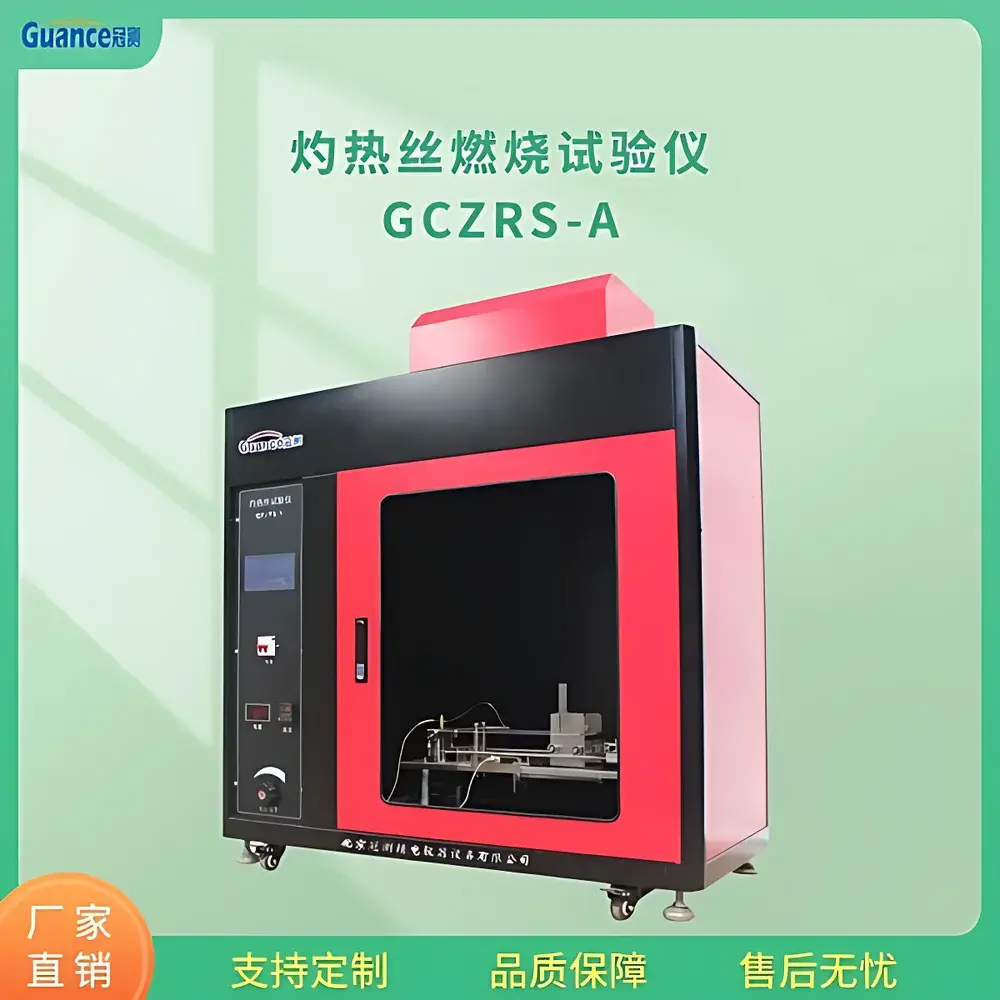
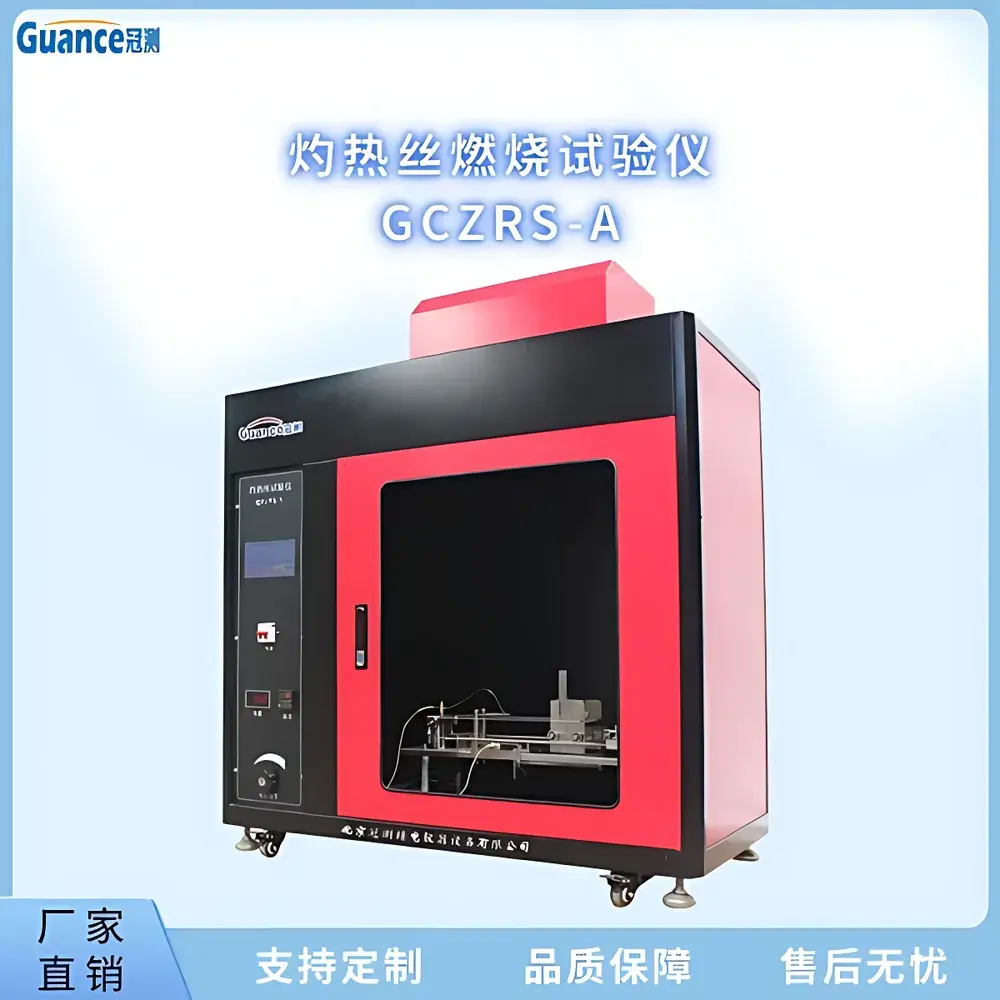
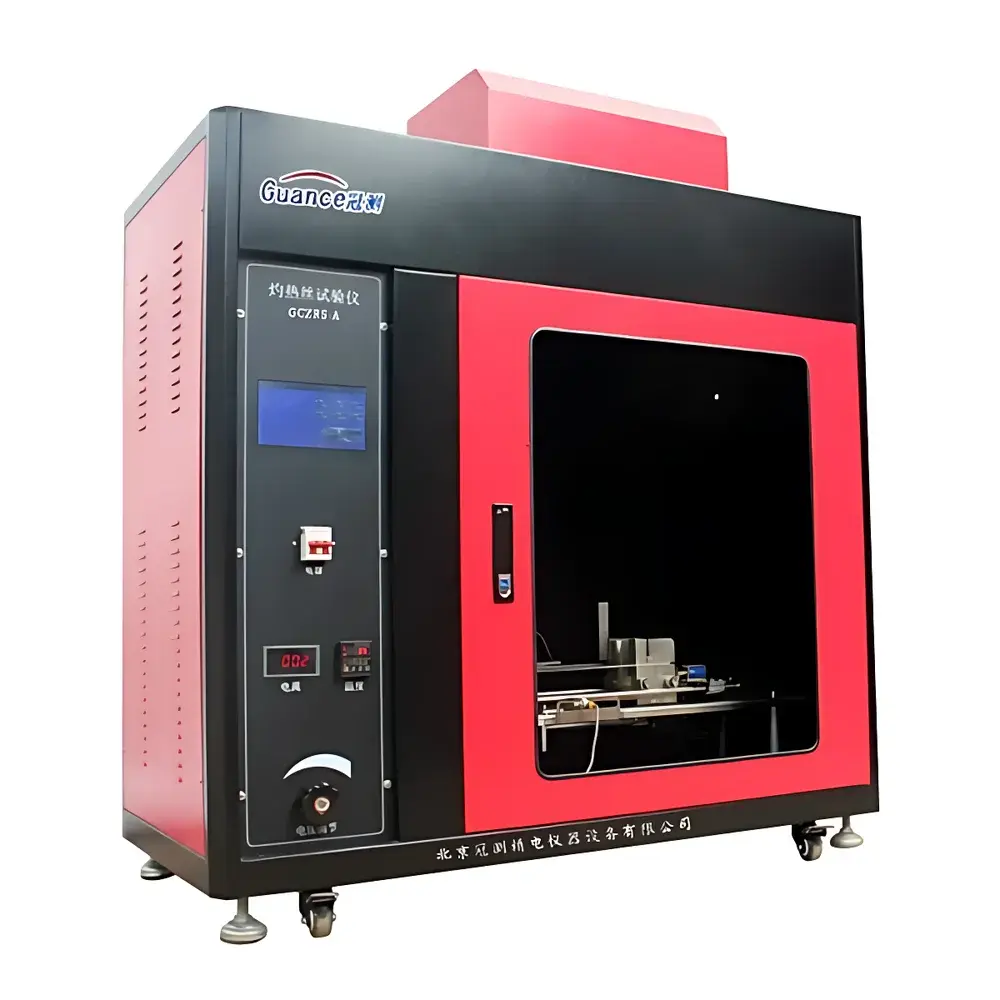
GuanCe Instruments GCZRS-A Glow-Wire Ignition Tester
| Brand | GuanCe Instruments |
|---|---|
| Origin | Beijing, China |
| Manufacturer Type | Authorized Distributor |
| Country of Origin | China |
| Model | GCZRS-A |
| Application Field | Electrical & Electronic Equipment |
| Heating Element | Ni80/Cr20 alloy wire (Φ4 mm) |
| Repeatability Error | ±1°C |
| Intended Use | Flammability assessment of insulating materials, engineering plastics, and other solid combustible materials |
Overview
The GuanCe Instruments GCZRS-A Glow-Wire Ignition Tester is a precision-engineered combustion test chamber designed to evaluate the ignition hazard of non-metallic materials used in electrical and electronic equipment. It operates in strict accordance with the principle of glow-wire testing as defined in IEC 60695-2-10, IEC 60695-2-11, and GB/T 5169.10–2006. The instrument heats a standardized Ni80/Cr20 alloy wire (Φ4 mm) to a preset temperature between 500 °C and 1000 °C (±2 °C), applies a controlled mechanical load of 1.0 N (±0.2 N), and maintains contact with the test specimen for a precisely timed duration (typically 30 s). The system evaluates critical fire safety parameters including Glow-Wire Ignition Temperature (GWIT), Glow-Wire Flammability Index (GWFI), and ignition behavior—specifically whether the specimen ignites, sustains flaming combustion, or causes ignition of underlying packaging material (e.g., pine board). Its robust thermal control architecture, optical flame monitoring interface, and fully automated test sequence support repeatable, auditable assessments required for product safety certification.
Key Features
- Independent microcomputer + 7-inch color touchscreen control system, decoupled from PLC-based analog-to-digital conversion limitations—ensuring superior temperature resolution and electromagnetic interference immunity
- Integrated real-time digital display of both temperature (°C) and time (s), with ±0.1 s timing resolution for glow-wire application, ignition onset, and flame extinction
- Precision mechanical actuation: 14 mm/s linear probe speed, 7 mm ±0.5 mm penetration depth, and calibrated 1.0 N force application via stainless steel weight system
- Full X–Z axis sample positioning stage accommodating irregular geometries; self-contained sample carriage with enclosed design to prevent tipping during thermal loading
- Optimized combustion chamber: ≥0.5 m³ internal volume (L×W×H ≈ 900 × 590 × 1050 mm), black matte interior surface (illuminance ≤20 Lux), and dedicated exhaust ducting with independent ventilation control
- Safety-critical hardware: K-type armored thermocouple (Φ0.5 mm), red-light photoelectric limit switch for positional accuracy, overtemperature cut-off circuitry, and flame-height measurement gauge
- One-touch test execution: Single-button initiation triggers full sequence—including preheat stabilization, contact timing, post-test cooling, data auto-save, and background ventilation activation
Sample Compatibility & Compliance
The GCZRS-A accommodates flat, curved, or irregularly shaped solid specimens up to standard dimensions defined in IEC 60695-2-10 (e.g., 60 mm × 60 mm × 10 mm). It supports evaluation of thermoplastics, thermosets, laminates, elastomers, and composite insulation systems. All test configurations comply with mandatory regulatory frameworks for electrical safety, including IEC 60695-2-10/11 (glow-wire end-product and material tests), UL 746A (polymeric materials), GB 4706.1 (household appliance safety), DIN 695 (German cable sheath requirements), and VDE 0471. The instrument’s thermal calibration traceability, documented repeatability (±1°C), and black-background optical environment meet GLP-aligned laboratory practice standards for flammability data generation under ISO/IEC 17025 environments.
Software & Data Management
Test protocols are executed and monitored via an embedded HMI interface with intuitive icon-driven navigation. Each test cycle automatically logs timestamped records—including setpoint temperature, actual thermocouple reading, contact duration, ignition time (ti), flame duration (tf), and operator-assigned sample ID. Historical datasets are stored locally with searchable metadata and exportable CSV output. While the system does not implement FDA 21 CFR Part 11-compliant electronic signatures or audit trails out-of-the-box, its deterministic control logic, immutable time-stamped logs, and manual intervention flags (e.g., “pause ignition timer”) provide foundational traceability for internal QA review and third-party certification audits.
Applications
- Qualification of enclosure materials for consumer electronics, power supplies, and industrial control panels
- Comparative GWIT/GWFI ranking of polymer formulations during R&D of halogen-free flame-retardant compounds
- Verification testing per UL Component Recognition Program (UR Recognition) for plastic housings and insulators
- Production-line screening of incoming molded parts against material specification limits (e.g., GWFI ≥850 °C)
- Root-cause analysis of field failures involving thermal runaway or proximity-induced ignition in PCB assemblies
- Supporting technical documentation for CE marking (EN 60335-1), CCC certification (GB 4706.1), and CB Scheme submissions
FAQ
What standards does the GCZRS-A directly support?
It is configured for full compliance with IEC 60695-2-10, IEC 60695-2-11, GB/T 5169.10–2006, GB/T 5169.11, UL 746A, and VDE 0471.
Is the glow-wire temperature calibrated and traceable?
Yes—the integrated K-type thermocouple is factory-calibrated to ±2 °C across 500–1000 °C, with verification points documented per ISO/IEC 17025 procedures.
Can the chamber volume be customized?
Standard configuration offers ≥0.5 m³ internal volume; optional stainless-steel enclosures with 0.75 m³ or 1.0 m³ volumes are available upon request.
How is specimen pressure applied and verified?
A calibrated 1.0 N load is delivered via precision-machined stainless steel weights (supplied with 0.5 N duplicates); force verification is performed using NIST-traceable load cells during installation qualification.
Does the system include flame detection automation?
No automatic flame sensor is integrated; visual observation through the tempered glass viewport—combined with the low-illuminance black background—is the primary method per IEC 60695-2-10 Clause 9.2.
Related Products



