
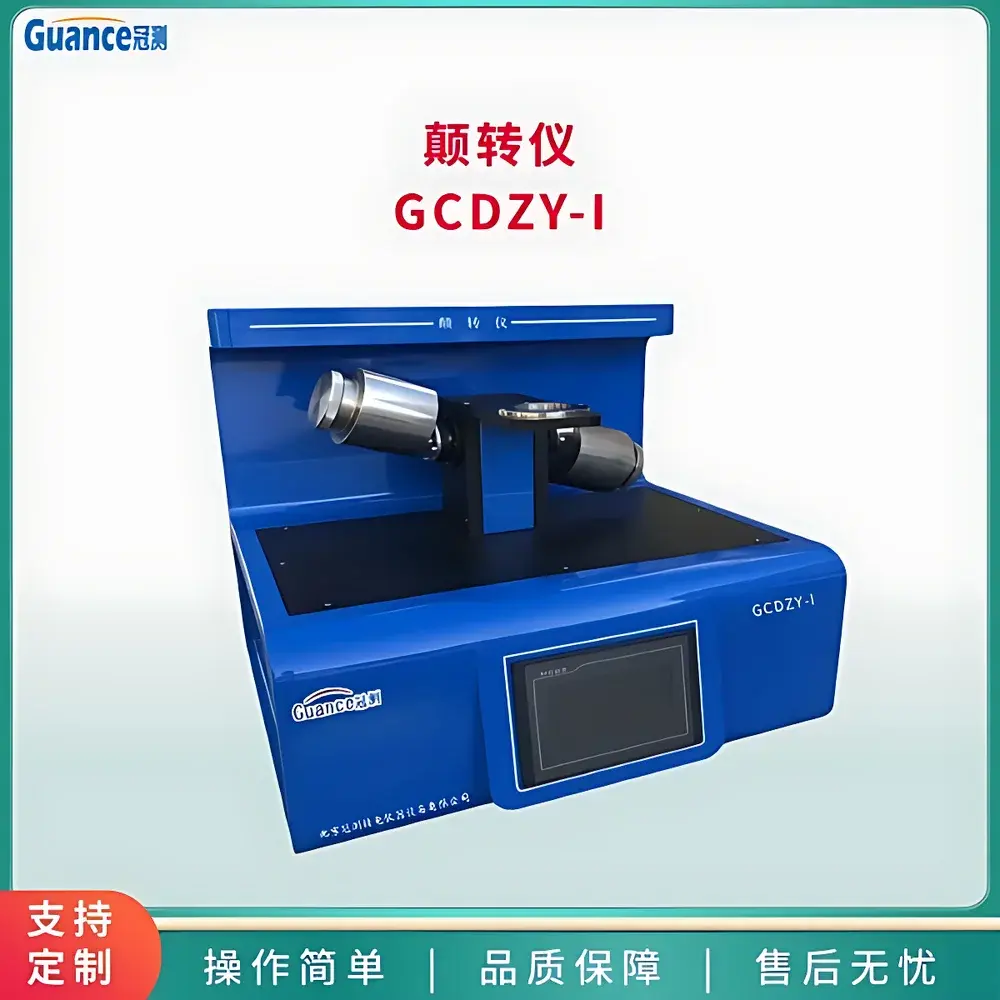
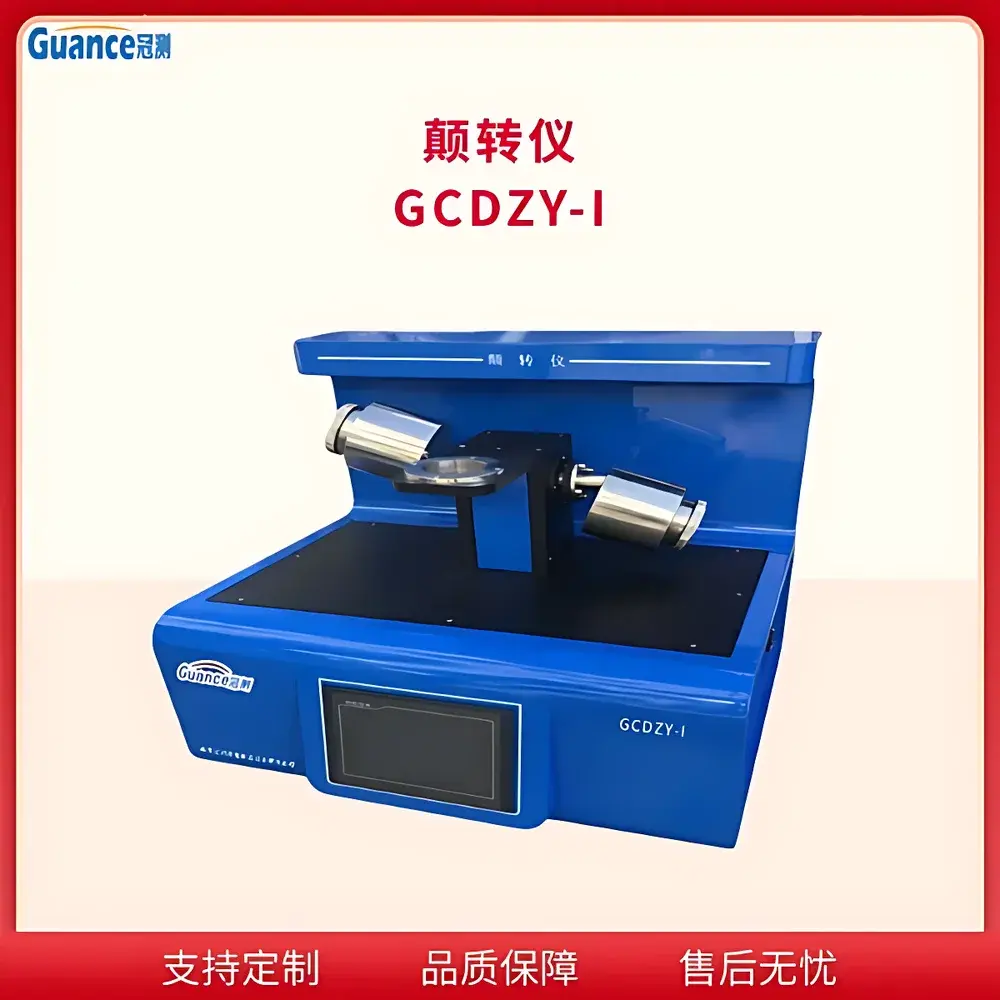
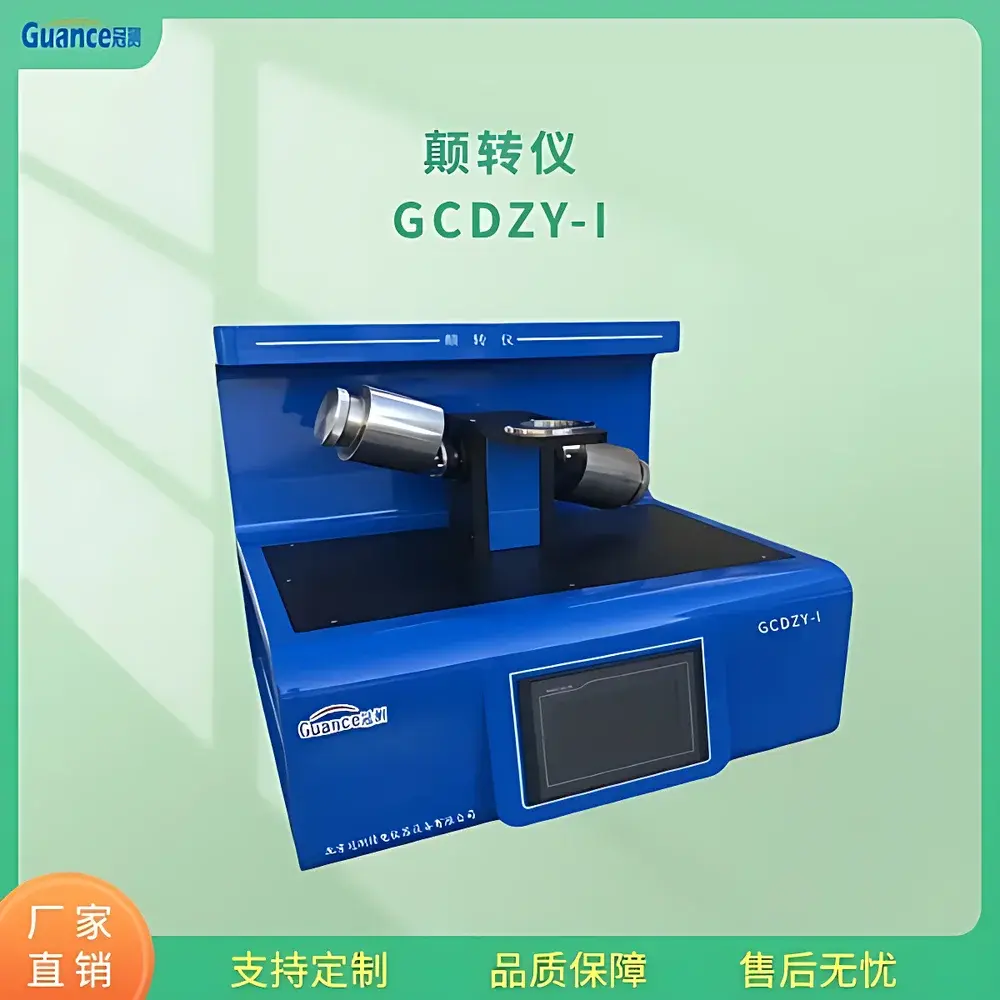
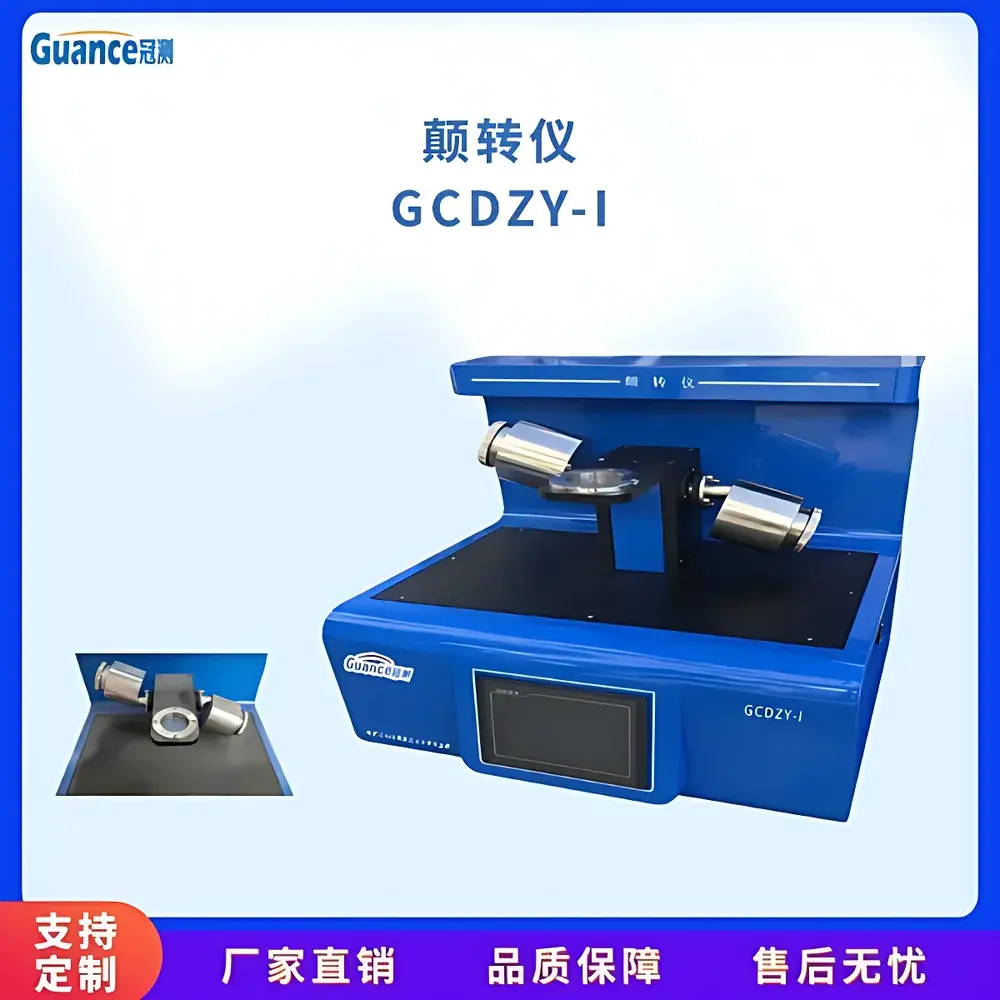
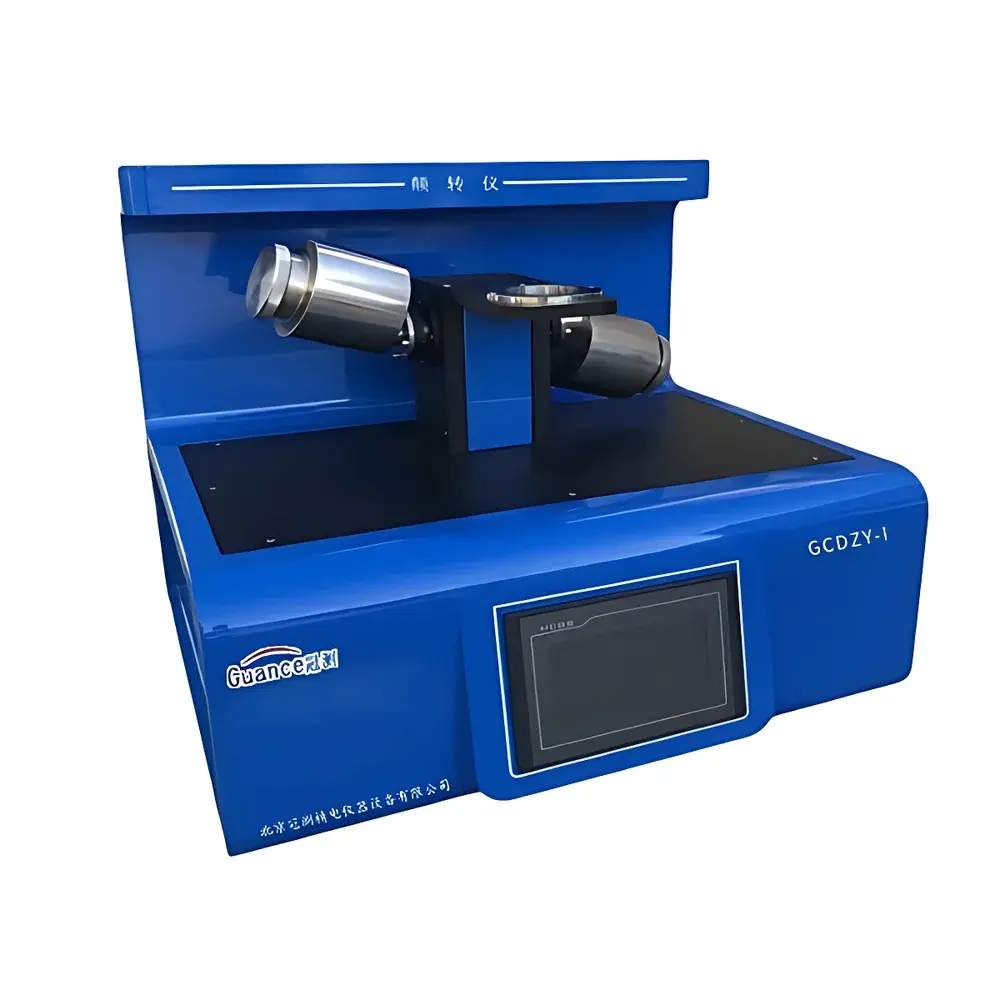
Guance Instruments GCDZY-I Carbon Anode Tumbler
| Brand | Guance Instruments |
|---|---|
| Origin | Beijing, China |
| Manufacturer Type | Authorized Distributor |
| Country of Origin | China |
| Model | GCDZY-I |
| Rated Power | 1 kW |
| Rated Voltage | 220 V / 50 Hz |
| Drum Internal Diameter | Φ68 mm |
| Drum Internal Height | 120 mm |
| Steel Ball Diameter | 6 mm |
| Rotational Speed | 90 rpm |
| Timer Range | Adjustable |
| Overall Dimensions (L×W×H) | 700 × 640 × 690 mm |
| Net Weight | 50 kg |
Overview
The Guance Instruments GCDZY-I Carbon Anode Tumbler is a precision-engineered mechanical testing device designed exclusively for standardized evaluation of air and CO₂ reactivity in carbon anodes used in aluminum electrolysis. It operates on the principle of controlled mechanical abrasion—rotating a cylindrical drum containing pre-reacted carbon specimens and calibrated steel balls—to quantify surface particle detachment following high-temperature oxidation exposure. This physical de-agglomeration step is critical prior to gravimetric mass loss analysis, as defined in YS/T 63.11–2006 (air reactivity) and YS/T 63.12–2006 (CO₂ reactivity). Unlike general-purpose tumblers, the GCDZY-I integrates metrologically traceable rotational stability, programmable timing, and industrial-grade mechanical isolation to ensure repeatability across inter-laboratory validation studies.
Key Features
- High-stability rotational drive system: stepper motor coupled with synchronous timing belt transmission ensures consistent 90 rpm output with <±0.5 rpm speed deviation over extended operation cycles.
- Industrial PLC-based control architecture: enables precise adjustment of tumble duration (0–999 minutes), automatic cycle termination, and fault logging for audit-ready process documentation.
- Human-machine interface (HMI) with 7-inch capacitive touchscreen: displays real-time status—including elapsed time, remaining time, motor temperature, and operational mode—supporting ISO/IEC 17025-compliant test record generation.
- Rugged enclosure fabricated from cold-rolled steel sheet with electrostatic epoxy-polyester powder coating: provides IP54-rated protection against dust ingress and corrosion in laboratory and pilot-plant environments.
- Optimized drum geometry: internal dimensions (Φ68 mm × 120 mm) and 6 mm stainless-steel ball specification conform strictly to YS/T 63.11 and YS/T 63.12 sample chamber requirements, minimizing inter-sample variability.
Sample Compatibility & Compliance
The GCDZY-I accepts standard carbon anode specimens prepared per YS/T 63 series protocols—typically 25 mm × 25 mm × 25 mm cubes or cylindrical cores (Φ25 mm × 25 mm) after thermal treatment in air or CO₂ atmospheres at 700–1100 °C. Its mechanical design ensures uniform tumbling energy distribution without specimen fracture or edge rounding artifacts. The instrument complies with national metallurgical standardization requirements for aluminum industry quality control laboratories and supports GLP-aligned workflows through deterministic timer resolution (±1 s) and non-volatile parameter storage. While not certified to ASTM C617 or ISO 5068, its operational parameters are functionally equivalent to those specified in Annex B of YS/T 63.12 for post-reaction particle removal.
Software & Data Management
The embedded PLC firmware retains up to 100 independent test configurations—including speed setpoint, duration, and user-defined ID tags—with timestamped execution logs stored locally on industrial-grade flash memory. HMI-generated session reports export via USB 2.0 to CSV format for integration into LIMS platforms or Excel-based QA/QC dashboards. All parameter changes are logged with operator ID (via optional RFID badge reader integration) and system clock stamp, satisfying basic FDA 21 CFR Part 11 electronic record integrity prerequisites when deployed in regulated manufacturing settings. No cloud connectivity or proprietary software installation is required—operation remains fully offline and deterministic.
Applications
- Quantitative assessment of carbon anode degradation kinetics following standardized air or CO₂ exposure tests.
- Quality assurance screening in carbon anode production facilities to verify batch-to-batch consistency in structural integrity post-oxidation.
- Research into coke microstructure evolution under simulated electrolytic cell conditions.
- Supporting ISO 17025 accreditation audits for laboratories performing YS/T 63-compliant carbon material certification.
- Preparation of uniformly abraded surfaces for subsequent SEM-EDS, XRD, or BET surface area analysis.
FAQ
What standards does the GCDZY-I directly support?
It is engineered to meet the mechanical tumbling requirements specified in YS/T 63.11–2006 and YS/T 63.12–2006 for aluminum industry carbon anode testing.
Can the rotation speed be adjusted beyond 90 rpm?
No—the mechanical and control system are calibrated and validated only at the fixed 90 rpm operating point mandated by YS/T 63 standards.
Is calibration certification provided with the unit?
A factory calibration report documenting rotational speed accuracy, timer linearity, and electrical safety compliance (GB 4793.1) is included; third-party ISO/IEC 17025 calibration is available upon request.
What maintenance is required for long-term reliability?
Annual inspection of belt tension, bearing lubrication (sealed-for-life units), and HMI touchscreen responsiveness is recommended; no routine recalibration is needed under normal laboratory use.
Does the instrument require external exhaust or fume handling?
No—it performs only mechanical tumbling; however, it must be operated in conjunction with a certified fume hood when handling post-reaction samples that may retain residual reactive carbon fines.



