
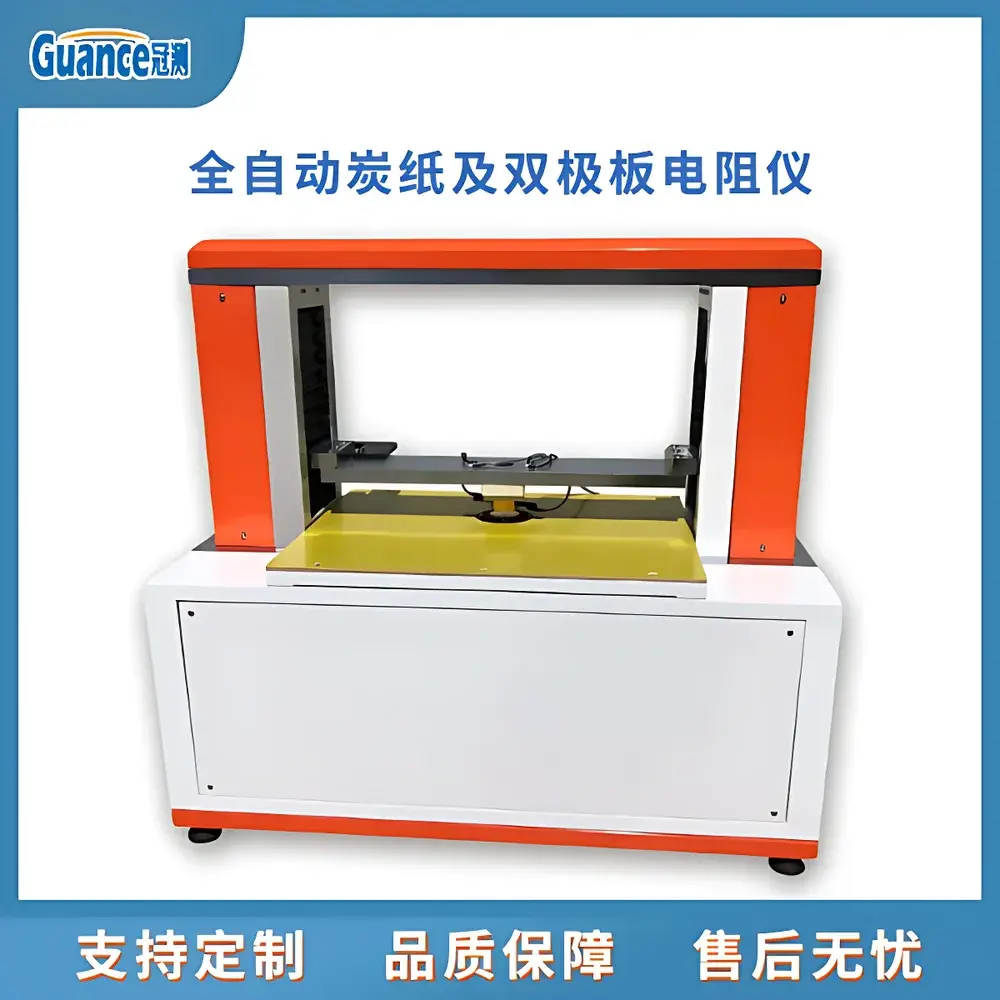
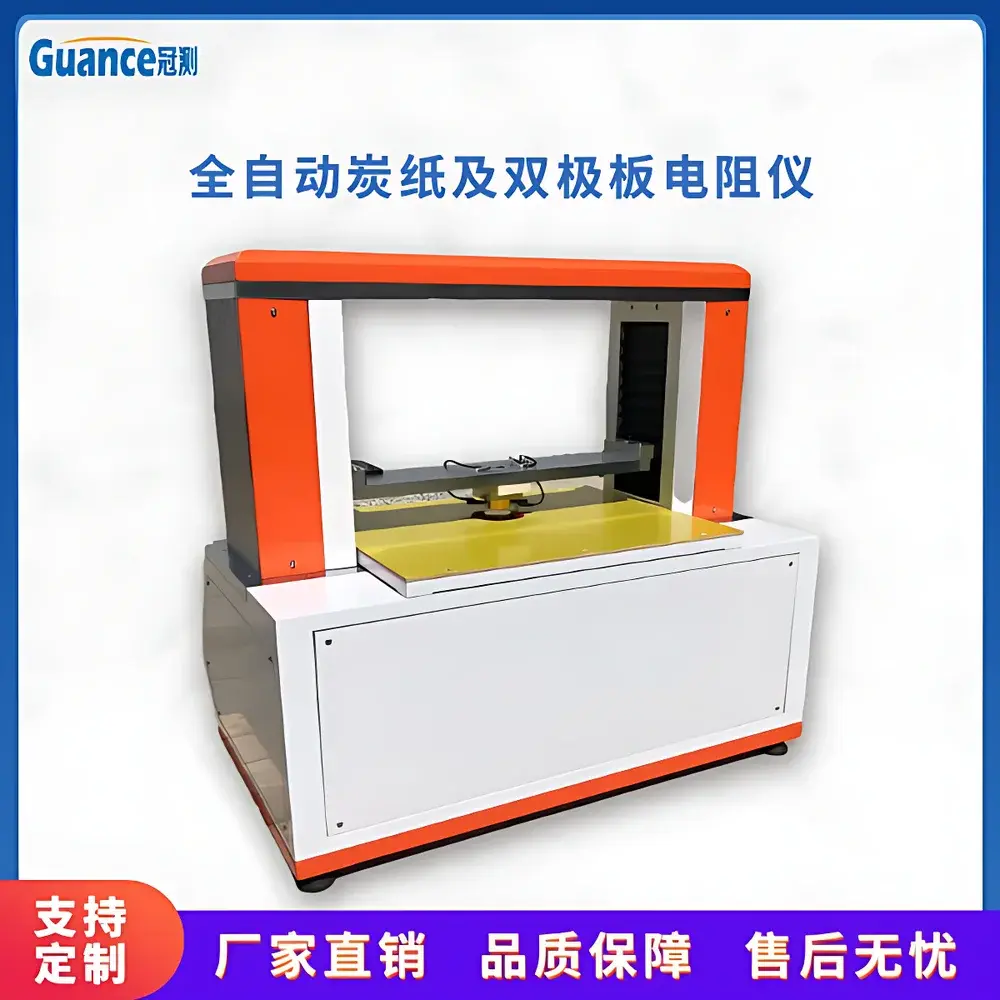
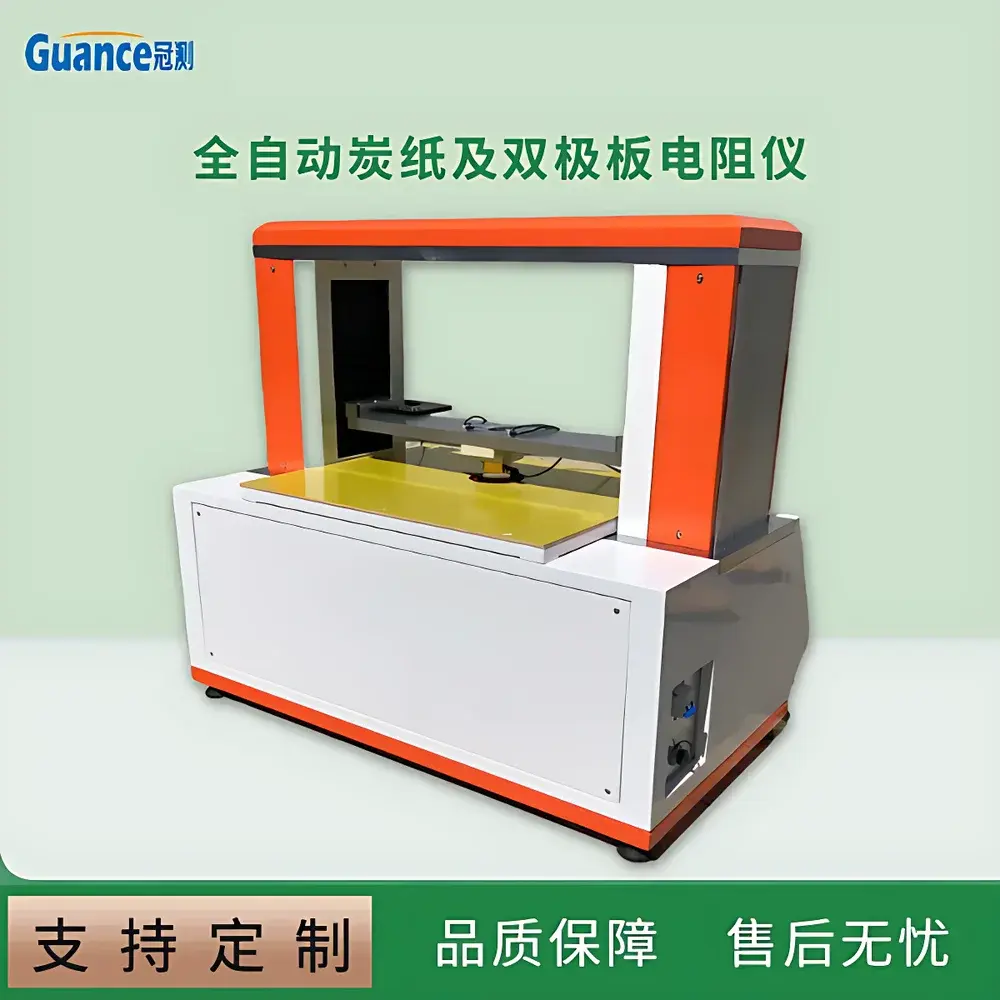
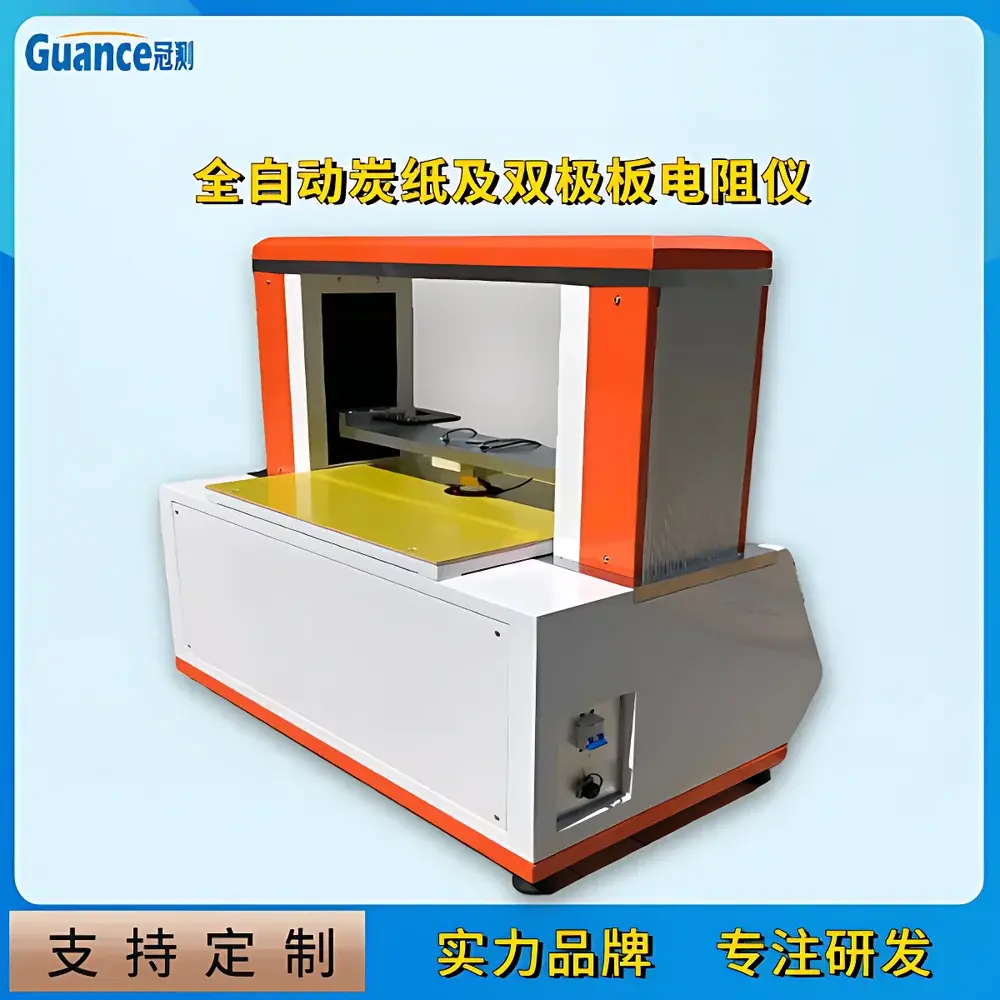
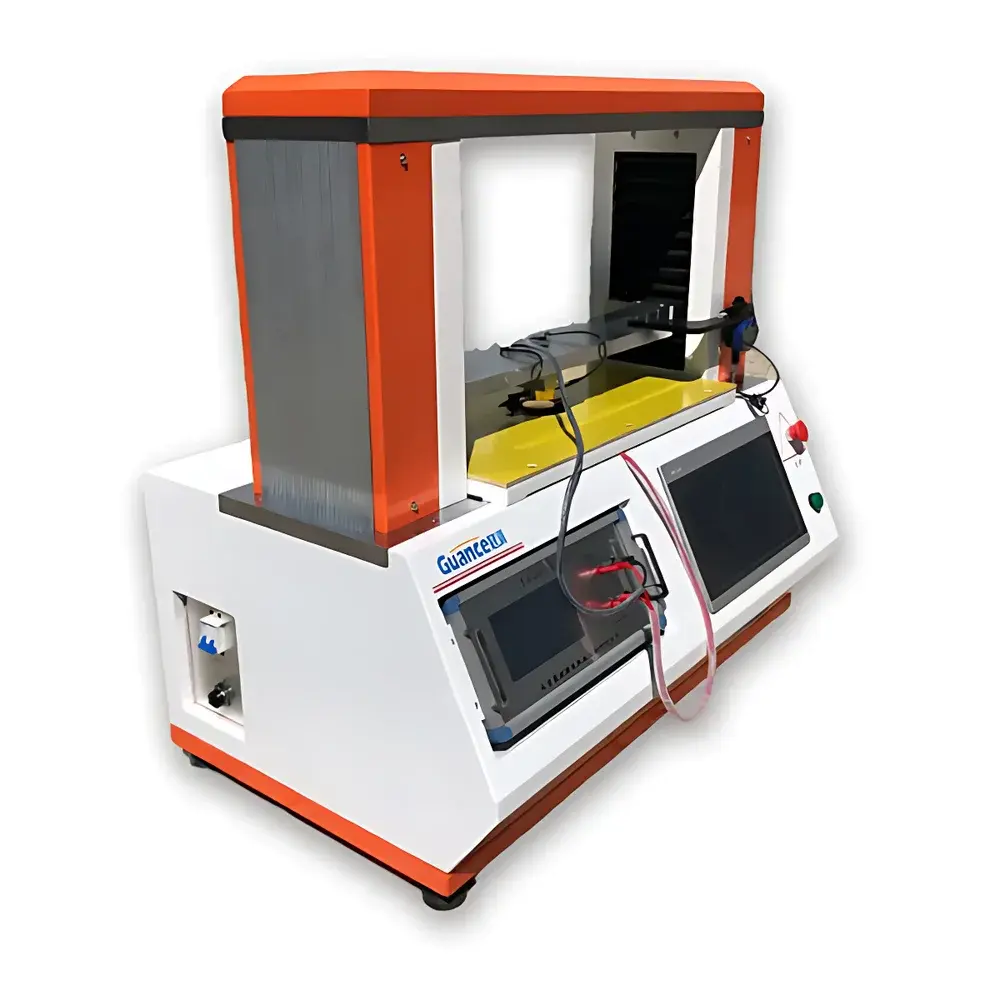
GuanCe Instruments GEST-20042D Bipolar Plate Low-Resistance Tester
| Brand | GuanCe Instruments |
|---|---|
| Origin | Beijing, China |
| Manufacturer Type | Authorized Distributor |
| Country of Origin | China |
| Model | GEST-20042D |
| Price | USD 1,540 (FOB Beijing) |
Overview
The GuanCe Instruments GEST-20042D Bipolar Plate Low-Resistance Tester is a precision-engineered system designed specifically for the electrical resistivity characterization of proton exchange membrane fuel cell (PEMFC) components—namely carbon paper gas diffusion layers (GDLs) and graphite or composite bipolar plates (BPPs). It operates on two complementary measurement principles: vertical through-plane resistivity (2-probe compression method) and horizontal in-plane resistivity (4-probe collinear probe method), both compliant with internationally referenced test standards including GB/T 20042.6–2011 and GB/T 20042.7–2014. The instrument integrates servo-controlled mechanical loading, high-resolution resistance acquisition, and real-time multivariable data synchronization to deliver reproducible, traceable measurements under controlled compressive stress conditions—critical for evaluating interfacial contact resistance (ICR), bulk conductivity, and compression-dependent conduction behavior in PEMFC stack design and quality assurance workflows.
Key Features
- Servo-driven force application system enabling precise, noiseless, and continuous pressure control from 0.1 MPa to 5.0 MPa (adjustable in 0.01 MPa increments)
- Dual-mode resistivity measurement: vertical (through-plane) via 2-probe compression with gold-plated 50 mm diameter electrodes; horizontal (in-plane) via ASTM F390-compliant 4-probe collinear configuration
- Integrated 10-inch industrial touchscreen HMI with embedded real-time visualization of pressure, compressive strain, thickness reduction, voltage, current, resistance, resistivity (Ω·cm, Ω·m, mΩ·cm), and conductivity (S/cm, S/m)
- Seven programmable test modes: constant force, constant pressure, stepwise force ramp, stepwise pressure ramp, fixed compression ratio, multi-step gradient testing, and auto-return post-test
- Onboard statistical engine that computes inter-step resistance differentials, relative change percentages, and mean/standard deviation across up to 10 user-defined compression levels
- Firmware-upgradable architecture supporting remote diagnostics, calibration parameter updates, and future protocol extensions via secure Ethernet or USB interface
Sample Compatibility & Compliance
The GEST-20042D accommodates standard PEMFC material specimens per ISO 8502-2 and GB/T 20042 series specifications: carbon paper (thickness 100–300 µm), molded graphite BPPs (up to 3 mm thick), and metal-coated composite plates. All mechanical and electrical interfaces conform to IEC 61000-4 electromagnetic compatibility requirements. Measurement uncertainty is validated against NIST-traceable low-resistance standards (0.1 mΩ to 100 Ω range), and full audit trails—including operator ID, timestamp, environmental metadata (optional ambient T/RH logging), and raw sensor outputs—are retained for GLP/GMP-aligned documentation. The system supports optional integration with laboratory information management systems (LIMS) via CSV export or Modbus TCP protocol.
Software & Data Management
The embedded firmware implements deterministic real-time data acquisition at 100 Hz sampling rate for all analog channels (load cell, displacement transducer, voltage/current sensors). Test sequences are defined via intuitive graphical workflow editor; each run generates a timestamped .csv file containing synchronized columns for time, applied force (N), nominal pressure (MPa), sample thickness (µm), voltage (mV), current (mA), calculated resistance (mΩ), resistivity (mΩ·cm), and compression ratio (%). Exported datasets include metadata headers compliant with ASTM E1447 and ISO/IEC 17025 reporting guidelines. Optional PC-based analysis software provides curve fitting (log R vs. P), comparative overlay plotting, batch statistical summaries, and PDF report generation with digital signature support for FDA 21 CFR Part 11 readiness.
Applications
- Quality control of carbon fiber paper and microporous layer (MPL)-coated GDLs during roll-to-roll manufacturing
- Development and validation of coated graphite or stainless-steel bipolar plates for reduced interfacial contact resistance
- Correlation studies between mechanical compression history and long-term electrical stability in accelerated stack cycling tests
- Material screening for next-generation conductive composites (e.g., graphene-enhanced polymers, carbon nanotube networks)
- Third-party certification testing per UL 2581, SAE J2718, and EU Directive 2009/125/EC energy efficiency evaluation protocols
FAQ
What standards does the GEST-20042D comply with for PEMFC component testing?
It fully implements GB/T 20042.6–2011 (bipolar plate resistivity) and GB/T 20042.7–2014 (carbon paper characterization), with measurement methodology aligned to ASTM D257 and IEC 60093 for surface and volume resistivity.
Can the system measure both anisotropic resistivity and contact resistance independently?
Yes—the vertical mode isolates through-plane resistivity under calibrated compressive load, while the horizontal 4-probe mode eliminates lead/contact resistance effects to yield true in-plane bulk resistivity.
Is calibration traceable to national metrology institutes?
Factory calibration uses NIST-traceable shunt resistors (0.1 mΩ, 1 Ω, 100 Ω) and certified load cells; users may perform field verification using supplied calibration kits.
Does the instrument support automated pass/fail judgment based on user-defined thresholds?
Yes—threshold limits can be set per test parameter (e.g., max allowable resistivity at 1.5 MPa); results trigger visual alerts and optional relay output for inline QC gating.
What is the maximum sample size supported?
The electrode stage accepts specimens up to 100 mm × 100 mm; standard test area is defined by the 50 mm diameter gold-plated electrodes, ensuring uniform current density distribution per ISO 10545-13.



